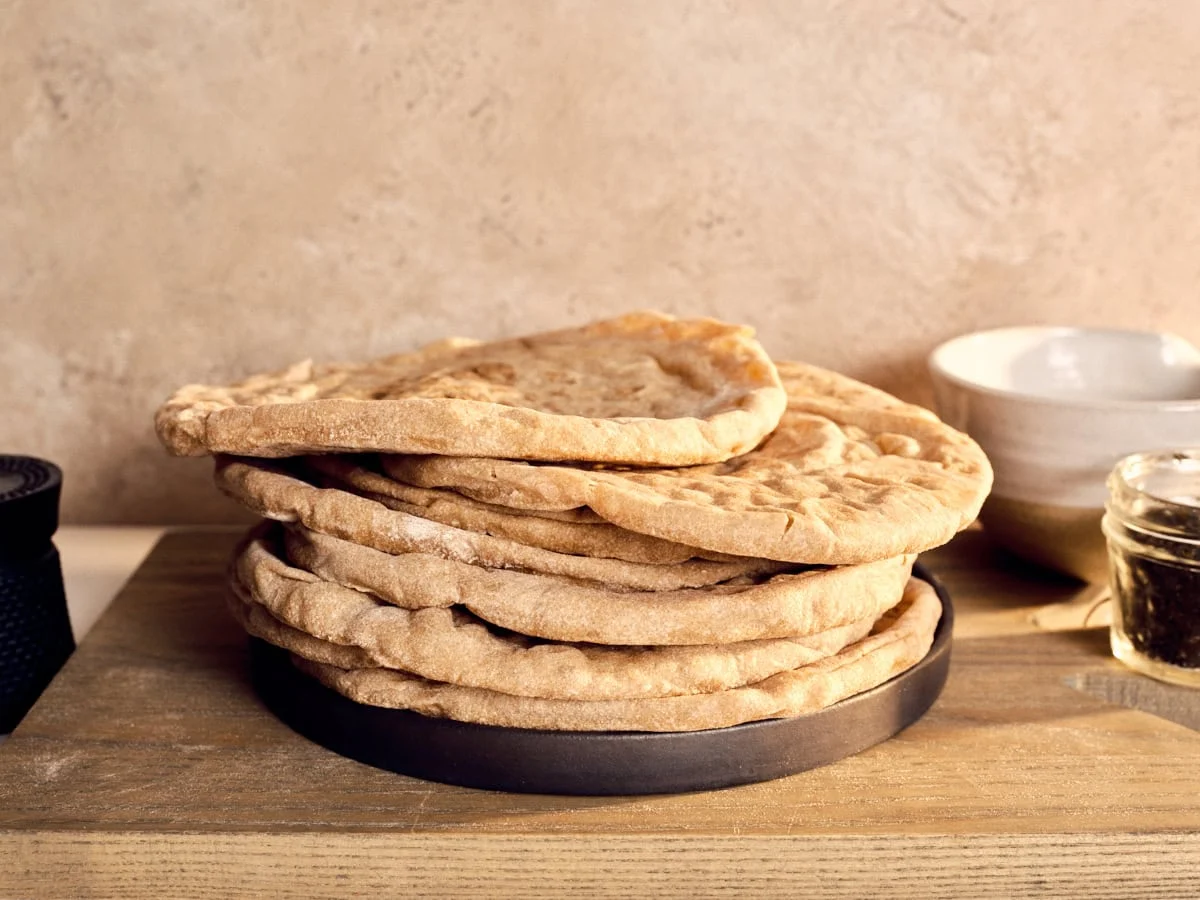

The artisanal baking community has long grappled with the challenge of balancing nutritional density with the delicate, airy textures consumers expect from everyday flatbreads. This culinary tension was recently brought to the forefront during a specialized baking workshop co-taught by prominent bread author and educator Maurizio Leo alongside fellow artisan baker Graison Gill. Hosted at the Chimacum Valley Grainery in Washington’s Pacific Northwest, the class introduced a unique whole-grain sourdough pita formulated with barley and fresh-milled flour. Inspired by that rainy-weekend collaboration, Leo subsequently developed a refined, 100% whole-wheat iteration that seeks to redefine how home bakers approach high-extraction, nutrient-dense flatbreads without sacrificing the quintessential pocket-puff.
Background and Context of the Collaboration
The Chimacum Valley Grainery represents a growing movement within regional grain economies, emphasizing locally grown, freshly milled heritage and modern grains that retain their nutrient-rich germ and bran. In commercial baking, whole-grain flours are frequently sidelined for high-extraction white flours due to their propensity to inhibit gluten development, weigh down dough, and yield dense, heavy final products.
However, the collaboration between Leo and Gill highlighted the untapped potential of marrying artisanal sourdough fermentation with regionally sourced, fresh-milled whole grains. The resulting pita formula developed from this event was designed to harness the natural enzymatic activity and prolonged breakdown of complex carbohydrates inherent in sourdough systems. By utilizing slow fermentation, the harshness often associated with whole-wheat profiles is mitigated, yielding a balanced flavor profile that highlights the inherent natural sweetness of the grain.
The Chronology and Baking Schedule
Designing an accessible recipe suitable for both professional kitchens and home environments required a streamlined chronology. Traditional sourdough products often demand extended, multi-day commitments that deter weeknight baking. To counter this, the whole-wheat sourdough pita schedule is structured to optimize both labor efficiency and chemical maturation.
The process commences at 9:00 p.m. with the preparation of an overnight levain utilizing whole-wheat flour, water, and a mature sourdough starter, maintained at an ambient temperature of 74°F to 76°F (23°C to 24°C). Alternatively, bakers may utilize a pre-existing ripe sourdough starter directly in the morning to bypass the overnight preferment stage, though this slightly alters the total whole-grain ratio depending on the starter’s maintenance flour.
The active mixing phase begins at 9:00 a.m. the following morning. The formula comprises a total dough weight of 1,320 grams, yielding ten individual 120-gram pita rounds. The precise hydration targets 84%, supported by 100% whole-wheat flour (specifically designated as Chimacum Valley Grainery Bread Flour or an equivalent high-protein whole-wheat flour), extra-virgin olive oil, fine sea salt, and split additions of water to ensure optimal gluten network formation without tearing the developing bran strands.
Following a mechanical spiral mixer or manual slap-and-fold kneading protocol, the dough enters bulk fermentation at 9:30 p.m. (or morning equivalent, depending on exact scheduling) lasting approximately three hours. During the first hour of bulk fermentation, two sets of structural stretches and folds are administered at thirty-minute intervals to build dough strength and gas retention capacity.
By 12:30 p.m., the dough reaches an optimal 25% increase in volume. It is then divided into ten equal 120-gram portions, pre-shaped into tight tension balls to ensure uniform structural integrity, and subjected to a one-hour final proof on a floured baking sheet under protective covers. Baking is executed at peak oven temperatures—nominally 550°F (290°C) or higher—utilizing a preheated baking steel or stone to facilitate rapid thermal transfer, which is the primary catalyst for the explosive steam generation required to inflate the pita pocket.
Technical Specifications and Nutritional Implications
The technical parameters of the whole-wheat sourdough pita formula underscore a precise scientific approach to flatbread production:
- Total Dough Weight: 1,320 grams
- Prefermented Flour Ratio: 9.5%
- Levain Inclusion: 22.0% of final dough weight
- Hydration Rate: 84.0%
- Yield: Ten 120-gram units (approx. 7 inches in diameter, 1/8-inch thickness)
Analysis of the baking mechanics reveals that whole-grain pitas present distinct challenges compared to refined-flour counterparts. The sharp edges of bran particles can physically sever gluten strands, while higher fiber content absorbs water rapidly, altering the rheological properties of the dough. To counteract this, the recipe employs a dual-water addition method and a controlled hydration of 84%, which grants the dough sufficient fluidity to expand rapidly under high heat.
Furthermore, the fermentation timeline aids in phytic acid breakdown via naturally occurring phytase enzymes activated during the sourdough process. This biochemical action enhances the bioavailability of essential minerals—such as iron, zinc, and magnesium—inherent in whole grains, offering a tangible nutritional advantage over commercially yeasted, rapid-process flatbreads.
Troubleshooting Common Baking Challenges
Achieving a consistent, hollow interior pocket in a 100% whole-wheat flatbread requires adherence to precise thermal and mechanical thresholds. Industry observations and home-baking metrics highlight several common failure points during the baking sequence:
- Absence of the Puff Effect: If the rolled dough fails to inflate, the root cause is typically insufficient oven temperature, an inadequately preheated baking surface, or incorrect rolling thickness. Dough rolled thicker than 1/8 inch retains too much moisture to flash-convert into steam instantly, while dough rolled too thin lacks the structural containment needed to trap expanding gases. Additionally, allowing the dough surface to dry out during proofing creates a prematurely set skin that prevents uniform expansion.
- Asymmetrical Inflation: Partial puffing—where only one side of the bread balloons—usually stems from uneven rolling thickness, creating localized weak spots in the gluten matrix.
- Excessive Surface Bubbling: When bulk fermentation or final proofing exceeds optimal parameters, the yeast exhausts its fermentative capacity and the gluten structure weakens, resulting in large, irregular surface blisters reminiscent of naan rather than a cohesive internal pocket.
Broader Market Impact and Culinary Outlook
The resurgence of interest in localized grain economies, exemplified by mills like the Chimacum Valley Grainery and educational initiatives by bakers like Maurizio Leo and Graison Gill, signals a broader shift in consumer preferences. Modern consumers increasingly seek transparency, nutritional integrity, and localized provenance in staple foods.
By demonstrating that high-extraction whole grains can be successfully utilized in delicate applications like pita bread without sacrificing texture or palatability, these developments encourage broader adoption of whole-grain milling practices. As commercial and home bakers alike continue to refine these methodologies, the gap between nutrient-dense ancient-grain diets and accessible everyday baking continues to narrow, offering promising implications for regional agricultural supply chains and public health alike.