
The preservation of seasonal produce has long been a cornerstone of domestic self-sufficiency, with the United States Department of Agriculture (USDA) continually updating and publishing safety guidelines to prevent foodborne illnesses such as botulism. Among the various heritage and modern crops preserved across North American kitchens, the tomatillo (Physalis ixocarpa)—a staple of Mexican and Southwestern cuisine—holds a unique place due to its natural acidity and distinct culinary applications. Unlike standard tomatoes, which frequently require peeling prior to thermal processing, whole tomatillos undergo a specialized preservation workflow that retains their outer skins while ensuring microbial safety through precise thermal thresholds and mandatory acidification.
Understanding the chemical composition and structural integrity of the tomatillo is essential for safe home food preservation. According to data compiled by the USDA’s Center for Food Safety and Applied Nutrition within their reference catalog of approximate food pH levels, fresh tomatillos possess an average pH value of approximately 3.83. This naturally acidic environment places them well below the critical 4.6 threshold that separates high-acid from low-acid foods, making them inherently less hospitable to certain spore-forming pathogens. However, to guarantee absolute safety during long-term ambient storage, institutional food safety frameworks mandate the addition of specific acidifiers, such as bottled lemon juice or lime juice, prior to sealing the jars.

The historical evolution of home canning standards reflects a systematic shift from traditional folklore and guesswork to rigorous, laboratory-tested protocols. Throughout the mid-to-late 20th century, as agricultural extension services gathered empirical data on heat penetration, thermal death times for bacterial spores, and equipment performance, standardized bulletins were established. The modern protocol for preserving whole plain tomatillos is formally codified in the USDA Complete Guide to Home Canning (Agriculture Information Bulletin No. 539), serving as the benchmark for extension offices and master food preservers across the country.
Yield Calculations and Raw Material Sourcing
Before initiating the canning process, practitioners must calculate the volume of fresh raw produce required to fill specific container sizes. Agricultural guidelines emphasize that raw agricultural yields are inherently variable, influenced by factors such as moisture content, fruit density, harvest timing, and cultivar differences. However, empirical averages offer a reliable baseline for kitchen planning.
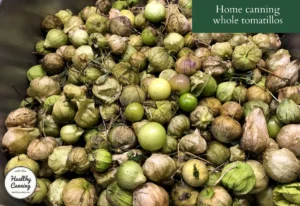
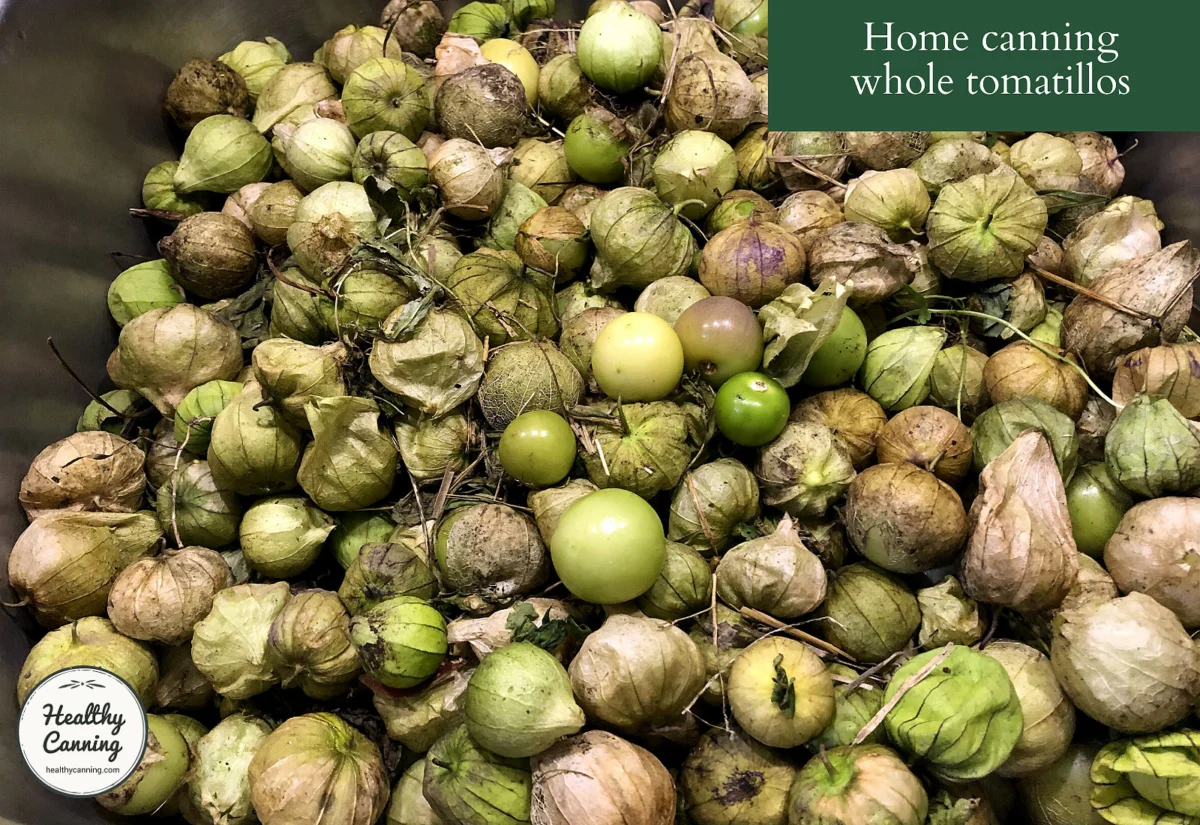
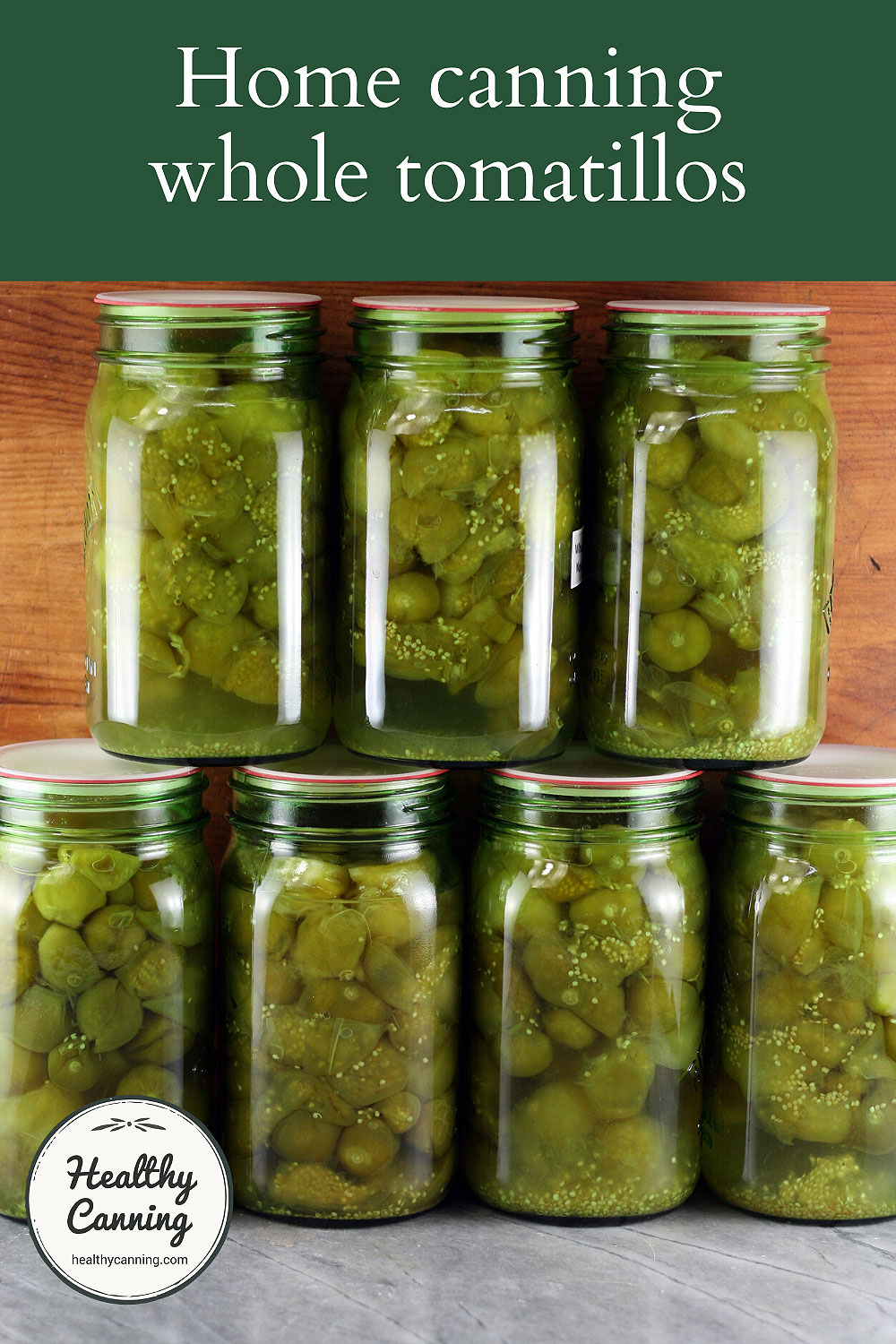
As a general rule of thumb, home canners should anticipate requiring approximately one kilogram of fresh, unhusked or husked tomatillos for every one-litre (one US quart) jar desired, or roughly two pounds per quart jar. Scaling down to half-litre (one US pint) jars requires a proportional adjustment. Sourcing firm, unblemished fruit with tightly adhering husks ensures optimal structural stability during the thermal processing phase, minimizing the risk of mushy textures or premature cellular breakdown within the sealed glass.
Equipment Selection and Thermal Processing Methods
The USDA framework authorizes three primary thermal processing methods for whole tomatillos: boiling water bath canning, atmospheric steam canning, and pressure canning. Each method requires strict adherence to designated processing times, headspace parameters—typically maintained at two centimeters or one-half inch—and jar size constraints restricted strictly to half-litre (pint) or one-litre (quart) capacities. Larger vessels are expressly prohibited due to insufficient heat penetration data.
Water bath canning and steam canning rely on boiling water temperatures (100°C or 212°F at sea level) sustained over extended periods to destroy yeasts, molds, and vegetative bacteria. For half-litre jars, the required processing time is 40 minutes, while one-litre jars demand 45 minutes. Atmospheric steam canners serve as an efficient alternative to traditional boiling water baths, utilizing significantly less water and energy while achieving identical thermal lethality. Nevertheless, steam canners are subject to specific operational limitations; they cannot be utilized if local altitude adjustments require a processing duration exceeding 45 minutes, as smaller residential steam units risk running completely dry during extended cycles.
Alternatively, pressure canning offers a rapid thermal reduction strategy, though it introduces specific regulatory and operational parameters. The USDA outlines weighted-gauge and dial-gauge pressure schedules designed to reduce processing times down to as little as one minute at 15 pounds of pressure (psi) for sea-level operations.

| Jar Size | Processing Time | 0 to 300 Meters (0–1,000 Feet) Pressure | Above 300 Meters (1,000 Feet) Pressure |
|---|---|---|---|
| ½ Litre or 1 Litre (1 Pint or 1 Quart) | 15 minutes | 5 lb (Weighted Gauge) | 10 lb (Weighted Gauge) |
| ½ Litre or 1 Litre (1 Pint or 1 Quart) | 10 minutes | 10 lb (Weighted Gauge) | 15 lb (Weighted Gauge) |
| ½ Litre or 1 Litre (1 Pint or 1 Quart) | 1 minute | 15 lb (Weighted Gauge) | Not Recommended |
A critical food safety caveat emphasized by extension educators is that utilizing an approved acid ingredient remains mandatory during pressure canning. The elevated pressure schedules were formulated strictly to optimize processing time efficiency rather than to serve as an independent sterilization mechanism capable of compensating for unacidified low-acid environments.
Altitude Adjustments and Environmental Variables
Environmental geography plays a decisive role in thermal food preservation. Because atmospheric pressure decreases with elevation, water boils at lower temperatures as altitude increases. Consequently, both water bath and steam canning procedures require mandatory time extensions to compensate for reduced thermal intensity. Similarly, pressure canners must be operated at elevated psi levels when processing food at higher altitudes to ensure that the internal retort temperature matches sea-level sterilization standards. Failure to apply correct altitude corrections can result, under worst-case scenarios, in under-processing and subsequent microbial survival.
Ingredient Modifications: Acidification and Seasoning
Recipe formulation within USDA parameters allows for limited customization regarding secondary ingredients, provided core safety rules remain uncompromised. Acidification is non-negotiable; while lemon juice is commonly selected for its neutral flavor profile, bottled lime juice is frequently utilized to complement the earthy, tart flavor inherent to tomatillos. Culinary experts advise caution when selecting lime juice due to its assertive flavor profile, which permanently influences the taste of dishes prepared with the canned fruit later on.
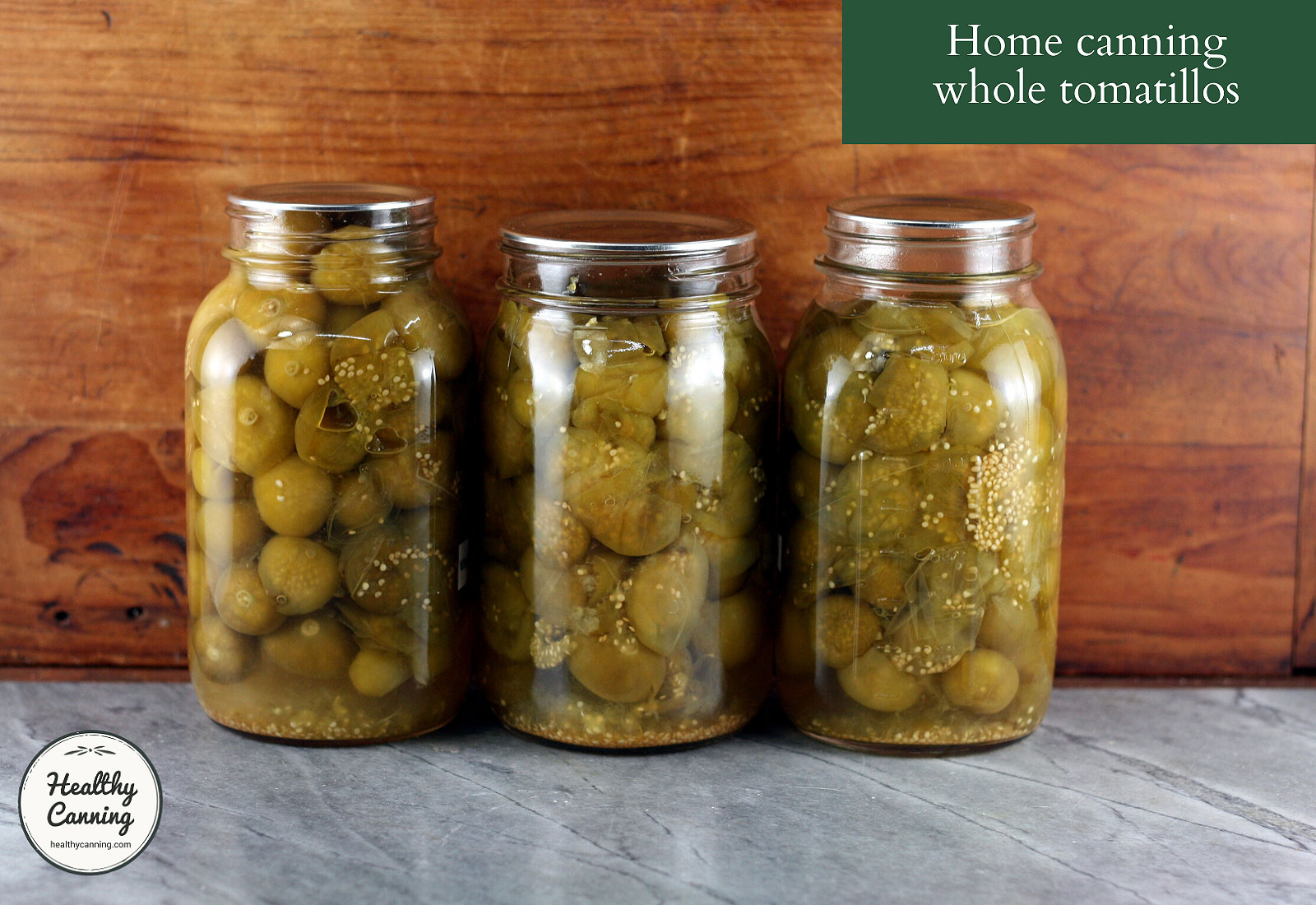
Conversely, sodium chloride (table salt) is classified strictly as a discretionary seasoning agent that contributes nothing to the microbiological safety of the canned product. Canners may omit salt entirely or substitute it with non-bitter, non-clouding commercial alternatives, such as Herbamare Sodium-Free seasoning, which clinical and culinary testing has shown maintains clear liquid suspension without interfering with the vacuum seal or aesthetic clarity of the jar.
Nutritional Profile and Culinary Integration
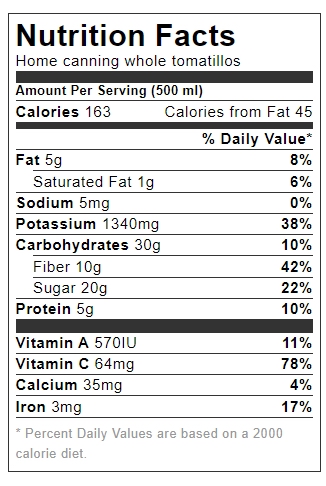
Whole canned tomatillos offer a nutrient-dense profile while remaining relatively low in caloric density. Nutritional analysis per half-litre (US pint) serving—prepared without added sodium—indicates an energy value of approximately 163 kilocalories. The contents deliver a substantial dietary fiber content estimated at 10 grams, alongside 30 grams of carbohydrates, 5 grams of protein, and 5 grams of total fat (including 1 gram of saturated fat). Furthermore, the product supplies notable micronutrients, including significant quantities of potassium (1,340 mg), Vitamin C (64 mg), and Vitamin A (570 IU), with a minimal sodium content of 5 milligrams.
From a gastronomic perspective, home-canned tomatillos differ fundamentally from fresh raw produce because the thermal processing inherent to canning essentially pre-cooks the fruit. Culinary authorities, including renowned food writers Martha Rose Shulman of The New York Times and the editorial staff behind The Joy of Cooking, note that canned tomatillos are ideally suited for cooked preparations, simmering applications, and blended salsas rather than fresh, uncooked pico de gallo alternatives.
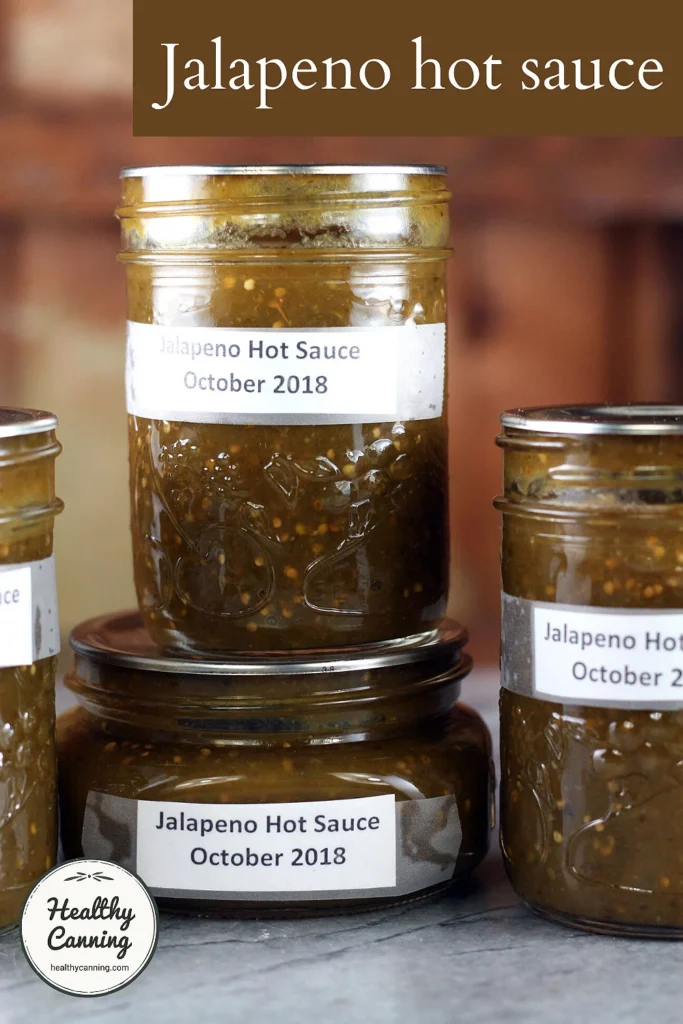
When substituting preserved tomatillos into traditional recipes, cooks can bypass initial broiling or simmering steps entirely. An 11-ounce portion of canned tomatillos effectively replaces one pound of fresh raw fruit once drained. Furthermore, their bright, acidic flavor profile makes them an exceptional condiment pairing for grilled meats, poultry, seafood, and spicy hot sauce formulations, bridging the gap between seasonal agricultural preservation and year-round culinary versatility.