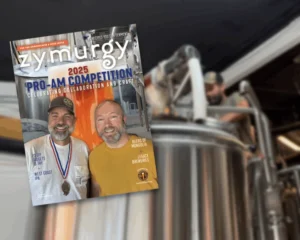

The American Homebrewers Association (AHA) has released the May/June 2026 edition of its flagship publication, Zymurgy, marking a significant pivot toward the internationalization of the hobby and the intersection of fermentation science with medical biotechnology. This latest installment provides a comprehensive survey of global brewing techniques, ranging from the burgeoning craft scene in Tuscany to the formal recognition of Ukrainian brewing heritage. With 14 new recipes and a deep dive into the technicalities of both ancient and modern styles, the issue serves as a technical manual for the modern zymurgist.
At the center of this issue is a feature on Ukrainian Golden Ale, authored by Lana Svitankova, a prominent voice in the Eastern European beer community. The article details the stylistic nuances that distinguish this variety from its British and Belgian counterparts. Historically positioned between the lighter British Golden Ale and the high-gravity Belgian Golden Strong Ale, the Ukrainian variant is characterized by its unique malt profile and specific yeast attenuation. The inclusion of this style reflects a broader trend within the Beer Judge Certification Program (BJCP) and the global brewing community to formalize regional traditions that have survived through periods of geopolitical instability.

The Formalization of Ukrainian Brewing Identity
The rise of Ukrainian Golden Ale is more than a stylistic evolution; it is a movement toward cultural preservation through fermentation. For years, the style existed in a nebulous space, often categorized under broader European ale headers. However, Svitankova’s research highlights the specific parameters that define the category: a prominent malt sweetness, a moderate to high alcohol by volume (ABV) range of 6.1% to 7.5%, and a distinct floral or spicy hop character.
Industry analysts suggest that the formal recognition of such styles in publications like Zymurgy is a precursor to their inclusion in international competitions. The timeline for Ukrainian Golden Ale’s recognition has accelerated since 2022, as the global brewing community sought to support Ukrainian artisans. By documenting the specific mashing schedules and hop varieties—often utilizing local cultivars—Zymurgy provides the technical framework necessary for brewers in the United States and elsewhere to replicate the style with authenticity.
Technical Mastery of European Classics: Dunkel and Saison
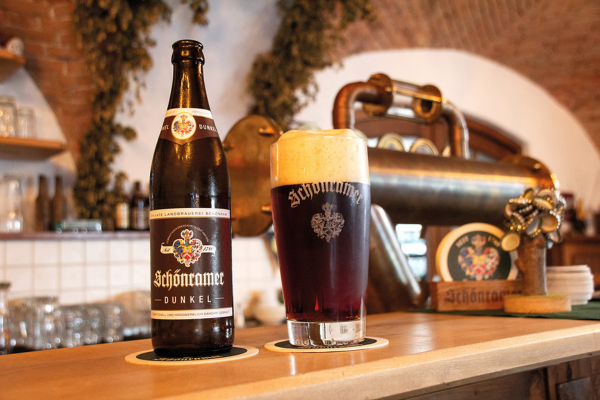
The May/June 2026 issue also revisits foundational European styles, emphasizing the technical precision required to balance complex malt bills with drinkability. A feature on German Dunkel explores the "secret" to this ancient Munich style, which lies in the Maillard reactions achieved through traditional decoction mashing or the strategic use of specialty roasted malts. The article argues that while modern malting technology has made single-infusion mashing more viable, the depth of flavor in a true Dunkel requires a sophisticated understanding of pH levels and temperature rests to avoid an overly cloying finish.

Simultaneously, the publication shifts its focus to Northern Italy, where National Homebrew Competition (NHC) gold medalist Carlo Sesia discusses the adaptation of Belgian Saisons. Sesia’s approach involves a synthesis of traditional Belgian yeast strains with the environmental conditions of Italy. This "Italian Saison" movement highlights the versatility of farmhouse ales, which were originally brewed to sustain seasonal workers. Sesia’s contribution focuses on the management of fermentation kinetics, particularly the "ramping" of temperatures to encourage the production of spicy phenols and fruity esters without generating harsh fusel alcohols.
Regionalism and Terroir: The Tuscan Brewing Movement
The exploration of Italy continues with a profile of the Homebrewers Fiorentini, a club based in Tuscany. This segment examines how regional agricultural products are being integrated into the brewing process, a practice that mirrors the "Italian Grape Ale" (IGA) style which was the first Italian style to be officially recognized by the BJCP. The Tuscan brewers are reportedly utilizing:
- Grape Must: Sourced from local vineyards (Sangiovese and Canaiolo), adding acidity and fermentable sugars that bridge the gap between wine and beer.
- Regional Honey: Utilizing chestnut and wildflower honeys to add complex aromatics that cannot be replicated with standard adjuncts.
- Wine-Soaked Oak: Leveraging the region’s vast wine infrastructure to age beers in barrels that previously held Chianti or Brunello, imparting tannins and micro-oxygenation characteristics.
This focus on terroir suggests a maturation of the homebrewing hobby, where the goal is no longer merely to replicate commercial examples but to create beverages that are intrinsically tied to a specific geographic location.
Biotechnology: Yeast as a Vehicle for Medical Innovation
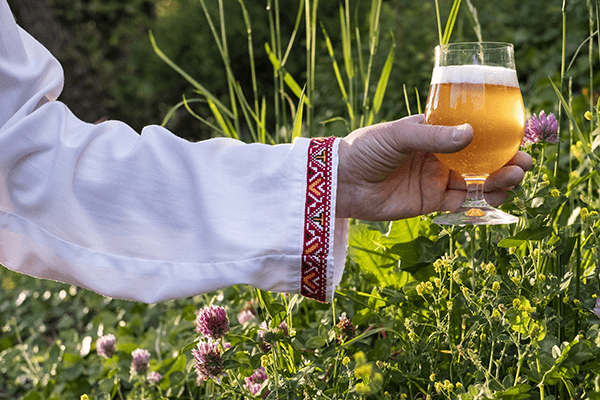
In perhaps the most unconventional feature of the issue, American virologist and homebrewer Chris Buck demonstrates the profound capabilities of Saccharomyces cerevisiae (brewer’s yeast) beyond the production of ethanol and carbon dioxide. Buck’s research involves the use of yeast as a "bio-factory" to synthesize proteins for vaccines targeting polyomaviruses—a group of viruses that can lead to severe diseases in immunocompromised individuals.
This intersection of homebrewing and high-level science is not without precedent. Yeast has long been a model organism in genetic research. However, Buck’s work highlights a practical application where the same fermentation vessels used by hobbyists can, in a laboratory setting, be used to produce life-saving medical components. This "Vaccine Beer" narrative serves to elevate the status of the hobby, framing the homebrewer not just as a maker of beverages, but as a practitioner of applied microbiology.
Supporting Data and Industry Context
The release of the May/June 2026 issue comes at a time of steady evolution for the American Homebrewers Association. Founded in 1978 by Charlie Papazian, the AHA has grown from a small group of enthusiasts to an organization representing tens of thousands of members. Current data from the Brewers Association (the parent organization of the AHA) indicates that while the "boom" years of the 2010s have stabilized, the sophistication of the average homebrewer has increased.
According to a 2025 AHA member survey:
- Over 60% of members now utilize all-grain brewing systems rather than extract-based kits.
- There has been a 15% increase in the use of electronic fermentation monitoring devices.
- Interest in "historical and heritage styles" has risen by 22% over the last three years, explaining the editorial focus on Ukrainian and regional Italian ales.
The inclusion of 14 recipes in this issue is a direct response to this demand for technical complexity. These recipes are reportedly "validated," meaning they have undergone testing to ensure they are scalable from small 5-gallon home batches to larger pilot systems.
Editorial Leadership and Future Implications
Dave Carpenter, the Editor-in-Chief of Zymurgy, continues to steer the publication toward a blend of "geeking out" on technical details and exploring the cultural gerunds of brewing—hiking, traveling, and exploring. Carpenter, who began his brewing journey in 2009, has emphasized that the magazine must remain a bridge between the amateur enthusiast and the professional industry.

The implications of this issue are twofold. First, it reinforces the role of the homebrewer as an innovator. By experimenting with ingredients like grape must or exploring the limits of yeast biotechnology, homebrewers often pave the way for commercial trends. Second, the focus on international styles like Ukrainian Golden Ale suggests a more globalized future for the AHA, moving beyond the North American and Western European centricity that has historically dominated the craft.
As the homebrewing community looks toward the latter half of the decade, the May/June 2026 issue of Zymurgy stands as a testament to the hobby’s resilience and its expanding boundaries. Whether through the lens of a gold-medal Saison in Italy or a vaccine-producing yeast strain in a laboratory, the message remains clear: the act of fermentation is a universal language of both art and science. The AHA continues to offer resources for those looking to join this global movement, providing a platform for education, advocacy, and the pursuit of the perfect pint.