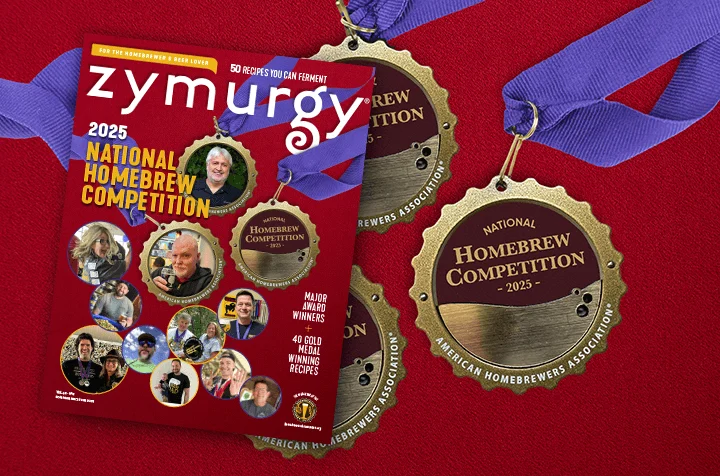

The American Homebrewers Association (AHA) has officially announced the release of the January/February 2026 edition of Zymurgy, its flagship publication dedicated to the art and science of home fermentation. This first installment of the 2026 editorial calendar serves as a comprehensive guide for the modern hobbyist, anchoring its coverage on the prestigious Great American Beer Festival (GABF) Pro-Am Competition medalists. Beyond the competitive landscape, the issue explores the historical preservation of legacy breweries, the technical evolution of the West Coast India Pale Ale (IPA), and an ethnographic look at the burgeoning brewing culture in Mongolia. Accompanied by 11 curated recipes and an analysis of contemporary brewing hardware, the issue reflects the current state of a global hobby that continues to bridge the gap between amateur experimentation and professional production.
The Great American Beer Festival Pro-Am Competition and Its Impact
At the heart of the January/February 2026 issue is the celebration of the GABF Pro-Am Competition winners. The Pro-Am competition represents one of the most significant intersections of the amateur and professional brewing worlds. Unlike standard categories at the GABF, which are reserved for commercially available beers, the Pro-Am category requires a professional brewery to partner with an AHA member. The professional brewery must scale up the homebrewer’s award-winning recipe, brewing it on a commercial system to be judged by the Professional Panel of the GABF.
The significance of these medals extends beyond personal accolades for the homebrewers involved. For the professional breweries, a Pro-Am medal is a testament to their ability to translate small-scale nuances into large-batch consistency. For the homebrewers, it serves as the ultimate validation of their technical skill and recipe formulation. The 2026 issue provides a detailed breakdown of the gold, silver, and bronze recipients, offering insights into the styles that dominated the most recent cycle. Historically, the Pro-Am category has been a breeding ground for future professional head brewers and a showcase for "out-of-the-box" ingredient combinations that commercial breweries might otherwise deem too risky for standard production.
The Technical Evolution of the West Coast IPA
The West Coast IPA, a style that defined the American craft beer movement in the late 1990s and early 2000s, remains a central focus of the issue. Zymurgy explores how this style has evolved over the last three decades to remain relevant in a market that has seen the rise and stabilization of Hazy/New England IPAs.
The report delves into the shifting parameters of "bitterness." While early iterations of the West Coast IPA were characterized by high International Bitterness Units (IBUs) and a heavy malt backbone featuring caramel or crystal malts, the modern "Westie" has moved toward a leaner, paler grist. This evolution emphasizes "dryness" and "drinkability," utilizing high-attenuation yeast strains and precise water chemistry—specifically a high sulfate-to-chloride ratio—to accentuate hop crispness.
The issue also highlights the integration of modern hop products. Homebrewers are increasingly adopting professional techniques such as the use of cryo-hops, hop extracts, and Incognito to achieve intense aromatic profiles without the vegetal astringency often associated with heavy dry-hopping. By interviewing veteran brewers, the publication outlines a chronology of the West Coast IPA, from the foundational bitterness of the "I-5 corridor" breweries to the bright, tropical, and clear iterations found in today’s taprooms.

Legacy Breweries and the Preservation of Tradition
In an era of rapid industry turnover and changing consumer preferences, Zymurgy dedicates a significant portion of the January/February issue to "legacy breweries." These are institutions that have maintained operational consistency for decades, surviving the initial craft boom and the subsequent market corrections.
The analysis focuses on how these breweries balance the need for innovation with the preservation of their flagship brands. For the homebrewer, legacy breweries serve as the gold standard for specific styles—be it a classic American Pale Ale, a robust Porter, or a traditional European Lager. The issue provides context on how these breweries have influenced homebrewing culture, often by being the first to share their proprietary yeast strains or hop schedules with the AHA community. This historical perspective serves as a reminder that while trends like "pastry stouts" or "smoothie sours" capture temporary attention, the technical foundations laid by legacy institutions remain the bedrock of the craft.
Global Frontiers: Brewing in the Steppes of Mongolia
Expanding its international scope, the magazine features a deep dive into the brewing landscape of Mongolia. This segment offers a rare look at how a culture with a deep history of traditional fermentation—most notably airag, fermented mare’s milk—is integrating modern craft beer techniques.
The report examines the logistical challenges faced by Mongolian brewers, including the extreme continental climate and the difficulties of sourcing fresh malt and hops in a landlocked nation. Despite these hurdles, a vibrant scene is emerging in Ulaanbaatar, where local brewers are experimenting with indigenous ingredients such as sea buckthorn and wild herbs to create a distinctly Mongolian beer profile. This global perspective reinforces the AHA’s mission to document the universal appeal of fermentation and the ways in which local terroir influences global beer styles.
Innovations in Brewing Hardware and Gadgetry
The January/February 2026 issue does not overlook the "gear-head" aspect of the hobby. As homebrewing moves further into the digital age, the "Brewing Gadgets" feature evaluates the latest tools designed to increase precision and reduce labor.
Key areas of focus include:
- Automated Fermentation Control: An analysis of new WiFi-enabled glycol chillers and heating wraps that allow brewers to manage fermentation temperatures remotely via smartphone applications.
- Electronic Hydrometers: A review of the latest generation of "drop-in" sensors that provide real-time gravity and temperature data without the need for manual sampling, thereby reducing the risk of oxidation and contamination.
- Electric All-in-One Systems: The continued refinement of eBIAB (Electric Brew in a Bag) systems, which have become the industry standard for homebrewers seeking a compact, repeatable, and indoor-friendly brewing solution.
These technological advancements reflect a broader trend toward professionalization in the home kitchen, allowing enthusiasts to produce beer that rivals commercial quality in terms of shelf stability and flavor consistency.
Editorial Leadership and the AHA Mission
Under the guidance of Editor-in-Chief Dave Carpenter, Zymurgy continues to position itself as the primary resource for the serious homebrewer. Carpenter, who began his brewing journey in 2009, brings a background in both linguistics and technical brewing to the publication. His editorial philosophy emphasizes the "why" behind the "how," encouraging readers to understand the biochemistry of fermentation rather than just following a set of instructions.
The AHA, as the parent organization, utilizes Zymurgy not only as an educational tool but also as a platform for advocacy. The magazine frequently touches upon the legal landscape of homebrewing, which varies significantly across different jurisdictions. By providing validated recipes and peer-reviewed technical articles, the AHA ensures that the 11 recipes included in this issue—ranging from the Pro-Am winners to experimental Mongolian-inspired ales—are accessible and successful for brewers of all skill levels.
Economic and Cultural Implications
The release of this issue comes at a time when the homebrewing industry is navigating a post-pandemic landscape. While the initial surge in home activities has stabilized, the hobby has matured. Homebrewers are increasingly focused on quality over quantity, leading to a higher demand for specialized ingredients and sophisticated equipment.
The Pro-Am competition, highlighted in this issue, remains a vital pipeline for the professional industry. Many of the techniques pioneered by homebrewers—such as the use of unconventional fruits, spices, and barrel-aging methods—eventually find their way into the commercial mainstream. In this sense, the January/February 2026 issue of Zymurgy is more than a hobbyist magazine; it is a forecast of the trends that will likely define the craft beer market in the years to come.
As the American Homebrewers Association continues to support its members through resources, competitions, and publications, the latest issue of Zymurgy stands as a testament to the enduring curiosity and ingenuity of the brewing community. Whether through the lens of a GABF medal winner or a brewer in the heart of Mongolia, the message remains clear: the pursuit of the perfect pint is a global endeavor that thrives on the sharing of knowledge and the celebration of craft.