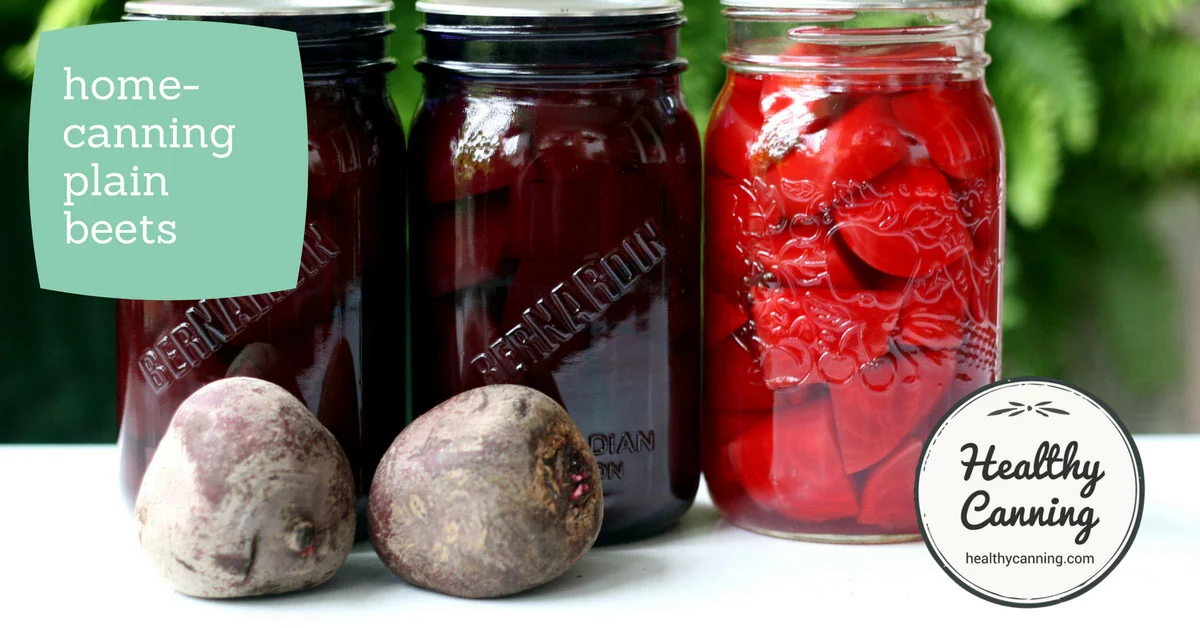

The practice of home food preservation has experienced a significant resurgence in recent years, driven by a growing interest in food security, self-sufficiency, and the desire for additive-free nutrition. Among the most versatile root vegetables for long-term storage is the beet, or beetroot, which offers a nutrient-dense addition to winter pantries. However, food safety experts from the United States Department of Agriculture (USDA) and the National Center for Home Food Preservation (NCHFP) emphasize that the preservation of plain beets requires strict adherence to scientifically validated protocols. Unlike high-acid fruits or pickled vegetables, plain beets are a low-acid food, meaning they lack the natural acidity required to inhibit the growth of dangerous pathogens in a low-oxygen environment. Consequently, the only safe method for canning plain beets is through the use of a pressure canner, a device capable of reaching the internal temperatures necessary to neutralize Clostridium botulinum spores.
The Critical Importance of Pressure Canning for Low-Acid Vegetables
The primary concern in home canning is botulism, a rare but potentially fatal paralytic illness caused by a nerve toxin produced by the bacterium Clostridium botulinum. These bacteria are found naturally in soil and are harmless in their spore form when exposed to oxygen. However, when placed in a sealed, low-acid, and moist environment—such as a jar of canned beets—the spores can germinate and release toxins.

Plain beets have a pH level that typically ranges between 5.3 and 6.6, placing them well within the "low-acid" category (defined as any food with a pH greater than 4.6). In a standard water bath canner, the temperature cannot exceed the boiling point of water (212°F or 100°C at sea level). While this temperature is sufficient to kill most yeasts, molds, and active bacteria, it is insufficient to destroy Clostridium botulinum spores, which can survive for hours in boiling water. Only a pressure canner can raise the internal temperature to 240°F (116°C), the threshold required to ensure the product is commercially sterile and safe for shelf storage.
Data from the Centers for Disease Control and Prevention (CDC) underscores the risks associated with improper canning. Between 1990 and 2012, at least 10 documented cases of botulism in the United States were directly linked to beets that had been processed in a water bath rather than a pressure canner. Experts warn that there is no "middle ground" or "shortcut" for plain beets; they must either be pressure canned, pickled in a high-vinegar solution, or frozen.
Chronology of Home Canning Safety Standards
The evolution of canning safety reflects a century of scientific advancement and public health refinement. The timeline of these standards illustrates how modern recommendations were forged through both laboratory testing and the observation of historical failures.
- 1926: The USDA issued its first major guidance on the necessity of pressure canning for non-acid vegetables. Farmers’ Bulletin No. 1471 explicitly warned against the water bath method for "baby beets," citing the risk of poisoning from botulinus bacteria. At this time, the recommended processing time for quart jars was 40 minutes at 10 pounds of pressure.
- 1940s (The WWII Era): Due to metal rationing during World War II, many households could not obtain pressure canners. This led to the dissemination of "acidified" methods by some university extensions, suggesting that adding a small amount of vinegar to beets would make them safe for water bath canning. Modern testing has since debunked this, proving that small amounts of vinegar do not sufficiently lower the pH to ensure safety without compromising the flavor and texture to the point of pickling.
- 1980s – 1990s: The USDA and the NCHFP standardized processing times based on modern jar designs and heat-penetration studies. The processing time for quarts was refined to 35 minutes, while pints were set at 30 minutes.
- 2015 – Present: The USDA "Complete Guide to Home Canning" remains the gold standard, reinforcing that all low-acid vegetables must be pressure canned. This guidance includes mandatory peeling to reduce the initial bacterial load (bioburden) before processing.
Pre-Processing and Preparation Protocols
To achieve a high-quality canned product that meets safety standards, the preparation of the beets is as critical as the canning process itself. The USDA recommends the "Hot Pack" method for beets because they are firm-fleshed and require pre-shrinking to ensure a proper vacuum seal and heat penetration.
Selection and Quantities
For a standard canning run, approximately 3 pounds (1.25 kg) of beets are required for every 1-quart (1-liter) jar. Ten medium-sized raw beets (roughly 3 inches or 9 cm in diameter) generally weigh about 4.5 pounds (2 kg). It is recommended to select beets that are uniform in size to ensure even pre-cooking. Beets larger than 3 inches in diameter are often fibrous and may result in a lower-quality final product.
The Cleaning and Peeling Mandate
Beets must be thoroughly washed to remove all soil. When preparing them for the initial boil, the taproot and at least one inch of the stem should be left intact. This prevents "bleeding"—the loss of the vibrant red pigment—during the pre-cooking stage.
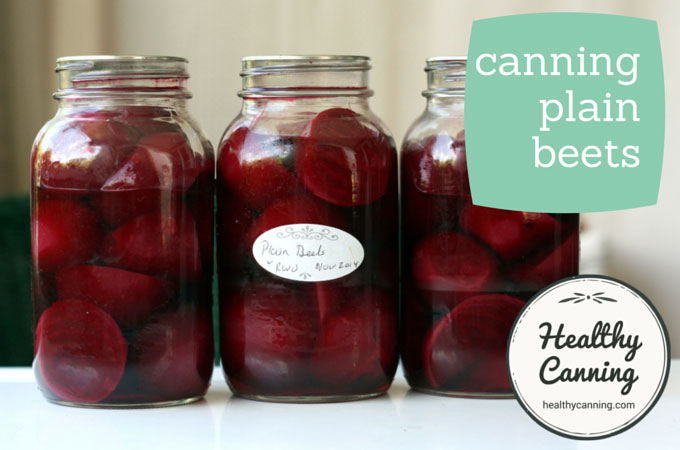
The beets are then boiled or steamed until the skins slip off easily, which usually takes 15 to 25 minutes depending on size. Once the skins are removed, the stems and roots are trimmed. The beets can then be sliced, cubed, or, if small (under 2 inches), left whole. A critical safety note from food scientists is that beets must be peeled. The skin of root vegetables carries the highest concentration of soil-borne bacteria; removing the skin significantly reduces the microbial load entering the jar.
Energy-Efficient Pre-Cooking Alternatives
While traditional boiling is the standard, two alternative methods for pre-cooking are recognized by enthusiasts, provided the beets remain hot when packed:
- Steam Pre-cooking: Using a multi-canner or steam basket can save water and energy.
- Pressure Pre-cooking: Utilizing a pressure cooker for the initial softening can save time. For a large batch (approx. 20 lbs), processing at 15 pounds for 3 minutes with a natural release typically makes the skins easy to remove.
Technical Specifications and Altitude Adjustments
The final safety of the product depends on the precise calibration of pressure and time. Processing times differ based on jar size, while the required pressure is determined by the altitude of the canner’s location. As altitude increases, the boiling point of water decreases, necessitating an increase in pressure to maintain the required internal temperature of 240°F.
Processing Times at 0–1,000 Feet (300 Meters)
- Half-litre (1 US Pint): 30 minutes at 10 lbs (weighted gauge) or 11 lbs (dial gauge).
- 1-litre (1 US Quart): 35 minutes at 10 lbs (weighted gauge) or 11 lbs (dial gauge).
Altitude Adjustments
For those living above 1,000 feet, the pressure must be increased to 15 lbs for weighted gauges. Failure to adjust for altitude is a common cause of under-processing, which can lead to spoilage or toxin production. A headspace of 1 inch (3 cm) must be maintained in the jar to allow for the expansion of the food and to ensure a proper vacuum seal during the cooling process.
Quality Indicators: The Chemistry of Color and Judging Criteria
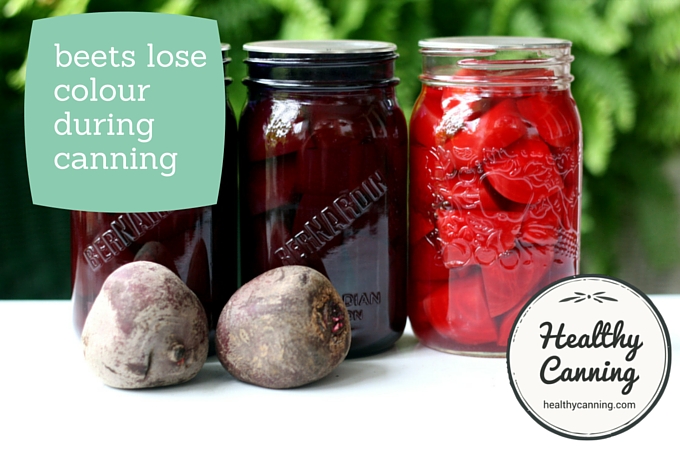
A common concern among home canners is the loss of color in processed beets. The red pigments in beets, known as betalaines, are heat-sensitive. During the high-temperature environment of a pressure canner, these pigments can undergo a chemical transformation into a colorless compound.
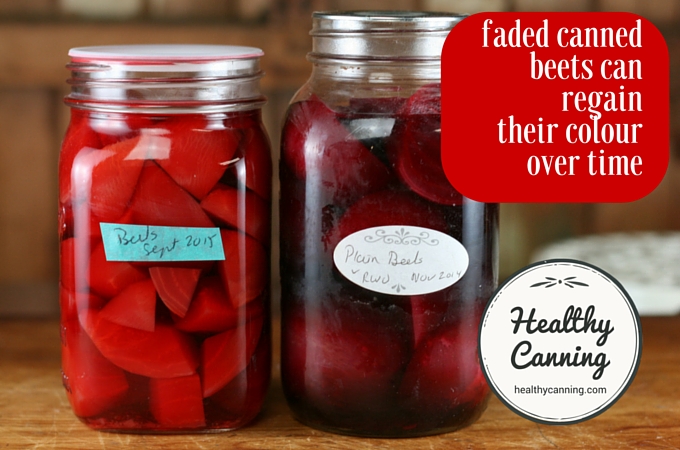
However, researchers at the Penn State Extension note that this reaction is often reversible. It is common for beets to appear pale immediately after they are removed from the canner, only for the deep red color to return after several days of storage at room temperature. To minimize initial color loss, varieties such as ‘Detroit Dark Red’ or ‘Formanova’ are recommended for their stable pigment profiles.

NCHFP Judging Criteria
For those who participate in agricultural fairs or simply wish to maintain the highest home standards, the NCHFP provides specific judging criteria for plain canned beets:
- Preparation: Must be peeled; uniform size and shape.
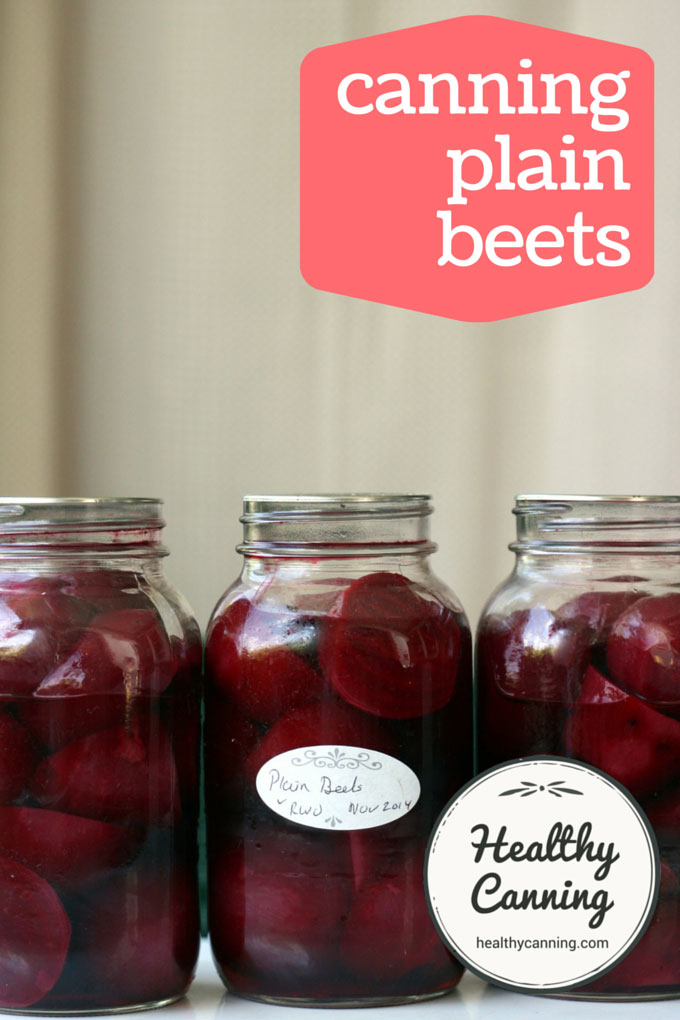
- Color: Deep, even red; no white rings or brownish tints.
- Clarity: The liquid should be a clear red, free of sediment, cloudiness, or traces of skin.
- Texture: Free from a fibrous or "woody" appearance.
Nutritional Analysis and Culinary Applications
Canned beets are not only a convenient pantry staple but also a nutritional powerhouse. A 250g serving (approximately one cup) of cooked, chopped beets provides:
- Calories: 124 kcal
- Dietary Fiber: 3.6g (supporting digestive health)
- Carbohydrates: 29.8g
- Protein: 4g
- Sodium: Naturally low at 2mg (if canned without added salt)
The salt added during the canning process is purely for seasoning and does not act as a preservative in pressure canning. This makes home-canned beets an excellent option for individuals on low-sodium diets.
From a culinary perspective, home-canned beets are highly versatile. They can be drained and tossed in olive oil or duck fat for rapid roasting, used as a base for traditional Borscht, or incorporated into modern dishes such as spicy beet and carrot curry with coconut milk. The convenience of having pre-cooked, shelf-stable beets allows for the preparation of healthy side dishes in minutes, even during the busiest winter months.
Broader Implications for Public Health and Food Security
The resurgence of home canning represents a significant shift in consumer behavior toward more localized and sustainable food systems. However, this shift necessitates a robust public education effort. The history of botulism cases linked to water-bathed beets serves as a reminder that traditional methods are not always the safest.
Public health officials emphasize that while home canning is an empowering skill, it is a science-based activity rather than a creative one. Deviating from tested recipes—such as canning beet greens with the roots in the same jar or omitting the peeling process—can have dire consequences. Beet tops (greens) must be canned separately using a specific procedure for leafy greens, as their density and heat-penetration rates differ from the root tubers.
By following the USDA’s rigorous pressure-canning standards, home preservers can enjoy the bounty of the harvest with total confidence. The combination of modern scientific validation and traditional preservation allows for a food supply that is both resilient and safe, bridging the gap between historical wisdom and contemporary safety requirements.