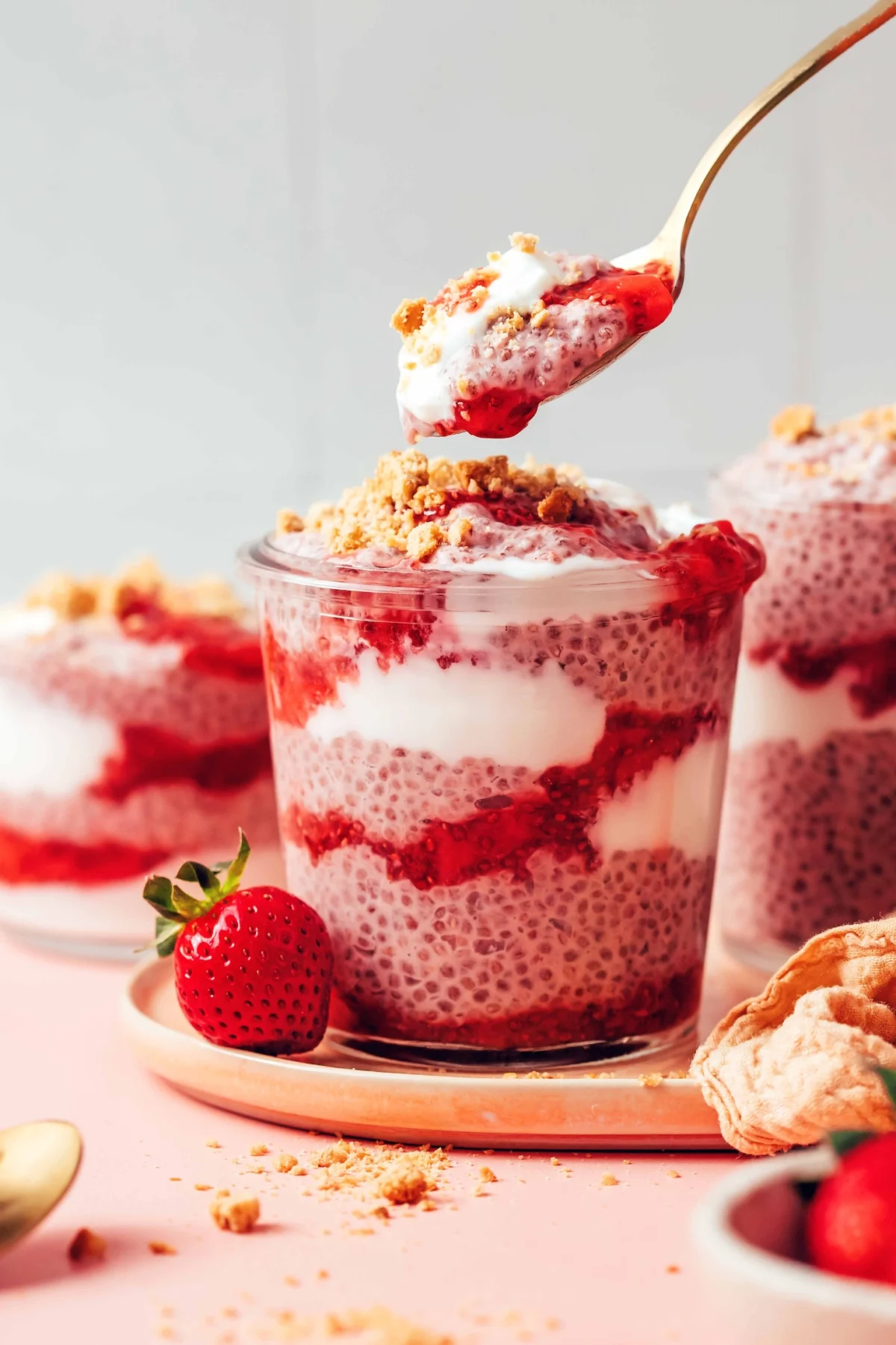

The modern culinary landscape continues to shift toward a paradigm where nutritional density and preparation efficiency intersect, a trend exemplified by the recent emergence of refined, plant-based breakfast solutions. Among these, the Strawberries & Cream Chia Pudding stands out as a sophisticated iteration of a health-food staple, utilizing a minimalist five-ingredient framework to achieve a flavor profile traditionally associated with indulgent desserts. By blending fresh fruit directly into a creamy base before the introduction of chia seeds, this recipe moves beyond the standard "overnight oats" or "plain chia" templates, offering a texture described as cloud-like and an aesthetic suitable for both daily meal prep and formal social gatherings. The dish represents a convergence of vegan dietary principles and gluten-free requirements, providing a high-fiber, nutrient-rich option that requires only five minutes of active labor.
Historical and Cultural Context of the Ingredients
To understand the significance of this specific pudding, one must examine the history of its primary components. Chia seeds, derived from the desert plant Salvia hispanica, were once a staple of the Aztec and Mayan diets. Historically prized for their ability to provide sustained energy, they were often referred to as "runner’s food." In the modern era, chia underwent a cultural transformation, moving from the novelty of "Chia Pets" in the 1980s to its current status as a recognized superfood. This transition was fueled by clinical research highlighting the seed’s unique hydrophilic properties—its ability to absorb up to twelve times its weight in liquid—which creates the gel-like consistency essential for pudding.

The pairing of strawberries and cream has a separate but equally deep-seated cultural lineage, most famously associated with the Wimbledon tennis tournament and British summertime. By adapting this classic flavor profile into a plant-based format using coconut milk and maple syrup, the recipe bridges the gap between traditional European gastronomy and contemporary wellness trends. This fusion addresses a growing consumer demand for "clean label" foods—products with minimal, recognizable ingredients that do not sacrifice the sensory experience of traditional comfort foods.
Chronological Preparation and Structural Development
The production of Strawberries & Cream Chia Pudding follows a specific chronological sequence designed to maximize flavor infusion and ensure structural integrity. Unlike traditional puddings that rely on heat-activated starches or eggs for thickening, this dish utilizes a cold-process method that preserves the heat-sensitive vitamins found in fresh fruit.
Phase One: The Infusion Base
The process begins with the creation of a "strawberry milk" base. Fresh strawberries are combined with a creamy liquid medium—typically canned light coconut milk for its high fat content and emulsifying properties—along with vanilla extract. The use of a blender at this stage is critical; it ensures that the strawberry fibers are fully integrated into the milk, creating a uniform pink hue and a consistent flavor throughout the pudding. Sweetening occurs at this stage, with maple syrup, agave, or stevia being introduced based on the consumer’s glycemic preferences.

Phase Two: The Incorporation of Chia
Once the liquid base is homogenized, chia seeds are added. A notable technical detail in this recipe is the "pulse" method. Rather than blending the seeds into a fine powder—which can release a bitter, grassy flavor—the seeds are briefly pulsed or stirred into the strawberry milk. This preserves the integrity of the seed’s outer hull, which is necessary for the development of the characteristic "tapioca-like" texture.
Phase Three: The Hydration Period
The final chronological step is the refrigeration phase, which requires a minimum of two hours, though overnight chilling is often recommended for a firmer set. During this window, the mucilage (a soluble fiber) on the surface of the chia seeds reacts with the strawberry-infused milk. This biochemical reaction transforms the liquid into a thick, spoonable pudding. This phase is entirely passive, making the dish an ideal candidate for "make-ahead" nutrition strategies.
Nutritional Profile and Supporting Data
A quantitative analysis of the Strawberries & Cream Chia Pudding reveals a profile that supports metabolic health and satiety. Based on a standard half-cup serving, the nutritional breakdown is as follows:

- Caloric Content: 127 calories
- Total Fat: 8.6 grams (with 4.7 grams of saturated fat, primarily from medium-chain triglycerides in coconut milk)
- Carbohydrates: 11.9 grams
- Dietary Fiber: 4.3 grams
- Protein: 2.5 grams
- Micronutrients: 20 mg of Vitamin C (approximately 22% of the Daily Value) and 77 mg of Calcium.
The fiber-to-calorie ratio is particularly significant. With 4.3 grams of fiber per serving, the pudding provides nearly 15-20% of the recommended daily intake for adults in a relatively low-calorie package. The presence of both soluble and insoluble fiber from the chia seeds and strawberries aids in slowing glucose absorption, preventing the insulin spikes often associated with conventional breakfast cereals or sweetened yogurts. Furthermore, the inclusion of 155 mg of potassium and 1.8 mg of iron enhances the dish’s status as a functional food rather than a mere snack.
Culinary Implications and Presentation Strategies
While the base recipe is designed for simplicity, its culinary implications extend to more complex presentations. Professional food stylists and home chefs alike have noted that the pudding serves as a versatile foundation for layering.
The integration of a strawberry compote—a reduction of fruit and a small amount of sweetener—adds a concentrated acidity that cuts through the richness of the coconut milk. Toppings such as dairy-free yogurt or coconut whipped cream introduce secondary textures, while crushed graham crackers or toasted nuts provide a necessary textural contrast (crunch) to the soft pudding.

In a social or hospitality context, serving the pudding in clear glass jars has become a preferred method of presentation. This allows the vibrant natural color of the strawberry-infused chia to be visible, appealing to the visual aspect of the dining experience. The dish’s stability at room temperature for short periods also makes it a viable option for spring and summer brunches, where traditional dairy-based puddings might pose food safety or consistency risks.
Market Trends and Consumer Response
The rise of recipes like the Strawberries & Cream Chia Pudding is reflective of broader shifts in the global food market. Market research indicates a significant increase in the "Ready-to-Eat" (RTE) healthy snack segment, which is projected to grow at a compound annual growth rate (CAGR) of over 5% through 2030. Consumers are increasingly seeking out "functional breakfasts" that can be prepared in bulk, reducing the cognitive load of morning routines.
Statements from plant-based nutritionists suggest that the success of this recipe lies in its "minimalist" philosophy. By limiting the ingredient list to five items, the recipe lowers the barrier to entry for individuals who may be intimidated by complex vegan cooking. This approach aligns with the "back-to-basics" movement in nutrition, which prioritizes whole foods over highly processed meat or dairy substitutes.

Furthermore, the environmental impact of such a dish is notably lower than its dairy-based counterparts. The production of coconut milk and chia seeds generally requires less water and land than bovine dairy farming, making this pudding a choice that resonates with the growing demographic of "climatarians"—consumers who make food choices based on environmental sustainability.
Broader Impact on Public Health and Lifestyle
From a public health perspective, the promotion of high-fiber, fruit-integrated snacks is a strategic response to the prevalence of ultra-processed foods in the Western diet. The Strawberries & Cream Chia Pudding offers a "healthier treat" alternative that satisfies the biological craving for sweetness without the detrimental effects of refined sugars and artificial additives.
The psychological benefit of such a dish should not be overlooked. The ability to consume a meal that "tastes like dessert" for breakfast can improve long-term adherence to healthy eating patterns. By reframing "diet food" as something luxurious and "cloud-like," recipes of this caliber help dismantle the perception that nutritional discipline requires sensory deprivation.

In conclusion, the Strawberries & Cream Chia Pudding is more than a simple recipe; it is a manifestation of modern dietary evolution. It successfully combines ancient botanical wisdom with contemporary flavor profiles and efficient preparation techniques. As the demand for plant-based, nutrient-dense, and aesthetically pleasing food continues to rise, this dish serves as a benchmark for how minimalist ingredients can produce maximalist results in both health and flavor. Whether utilized as a meal-prep staple or a sophisticated party dessert, it represents a versatile and scientifically sound addition to the modern pantry.