
The question of whether vegetable and seed oils are detrimental to health has ignited a fierce debate, migrating from the fringes of social media to mainstream discourse and even bestseller lists. Fuelled by popular movements such as the carnivore diet, terms like "toxic sludge," "motor oil," and "the hateful eight" have become common parlance among critics who attribute chronic diseases to these widely consumed cooking fats. This contentious discussion is not entirely new; the merits of vegetable oils have been debated since their initial market introduction. However, the current intensity, amplified by social media algorithms and wellness influencers, demands a clear, evidence-based examination. This article aims to dissect the scientific consensus, separate fact from sensationalism, and provide a nuanced understanding of vegetable and seed oils within the broader context of human nutrition.
The Historical Context of Fat Debates
The debate over dietary fats has a long and often contradictory history. For much of the 20th century, saturated fats, predominantly found in animal products like butter, were demonized by health authorities, who linked them directly to heart disease. This era saw the rise of hydrogenated vegetable oils and margarine, marketed as healthier alternatives. Yet, the subsequent discovery of industrial trans fats – a byproduct of the hydrogenation process – and their undeniable harm to cardiovascular health, led to a public health reversal and a ban by the Food and Drug Administration (FDA) on their artificial inclusion in foods by 2018. This historical trajectory of dietary advice, sometimes flawed, has fostered a climate of distrust, making the public susceptible to new claims, including the current accusations against vegetable oils. Critics often invoke this past to argue that vegetable oils are merely the latest iteration of "unhealthy" fats promoted by profit-driven industries. They contend that while animal fats have been a staple of human diets for millennia, vegetable oils are a relatively recent invention, designed to monetize cheap-to-grow crops at the expense of public health.
What Exactly Are "Vegetable Oils"?
Before delving into their impact, it is crucial to define what constitutes a "vegetable oil" in this context. Often used interchangeably with "seed oils," these fats are derived from the seeds of various plants. The most common varieties found in typical grocery stores include:
- Canola oil (from rapeseed)
- Corn oil
- Soybean oil
- Sunflower oil
- Safflower oil
- Cottonseed oil
- Grapeseed oil
- Rice bran oil
It is important to distinguish these from other plant-based oils that are often mistakenly lumped into the "vegetable oil" category. Oils like extra virgin olive oil, avocado oil, palm oil, and coconut oil are derived from the fruit of their respective plants, not the seeds. These fruit-derived oils generally have different fatty acid profiles and processing methods, which significantly impact their nutritional properties.
The Manufacturing Process: From Seed to Shelf
The primary concern surrounding many vegetable oils stems from their industrial processing. Unlike fruit-derived oils, such as olive oil, which can be extracted relatively easily from naturally fatty olives through mechanical pressing, most seed oils come from plants with a low inherent fat content. For example, a cup of green olives contains approximately 20 grams of fat, whereas a cup of corn offers only about 2 grams. To extract a usable quantity of oil from these less fatty sources, manufacturers employ an extensive multi-step process known as refining, bleaching, and deodorizing (RBD):
- Crushing and Pre-pressing: Seeds are cleaned, dehulled, and then crushed or pressed to extract some initial oil.
- Solvent Extraction: For maximum yield, the remaining seed meal is typically treated with chemical solvents, most commonly hexane, to extract the last traces of oil.
- Degumming: Water is added to remove phospholipids and gums, which can cause cloudiness and reduce shelf life.
- Refining (Neutralization): The oil is treated with an alkali solution (e.g., sodium hydroxide) to remove free fatty acids, which contribute to rancidity and undesirable flavors. This step also removes some beneficial compounds.
- Bleaching: The oil is passed through activated clay or other adsorbing agents to remove pigments, chlorophyll, and other impurities, resulting in a lighter color.
- Deodorizing: The oil is subjected to high-temperature steam under vacuum to remove volatile compounds that contribute to unwanted odors and flavors. This process also significantly reduces the levels of heat-sensitive phytonutrients.
During this rigorous process, naturally occurring health-promoting polyphenols, antioxidants, and other stabilizing nutrients are largely stripped away. Crucially, the high temperatures and chemical treatments can alter the chemical structure of some unsaturated fats, leading to the formation of trans fatty acids. While the 2018 FDA ban targeted artificially produced trans fats in processed foods, small amounts can still be generated during the high-heat processing of oils, or when oils are repeatedly heated, such as in deep fryers in restaurants.
To label these processed oils as "toxic" might be an overstatement, especially for moderate home use. However, the scientific consensus is clear that artificial trans fats are harmful, and their minimization in the diet is a key public health objective. The loss of protective compounds and the potential for trans fat formation during industrial processing are valid concerns that differentiate refined vegetable oils from their minimally processed counterparts.
Expert Recommendations: Sorting Through the Fats
Navigating the array of cooking oils available can be daunting. Leading nutrition organizations, including Precision Nutrition, offer frameworks to guide consumers. These typically categorize fats based on their processing, fatty acid profiles, and established health impacts.
A common approach involves categorizing fats into "Eat More," "Eat Some," and "Eat Less" groups.
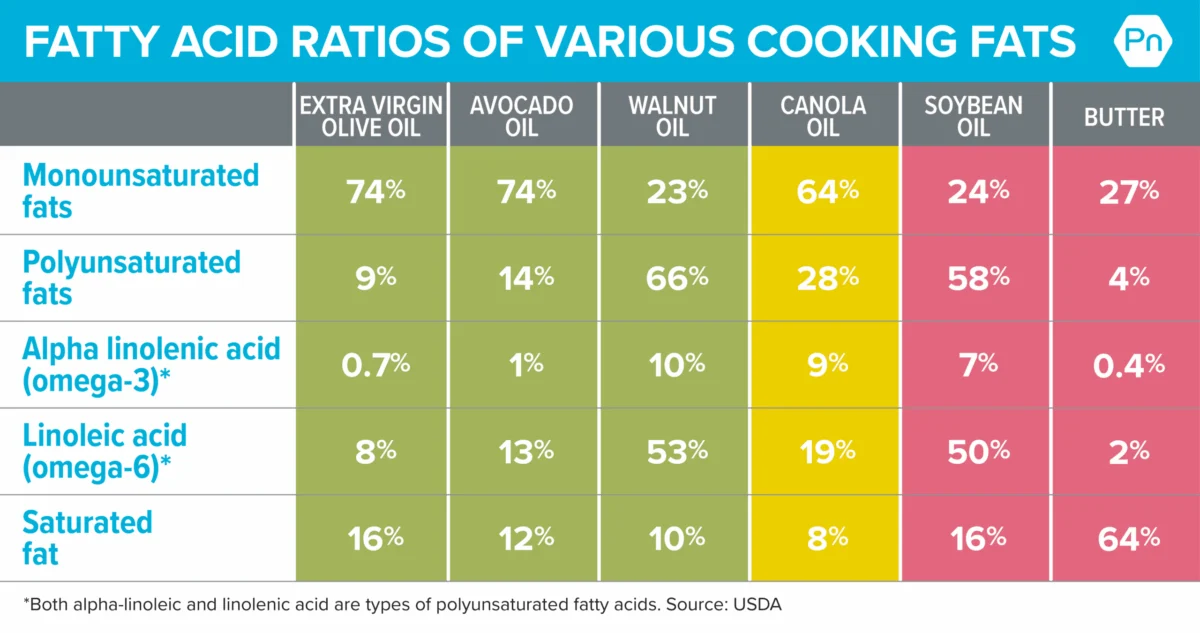
- "Eat More": This category usually includes minimally processed oils rich in monounsaturated fatty acids (MUFAs) and certain polyunsaturated fatty acids (PUFAs), as well as whole food sources of healthy fats. Examples are extra virgin olive oil, avocado oil, and walnut oil. These are generally supported by extensive research demonstrating health benefits.
- "Eat Some": This group often includes certain expeller-pressed vegetable oils like canola oil, high-oleic sunflower, and safflower oils. "Eat some" implies that these foods, when consumed in reasonable amounts, are likely health-neutral or may offer minor benefits. Their less controversial fatty acid profiles and often lower processing make them preferable to more refined alternatives. Dark chocolate is another example often placed here, offering some benefits in small quantities.
- "Eat Less": This category typically encompasses highly refined vegetable oils, butter, and other fats high in saturated fat. The recommendation to "eat less" suggests that these should be consumed sparingly due to potential negative health implications when eaten in larger quantities or as a primary fat source.
The specific placement of certain oils can be contentious. Some argue that expeller-pressed canola oil, for instance, should be in the "eat more" category alongside olive oil due to its omega-3 content, while others insist all vegetable oils belong in "eat less" and butter should be re-elevated. Understanding the scientific rationale behind these recommendations is key.
Head-to-Head: A Deep Dive into Common Cooking Fats

To illuminate the distinctions, let’s examine some critical comparisons:
1. Extra Virgin Olive Oil (EVOO) vs. Expeller-Pressed Canola Oil
Both EVOO and expeller-pressed canola oil represent less refined options within their respective categories, making them suitable for comparison.
-
The Case for Extra Virgin Olive Oil (EVOO):
EVOO is extracted by mechanically grinding and pressing olives without the use of heat or chemical solvents. This minimal processing preserves the olive fruit’s original polyphenols – powerful plant-based compounds known for their anti-inflammatory and antioxidant properties, protecting cells from damage. EVOO is exceptionally rich in heart-healthy monounsaturated fatty acids (MUFAs).
Crucially, EVOO boasts an unparalleled body of research supporting its health benefits. Numerous studies link its consumption to a reduced risk of cardiovascular disease, stroke, certain cancers (breast, colorectal), type 2 diabetes, and Alzheimer’s disease. For example, a study involving over 22,000 adults in Southern Italy found that those consuming more than two tablespoons of olive oil daily had a 20% lower mortality rate over 13 years compared to those consuming less than one tablespoon. Furthermore, EVOO consumption is associated with favorable lipid profiles, including reductions in LDL ("bad") cholesterol, particularly when it replaces saturated fats.Smoke Point Misconception: Historically, EVOO’s relatively low smoke point (350-410°F or 175-210°C) led to recommendations against cooking with it. However, modern research has largely debunked this concern. The high concentration of MUFAs and the presence of polyphenols in EVOO make it remarkably stable under heat. One study that heated various oils to 464°F (240°C) and then held them at 356°F (180°C) for several hours found EVOO to be more stable than any other oil tested, including canola oil. Therefore, EVOO is suitable for most home cooking methods, including sautéing and roasting.
-
The Case for Expeller-Pressed Canola Oil:
Canola oil, a Canadian-bred hybrid of the rapeseed plant (hence "Canola" from "Canada oil"), is one of the more affordable options. Expeller-pressed canola oil is produced by mechanically pressing rapeseed without chemical solvents or excessive heat, helping to preserve some beneficial compounds. It stands out among common vegetable oils for its richness in MUFAs and alpha-linolenic acid (ALA), a plant-based omega-3 fatty acid. Additionally, canola oil contains phytosterols, plant compounds that can help improve blood cholesterol levels, especially when used to replace saturated fats like butter. -
The Winner: Extra Virgin Olive Oil.
The overwhelming body of evidence supporting EVOO’s health-promoting qualities, coupled with its superior fatty acid profile and high antioxidant content, makes it the clear winner. Avocado oil, with its similar MUFA richness and antioxidant profile, is another excellent choice in the "eat more" category.
However, expeller-pressed canola oil remains a good budget-friendly option. Its neutral flavor also makes it a popular choice for baking, where EVOO’s distinct taste might not be desired. When consumed in moderation, expeller-pressed canola oil is considered health-neutral, and potentially somewhat beneficial, making it a reasonable component of a healthy diet.
2. Expeller-Pressed Canola Oil vs. Refined Canola Oil
This comparison highlights the profound impact of processing methods.
-
Expeller-Pressed Canola Oil: As discussed, this method mechanically squeezes oil from seeds, avoiding harsh chemicals and high heat. This helps to retain beneficial compounds like alpha-linolenic acid and phytosterols, contributing to a better overall nutritional profile.
-
Refined Canola Oil: The conventional refining process (RBD) significantly alters the oil. It removes a portion of the protective alpha-linolenic acid and can introduce small amounts of unhealthy trans fatty acids. This results in a product with a proportionally lower omega-3 content and a higher omega-6 content, albeit still with a better overall fatty acid balance than some other refined vegetable oils like soybean oil.
-
The Winner: Expeller-Pressed Canola Oil (by a small margin).
While the difference in health impact might be subtle for moderate consumption, expeller-pressed canola oil is preferable due to its less invasive processing and better preservation of beneficial compounds. The critical takeaway here is that processing matters, even within the same oil type.
The Omega-6 Fatty Acid Debate: Inflammatory or Essential?
A central tenet of the "seed oil is toxic" argument revolves around omega-6 fatty acids, specifically linoleic acid, which are abundant in many vegetable oils. The claim is that the typical Western diet, heavily skewed towards a high omega-6 to omega-3 ratio (often 16:1 to 20:1, compared to an ancestral 1:1 to 4:1), promotes chronic inflammation, thereby increasing the risk of diseases like diabetes, obesity, and cardiovascular conditions.
-
Scientific Nuance: While omega-6 fatty acids are precursors to pro-inflammatory signaling molecules (eicosanoids), they also produce anti-inflammatory ones. The body needs both omega-6 and omega-3 fatty acids for various vital functions, including immune response, brain health, and cell membrane integrity. Both are essential, meaning the body cannot produce them and they must be obtained from the diet.
Recent scientific consensus has largely shifted away from the simplistic view that all omega-6s are inherently inflammatory. Research has shown that when omega-6 fats are consumed within the context of whole foods – such as nuts, seeds, and avocados – they are often associated with health benefits, including reduced blood cholesterol and even reductions in inflammation. A 2019 review in the American Heart Association journal Circulation concluded that, if anything, consuming omega-6 fats was associated with a reduced risk of stroke, heart disease, and early death. Harvard Health similarly published an article titled "No need to avoid healthy omega-6 fats," reflecting this evolving understanding. -
The Critical Distinction: Whole Foods vs. Refined Oils: The key difference lies in the "food matrix." Nuts and seeds, naturally rich in omega-6s, come packaged with a complex array of health-protective components: fiber, polyphenols, protein, vitamins, and minerals. These compounds can mitigate potential pro-inflammatory effects and provide synergistic health benefits. In contrast, highly refined vegetable oils are essentially isolated fatty acids, largely stripped of these protective co-factors. Without these natural buffers, the polyunsaturated fats in refined oils are more susceptible to oxidation, which is a process that can contribute to cellular damage and inflammation.

Refined Vegetable Oil vs. Butter: The Battle of the Fats
This comparison often generates the most heated exchanges online, representing a clash between proponents of traditional animal fats and those advocating for plant-based alternatives.
-
The Case for Butter:
Butter, an ancient dietary staple, is rich in saturated fat. Its proponents argue that saturated fats have been unfairly maligned, pointing to the disastrous advice of the mid-20th century that encouraged replacing butter with trans-fat-laden margarine. Some also claim that the evidence linking saturated fat to heart disease is weak.
However, current dietary guidelines, including those from the U.S. Dietary Guidelines and the American Heart Association, recommend limiting saturated fat intake to less than 10% of total daily calories. This is based on robust evidence indicating that excessive saturated fat consumption can raise LDL cholesterol levels, a known risk factor for heart disease. For example, replacing just 5% of dietary saturated fats with monounsaturated fats has been shown to reduce heart disease risk by 15%, and with polyunsaturated fats (including from vegetable oils), by 10%.
Not all saturated fats are created equal in their impact on cholesterol. In some dairy products, a "milk fat globule membrane" (MFGM) surrounds the saturated fats, potentially limiting their cholesterol-raising effects. However, butter is relatively low in this protective membrane compared to other full-fat dairy items like milk, cream, or cheese, and consequently tends to raise blood cholesterol more. A single tablespoon of butter contains about 7 grams of saturated fat, roughly one-third of the recommended daily limit for someone on a 2000-calorie diet. While butter doesn’t need to be eliminated, moderation is advisable. -
The Case for Refined Vegetable Oils (and the Oxidation Problem):
Polyunsaturated fats, due to their chemical structure, are inherently less stable and more prone to oxidation than saturated or monounsaturated fats. As previously discussed, the refining process strips away many protective phytochemicals and antioxidants, further increasing their susceptibility to oxidation. The theory posits that consuming these oxidized fats increases oxidative stress and inflammation in the body, potentially elevating the risk of various chronic health conditions. There is some evidence suggesting that diets high in polyunsaturated fats, particularly from highly refined vegetable oils, are associated with increased markers of oxidized blood lipids and lipid peroxidation.
However, for most people, the primary source of problematic refined vegetable oils is not home cooking, but ultra-processed foods. These industrial products (e.g., cookies, chips, crackers, frozen dinners, many sauces, packaged snacks) often contain refined vegetable oils that have undergone multiple rounds of processing and repeated heat exposure during manufacturing, further increasing their oxidation. Beyond the oils themselves, ultra-processed foods are typically loaded with other potentially harmful ingredients like added sugars, sodium, and artificial additives, while being severely lacking in beneficial nutrients such as fiber, vitamins, minerals, and phytonutrients. They are also notoriously calorie-dense, highly palatable, and designed to be difficult to stop eating, contributing significantly to obesity risk.
Extensive research links high consumption of ultra-processed foods to a myriad of health problems, including:- Increased risk of premature death
- Obesity and metabolic syndrome
- Cardiovascular disease and hypertension
- Type 2 diabetes
- Certain cancers
- Depression and anxiety
- Irritable bowel syndrome (IBS)
Therefore, while the oxidation of refined oils is a concern, it’s often compounded by the overall poor nutritional profile and addictive nature of the ultra-processed foods they are found in. A reasonable approach is to limit ultra-processed foods to about 20% of one’s total intake, focusing the remaining 80% on minimally processed whole foods. This strategy naturally reduces refined vegetable oil intake to safer levels. Moreover, consuming refined oils in the context of a diet rich in colorful plants, fiber, phytochemicals, and antioxidants may help offset the concern of oxidation.
-
The Winner: A Draw.
Ultimately, both refined vegetable oils and butter should be consumed in moderation, and neither is inherently "health-promoting" as a primary fat source. Refined vegetable oils are high in polyunsaturated fats and stripped of protective compounds, with some debate over their omega-6 contribution to inflammation. They also contain small amounts of trans fats from processing. Butter, while less processed and without the omega-6 concerns, is high in saturated fat which, in excess, can be problematic for cholesterol levels, especially given its low content of the protective milk fat globule membrane. Both have a place in a balanced diet but require mindful consumption.
Holistic Dietary Advice: Beyond the Oil Bottle
The discussion around cooking fats reveals a broader truth in nutrition: context, processing, and the overall dietary pattern are paramount.
-
Prioritize Minimally-Processed Whole Foods: The cornerstone of a healthy diet should be whole and minimally processed foods. This includes natural sources of healthy fats like nuts, seeds, avocados, olives, and fatty fish (e.g., salmon). These foods are rich in health-promoting monounsaturated and omega-3 fats, along with fiber, protein, vitamins, minerals, and a vast array of antioxidants. Ultra-processed foods, conversely, are typically deficient in these beneficial components and engineered for hyper-palatability, making them easy to overconsume. To identify highly processed foods, consider: Is it recognizable as its original food? Does it have a long ingredient list with unfamiliar names? Could you make it in a home kitchen with standard ingredients? If the answer is "no" to most of these, it’s likely highly processed.
-
Limit Deep-Fried Foods: Regardless of the type of fat used, deep-frying involves extreme heat that can degrade fats, create unhealthy compounds, and increase the calorie density of foods. All deep-fried foods should be categorized in the "eat less" column.
-
Get Most of Your Fats from Food, Not Just Oils: While quality cooking oils like EVOO have health benefits, they are concentrated sources of calories and lack the fiber and micronutrients found in whole foods. As a general rule, prioritize obtaining most of your dietary fats from whole food sources. Avocados, nuts, seeds, and olives provide a more complete nutritional package. Aiming for 1-3 servings of oils or butter per day as part of cooking or dressing is a reasonable guideline, ensuring fats are integrated into a nutrient-dense diet rather than consumed in isolation.
Conclusion: Nuance Over Dogma
The debate surrounding vegetable and seed oils is complex, reflecting the intricate nature of nutrition science itself. While some claims of "toxicity" are exaggerated and lack robust scientific backing, concerns regarding the industrial processing of refined vegetable oils and their prevalence in ultra-processed foods are legitimate.
Extra virgin olive oil, cold-pressed avocado oil, and walnut oil emerge as superior choices due to their minimal processing, favorable fatty acid profiles, and rich antioxidant content, supported by extensive research. For budget-conscious consumers, expeller-pressed canola oil and high-oleic sunflower/safflower oils offer reasonable alternatives.
Ultimately, dietary health is not determined by vilifying or elevating a single ingredient. It is a mosaic built on the overall quality of one’s eating patterns. Prioritizing minimally processed whole foods, moderating intake of refined oils and saturated fats, and limiting ultra-processed foods will yield far greater health dividends than fixating on an isolated debate over "seed oils." Informed choices, guided by scientific consensus rather than social media sensationalism, empower individuals to build sustainable, health-promoting dietary habits.