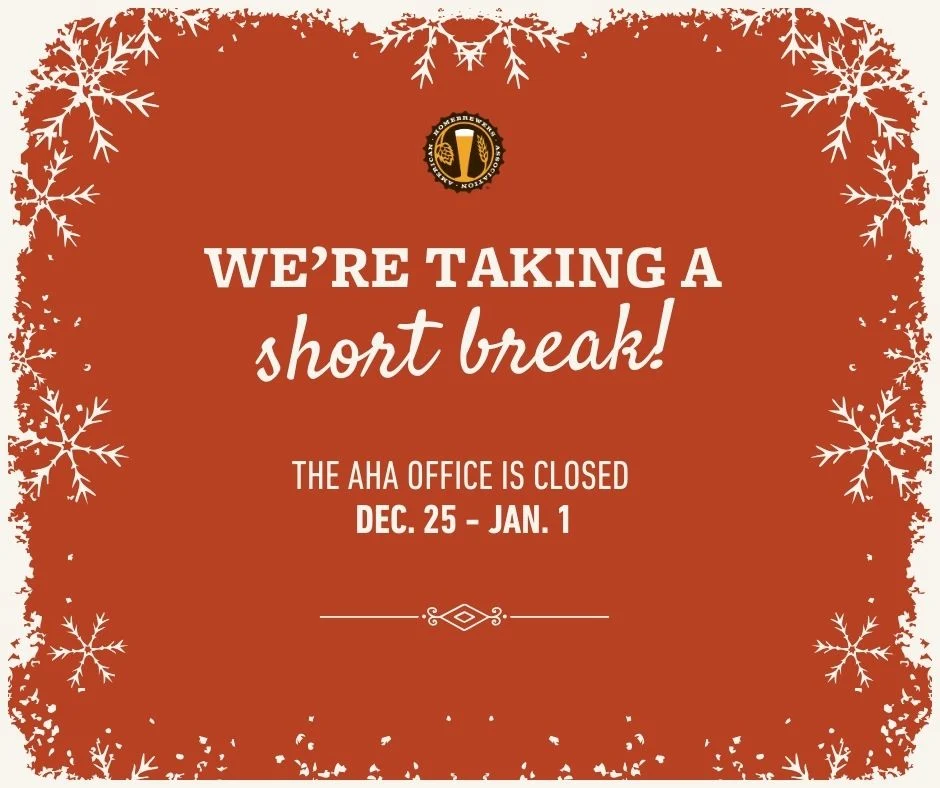

The American Homebrewers Association (AHA) has officially announced a scheduled operational hiatus commencing on December 25, 2025, with a planned resumption of all organizational activities on January 2, 2026. This week-long closure is intended to allow the association’s professional staff a period of rest and recuperation following a year of significant activity within the craft beverage sector. During this timeframe, the organization’s physical headquarters and standard member support channels will be inactive, though digital resources and community forums are expected to remain accessible for the global network of fermentation enthusiasts.
The decision reflects a broader trend among non-profit trade organizations and advocacy groups within the craft beer industry to prioritize staff well-being and organizational recalibration during the winter solstice period. For the AHA, a division of the Brewers Association (BA), this transition period serves as a vital bridge between the heavy administrative demands of the autumn festival season and the strategic rollout of new educational content and legislative advocacy programs slated for the first quarter of 2026.
Historical Context and the Evolution of the AHA
To understand the significance of the American Homebrewers Association’s current standing, one must look back to its inception in 1978. Founded by Charlie Papazian in Boulder, Colorado, the AHA was established at a time when homebrewing was still technically illegal under federal law in the United States. The organization’s primary mission was to provide a unified voice for hobbyists and to advocate for the decriminalization of the craft.
The pivotal moment for the organization occurred later that year when President Jimmy Carter signed H.R. 1337, which included an amendment creating a federal exemption for beer brewed at home for personal or family use. This legislative victory laid the groundwork for the modern craft beer revolution. Since its founding, the AHA has grown from a small group of enthusiasts into a massive professional body representing over 37,000 members. Its influence extends beyond simple hobbyist support, acting as a foundational pillar for the entire American craft brewing industry, as many of the nation’s most successful commercial brewers began their careers in their kitchens and garages.
Throughout the decades, the AHA has successfully navigated various economic cycles and shifts in consumer behavior. The year 2025 has been particularly active for the association, characterized by a renewed focus on technical education and the integration of modern fermentation technologies. The year-end closure marks a conclusion to a calendar year defined by the successful execution of Homebrew Con and the National Homebrew Competition, the world’s largest international competition for amateur brewers.
Operational Timeline and Member Services Impact
The closure is structured to minimize disruption to the membership while ensuring a complete cessation of administrative labor. The timeline is as follows:
- December 24, 2025: Final business day of the calendar year; administrative offices close at the end of the business day.
- December 25, 2025 – January 1, 2026: Full operational hiatus. Email correspondence, membership processing, and technical support inquiries will be queued for review upon return.
- January 2, 2026: Reopening of offices and resumption of full services, including the dispatch of membership materials and the publication of new digital content.
While human-led support will be unavailable, the AHA’s extensive digital library, which includes decades of "Zymurgy" magazine archives, brewing tutorials, and recipe databases, will remain live. The association has invested heavily in its digital infrastructure over the last five years, ensuring that the "AHA Forum" and "Brewers Publications" resources can function autonomously during periods of staff absence. This ensures that brewers who receive new equipment or ingredients during the holiday season can still access the technical data required for their holiday "brew days."
The Economic and Social Impact of Homebrewing in 2025
The homebrewing hobby remains a significant contributor to the broader American economy. According to data released by the Brewers Association, there are approximately 1.1 million homebrewers in the United States who produce more than 1.4 million barrels of beer annually. This production accounts for roughly 1% of the total beer production in the U.S., a staggering figure considering it is produced entirely by amateurs.
The economic footprint of these hobbyists is substantial, supporting a vast network of local homebrew supply shops (LHBS) and online retailers. The holiday season typically represents a peak period for these businesses. Industry analysts suggest that the final quarter of the year can account for up to 35% of annual revenue for equipment manufacturers, as consumers purchase starter kits, advanced fermentation vessels, and automated brewing systems.
The AHA plays a critical role in this ecosystem by providing the educational framework that converts casual enthusiasts into lifelong hobbyists. By maintaining high standards of technical accuracy and promoting safety in the brewing process, the association helps sustain the market for high-quality ingredients and specialized hardware.
Advocacy and Legislative Outlook for 2026
One of the primary reasons for the scheduled hiatus is to prepare the AHA’s advocacy team for the 2026 legislative sessions. Despite the federal legalization of homebrewing in 1978, state-level regulations continue to present challenges. It was not until 2013 that homebrewing was legal in all 50 states, with Alabama and Mississippi being the final jurisdictions to pass enabling legislation.
However, the legal landscape remains complex. Current advocacy efforts are focused on several key areas:
- Transport Laws: Clarifying the legality of transporting homebrewed beverages to competitions and club meetings across state lines.
- Homebrew Pouring Rights: Expanding the ability of homebrewers to share their creations at non-profit festivals and charitable events.
- Shipping Regulations: Working with carriers and legislators to allow for the legal shipping of homebrew samples for the purpose of competition and peer review.
The AHA’s Government Affairs department uses the year-end break to finalize their strategy for engaging with state legislators in the upcoming year. The goal is to further harmonize state laws with federal standards, ensuring that hobbyists have the same rights regardless of their geographic location.
Technical Trends and Content Evolution
As the association looks toward 2026, several technical trends are expected to dominate the discourse. The rise of "low-and-no" alcohol brewing has become a major focus for the AHA, reflecting broader consumer trends toward health and wellness. Developing techniques for producing high-quality non-alcoholic beer at home requires sophisticated knowledge of yeast management and fermentation control, areas where the AHA provides essential guidance.
Additionally, the integration of smart technology into the brewing process continues to accelerate. From Wi-Fi-enabled hydrometers to automated mash tun controllers, the modern homebrewer is increasingly reliant on data. The AHA has responded by enriching its content with deep dives into software integration and digital record-keeping, helping brewers achieve greater consistency in their final products.
The "Zymurgy" publication, the official journal of the AHA, is also slated for a refresh in the coming year. As print media continues to evolve, the association is exploring hybrid models that combine the tactile experience of a physical magazine with interactive digital supplements, such as video demonstrations and live Q&A sessions with master brewers.
Organizational Wellness and Industry Standards
The decision to close for a full week is also a statement on organizational culture. The craft beverage industry, while often viewed as a "passion-led" sector, is subject to high levels of burnout and labor intensity. By formalizing a winter recess, the AHA and the Brewers Association are setting a standard for other industry bodies to follow.
Mental health and work-life balance have become central themes in the Brewers Association’s "Human Resources" guidelines for small breweries. By practicing these principles at the administrative level, the AHA reinforces its commitment to a sustainable industry model. This hiatus is not merely a break in service but a strategic investment in the long-term productivity of the team responsible for supporting tens of thousands of members.
Conclusion and Future Outlook
The American Homebrewers Association enters its year-end hiatus at a time of relative stability for the hobby. While the explosive growth seen during the mid-2010s has leveled off, the community has become more professionalized and technically proficient. The "refresh and recharge" period announced by the AHA leadership is a necessary step in maintaining the momentum of the organization.
As the team prepares for 2026, the focus remains clear: protecting the rights of homebrewers, fostering a diverse and inclusive community, and providing the highest quality educational resources available. The return of the staff in early January will signal the start of a new cycle of competition, collaboration, and, most importantly, the continued celebration of the art and science of fermentation. Members are encouraged to use the interim period to plan their 2026 brewing calendars and to utilize the vast digital archives that remain the gold standard for brewing knowledge globally.