
Today’s technological landscape offers an unprecedented array of tools for personal health monitoring, marking a significant departure from historical methods of self-assessment. From the rudimentary observations of ancient societies to the sophisticated algorithms of modern wearables, humanity’s quest to understand and optimize its physical state has undergone a profound transformation. Where early humans depended on instinct, observable physical changes, and the direct experience of their bodies to gauge well-being, contemporary individuals can now access real-time data on metrics such as heart rate, step count, exercise intensity, and sleep quality, often consolidated within a single, sleek device. This evolution represents a fundamental shift in how we perceive and interact with our own physiology, offering a bridge between subjective feelings and objective, quantifiable measurements.
The Evolution of Self-Assessment: From Intuition to Algorithms
For millennia, human self-assessment was a deeply intuitive process. Our ancestors navigated their health primarily through visceral feelings: hunger, fatigue, pain, and observable changes in their physical capabilities. A hunter-gatherer would understand their fitness by their ability to pursue game, their stamina during long treks, or their recovery after strenuous activity. Sleep quality was judged by how rested one felt, and diet by the availability of food and the body’s immediate reactions to it. This sensory-driven approach, while lacking in precise data, fostered a profound connection to the body’s internal signals.
The advent of modern science and medicine began to introduce objective measures, such as thermometers and scales, but these were typically confined to clinical settings. The true revolution in personal health monitoring began to accelerate in the late 20th and early 21st centuries with the miniaturization of technology and the rise of digital connectivity. Early pedometers offered a simple count of steps, a tangible metric for physical activity. The 1980s saw the introduction of consumer heart rate monitors, initially bulky chest straps, which provided a new layer of physiological insight for athletes.
However, the proliferation of sophisticated, multi-functional wearable devices in the last decade has truly democratized objective health data. Smartwatches, fitness bands, and even smart rings now integrate a suite of sensors—accelerometers, gyroscopes, optical heart rate sensors, and more—to track a comprehensive range of biometric information. This technological leap has empowered individuals to become active participants in monitoring their own health, moving beyond mere subjective feeling to embrace a data-driven understanding of their bodies.
Accuracy Under Scrutiny: What Wearables Measure Well, and What They Don’t
While the promise of objective data is compelling, the accuracy of these devices varies significantly depending on the metric and the technology employed. It is a critical distinction that not all data points generated by consumer wearables are equally reliable. Industry leaders and academic researchers continually refine algorithms and hardware, yet inherent limitations persist.
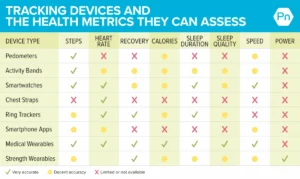
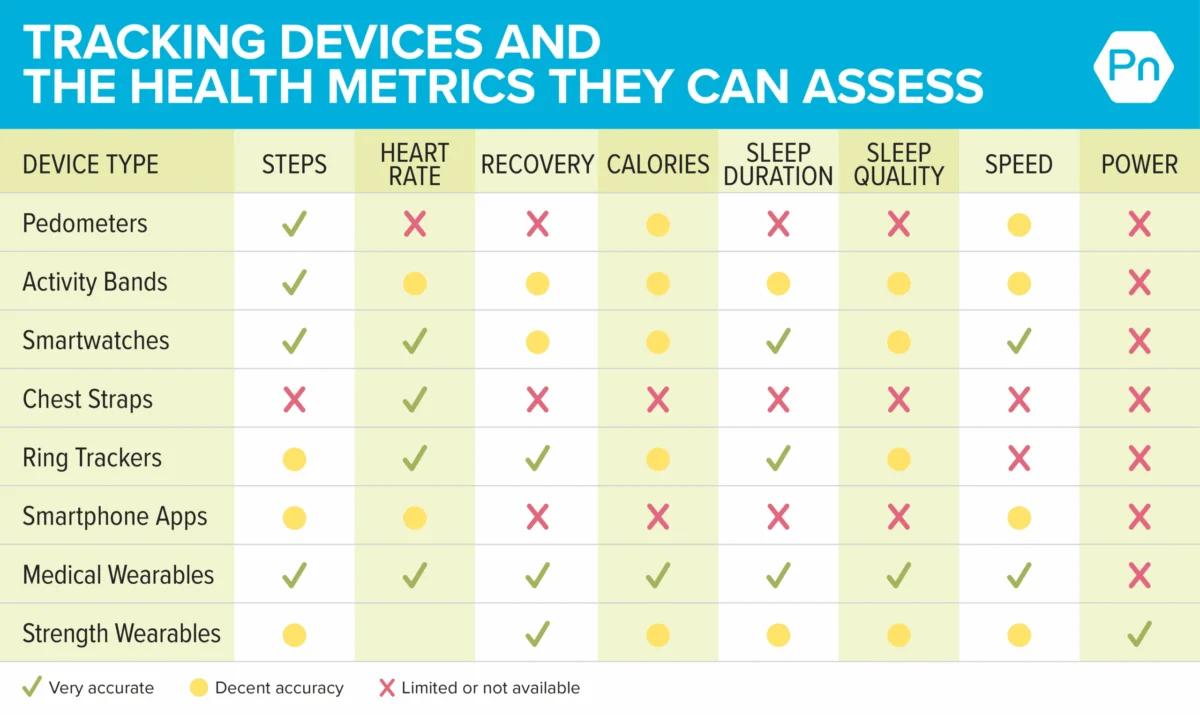
Generally, metrics like heart rate and step count are considered to be highly reliable across a wide range of devices. Optical heart rate sensors, commonly found in wrist-worn wearables, have improved considerably, often providing data comparable to electrocardiograms (ECGs) in resting states and moderate activity, though accuracy can diminish during high-intensity exercise or with certain skin tones and tattoos. Step counters, leveraging accelerometers, are also largely accurate for basic daily activity.
However, other types of outputs present substantial margins for error. Calories burned, for instance, are notoriously difficult to quantify precisely outside of a laboratory setting. Consumer devices rely on algorithms that combine heart rate, movement data, and user-inputted biometrics (age, weight, height) to estimate energy expenditure. These estimations can deviate by 20-30% or more from actual metabolic rates, making them a general guideline rather than a precise measurement. Similarly, advanced metrics like sleep stage tracking (REM, deep, light sleep) are still subjects of ongoing research. While wearables can accurately determine sleep duration, differentiating between sleep stages through wrist movement and heart rate alone is less reliable than polysomnography, the gold standard used in sleep clinics. Other parameters, such as movement velocity in specific exercises or recovery scores, also carry significant potential for inaccuracy, influenced by sensor placement, individual physiology, and algorithmic sophistication.
Manufacturers are constantly pushing the boundaries of accuracy. Many invest heavily in research and development, collaborating with medical institutions and conducting extensive validation studies. However, the commercial imperative to offer a wide range of features sometimes outpaces the scientific validation of every single metric. Consumers are often advised to view less reliable metrics as directional indicators rather than absolute truths.
Navigating the Data Deluge: The Paradox of Information Overload

The sheer volume of data offered by modern tracking devices presents a unique paradox: while information is crucial for informed decision-making, an excess of it can be counterproductive. Samantha Kleinberg, a computer scientist specializing in decision-making, highlights that even a "tiny amount of surplus information has a big negative effect on our decision-making." This phenomenon, often depicted as an inverted U-shaped curve, illustrates that there’s a "sweet spot" for information; too little leaves us uninformed, but too much leads to "analysis paralysis," diminishing our ability to make sound choices.
Consider the common scenario of choosing a restaurant. Scanning hundreds of reviews for every taco place in a neighborhood, all promising the "best" el pastor, can overwhelm a diner, making a simple decision unnecessarily arduous. In the realm of health and fitness, this effect is amplified. The industry frequently competes on providing "more science," "more customization," and "more complexity," yet without clear guidance, this abundance can obscure the path forward. Individuals, seeking to optimize every facet of their health, may find themselves drowning in metrics without a coherent strategy for utilizing them.
This challenge underscores the importance of intentionality in data consumption. Rather than passively absorbing every data point, individuals must actively filter and prioritize information that genuinely serves their health goals. The fundamental question to ask oneself is: "Does tracking increase my well-being and performance?" A clear "yes" or "no" provides immediate direction, indicating whether to continue with current tracking practices or to disengage. However, for many, the answer lies in a gray area, necessitating a deeper understanding of when tracking truly adds value.
Optimizing Wellbeing: When Tracking Becomes a Catalyst
When deployed judiciously, tracking technology can be a powerful catalyst for positive behavioral change and enhanced well-being. Its utility often manifests in three key areas:
-
Validating Intuition and Reducing Stress: Many individuals struggle with self-doubt regarding their health practices, even when following expert advice. The subjective feeling of "is this working?" can be a source of significant anxiety. Objective data can provide critical validation, bridging the gap between perception and reality. For instance, an individual embarking on a new low-intensity cardio regimen might feel it’s "too easy" to be effective. However, seeing a consistent drop in their resting heart rate or improved recovery times on their tracker can confirm the efficacy of the approach, reducing stress and fostering adherence. This objective reinforcement can build confidence, particularly for high-achievers who might otherwise question their performance or feel "not good enough" without tangible proof. The data acts as an external assurance, complementing internal feelings and expert guidance.
-
Fueling Motivation Through Clear Feedback: Behavioral science posits that for a behavior to occur, three elements are necessary: motivation, ability, and a prompt. Fitness trackers excel at providing the "prompt" by highlighting important data, making the right choices clearer and more immediate. Take the example of an individual who habitually enjoys a glass of wine in the evening, believing it aids sleep. A sleep tracker, however, might consistently show a marked decrease in sleep quality on nights alcohol is consumed. This clear, undeniable feedback serves as a powerful prompt, revealing a direct causal link that was previously obscured by subjective feeling. Once this insight is gained, it becomes difficult to "un-see" the impact, often leading to a motivated adjustment in behavior. Such focused data can be transformative, as evidenced by individuals who have used lifestyle trackers to address significant health challenges, like reducing high cholesterol levels, by making targeted changes based on concrete feedback.
-
Deepening Self-Understanding: Tracking can illuminate personal patterns and responses that might otherwise remain unnoticed, fostering a more accurate self-perception. The common belief that "the harder you work, the better your results" is not always true. Over-training can inhibit performance and recovery, a pitfall for many dedicated individuals. Conversely, some chronically underestimate their capacity, failing to push themselves enough. Data offers a corrective lens. For example, in high-intensity interval training (HIIT), prescribed rest periods are often generalized. A heart rate monitor can provide an individualized picture of actual recovery needs, showing whether one is truly ready for the next interval or if more rest is required. This real-time feedback helps distinguish between perceived effort and physiological reality, guiding individuals away from unproductive "junk volume" (where fatigue accumulates without performance gains) and towards efficient training. By observing metrics of output, fatigue, and recovery, individuals can gain a nuanced understanding of their body’s unique responses, optimizing both training and recuperation.
The Pitfalls: When Data Becomes a Detriment
Despite the undeniable benefits, the indiscriminate or excessive use of tracking technology can lead to adverse outcomes, detracting from well-being and even hindering performance.
-
Increased Stress and Performance Anxiety: Data, particularly when it reflects factors beyond one’s control, can become a source of significant stress without any corresponding benefit. A new parent, for instance, grappling with the relentless demands of a newborn, might receive consistently "poor" sleep quality scores from their wearable. While technically accurate, this information is largely unhelpful and can exacerbate feelings of inadequacy or anxiety, as sleep disruption is an unavoidable reality in their current circumstances. In such cases, the data serves only to underscore a problem without offering an immediate solution, becoming counterproductive. Tracking should be paused or adjusted during periods when priorities lie elsewhere or when scores are beyond immediate influence.
-
Loss of Intrinsic Motivation: When the focus shifts predominantly to numbers and metrics, the intrinsic joy and experiential aspects of activities can diminish. An avid recreational cyclist, initially motivated by the pure pleasure of riding, might become consumed by the desire to "demolish" segment records on local trails. This relentless pursuit of numerical targets can transform an enjoyable hobby into a chore, leading to overtraining, under-recovery, and ultimately, burnout. The activity becomes about external validation (the fastest time) rather than internal satisfaction (the feel of the ride, the scenery). When workouts or activities are reduced to data points, the rich sensory experience and the inherent rewards of movement can be lost, eroding long-term engagement.

-
Disconnect from Bodily Senses: An over-reliance on external data risks alienating individuals from their own internal bodily signals. If one constantly defers to an app to determine hunger levels, caloric intake, or optimal rest, the ability to interpret innate cues like satiety, energy levels, or fatigue can atrophy. The "My Fitness Pal Blackout" incident, where a popular calorie-tracking app became inaccessible for a day, highlighted this vulnerability. Users who were accustomed to the app dictating their dietary choices experienced mild panic and a feeling of being "adrift" without its guidance. This dependence can lead to a state where individuals feel disconnected from their own bodies, unable to make informed decisions based on their subjective experience. This phenomenon, sometimes linked to "nomophobia" (the fear of being without one’s mobile phone), underscores the importance of fostering a healthy, balanced relationship with technology, ensuring that tools remain aids rather than dictators of personal well-being.
Cultivating Internal Awareness in a Data-Rich World
The ultimate goal of using fitness trackers should not be to replace our senses but to refine them. By intentionally integrating objective data with subjective experience, individuals can develop a more sophisticated and resilient approach to health management.
-
Prioritizing Self-Reflection Before Data Review: A foundational practice is to consciously check in with one’s body and mind before consulting any tracking data. For any metric—be it distance biked, calories consumed, or sleep quality—take a moment to pause, breathe, and make an internal assessment. "How do I feel I slept?" or "How hard did that workout feel?" This initial, intuitive estimation leverages the brain’s powerful (though often imperfect) prediction-making capabilities. Only after this self-assessment should the tracker data be reviewed. This calibration process, consistently applied, helps narrow the gap between subjective perception and objective measurement, gradually improving the accuracy of one’s internal barometer. Regular app updates, which often refine algorithms, also contribute to better predictive accuracy.
-
Developing Intuitive Shortcuts and Mental Models: While objective tools can be precise, mental shortcuts can be remarkably effective for real-time assessment. The Rate of Perceived Exertion (RPE) scale, for instance, is a highly validated sensory-driven approach where individuals subjectively rate the intensity of their physical activity. Coaches often use prompts like "For a million dollars a rep, how many more reps do you think you could do?" to help clients understand their maximal effort. While not objective, this question provides a powerful mental shortcut to gauge proximity to failure. By consistently mapping felt experience against occasional objective data (e.g., comparing RPE to heart rate zones or power output), individuals can significantly improve their ability to accurately estimate their effort and capacity, making RPE a reliable tool even without constant gadget reliance.
-
Honing Innate Sensory Capabilities: Humans possess an incredibly rich and complex network of sensory information that even the most advanced technology cannot fully replicate. This includes proprioception (the sense of body position and movement), interoception (the sense of the body’s internal state, like hunger, thirst, and discomfort), exteroception (the sense of external stimuli), and kinesthesia (the sense of body movement). All this information feeds into the nervous system’s powerful pattern-recognition machine. To continue honing the ability to leverage this network, regular, mindful check-ins with how one is feeling are crucial. This involves paying attention to subtle cues—muscle fatigue, mental clarity, digestive comfort, emotional state—and allowing these internal signals to inform decisions. By consciously cultivating this connection to the body’s inherent intelligence, individuals can use wearable technology as a supportive tool, enhancing their understanding without eclipsing their fundamental capacity for self-awareness.
The Future of Personalized Health: A Balanced Approach
The trajectory of health technology points towards increasingly personalized and predictive insights. Future wearables may integrate more sophisticated biosensors, offering continuous monitoring of blood glucose, lactate, and even certain hormones, moving beyond current metrics to provide a more holistic view of physiological function. Artificial intelligence and machine learning will play an even greater role in interpreting complex data patterns, offering highly customized recommendations for nutrition, exercise, and recovery.
However, the ethical implications of such pervasive tracking—including data privacy, security, and the potential for surveillance—will require careful navigation. Furthermore, the risk of fostering a generation overly reliant on external metrics, disconnected from their innate bodily wisdom, remains a significant concern. The "quantified self" movement, while empowering, must evolve to emphasize not just the collection of data, but its thoughtful integration with lived experience.
Ultimately, the most effective approach to personal health in the digital age will involve a harmonious blend of technology and intuition. Fitness trackers and health apps are invaluable tools for providing objective feedback and illuminating patterns that are difficult to perceive subjectively. They can validate efforts, prompt behavioral changes, and deepen self-understanding. Yet, they should never fully supplant the profound, nuanced wisdom of the body’s own sensory network. By actively calibrating objective data with subjective feelings, individuals can leverage the best of both worlds, achieving not only superior health outcomes but also a more mindful, enjoyable, and resilient relationship with their own physical and mental well-being.