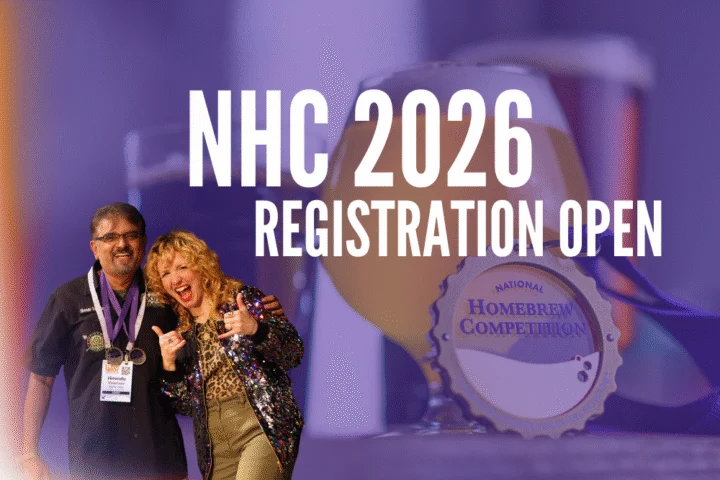

The American Homebrewers Association (AHA) has officially announced the opening of registration for the 2026 National Homebrew Competition (NHC), marking nearly half a century of the world’s most prestigious amateur brewing event. As the competition enters its 48th year, it remains the definitive proving ground for amateur brewers, cidermakers, and meadmakers across the globe. Since its inception in 1979, the NHC has evaluated more than 170,000 entries, providing a critical platform for hobbyists to receive professional-grade feedback and compete for some of the most coveted titles in the brewing community.
Supported by the Beer Judge Certification Program (BJCP), the 2026 NHC represents the pinnacle of organized homebrewing. The registration window is currently open and is scheduled to close promptly at 8:00 AM MT on February 25, 2026. Organizers emphasize that participants must be active members of the American Homebrewers Association to qualify for entry. The competition serves not only as a contest but as an educational cornerstone for the brewing industry, utilizing high-level BJCP and Cicerone-certified judges to provide rigorous sensory analysis for every submitted bottle.
Historical Context and the Evolution of the NHC
The National Homebrew Competition traces its roots back to the late 1970s, a period often cited as the "dark ages" of American beer, when the market was dominated by a handful of mass-produced lagers. In 1978, President Jimmy Carter signed H.R. 1337, which included an amendment by Senators Alan Cranston and William Steiger to federally legalize homebrewing for personal or family use. This legislative shift paved the way for Charlie Papazian and Charlie Matzen to form the American Homebrewers Association in Boulder, Colorado.
The first NHC was held in 1979, featuring only a handful of categories and a small group of passionate hobbyists. Over the ensuing decades, the competition grew in tandem with the American craft beer revolution. Many of the most successful professional brewers in the United States, including the founders of Sierra Nevada Brewing Co., Dogfish Head Craft Brewery, and Bell’s Brewery, began their careers as homebrewers competing in AHA-sanctioned events. Today, the NHC stands as the largest beer competition in the world, reflecting the sophisticated palate and technical proficiency of modern amateur brewers.
The 2026 event is particularly significant as it approaches the competition’s 50th anniversary. The longevity of the program highlights the enduring appeal of fermentation science and the commitment of the AHA to fostering a community of excellence.
Competition Structure and Logistics for 2026
The 2026 National Homebrew Competition is organized into a two-tier judging format designed to handle thousands of entries while maintaining high standards of objectivity. The process begins with the First Round, which consists of nine distinct judging sites across the United States.
Participants have the flexibility to select their preferred First Round site, a logistical benefit that allows brewers to manage shipping costs or timeframes according to their needs. However, the AHA has implemented a strict cap of 750 entries per location. Given the historical popularity of the competition, these slots are expected to fill well before the February 25 deadline. The first round of judging will take place across various dates in the spring, depending on the specific site selected.
Following the First Round, the top-performing entries—specifically those awarded Bronze, Silver, and Gold in their respective categories—will advance to the Final Round. This culminating event, along with the official awards ceremony, is scheduled to take place during Homebrew Con 2026 in Asheville, North Carolina, in June. Asheville, often referred to as "Beer City USA," provides a fitting backdrop for the finale, boasting one of the highest numbers of breweries per capita in the United States.
The Role of the BJCP and Professional Judging
A defining feature of the NHC is the caliber of its judging panel. The competition is supported by the Beer Judge Certification Program (BJCP), a non-profit organization founded in 1985 to promote beer literacy and the appreciation of real beer. BJCP judges undergo rigorous training and examination to identify style characteristics, off-flavors, and technical flaws.
In addition to BJCP-certified judges, the 2026 NHC will utilize Cicerone-certified professionals and recognized experts from the brewing community. For the entrant, the primary value of the NHC often lies in the scoresheets. Every participant receives detailed feedback via the Brewing Application Portal (BAP), providing insights into how their beer, cider, or mead compares to established style guidelines. This feedback loop is essential for hobbyists looking to refine their techniques and move toward professional-level consistency.
The competition covers a vast array of styles, ranging from traditional European lagers and British ales to modern American IPA variants, as well as specialized categories for mead and cider. This diversity ensures that the NHC remains a comprehensive snapshot of current global brewing trends.
Data Analysis: The Scale of Global Homebrewing
The 170,000 entries judged since 1979 represent more than just a number; they signify a massive data set on the evolution of beer styles. In the early years of the competition, entries were heavily weighted toward classic styles like Brown Ales and Porters. In the 21st century, there has been a dramatic shift toward hop-forward styles and experimental fermentations, including sour ales and fruit-infused meads.
Statistical trends from previous NHC cycles indicate that the competition typically sees a surge in entries during the final 72 hours of the registration period. In recent years, the IPA category has remained the most contested, often requiring multiple "mini-best-of-show" rounds to determine a winner. The inclusion of cider and mead categories has also seen steady growth, reflecting a broader interest in alternative fermentation among the AHA membership.
The economic impact of homebrewing, while difficult to quantify precisely, is substantial. The AHA estimates that there are over 1.1 million homebrewers in the United States who produce roughly 1.4 million barrels of beer annually. The NHC serves as the primary marketing and quality-control event for this demographic, influencing the purchase of millions of dollars worth of brewing equipment, malt, hops, and yeast.
Official Responses and Community Implications
Leadership within the American Homebrewers Association views the 2026 competition as a vital touchpoint for the community. In statements regarding the opening of registration, the AHA has emphasized the inclusive nature of the event. While the competition is inherently competitive, the organization stresses that its primary goal is the "advancement of the hobby and the education of the brewer."
The decision to host the final round in Asheville is seen by industry analysts as a strategic move to re-energize the East Coast brewing community. Asheville’s established infrastructure for beer tourism makes it an ideal location for Homebrew Con, the AHA’s annual conference that runs concurrently with the NHC finals. The conference provides a forum for seminars, social clubs, and the sharing of technical innovations, further cementing the link between the competition and the broader culture of craft beer.
Industry observers also note that the NHC acts as an informal "talent scout" for the commercial brewing sector. It is common for winners of the NHC to leverage their success into professional brewing careers or to open their own commercial taprooms. The "Homebrew Shop of the Year" and "Homebrew Club of the Year" awards, also presented during the NHC cycle, provide critical recognition for the small businesses and local organizations that form the backbone of the hobby.
Chronology of the 2026 NHC Cycle
To assist participants in their planning, the AHA has outlined the following projected timeline for the 2026 competition cycle:
- February 2, 2026: Official opening of the registration and entry payment window.
- February 25, 2026 (8:00 AM MT): Registration deadline. All entries must be registered and paid for by this time.
- March – April 2026: Receiving window for First Round entries at the nine designated regional sites.
- April 2026: First Round judging conducted across all regional locations.
- May 1, 2026: Deadline for notifying entrants of their advancement to the Final Round. BJCP scoresheets from the First Round are typically released to all participants during this period.
- May 2026: Shipping and receiving window for Final Round entries destined for Asheville, NC.
- June 2026: Final Round judging and the National Homebrew Competition Awards Ceremony held in conjunction with Homebrew Con in Asheville.
Conclusion and Future Outlook
The 2026 National Homebrew Competition stands as a testament to the resilience and creativity of the amateur brewing community. As registration begins, the focus remains on the pursuit of brewing excellence and the communal spirit that has defined the AHA for nearly five decades. For the thousands of brewers preparing their kettles and fermenters, the NHC represents the ultimate challenge: the opportunity to have their craft validated by the best in the business.
As the brewing landscape continues to evolve with new ingredients and techniques, the NHC provides the necessary framework to ensure that the quality of home-fermented beverages keeps pace with the professional industry. Whether a participant is a first-time entrant or a seasoned veteran chasing a "Ninkasi Award" for the most points in the competition, the 2026 NHC promises to be a landmark event in the history of American fermentation.
For those seeking further information or looking to join the conversation regarding style guidelines and shipping logistics, the AHA maintains an active forum where the Competition Chair and Deputy Chair engage directly with the community. As the February 25 deadline approaches, the global homebrewing community turns its attention to the road to Asheville, where the next generation of brewing champions will be crowned.