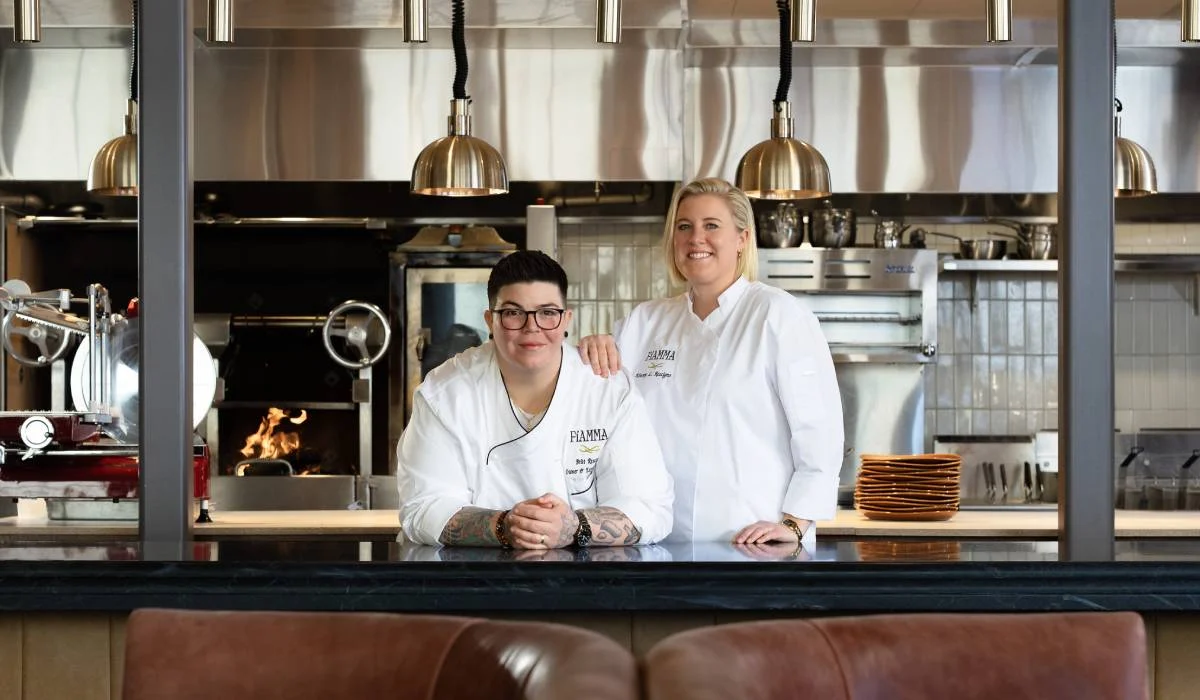

The traditional narrative of the successful restaurateur has long been rooted in the "martyrdom of the grind," a culture where culinary excellence is measured by the number of hours a chef spends on the line and their willingness to micromanage every plate that leaves the pass. However, a significant paradigm shift is occurring within the hospitality sector, led by a new generation of operators who prioritize sustainable leadership and team autonomy over constant physical presence. At the forefront of this movement are Britt Rescigno and Kinsey Leodler, the co-owners of Fiamma, a live-fire destination in Sun Valley, Idaho. Their philosophy, centered on the concept of "space with support," offers a blueprint for modern hospitality management that challenges the industry’s historical reliance on high-stress, top-down governance.
The Shift from Tactical Execution to Strategic Oversight
In the high-stakes environment of a professional kitchen, the transition from being a tactical operator to a strategic leader is often the most difficult hurdle for entrepreneurs. For Rescigno and Leodler, this evolution was not merely a choice but a necessity for the long-term viability of their business. Speaking on a recent episode of The Restaurant Innovator podcast, Rescigno, a celebrated chef known for her competitive prowess on platforms like Food Network’s Chopped and Tournament of Champions, noted that the true mark of success is the ability to step away.
The "grind" culture, while often romanticized, frequently leads to high turnover and executive burnout. In contrast, the Fiamma model suggests that a leader’s value is not found in their ability to do everyone’s job, but in their ability to train a team that functions seamlessly in their absence. This approach requires a fundamental dismantling of the "hero chef" trope, replacing it with a decentralized management structure where trust is the primary currency.
The Philosophy of Space with Support
Kinsey Leodler, who manages the business and operational side of Fiamma alongside Rescigno, defines their leadership style as creating "space with support." This concept acknowledges that while employees need the freedom to execute their roles without interference, they also require a safety net of mentorship. According to Leodler, the greatest challenge during Fiamma’s inaugural year was resisting the urge to intervene.
The philosophy posits that micromanagement is a thief of growth. When a leader "hovers," they prevent the very mistakes that facilitate learning. Leodler argues that nine times out of ten, employees will exceed expectations if they are given the room to "spread their wings." This "space" allows for a culture of psychological safety, where staff members feel empowered to make decisions, knowing that failure is viewed as a coaching opportunity rather than a fireable offense.
A Chronology of Fiamma’s Operational Maturation
The development of Fiamma’s current leadership model followed a clear chronological progression from the restaurant’s inception to its current status as a Sun Valley staple.
Phase I: The Foundation (Pre-Launch to Month 3)
During the initial launch phase, Rescigno and Leodler were deeply embedded in every facet of the operation. This period was characterized by high-intensity involvement, where the owners were responsible for every station, every administrative task, and every customer interaction. This hands-on approach was essential for establishing the brand’s identity and ensuring that the "live-fire" concept met their exacting standards.
Phase II: The Identification of Management Layers (Months 4 to 8)
As the restaurant gained traction, the founders began identifying key performers within their ranks. This period saw the formalization of management roles. By delegating specific areas of the restaurant—such as front-of-house operations, bar management, and kitchen prep—to trusted individuals, Rescigno and Leodler began the process of "giving away the keys."
Phase III: Strategic Withdrawal and Mentorship (Month 9 to Year 1)
By the end of their first year, the duo had successfully transitioned into a role of oversight. Success was no longer defined by their physical presence but by the quality of the "manager log" at the end of the night. Rescigno highlighted that she no longer feels the need to monitor security cameras or stay on-site 24/7. Instead, she finds professional fulfillment in seeing how the team handles challenges independently, treating the manager log as a testament to the efficacy of their training programs.
Supporting Data: The Economic and Human Cost of Turnover
The Fiamma leadership model is supported by broader industry data regarding employee retention and operational efficiency. According to the National Restaurant Association, the hospitality industry has historically faced turnover rates exceeding 70% annually. The cost of replacing a single front-line employee is estimated to be between $5,864 and $15,000 when accounting for recruiting, hiring, and training.
By fostering a culture of autonomy and "space with support," restaurants can significantly reduce these costs. Studies in organizational psychology suggest that "autonomy-supportive" environments lead to higher job satisfaction and lower levels of emotional exhaustion. In an era of chronic labor shortages, the ability to retain a highly skilled, confident team is a competitive advantage that directly impacts the bottom line.
Innovation Through Autonomy: The Five-Burger Strategy
One of the most notable outcomes of Fiamma’s empowered culture is the freedom it gives the owners to innovate. Because they are not bogged down by daily line duties, Rescigno and Leodler have been able to implement unique marketing and operational strategies, such as their "five-burgers-a-day" exclusivity play.
This strategy involves serving only five burgers per day, creating a sense of scarcity and high demand that drives early-evening traffic and social media engagement. Such creative maneuvers require a leader to have the mental bandwidth for long-term strategy—bandwidth that is only available when the daily operations are successfully delegated. Furthermore, Leodler noted that some of the restaurant’s best administrative and digital tool improvements came directly from staff members who were encouraged to experiment with new systems.
Official Responses and Industry Implications
While the culinary world has historically been slow to change, the response to Fiamma’s model from industry peers has been overwhelmingly positive. Observers note that the "Yin and Yang" of Rescigno and Leodler’s partnership—balancing culinary artistry with rigorous operational systems—provides a stable foundation for this type of delegation.
The implications for the broader hospitality sector are profound. As the industry moves toward a more sustainable future, the Fiamma model suggests several key takeaways for other operators:
- Redefining the Manager Log: Moving from a tool of surveillance to a tool of celebration and coaching.
- Reframing Mistakes: Viewing operational errors not as failures, but as "learning moments" that prevent future issues.
- Scalability: A restaurant that can run without its owners is a scalable business. By building a self-sufficient team, Rescigno and Leodler have created a model that could, in theory, be replicated in other markets.
Fact-Based Analysis: The Long-Term Impact on Mental Health
Beyond the financial benefits, the "space with support" model addresses the mental health crisis within the culinary industry. Organizations like The 86 Network and Heirloom Foundation have long advocated for a shift away from the "suffer for your craft" mentality. Rescigno’s admission that she no longer feels "the building is going to burn down" in her absence is a powerful statement on the reduction of executive stress.
When leaders trust their teams, it reduces the cortisol-heavy environment typical of many kitchens. This leads to better decision-making, fewer workplace accidents, and a more welcoming atmosphere for guests. In Sun Valley’s emerging market, where Fiamma must compete for both talent and diners, this culture of "gentle guiding hands" serves as a powerful recruitment tool.
Conclusion
The first year of Fiamma has demonstrated that leadership in the restaurant industry is evolving from a model of control to a model of empowerment. Britt Rescigno and Kinsey Leodler have shown that by creating "space with support," they have not only built a successful restaurant but also a resilient, innovative team. As the industry continues to navigate the complexities of a post-pandemic landscape, the ability to let go of the reins and trust in the training and talent of a team may well become the most essential skill for the modern restaurateur. Success, as Fiamma proves, is not about being the only person who can do the job—it is about ensuring that everyone else can do it just as well.