
The journey from a casual morning ritual to a meticulous scientific pursuit defines the modern appreciation of coffee. What once was simply a means to an end—a caffeine delivery system to navigate the demands of a post-PhD career—has evolved into a sophisticated exploration of flavor, chemistry, and precise extraction techniques. This transformation mirrors a broader cultural shift, particularly evident in the "third wave coffee" movement that has swept through regions like Scandinavia, elevating coffee appreciation to an art form grounded in scientific understanding. This movement emphasizes single-origin beans, lighter roasts that highlight inherent varietal characteristics, and meticulous brewing methods designed to extract the most nuanced flavors. The increasing availability of specialty coffee, often delivered through curated subscriptions from roasters across Norway, Sweden, and Denmark, underscores a growing consumer desire for quality and diversity.
The year 2020, marked by unprecedented global changes, inadvertently provided many with extended opportunities for introspection and the refinement of domestic pursuits. For coffee enthusiasts, this meant deeper dives into the intricacies of brewing. The advent of tools like coffee advent calendars, offering 24 days of blind tasting, transformed daily coffee into an engaging sensory challenge. Participants learned to discern bean origins and processing methods, highlighting the profound impact these factors have on flavor profiles. Simultaneously, experimentation with various coffee grinders, from traditional workhorses to borrowed hand grinders, introduced a new level of variability and frustration into established routines. This disruption, initially perceived as an obstacle, served as a catalyst for deeper learning, unveiling the profound complexity of reproducible pour-over coffee preparation. This journey into the scientific underpinnings of coffee extraction reveals a rich tapestry of controllable parameters, each contributing significantly to the final cup.
Deconstructing the Brew: Fundamental Parameters
The process of brewing coffee, at its core, is an act of extraction—dissolving soluble compounds from ground coffee into water. This fundamental chemical process is influenced by a multitude of variables, many of which can be precisely controlled by the brewer. Understanding these parameters is the first step towards consistent, high-quality coffee.

Brew Ratio (BR): The Foundation of a Recipe
The brew ratio (BR) is a critical parameter, defining the proportion of water used relative to the mass of ground coffee. Typically expressed as a ratio of water mass to coffee mass, a common starting point is 60 grams of coffee per 1000 grams of water, yielding a BR of approximately 16.7 (1000/60). This metric provides a simple, scalable "recipe" for coffee, much like Baker’s percentage in baking, allowing for easy adjustment of batch size while maintaining consistent strength. Standard brew ratios for black coffee generally fall within the range of 1:15 to 1:25. Deviations outside this range can lead to either excessively weak or overwhelmingly strong brews, impacting the sensory experience significantly.
Total Dissolved Solids (TDS): Measuring Strength and Unlocking Flavor
Total Dissolved Solids (TDS) quantifies the concentration of coffee solubles in the final beverage, expressed as a percentage. This measurement is crucial for understanding coffee strength and its impact on taste perception. A brew that is too strong often manifests as bitter or astringent. Conversely, diluting an overly strong brew with a small amount of hot water can sometimes dramatically transform it, revealing latent fruity notes and enhancing clarity.
Historically, TDS was measured gravimetrically by evaporating a coffee sample to dryness and weighing the residue. This method, while accurate for non-volatile solids, is impractical for daily brewing, requiring specialized laboratory equipment like analytical balances with sub-milligram accuracy. A more accessible and practical method involves refractometry, which measures the bending of light as it passes through the coffee solution. Light travels at different speeds through pure water versus water containing dissolved solids, and this difference correlates directly with the concentration of those solids.
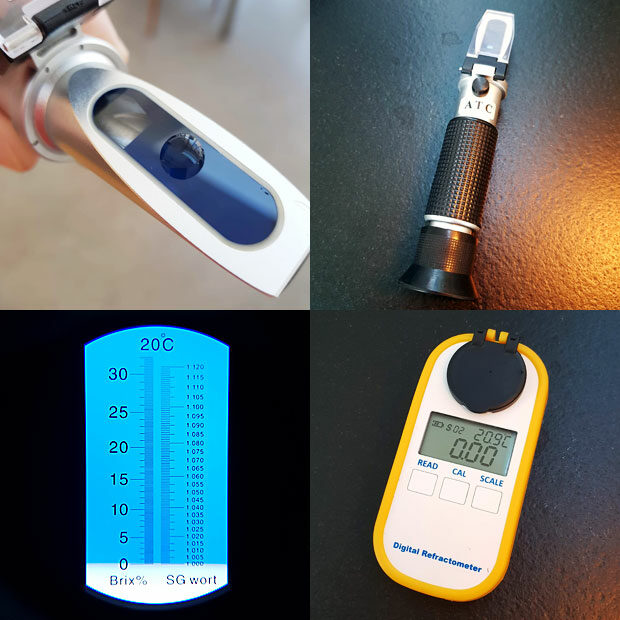
Handheld analog refractometers, often equipped with a Brix (%Brix) scale, offer an affordable entry point. A %Brix reading can be converted to %TDS by multiplying by approximately 0.85. While these devices provide a resolution of 0.1-0.2 %Brix, sufficient to confirm if a brew falls within the typical range of 1.2-1.5% TDS, they lack the precision for fine-tuning. For greater accuracy, digital refractometers are available, some specifically calibrated for coffee, offering 0.01 °Brix resolution and automatic TDS conversion. However, these come at a significantly higher cost.
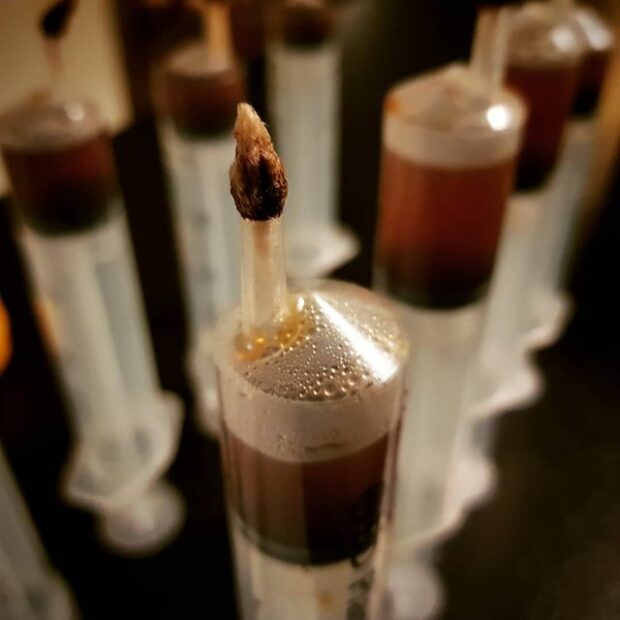
Beyond coffee, a handheld refractometer proves versatile in the kitchen, useful for measuring sugar content in sorbets (e.g., aiming for 26 %Brix) or specific gravity (SG) in homebrewing. When measuring TDS of a hot extraction, samples must be rapidly hot-filtered to halt further extraction and then cooled completely before measurement. A simple DIY method involves using plastic syringes with a cotton plug for filtration, ensuring minimal evaporation during cooling and eliminating the need for expensive lab-grade syringe filters. The profound insight from TDS measurement is that a typical cup of black coffee is over 98% water, a fact often hard to reconcile with its rich flavor profile.
The Economics and Aesthetics of Extraction Yield (EY)
Building upon TDS, Extraction Yield (EY) measures the efficiency of the brewing process by quantifying the percentage of soluble material extracted from the coffee grounds relative to their initial dry mass. This metric is critical for both flavor development and economic efficiency, as it indicates how much of the coffee’s potential has been utilized.
The calculation of EY can become complex, particularly when distinguishing between immersion brews (like a French press) and percolation brews (like pour-over). Two distinct definitions of extraction yield are often employed:
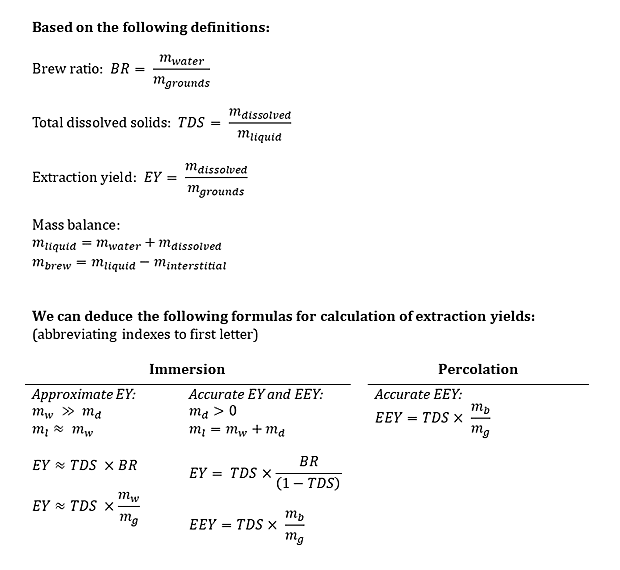
- Extraction Yield (EY): The total mass of dissolved solids extracted from the coffee grounds, divided by the initial mass of the dry coffee grounds. This reflects the total material removed from the grounds.
- Effective Extraction Yield (EEY): The mass of dissolved solids present in the final cup, divided by the initial mass of the dry coffee grounds. This focuses on what the consumer actually experiences.
In immersion brews, where all grounds are uniformly submerged in water, the entire liquid mass eventually has the potential to contribute to the cup. In percolation brews, however, a significant portion of liquid remains trapped within the grounds (interstitial liquid) and does not make it into the final beverage. This distinction leads to EY being equal to EEY for percolation brews under certain simplified assumptions, while for immersion brews, EY can be higher than EEY if the entire liquid mass (including interstitial) is considered for extraction but only a portion is served.
Experts like Scott Rao and Jonathan Gagné have extensively discussed the nuances of these calculations, highlighting the complexities introduced by interstitial liquid. Simplified formulas allow for approximate calculations, such as EY ≈ TDS x BR. However, for precise calculations, the mass of dissolved solids itself must be accounted for in the total liquid mass, leading to iterative calculations or more complex formulas like EY = TDS x BR / (1-TDS).
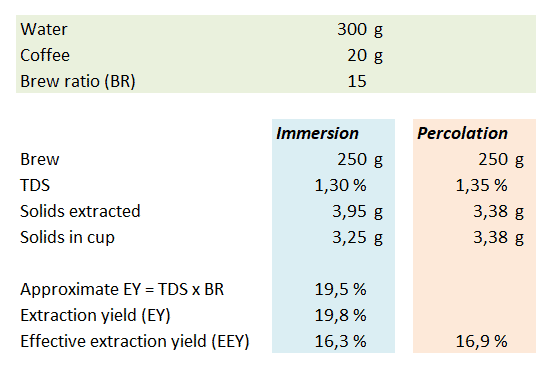
Consider an example: 20g of coffee and 300g of water, yielding 250g of brewed coffee.
- Immersion Brew: If the TDS is 1.30%, the total dissolved solids (m_dissolved) in the entire liquid mass (including what might be retained) could be 3.95g, leading to an EY of 19.8%. However, the solids actually delivered to the cup (m_brew = 250g) would be 3.25g (1.30% of 250g), resulting in an EEY of 16.3%.
- Percolation Brew: If the TDS in the cup is 1.35%, the solids in the cup would be 3.38g (1.35% of 250g), yielding an EEY of 16.9%. In this case, EY is often considered equivalent to EEY when focusing on the final beverage.
This comparison reveals that while an immersion method might extract more solids from the grounds overall, a percolation method can be more effective at delivering those solids into the final cup. The difference in the total mass of extracted compounds (e.g., 3.95g vs. 3.38g in the example) directly explains the sensory distinctions between immersion and percolation coffees. With hundreds of chemical compounds contributing to coffee flavor, even small differences in extracted mass can significantly alter the overall profile. Furthermore, factors like evaporation during brewing can subtly affect the brew ratio and, consequently, the accuracy of yield calculations, though this is often disregarded for practical reasons. The water content within roasted beans (typically 1-4%) also represents a minor variable for highly precise yield calculations.
The Crucial Role of Grind: Particle Size Distribution (PSD)
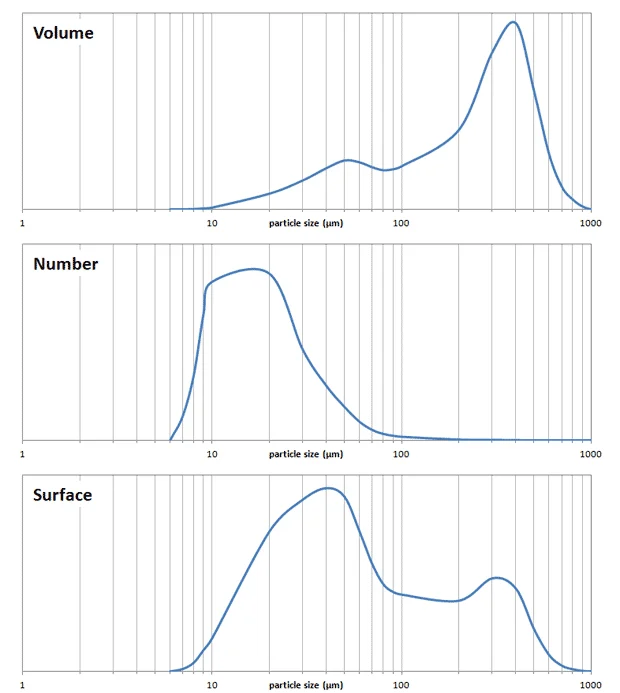
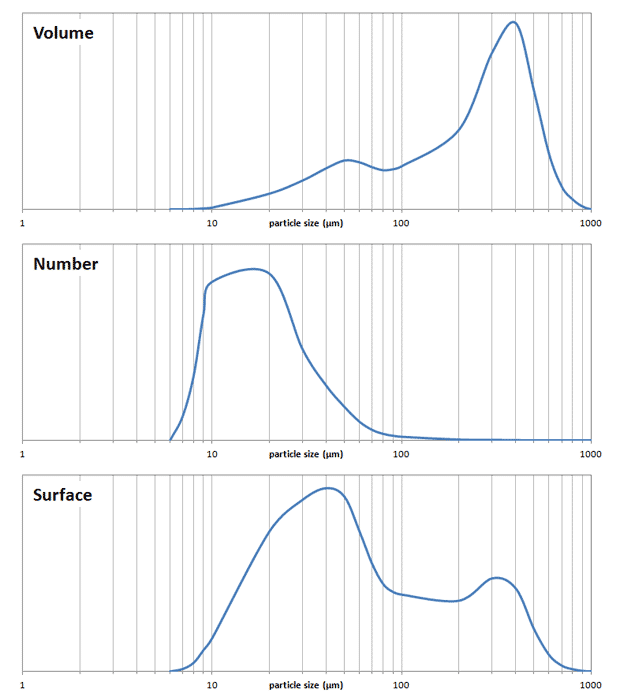
Before extraction can begin, roasted coffee beans must be ground. This seemingly simple step is, in fact, one of the most critical and complex, directly impacting both the rate of extraction and the flow dynamics of percolation brewing. When a coffee bean is ground, it shatters into a range of particle sizes, from larger "boulders" to extremely small "fines," typically defined as particles under 100 micrometers (µm). Ground coffee is never uniform; it exhibits a particle size distribution (PSD).
Measuring PSD accurately is challenging. While specialized industrial equipment like MicroTrac or Sympatec is used in the coffee industry, home brewers can use mechanical sifters (e.g., Kruve) or even image analysis via Python applications to estimate their grind consistency. However, fines often clump together or adhere to larger particles, making their accurate quantification difficult.
The way PSD is visualized is crucial for understanding its impact. Displaying distribution by volume (most common) can be misleading, as fines, despite their low volume, are numerous. A visualization by number of particles dramatically illustrates the sheer quantity of fines. However, the most insightful visualization is by surface area, as extraction occurs at the particle surface. This view often reveals that over half of the total extraction surface area can come from particles smaller than 100 µm. This is significant, especially considering preliminary research by Matt Perger of Barista Hustle, suggesting that coffee particles are only extracted to a depth of approximately 100 µm. This implies that the core of larger particles may remain unextracted, representing "wasted" coffee. Despite this, larger particles are essential for creating a permeable filter bed, preventing clogging, and maintaining a desirable draw-down time in pour-over methods.
The ideal grind size and distribution remain a subject of debate, but for pour-over coffee, a narrow PSD with minimal fines is generally preferred. This ensures better flow rates and reduces the risk of clogging. Too fine a grind leads to rapid, often bitter over-extraction and significant filtration issues. Conversely, too coarse a grind results in under-extraction and a weak, sour cup. The balance lies in finding the finest grind possible that still allows for adequate flow without clogging.
The quality of the grinder is paramount. Cheap blade grinders, which chop beans unevenly, produce a wide, undesirable PSD with excessive fines. Burr grinders, standard for quality home and commercial use, come in various materials, geometries, and sizes (conical vs. flat). High-end commercial grinders often feature large flat burrs with specific groove designs tailored for espresso (where some fines are desired for crema and body) or pour-over (where fines are detrimental). Conical burrs are favored in compact hand grinders. Ironically, large-scale industrial cylindrical grinders can produce extremely narrow PSDs, suggesting that commercially pre-ground filter coffee, if properly packaged in an inert atmosphere, could offer a more uniform grind than many home setups. However, the rapid oxidation of ground coffee once exposed to air (within days) necessitates grinding beans fresh for optimal flavor. Strategies like double grinding (a coarse initial grind followed by a finer one) or sifting can help home brewers achieve a narrower PSD, though proper evaluation requires measuring the distribution.
Environmental Factors and Sensory Impact
Beyond the immediate mechanics of brewing, several environmental and material factors profoundly influence the final cup.
Bean Freshness: The Race Against Oxidation
The dictum "use freshly roasted beans" is not merely a preference but a scientific imperative. Once roasted, coffee beans are dynamic entities, undergoing chemical changes. Exposure to oxygen initiates oxidation reactions, particularly affecting the delicate oils and volatile aromatic compounds that define coffee’s flavor. These reactions lead to the development of "stale" flavors. To preserve quality, beans should be stored in airtight bags, ideally with residual oxygen removed. Once opened, the clock starts ticking; the large surface area of ground coffee accelerates oxidation dramatically, making grinding just before brewing essential. For longer-term storage of larger quantities, colder temperatures (refrigerator or freezer) slow down chemical degradation, extending freshness.
The Unsung Hero: Water Composition
Water, comprising over 98% of brewed coffee, is far from a neutral solvent. Its mineral content and pH significantly impact extraction efficiency and the final flavor profile. Minerals like calcium, magnesium, and bicarbonates interact with coffee compounds, influencing the perception of acidity, sweetness, and body. For instance, magnesium ions are particularly effective at extracting desirable fruity notes. The concept of "DIY mineral water" for coffee, which gained traction with early enthusiasts, involves adding specific mineral salts to distilled or low-mineral tap water to achieve an optimal brewing profile. Expert resources, such as Jonathan Gagné’s Coffee Ad Astra blog, provide detailed water recipes, often based on distilled water to allow for complete control. However, for those in regions with naturally soft water (like Scandinavia), the challenge shifts to adding minerals to local tap water rather than removing them.
Temperature Dynamics: Solubility and Diffusion
Temperature is a primary driver of extraction kinetics. The solubility of chemical compounds generally increases with temperature, as does the rate of diffusion. High brewing temperatures, ideally close to 100°C (212°F), maximize the extraction of a wide range of compounds and accelerate the process. However, maximizing extraction does not always equate to the "best possible cup." Different compounds extract at different rates and solubilities across the temperature spectrum. For example, cold brewing, typically performed overnight in a refrigerator, intentionally uses low temperatures to achieve a distinct flavor profile, often characterized by lower acidity and bitterness due to the selective extraction of certain compounds. The serving temperature of the final beverage also influences sensory perception; sweetness and bitterness tend to diminish as coffee cools, while sourness and saltiness remain more stable. This highlights the multi-faceted role of temperature throughout the entire coffee experience.
Filter Material: Clarity, Body, and Flavor Profile
The choice of filter material significantly influences the clarity, body, and overall flavor profile of brewed coffee. While paper is the most common, metal, cloth, and nylon filters are also used. Paper filters are highly effective at retaining fine particles, leading to a "cleaner" cup. The human palate is remarkably sensitive; even microscopic particles (as small as 5 µm, akin to the "just noticeable difference" in chocolate texture) can be detected, contributing to a "muddy" mouthfeel often associated with French press coffee, which uses a coarser metal mesh filter and leaves considerable residue. In contrast, a Chemex, with its thick paper filter, yields a remarkably "clean" and clear brew.
Beyond particle retention, paper filters absorb coffee oils, which contribute to mouthfeel and flavor complexity. While a paper filter removes these oils, metal filters allow them to pass through, offering a richer, fuller-bodied experience akin to espresso, where oils are integral to crema and taste. Experimenting with metal filters in devices like V60 drippers or Aeropresses can reveal the sensory impact of these retained oils.
Within paper filters, choices abound. Bleached filters are often preferred for their neutrality; the bleaching process removes lignin and hemicellulose, along with the brown color, leaving behind purer cellulose with fewer flavor-influencing residues. Modern bleaching techniques predominantly use oxygen-based oxidizing agents, mitigating concerns about chlorine. The science of filtration is vast, as exemplified by the diverse grades of laboratory filter papers (e.g., Whatman). Pore size is a critical trade-off between flow rate and particle retention. While dry filter analysis provides initial insights, it’s important to remember that cellulose fibers swell when wet, altering the filter’s actual performance.
A Structured Approach to Coffee Optimization
For any coffee enthusiast seeking to elevate their brewing, a systematic approach to parameter exploration is highly beneficial. Based on their foundational impact, the following hierarchy is recommended:
- Brew Strength (TDS) & Extraction Yield (EY): These are the most fundamental parameters influencing the overall balance and intensity of the coffee. Getting these right provides a solid base before fine-tuning other variables. Tools like the "Coffee Compass" from Barista Hustle can be invaluable here, guiding adjustments based on sensory feedback (e.g., if coffee is sour, increase extraction; if bitter, decrease extraction).
- Grind Size & Particle Size Distribution: Once strength and yield are in the correct range, optimizing grind consistency becomes paramount. This directly influences both extraction efficiency and flow dynamics, preventing issues like clogging or channeling.
- Bean Freshness: While crucial, even the freshest beans cannot compensate for poor strength or grind. Once the core brewing parameters are controlled, ensuring peak freshness maximizes the flavor potential.
- Water Composition: This is a more advanced adjustment. Given the complexity of local tap water and the specific mineral interactions, it’s best explored after mastering the more direct variables. Consistency in water composition is key, and varying beans often means the "ideal" water profile might shift.
- Temperature: Fine-tuning brewing temperature can extract specific flavor compounds, but its impact is secondary to the foundational parameters.
- Filter Material: This influences mouthfeel and clarity, and can be explored once the desired flavor profile from the other parameters is consistently achieved.
In conclusion, coffee brewing is a dynamic interplay of chemical extraction and sensory perception, increasingly supported by scientific research. From the precise measurement of dissolved solids to the nuanced impact of particle size distribution, each variable offers an opportunity for deeper understanding and greater control. By systematically exploring these parameters, coffee enthusiasts can move beyond guesswork, empowering themselves to consistently craft exceptional cups and truly appreciate the profound complexity encapsulated within each brew. The continuous evolution of scientific understanding in coffee ensures that the pursuit of the perfect cup remains an endlessly fascinating journey.