
For a decade, professional kitchens have relied on a variety of commercial sous vide setups to achieve unparalleled precision in cooking. Among these, the PolyScience Classic Series Immersion Circulator has long been regarded as a benchmark for performance and durability. However, this esteemed model is no longer in production, leaving a void for chefs and culinary professionals who valued its robust capabilities. While the original unit is off the market, its legacy and the principles it embodied continue to influence the development of contemporary sous vide technology. This article delves into the history, performance, design, and lasting impact of the PolyScience Classic Series, while also exploring the evolving landscape of commercial sous vide equipment.
The Rise of Sous Vide and PolyScience’s Enduring Legacy
The technique of sous vide, French for "under vacuum," gained significant traction in professional kitchens during the late 20th century. It involves vacuum-sealing food in a plastic pouch and then immersing it in a precisely controlled water bath to cook it to a perfect and consistent temperature. This method allows for exceptionally tender and evenly cooked results, minimizing the risk of overcooking and maximizing flavor retention.
PolyScience, a brand synonymous with high-quality scientific and culinary equipment, emerged as a leading innovator in the development of sous vide immersion circulators. The Classic Series, in particular, quickly established itself as the go-to device for many of the world’s most acclaimed restaurants. Its introduction marked a significant step forward in making precise temperature control accessible and reliable for large-scale culinary operations. The demand for such accuracy was driven by a culinary world increasingly focused on consistency, ingredient integrity, and the pursuit of perfect textures and flavors. Chefs recognized that sous vide, powered by reliable circulators like the Classic Series, could elevate their offerings and streamline kitchen operations.
Unpacking the PolyScience Classic Series: Performance and Precision
The PolyScience Classic Series Immersion Circulator was renowned for its robust construction and exceptional performance, designed to withstand the rigors of a demanding professional kitchen environment. Capable of managing water baths up to an impressive 8 gallons, it offered ample capacity for batch cooking and large-scale preparations. A key feature contributing to its reliability was the auto-restart function, ensuring that cooking cycles would resume uninterrupted in the event of a power outage, a critical consideration in busy restaurant settings where time and consistency are paramount.
The circulator’s dual-speed water pump was another standout element, providing a high degree of control over water circulation. This ensured uniform temperature distribution throughout the water bath, eliminating hot or cold spots and guaranteeing that food items were cooked evenly from edge to edge. This level of precision was a significant departure from less sophisticated methods and contributed directly to the superior quality of sous vide-cooked dishes.

In terms of temperature accuracy, the Classic Series often edged out even some of its contemporary counterparts. While some sources indicate a temperature maintenance of within 0.09°F, a slight improvement over the 0.1°F accuracy of its successor, the Chef Series (later rebranded as the "Creative" series), the practical difference in real-world culinary applications was often negligible. However, for professionals who demanded the absolute best, this minute difference underscored PolyScience’s commitment to engineering excellence and the pursuit of ultimate precision. This dedication to exacting standards cemented its reputation as a gold standard in professional sous vide.
Design and User Interface: Functionality Meets Industrial Aesthetics
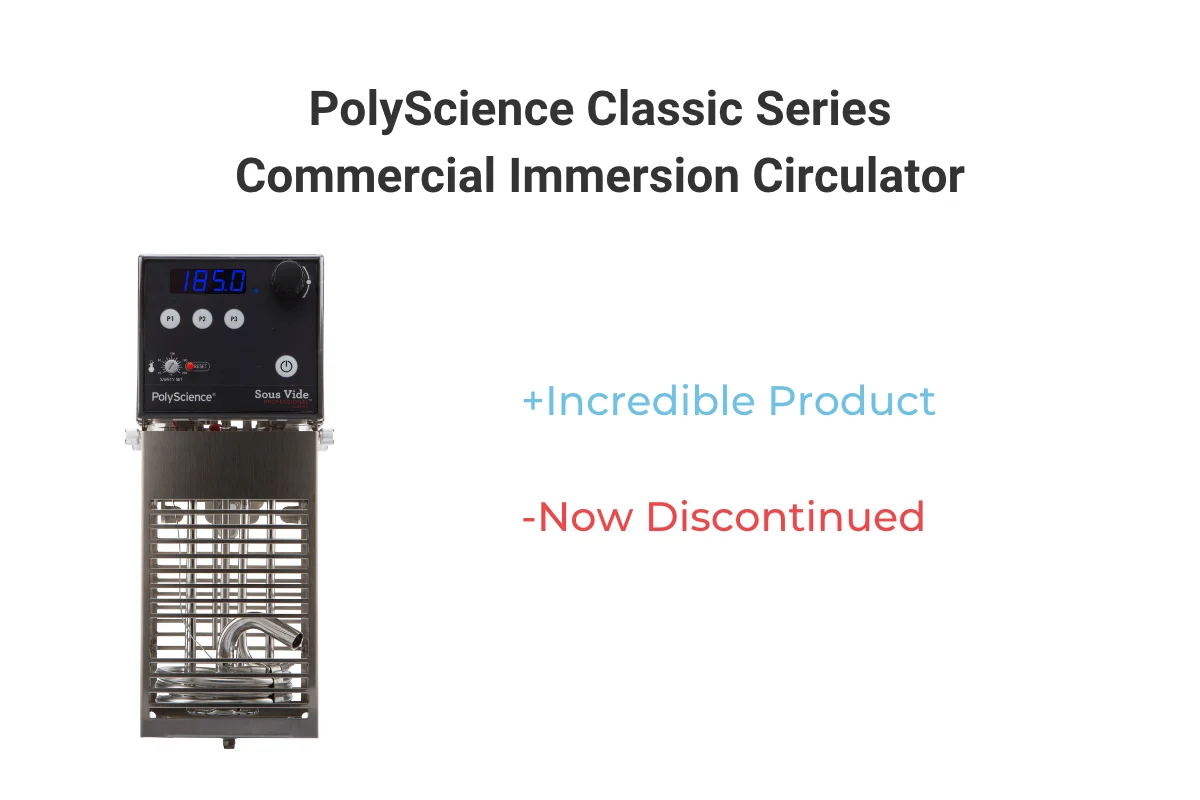
The design of the PolyScience Classic Series was characterized by its industrial aesthetic, prioritizing functionality and ease of maintenance. A prominent feature was the open metal cage at the base, which housed the stainless steel heating coil and pump. This exposed design not only contributed to its robust appearance but also allowed users to easily monitor the internal components. Crucially, the entire cage could be quickly detached, significantly simplifying the process of cleaning and performing routine maintenance – a vital consideration in a commercial kitchen where hygiene and efficiency are non-negotiable.
Control of the Classic Series was managed through a single, intuitive rotating knob. This streamlined interface allowed users to effortlessly set the desired cooking temperature. Furthermore, it offered a "lock-out" mode, a clever feature designed to prevent accidental adjustments to the temperature during the cooking process, thereby safeguarding the integrity of the meal.
Adding to its user-friendly design were three programmable preset functions. These allowed chefs to store and quickly access frequently used temperature settings for specific dishes or cooking techniques. This simple yet effective feature significantly enhanced workflow and reduced the time spent on repeated manual adjustments, further solidifying its position as a valuable tool for professional chefs.
The Discontinuation and the Evolving Market
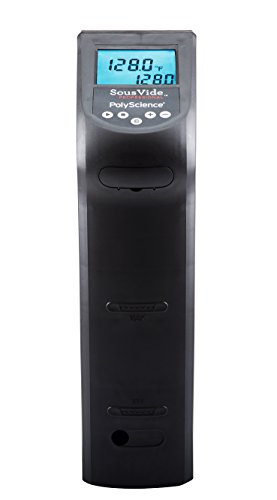
The discontinuation of the PolyScience Classic Series Immersion Circulator, following Breville’s acquisition of PolyScience culinary products, marked the end of an era for many culinary professionals. The transition from a dedicated scientific equipment manufacturer to a consumer electronics giant, while potentially offering broader market reach, also signaled a shift in product focus. The Classic Series, with its robust, industrial design, eventually gave way to more compact and consumer-oriented models.
This transition reflects a broader trend in the sous vide market. As the popularity of sous vide cooking has surged beyond professional kitchens into home use, manufacturers have responded by developing a wide array of immersion circulators. Many current production models, both commercial and home-use, are indeed smaller, more powerful, and often more cost-effective than their predecessors. This evolution has made sous vide technology more accessible to a wider audience, democratizing a technique once exclusive to high-end restaurants.
The implications of this shift are multifaceted. While the accessibility and affordability of newer models are undeniable benefits, some seasoned professionals may lament the loss of the sheer durability and utilitarian design of the Classic Series. The industrial build quality of the older PolyScience units was often seen as a testament to their longevity and ability to withstand constant, heavy use. The "gold standard" status of the Classic Series was not just about its technical specifications but also about its unwavering reliability over years of demanding service.
Alternatives and the Future of Commercial Sous Vide
For professionals currently in need of a commercial immersion circulator, several viable alternatives exist in today’s market. The Breville Polyscience Creative Series, which directly succeeded the Classic Series, remains a strong contender. While it boasts a more compact and portable design, it retains significant power and the precision expected from the PolyScience lineage. Chefs transitioning from the Classic Series will likely find the Creative Series to be a capable replacement, offering a modern take on the trusted PolyScience brand.
Beyond the Breville offerings, the commercial sous vide market is populated by a range of manufacturers producing robust and technologically advanced immersion circulators. Brands like Anova Culinary, Joule, and Instant Pot (with its sous vide functionalities) have introduced models that cater to both professional and serious home cooks. These newer devices often incorporate advanced features such as Wi-Fi connectivity for remote control and monitoring, user-friendly app interfaces, and enhanced heating elements for faster water temperature attainment.
The continuous innovation in this sector suggests a future where sous vide technology becomes even more integrated into culinary practices. As artificial intelligence and smart kitchen technologies advance, we can anticipate immersion circulators that offer even greater levels of automation, predictive cooking capabilities, and seamless integration with other kitchen appliances and inventory management systems. The pursuit of perfect cooking temperatures and consistent results will undoubtedly continue to drive the evolution of these essential culinary tools.
Conclusion: A Legacy of Excellence
The PolyScience Classic Series Immersion Circulator may no longer be in production, but its impact on the professional culinary world is undeniable. It set a high bar for performance, durability, and precision, becoming an indispensable tool in countless top-tier kitchens. Its legacy lives on in the advanced sous vide technology available today, serving as a testament to the enduring value of quality engineering and a commitment to culinary excellence. For those fortunate enough to find a Classic Series unit on the second-hand market, particularly from closing restaurants where used gear is often available at bargain prices, it represents an opportunity to acquire a piece of culinary history that continues to deliver exceptional results. As the sous vide landscape evolves, the principles embodied by the PolyScience Classic Series – unwavering accuracy, robust construction, and user-centric design – remain the guiding stars for innovation in the pursuit of culinary perfection.