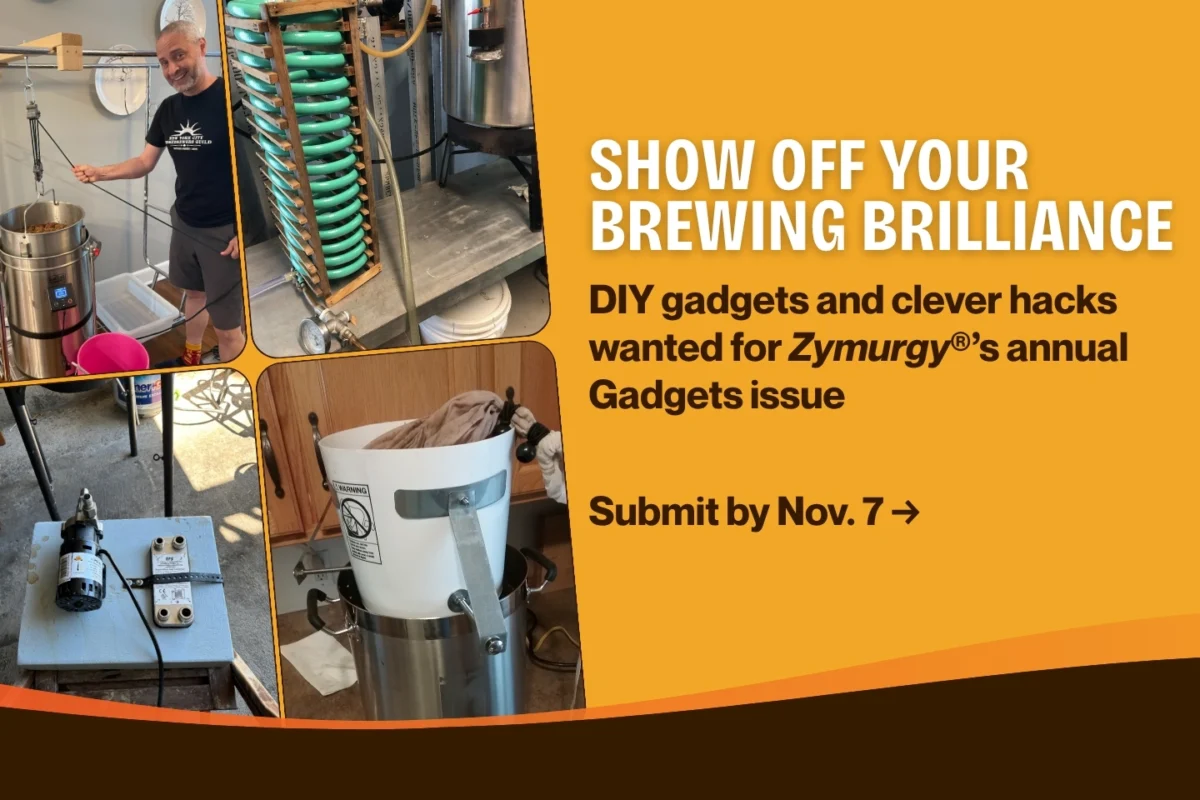

The American Homebrewers Association has officially opened its submission window for the highly anticipated January/February 2026 "Gadgets" issue of Zymurgy magazine, inviting enthusiasts and amateur engineers to showcase their unique DIY brewing inventions. This annual tradition highlights the intersection of technical ingenuity and artisanal craft, providing a platform for homebrewers to share homemade tools, modified equipment, and workflow hacks that improve the efficiency and quality of the brewing process. According to the association’s announcement, contributors have until Friday, November 7, 2025, to submit high-resolution photographs and detailed descriptions of their creations for a chance to be featured in what is recognized as the world’s longest-running publication dedicated specifically to the hobby of homebrewing.
The call for submissions is a cornerstone of the American Homebrewers Association’s editorial calendar, reflecting the "maker" spirit that has defined the hobby since its federal legalization in the United States in 1978. By soliciting content directly from its membership base, Zymurgy continues to serve as a peer-reviewed repository of practical knowledge, ranging from simple hardware store modifications to complex electronic control systems. To participate in this editorial cycle, individuals must hold an active membership with the American Homebrewers Association, an organization that serves as the advocacy and educational hub for the nation’s estimated 1.1 million homebrewers.
Historical Context and the Evolution of Zymurgy Magazine
To understand the significance of the "Gadgets" issue, one must look at the history of the American Homebrewers Association and its flagship publication. Founded in 1978 in Boulder, Colorado, by Charlie Papazian—often referred to as the "father of homebrewing"—the association was established shortly after President Jimmy Carter signed H.R. 1337, which legalized the home production of beer for personal or family use. Zymurgy was launched that same year, taking its name from the Greek word for the study of fermentation.
Over the decades, the magazine has evolved from a black-and-white newsletter into a high-production-value journal that bridges the gap between amateur experimentation and professional brewing science. The Gadgets issue, in particular, has become a fan favorite because it addresses the inherent resourcefulness required of homebrewers. Unlike commercial breweries with multi-million dollar budgets, homebrewers often have to repurpose household items or build their own machinery to achieve professional-grade results. This culture of "brewing on a budget" or "hacking the brew day" has led to significant innovations that eventually trickled up into the commercial craft beer sector.
Technical Scope and Submission Criteria
The American Homebrewers Association has specified that the upcoming issue is looking for a broad range of inventions. Historically, these submissions have been categorized into several key areas of the brewing process. First are "Cold Side" innovations, which include fermentation temperature controllers, yeast stir plates, and oxygenation systems. Given the critical nature of temperature control in producing clean-tasting lagers and ales, DIY glycol chillers or modified chest freezers (often called "keezers") are frequently featured.
Second are "Hot Side" gadgets, focusing on the mashing and boiling stages. This includes custom-built electric brewing rigs, sparge arms made from copper piping, and high-efficiency immersion or counter-flow chillers. The third category often involves "Data and Automation," where tech-savvy brewers utilize microcontrollers like Arduino or Raspberry Pi to monitor gravity readings in real-time or automate valve controls.
For the 2026 issue, the association emphasizes that the most successful submissions are those that solve a common problem. Whether it is a device that speeds up the cleaning process—the most labor-intensive part of brewing—or a tool that improves hop utilization, the focus is on practical utility. Submissions must include a clear, well-lit photograph and a concise description explaining how the gadget works and what materials were used in its construction.
Chronology of the Submission and Publication Cycle
The timeline for the January/February 2026 issue follows a rigorous editorial schedule designed to ensure quality control and technical accuracy. The process began with the initial call for entries in late 2024, leading up to the firm deadline of November 7, 2025.
Once the submission window closes, the Zymurgy editorial team will begin the vetting process. Each submission is reviewed for safety, originality, and clarity. In cases involving complex electrical work or pressurized vessels, the association may consult with technical experts to ensure that the featured DIY projects do not pose a risk to readers who might attempt to replicate them.
Following the selection process in late November, the magazine enters the design and layout phase in December. The January/February issue is typically distributed to members in late December or early January, marking the start of the new year with a focus on "New Year’s Resolutions" regarding brewery upgrades. This cycle allows members to spend the winter months—often the busiest time for indoor brewing—implementing the ideas they find in the magazine.
Supporting Data: The Impact of Homebrewing on the Craft Industry
The importance of organizations like the American Homebrewers Association is underscored by the economic and cultural data surrounding the hobby. According to the most recent surveys conducted by the Brewers Association (the parent organization of the AHA), homebrewers contribute significantly to the broader craft beer economy. It is estimated that homebrewers spend over $800 million annually on equipment, ingredients, and education.
Furthermore, the "Gadgets" issue serves as an incubator for the industry. A 2023 industry report noted that approximately 90% of professional craft brewers in the United States began their careers as homebrewers. Many of the tools now considered standard in small-scale commercial brewing—such as certain types of heat exchangers and hop-dosing vessels—had their origins in the garages and basements of hobbyists who shared their designs in the pages of Zymurgy. The magazine effectively serves as a decentralized Research and Development department for the brewing world.
Official Responses and Community Engagement
While official statements from the American Homebrewers Association regarding this specific call for submissions are focused on technical requirements, the underlying sentiment from the organization emphasizes community and the democratization of brewing knowledge. Representatives from the AHA have frequently noted that the Gadgets issue is one of their most engaged-with editions because it allows the membership to take center stage.
"The ingenuity of our members never ceases to amaze us," a spokesperson for the AHA noted in a previous editorial cycle. "Homebrewers are natural problem solvers. When they see a gap in the market or a way to make their brew day more efficient, they don’t wait for a manufacturer to catch up—they build it themselves. Zymurgy is proud to be the platform that documents this grassroots innovation."
The requirement for membership to submit content is also a strategic move to bolster the association’s advocacy efforts. The American Homebrewers Association uses membership dues to fund legislative initiatives, such as the "Homebrew Con" annual conference and lobbying for fairer laws regarding the transport and sharing of home-produced beverages at festivals and competitions.
Broader Impact and Implications for Brewing Science
The publication of the Gadgets issue has implications that extend beyond mere hobbyist interest. It contributes to a "shared knowledge" economy that challenges the proprietary nature of commercial technology. By publishing DIY designs, the American Homebrewers Association ensures that brewing technology remains accessible to everyone, regardless of their financial status.
Moreover, the focus on "hacks" and "inventions" encourages a scientific mindset. To build an effective gadget, a brewer must understand the physics of fluid dynamics, the thermodynamics of cooling, and the biochemistry of fermentation. This educational aspect is vital for the continued growth of the hobby. As brewing equipment becomes more digitized and automated, the 2026 issue is expected to see a surge in software-based gadgets, reflecting the broader societal shift toward the Internet of Things (IoT).
The "Gadgets" issue also plays a role in sustainability. Many submissions involve upcycling existing materials—such as converting retired stainless steel soda kegs into fermentation vessels or using recycled wood for keezer collars. In an era where environmental impact is a growing concern among consumers, the homebrewing community’s focus on repurposing and repairing equipment provides a model for sustainable hobbyism.
Conclusion and Call to Action for Members
As the November 7 deadline approaches, the American Homebrewers Association continues to encourage its diverse membership—ranging from beginners to veteran "master" brewers—to document their workspace improvements. The Jan/Feb 2026 issue of Zymurgy stands to be a definitive look at the current state of homebrewing technology, driven by the people who use it most.
For those who are not yet members, the association offers various tiers of enrollment that provide access to the Zymurgy digital archive, which contains decades of previous gadget designs and technical papers. This archive serves as an invaluable resource for anyone looking to refine their craft or find inspiration for their own DIY project. As the hobby moves toward a new decade, the American Homebrewers Association remains committed to its mission: promoting the community of homebrewers and empowering them with the tools and knowledge to make the best beer in the world, one gadget at a time.