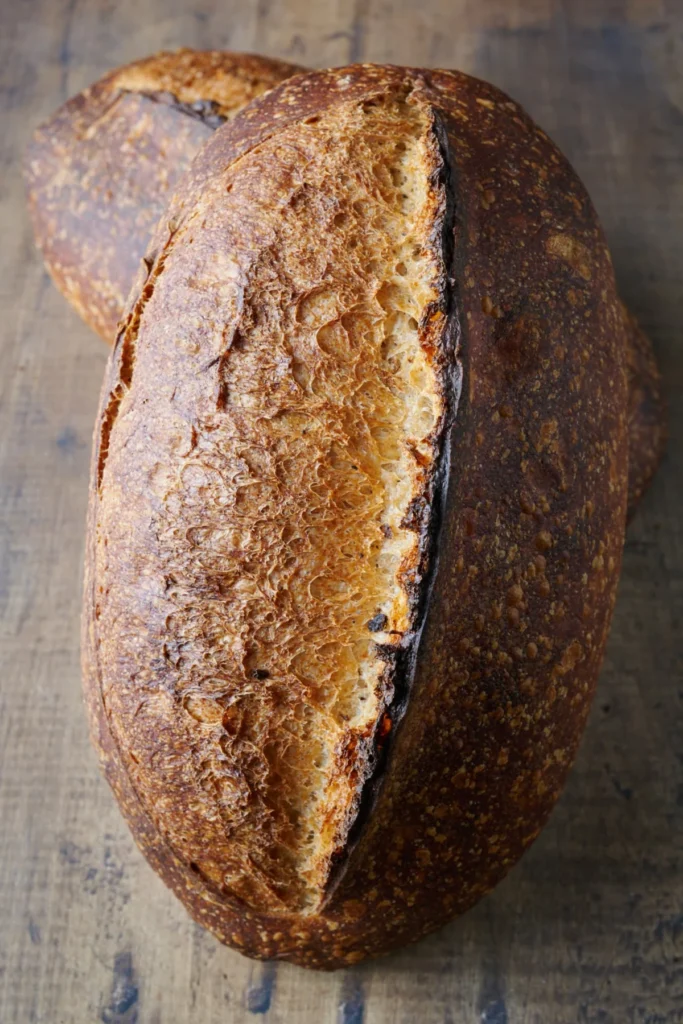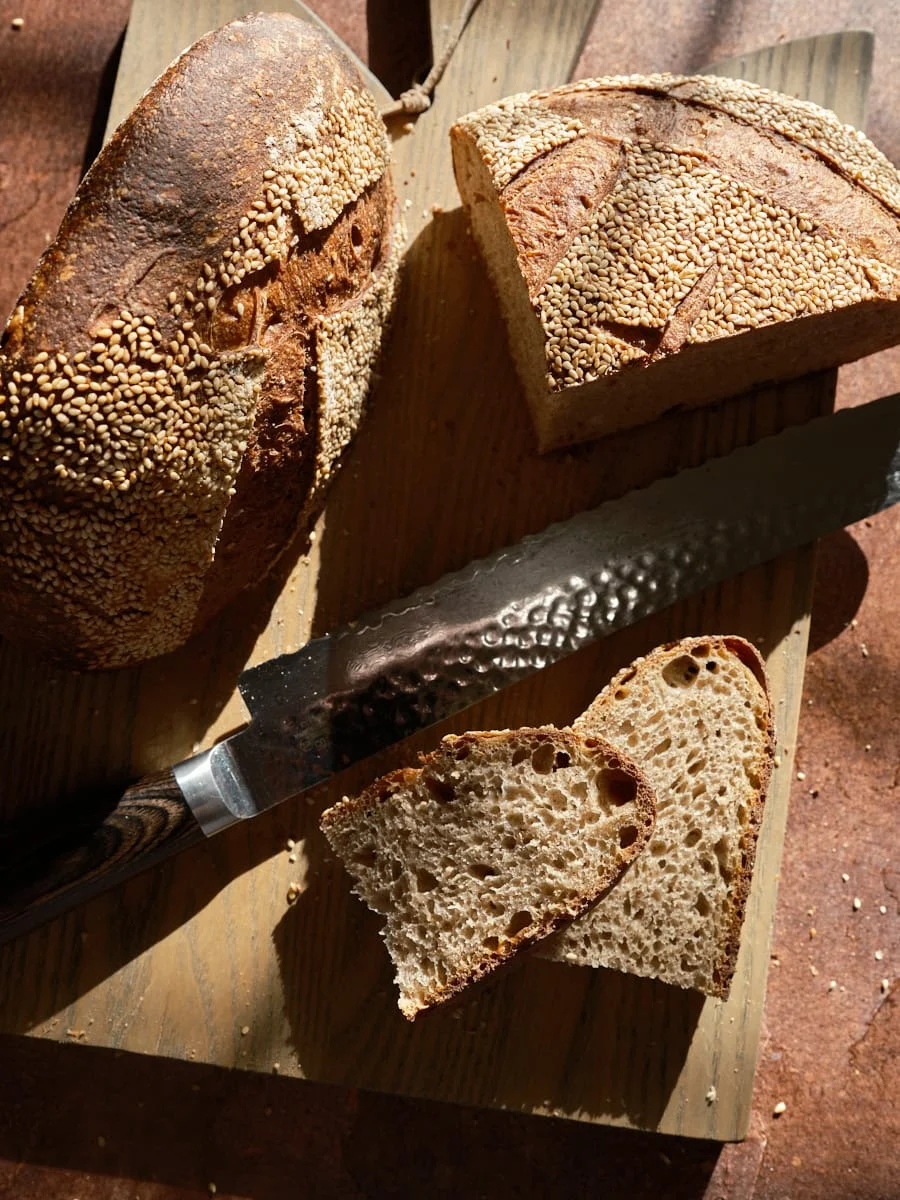

This exceptionally flavorful sourdough, imbued with the warming essence of anise and the robust character of buckwheat, offers a comforting culinary embrace against the persistent chill of winter. The frigid weather, while a natural impetus for the warmth of a roaring oven, presents its own challenges with its early darkness and dry air. Yet, as the baking process unfolds, from the pungent aroma of freshly ground anise to the rich sweetness of malt, the earthy speckles of buckwheat, and the silken texture derived from a flour scald, the cold outside recedes, replaced by the satisfying warmth of creation.
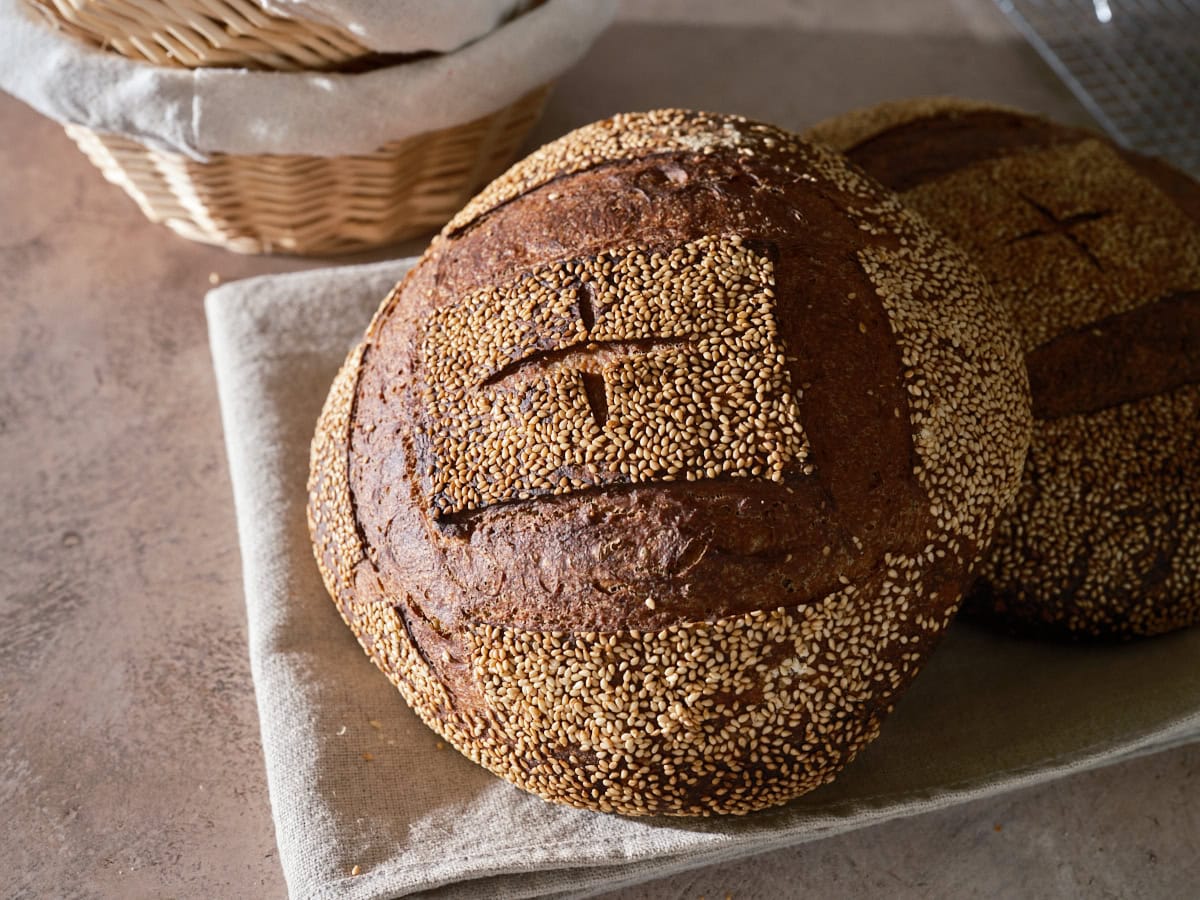
Anise, a spice that commands attention, doesn’t merely hint at its presence; it announces it with a bold, licorice-like fragrance. This distinctive quality, a personal favorite for baking, has found its way into countless cookies and biscotti, yet its application in a large sourdough loaf was a novel exploration. When paired with the nutty, mineral, and subtly tannic notes of buckwheat, anise transforms into a key component of a beautifully balanced and utterly irresistible bread. To crown this creation, a generous topping of striking white sesame seeds not only complements the spice and sweetness but also provides a visually stunning contrast against the whole-grain richness of the loaf.
The Science Behind the Scald: Enhancing Texture and Flavor
The inclusion of buckwheat in this recipe was a deliberate choice, and the technique of scalding the flour proved to be an inspired method for both flavor enhancement and textural refinement. Scalding flour, a process involving covering it with boiling water to create a thick, gelled paste, shares similarities with the Japanese Yudane and the Chinese Tangzhong techniques. This gelatinization process unlocks a wealth of aromatic compounds and deeply infuses the flour with flavor. Crucially, it also enhances the dough’s ability to retain moisture, a key factor in extending the bread’s freshness and delaying staling. This simple yet effective technique adds an extra layer of sophistication to the final loaf.
Flour Selection: A Symphony of Grains
The foundation of this hearty, sandwich-ready loaf is a high-extraction (Type 85) flour. The choice of Cairnspring’s Trailblazer, a staple in the baker’s kitchen, provides a robust base with an increased quotient of bran and germ, contributing to both flavor and nutritional density. Buckwheat, known for its unique earthy profile, is introduced at a carefully considered percentage. Past experience has shown that buckwheat, lacking the gluten structure of wheat, can sometimes tighten the crumb. However, this trade-off yields an intense earthiness and a visually appealing hue that significantly enhances the bread’s overall character.
A Meticulous Baking Schedule: Two Days to Perfection
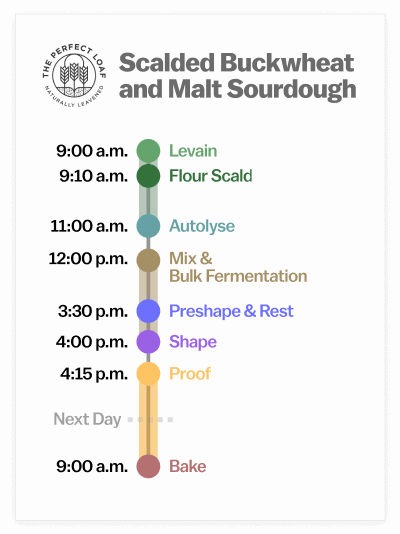
This sourdough recipe is meticulously designed to unfold over two days, requiring minimal active intervention from the baker. The process begins with attentive monitoring of the dough during bulk fermentation, followed by shaping and a crucial overnight cold proof. This extended cold fermentation period allows the flavors to deepen and develop complex notes. The loaves are then baked the following morning, or they can be held in refrigeration until the evening, ensuring freshly baked bread is ready for dinner.
Technical Specifications: Precision in Every Gram
This recipe yields two 900-gram loaves. For bakers wishing to scale the recipe up or down, a comprehensive spreadsheet is available to members of The Baker’s Corner.
Vitals:
- Total Dough Weight: 1,800 grams
- Prefermented Flour: 5.8%
- Levain in Final Dough: 18.5%
- Hydration: 75.0% (83% including the water in the flour scald)
- Yield: Two 900g loaves
The target final dough temperature for this recipe is 78°F (26°C). Maintaining precise dough temperature is paramount in sourdough baking, influencing fermentation rates and ultimately the bread’s structure and flavor.
Total Formula:
| Weight | Ingredient | Baker’s Percentage |
|---|---|---|
| 46g | Scald: Buckwheat flour (Anthony’s Organic Buckwheat Flour) | 5.0% |
| 73g | Scald: Water | 8.0% |
| 687g | High-extraction wheat flour (Type 85; Cairnspring Trailblazer) | 75.0% |
| 183g | Whole wheat flour (Camas Country Hard Red Wheat) | 20.0% |
| 46g | Barley malt syrup | 5.0% |
| 6g | Aniseed, ground | 0.6% |
| 596g | Water 1 (levain and autolyse) | 65.0% |
| 92g | Water 2 (mix) | 10.0% |
| 18g | Fine sea salt | 2.0% |
| 53g | Ripe sourdough starter, 100% hydration | 5.8% |
The Method: A Step-by-Step Journey
1. Prepare the Levain – 9:00 a.m.
| Weight | Ingredient | Baker’s Percentage |
|---|---|---|
| 53g | High-extraction wheat flour | 100.0% |
| 53g | Water 1 (levain) | 100.0% |
| 53g | Ripe sourdough starter | 100.0% |
Combine the levain ingredients in a clean jar and allow them to ripen at 74-76°F (23-24°C) for approximately 3 hours. This active starter forms the biological engine of the sourdough. For precise scaling of the levain, a dedicated sourdough starter and levain calculator is an invaluable tool.
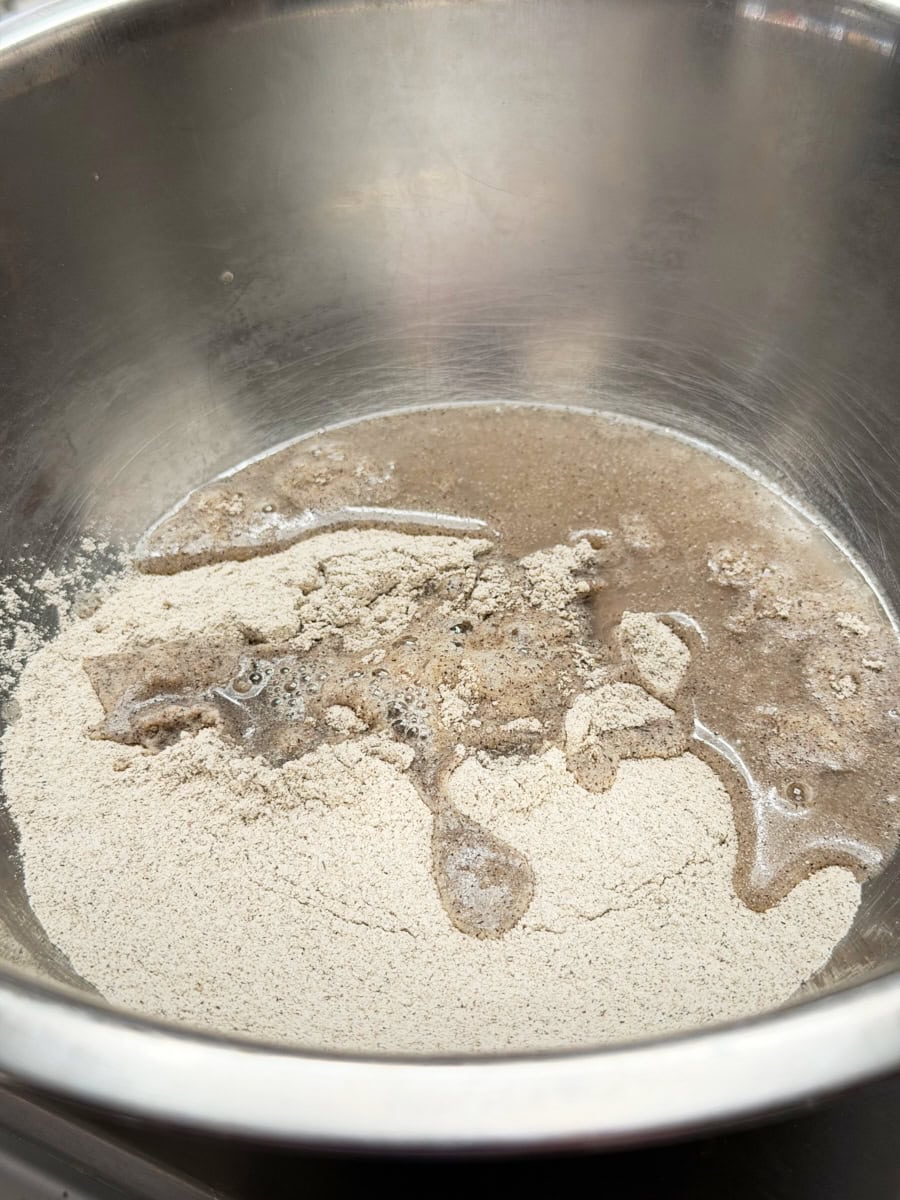
2. Prepare the Flour Scald – 9:10 a.m.
| Weight | Ingredient |
|---|---|
| 46g | Buckwheat flour |
| 73g | Water, boiling |
In a small bowl, combine the buckwheat flour with the boiling water. Stir vigorously until a smooth paste forms. If the mixture appears too dry, a small additional splash of boiling water can be incorporated. This aromatic paste is then set aside.
3. Autolyse – 11:00 a.m.

| Weight | Ingredient |
|---|---|
| 634g | High-extraction flour |
| 183g | Whole wheat flour |
| 543g | Water 1 (autolyse) |
| All | Flour scald |
Using a water temperature calculator to achieve the target final dough temperature of 78°F (25°C), combine the flours, autolyse water, and the prepared flour scald in a large bowl. Mix with wet hands until no dry flour remains, creating a shaggy but cohesive dough. Cover and let rest for 1 hour. This resting period, known as autolyse, allows the flour to fully hydrate and gluten development to begin passively.
4. Mix – 12:00 p.m.
| Weight | Ingredient |
|---|---|
| 92g | Water 2 (mix) |
| 18g | Fine sea salt |
| 159g | Ripe levain |
This recipe features a high hydration level, meaning the dough will be notably slack and sticky. The "bassinage" technique, where a portion of the water (Water 2) is held back and added gradually, is employed to manage this. This ensures the dough achieves optimal hydration without becoming unmanageable.
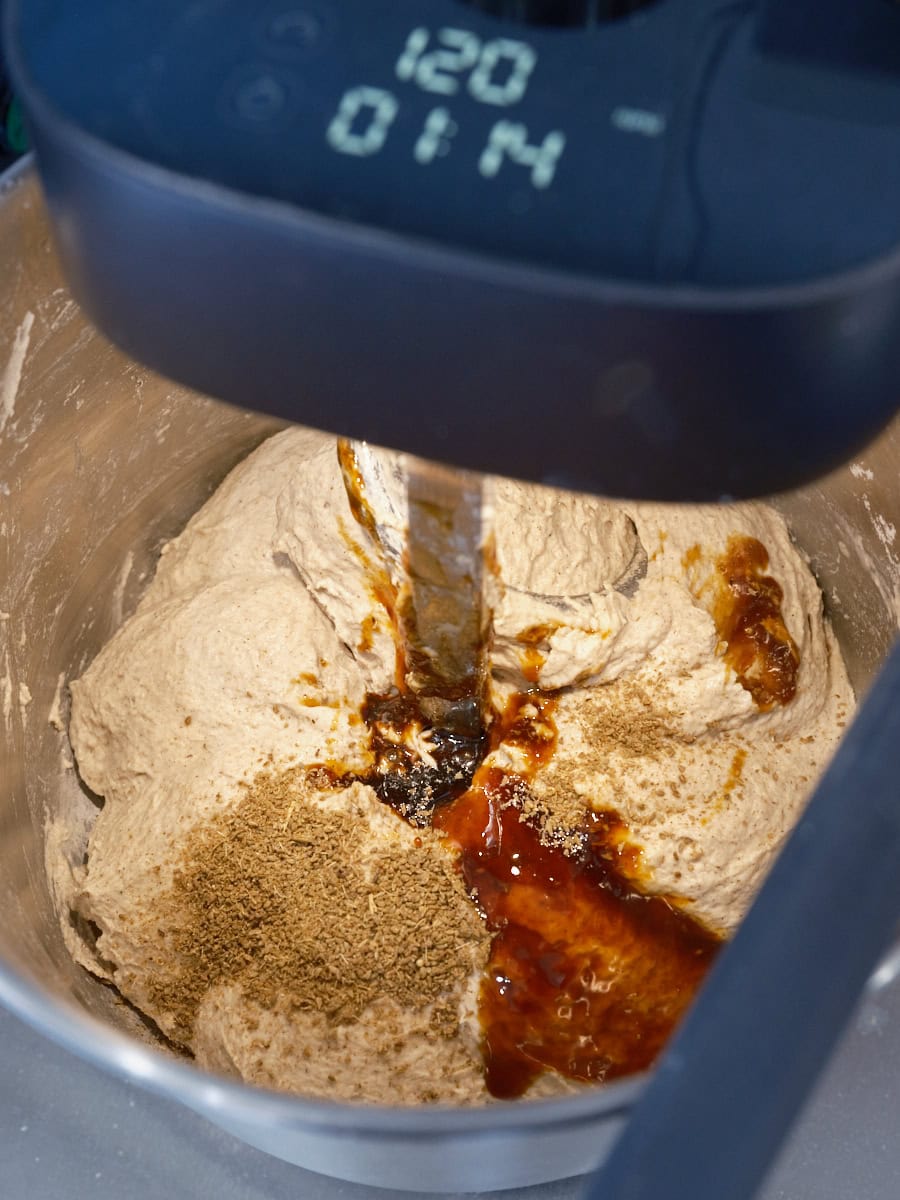
Mixing with a Mechanical Mixer:
For those utilizing a mechanical mixer, such as a spiral mixer, the dough is typically incorporated in stages after the autolyse. This controlled mixing ensures even distribution of ingredients and proper gluten development.
Mixing by Hand:
For hand mixing, add the salt and levain to the autolysed dough, along with a splash of Water 2. Thoroughly incorporate these ingredients using wet hands or a dough whisk. Knead for approximately 5 minutes using the slap-and-fold technique or the folds-in-the-bowl method until the dough is smooth and less shaggy. Transfer the dough to a clean container, cover, and allow it to rest for 10 minutes. If the dough still feels too wet, incorporate the remaining Water 2. Subsequent kneading, either by hand or with a dough whisk, should result in a smoother, more cohesive dough.
5. Bulk Fermentation – 12:30 p.m. to 3:30 p.m. (3 hours)
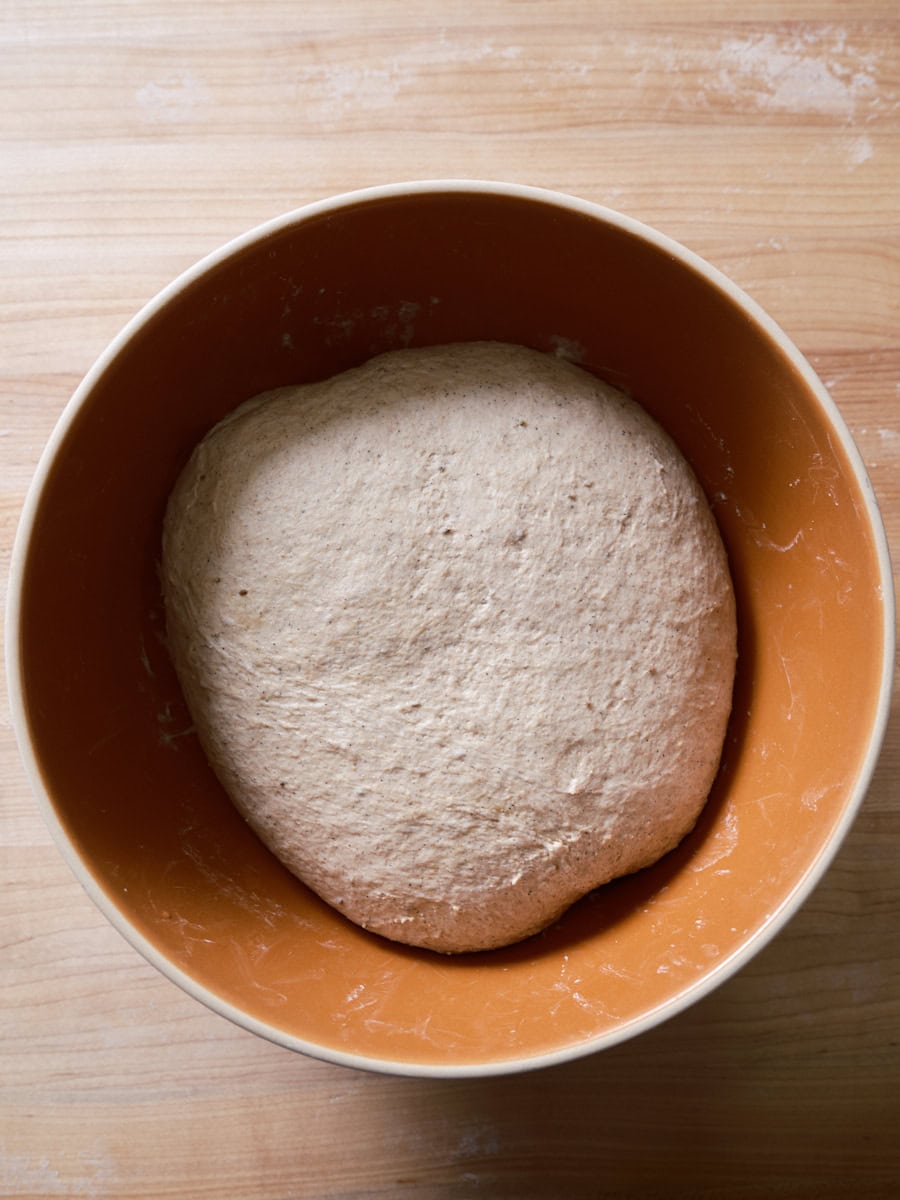
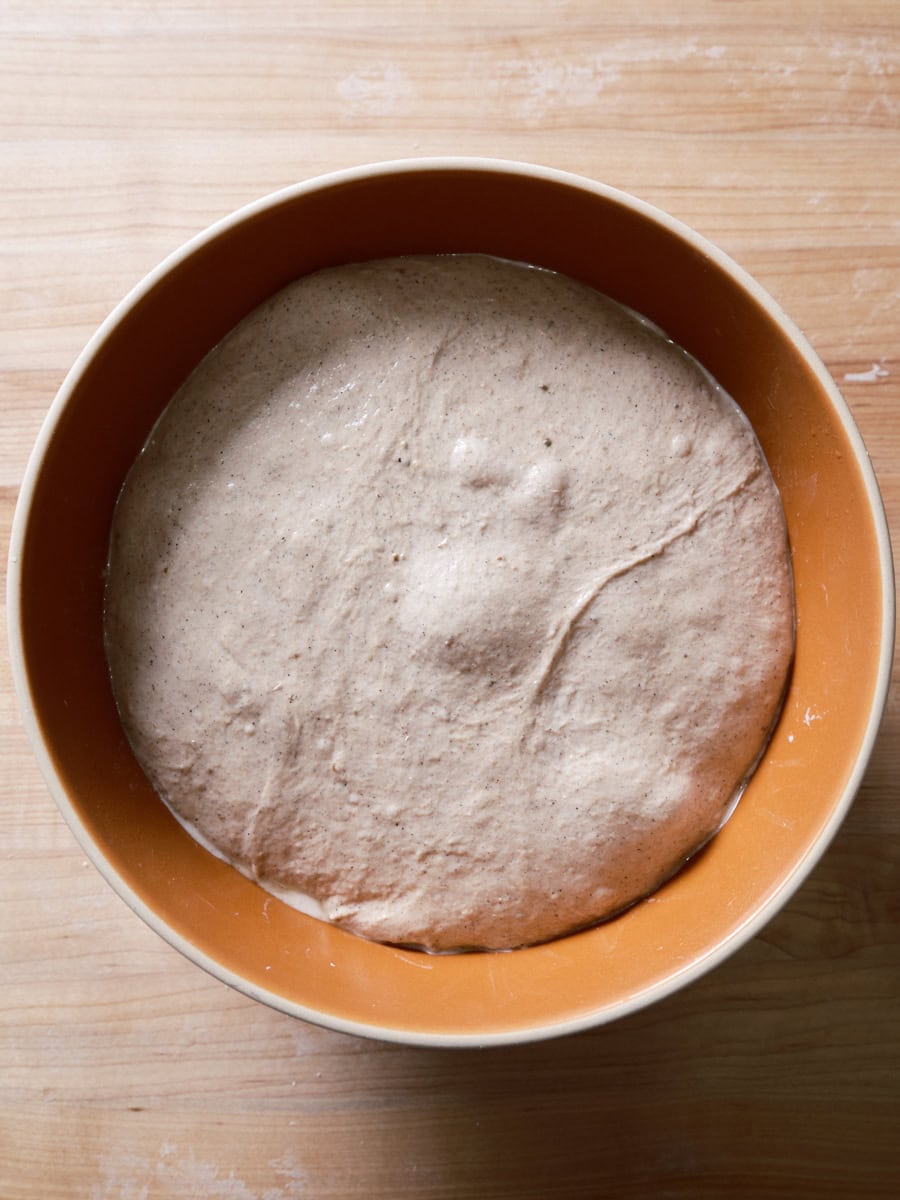
At a warm room temperature of 74-76°F (23-24°C), bulk fermentation is expected to last for approximately 3 hours. During this critical phase, two sets of stretch-and-folds are performed at 30-minute intervals. These folds strengthen the gluten network, build structure, and evenly distribute the yeast and bacteria, contributing to a well-risen loaf. After the second set of folds, the dough is left undisturbed to continue fermenting. A visual cue for the end of bulk fermentation is a noticeable increase in dough volume, typically around 30%, and a smooth, airy appearance.
6. Pre-shape – 3:30 p.m.
Gently turn the fermented dough out onto a lightly floured work surface. Divide the dough into two equal portions. Each portion is then carefully pre-shaped into a loose round. This step gently degasses the dough and begins to build surface tension, preparing it for the final shaping. Allow the pre-shaped rounds to rest, uncovered, for 30 minutes.
7. Shape – 4:00 p.m.
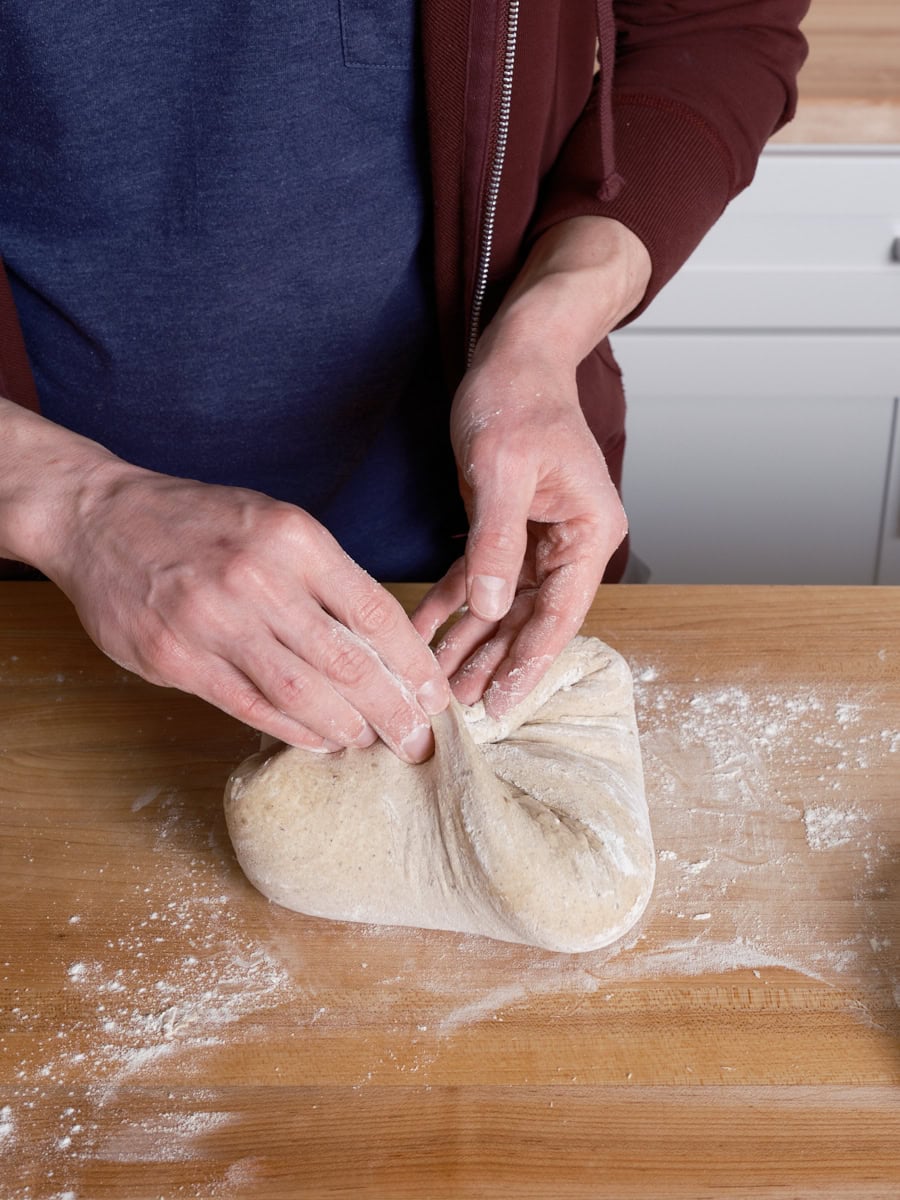
A generous layer of raw white sesame seeds is spread onto a clean kitchen towel or a quarter-sheet pan. The pre-shaped dough rounds are then inverted onto this seeded surface. Using a "gather up" method, opposing points of the dough are folded towards the center, slightly overlapping. This process is repeated with the remaining points, and the dough is then flipped over. With gentle tension created by dragging the dough towards the body, a smooth, rounded shape is formed. This shaped dough is then carefully transferred, seam-side up, into a floured proofing basket.
8. Proof – 4:15 p.m. to 9:00 a.m. (Overnight Cold Proof)
The proofing baskets are covered with reusable plastic bags and sealed to prevent the dough from drying out. They are then placed in the refrigerator for an overnight cold proof. This extended period of slow fermentation in a cold environment is essential for developing complex flavors and achieving an optimal crust.
9. Bake – 9:00 a.m.
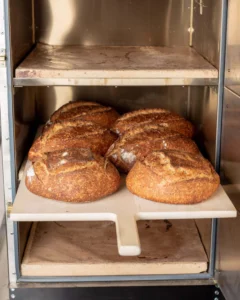
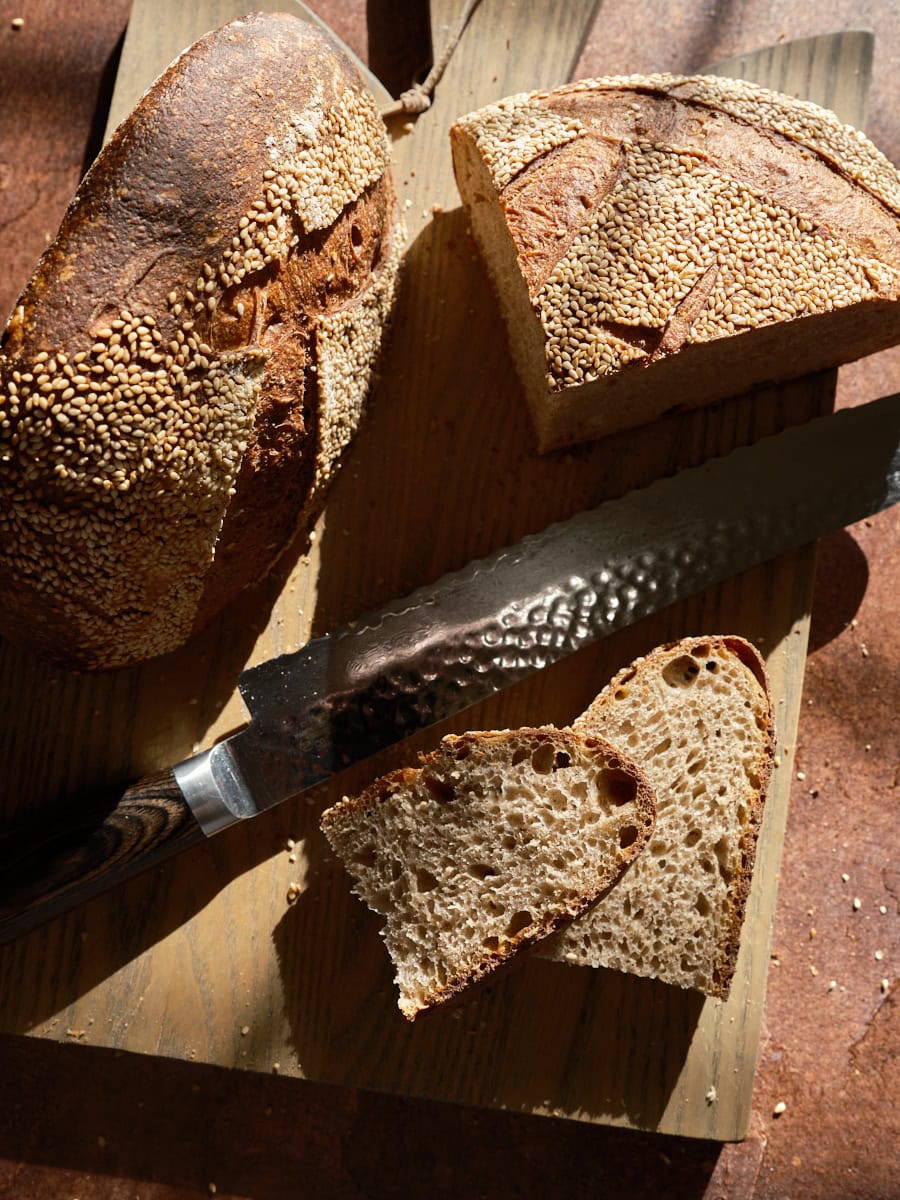
The oven is preheated to 450°F (230°C) with a Dutch oven or baking stone/steel in place. One proofing basket is removed from the refrigerator. The dough is inverted onto parchment paper, scored with a sharp blade, and carefully transferred into the preheated baking vessel. Steam is introduced into the oven for the initial 20 minutes of baking, crucial for achieving a superior crust. After this initial steaming period, the steam is released by venting the oven or removing the steaming apparatus. The loaves continue to bake for an additional 30 minutes, or until they achieve a deep golden-brown color and an internal temperature of approximately 204°F (95°C). The process is repeated for the second loaf. Allow the baked loaves to cool completely on a wire rack for 1 to 2 hours before slicing to ensure the crumb is fully set.

Frequently Asked Questions
- What can I use instead of aniseed?
Caraway seeds offer a comparable spice profile and would be an excellent substitute. - What can I use instead of barley malt syrup?
For a more complex, bitter-sweet flavor, blackstrap molasses is a suitable alternative. Honey can also be used for a sweeter, more floral note that pairs harmoniously with anise.
Further Exploration
For those captivated by the nuanced flavors of buckwheat in sourdough, the Soft Honey Buckwheat Sandwich Bread recipe offers a rich yet sweet alternative. This exploration into the art of sourdough baking, particularly with ingredients like anise and buckwheat, provides a deeply satisfying culinary experience, transforming simple flour and water into a work of art.