
The culinary and scientific communities are abuzz following the release of a seminal document by Hervé This, co-founder of molecular gastronomy, summarizing two decades of groundbreaking research from the monthly Molecular Gastronomy Seminars in Paris. This extensive compendium, now available for public distribution in both French and English, serves as a testament to the rigorous scientific inquiry applied to culinary practices and promises to be an invaluable resource for chefs, food scientists, and educators globally.
The Genesis of Molecular Gastronomy: A Scientific Revolution in the Kitchen
The concept of "molecular gastronomy" emerged in the late 1980s, coined by Hungarian physicist Nicholas Kurti and French physical chemist Hervé This. Their vision was to establish a scientific discipline dedicated to studying the physical and chemical processes that occur during cooking. Far from merely a style of cuisine, molecular gastronomy was conceived as a rigorous academic pursuit aimed at understanding, demystifying, and ultimately optimizing culinary techniques through the lens of physics and chemistry.
The initial impetus for this new field was the observation that much of traditional cooking relied on anecdotal evidence, inherited wisdom, and practices passed down through generations, often without a clear scientific understanding of why certain methods worked or didn’t. Kurti, famous for his work on low-temperature physics, and This sought to bring scientific methodology – observation, hypothesis formation, experimentation, and data analysis – into the kitchen. Their aim was not to invent novel dishes but to systematically investigate the science behind classic recipes and culinary phenomena.
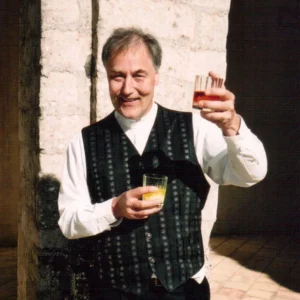
This revolutionary approach culminated in the establishment of the International Workshop on Molecular Gastronomy, held in Erice, Sicily, starting in 1992. These workshops brought together leading chefs, scientists, and food enthusiasts from around the world to discuss and debate the scientific underpinnings of cooking. Erice quickly became the intellectual crucible for the nascent discipline, fostering interdisciplinary dialogue and laying the groundwork for future research. Hervé This was a pivotal figure in these gatherings, often photographed illustrating scientific principles with everyday ingredients, as evidenced by an iconic image from the 2004 workshop showing him with eggs immersed in colored solutions. These workshops underscored the collaborative spirit and the earnest scientific curiosity that defined molecular gastronomy from its very inception.
Hervé This, a research director at INRA (France’s National Institute for Agricultural Research) and a professor at AgroParisTech, has been at the forefront of this movement. His early work, including publications like "Kitchen Mysteries: Explaining the Science of Cooking," captivated audiences by dissecting common kitchen practices. He questioned long-held beliefs – such as whether searing meat "seals in" juices or if adding salt to boiling water significantly raises its boiling point – and provided scientific explanations, inspiring a new generation to approach cooking with a critical, inquisitive mind. This intellectual rigor resonated deeply with aspiring culinarians and scientists, demonstrating that the kitchen could be as fascinating a laboratory as any.
Two Decades of Rigorous Inquiry: The Paris Seminars Unveiled
Building upon the foundational principles established in Erice, Hervé This initiated the monthly Molecular Gastronomy Seminars in Paris. For two decades, these seminars have served as a continuous forum for experimental research, bringing together a diverse group of participants, including professional chefs, food scientists, students, and passionate amateurs. The methodology employed is consistently scientific: identify a culinary claim or practice, formulate a hypothesis, design and conduct experiments, observe and measure results, and document findings.
The newly released summary document encapsulates the sheer volume and diversity of investigations undertaken during these seminars. While the English version offers brief overviews, the full, extensive documentation for each seminar is meticulously preserved in French, providing detailed experimental conditions, results, and analyses. This comprehensive archive is a testament to the dedication of This and his collaborators in systematically challenging culinary dogma.
The seminars have tackled a wide array of culinary questions, ranging from the seemingly trivial to the profoundly complex. For instance, investigations have explored:
- Egg Coagulation: Precise temperatures and timings for cooking eggs to achieve specific textures, challenging conventional wisdom about "soft-boiled" or "hard-boiled" states. The seminars delve into the thermodynamics of protein denaturation and how slight variations in temperature and time can dramatically alter the final product, affecting everything from yolk consistency to albumen texture.
- The Impact of Salt on Boiling Water: Quantifying the actual effect of salt on the boiling point of water and its practical implications for cooking pasta or vegetables. While salt does raise the boiling point, the seminars demonstrate that the amount typically used in home cooking has a negligible effect on cooking time, highlighting flavor enhancement as its primary role.
- Browning Reactions: Exploring the Maillard reaction and caramelization in various foods, understanding the conditions (temperature, pH, presence of reducing sugars and amino acids) that optimize flavor and color development in everything from seared meats to roasted vegetables. This research has helped chefs understand how to achieve desired crusts and aromatic compounds more consistently.
- Emulsification Stability: Investigating the science behind stable emulsions like mayonnaise or vinaigrettes, identifying the critical ratios of oil, water, and emulsifiers, and the mechanical energy required to create lasting mixtures. This has practical applications for developing more reliable sauces and dressings.
- Texture Modification: Experiments on how different cooking methods, ingredients, and additives affect the texture of food, from the crispness of fried items to the tenderness of braised meats or the elasticity of doughs. Understanding the rheology of food is crucial for both sensory perception and food product development.
- Flavor Release and Perception: Analyzing how different cooking techniques influence the release of volatile aromatic compounds and how these interact with taste receptors, contributing to the overall sensory experience. This includes studying the effect of temperature on aroma perception and the synergistic effects of various ingredients.
These examples illustrate the meticulous, evidence-based approach adopted by the seminars. Each finding, however minute it might seem in isolation, contributes to a larger tapestry of scientific understanding in the culinary arts. The consistent documentation of experimental conditions and results is crucial, providing reproducible data that can be built upon by future researchers and practitioners.
A "Treasure Trove" for Culinary Professionals and Scientists
The comprehensive summary, alongside the extensive underlying documentation, is accurately described as a "treasure trove" for both chefs and chemists. Its value extends across several dimensions:
For culinary professionals, the seminars’ findings offer practical insights that can refine techniques, optimize recipes, and inspire innovation. By understanding the scientific principles behind cooking, chefs can move beyond rote memorization of recipes to a deeper, more intuitive grasp of how ingredients behave and interact. This knowledge empowers them to troubleshoot culinary challenges, develop new dishes with greater precision, and consistently achieve desired outcomes in terms of flavor, texture, and appearance. For instance, knowing the exact temperature at which proteins coagulate allows a chef to precisely control the doneness of a delicate fish or a perfectly rendered egg yolk, leading to more consistent and superior gastronomic experiences. The data can also inform menu development, ingredient sourcing, and even kitchen design, optimizing workflow and efficiency.
For chemists and food scientists, the archive represents a rich source of empirical data and research hypotheses. It bridges the often-disparate worlds of academic food science and practical culinary application. The systematic exploration of everyday kitchen phenomena provides valuable starting points for more in-depth laboratory research, potentially leading to new discoveries in food chemistry, material science, and nutrition. The detailed experimental conditions allow for replication and further validation, fostering a truly scientific dialogue about food. Furthermore, the findings can inform the development of new food products, processing techniques, and quality control measures within the food industry.
The educational impact is equally significant. The seminars’ work provides an invaluable pedagogical tool for culinary schools and science departments alike. It offers concrete examples of scientific methodology applied to a universally relatable subject – food – making complex scientific concepts accessible and engaging. It encourages students to think critically, question assumptions, and embrace experimentation, fostering a generation of chefs who are not just skilled practitioners but also informed scientists. Conversely, it can inspire science students to explore the practical applications of their knowledge in a dynamic and creative field.
The dual-language availability, despite the note regarding the English translation’s occasional nuances, ensures a broader reach. While the French edition remains the definitive source for complete details, the English summary provides a vital entry point for the global scientific and culinary communities, facilitating the dissemination of these critical insights across linguistic barriers. This commitment to open knowledge sharing aligns with the scientific ethos of collaboration and progress.
Beyond the Kitchen: Broader Implications of Molecular Gastronomy
The enduring legacy of the Molecular Gastronomy Seminars, and indeed the entire field, extends far beyond the confines of individual kitchens or laboratories. Its implications resonate across the food industry, public health, and general education.
In the restaurant industry, molecular gastronomy has fostered an era of unprecedented innovation. While often mistakenly equated with "molecular cuisine" – the application of these scientific principles to create novel dishes (e.g., foams, spherification, gels) – the underlying discipline has pushed chefs to understand their ingredients and processes at a fundamental level. This has led to greater precision, consistency, and creativity in fine dining and beyond. Renowned chefs like Ferran Adrià of El Bulli and Heston Blumenthal of The Fat Duck, while not solely practitioners of "molecular cuisine," have openly acknowledged the profound influence of molecular gastronomy’s scientific rigor on their culinary philosophy and techniques. They exemplify how scientific understanding can unlock new textures, flavors, and sensory experiences.
For food product development, the insights gained from molecular gastronomy are directly applicable. Understanding protein denaturation, starch gelatinization, or fat crystallization at a molecular level allows for the creation of new ingredients, healthier food alternatives, and improved processing methods. This knowledge contributes to better shelf stability, enhanced nutritional profiles, and improved sensory attributes of mass-produced foods.
At a societal level, molecular gastronomy has played a crucial role in demystifying food science and raising public awareness about the chemistry and physics of everyday cooking. By challenging common kitchen myths, it encourages a more evidence-based approach to food preparation, which can have positive impacts on food safety, nutrition, and resource management. It empowers consumers to make more informed choices and understand the science behind dietary recommendations or cooking advice.
The ongoing quest to question and test culinary claims, as championed by Hervé This and the Paris seminars, underscores the importance of critical thinking in all aspects of life. It serves as a powerful reminder that even the most ingrained traditions and beliefs can benefit from rigorous scientific scrutiny. This intellectual curiosity is fundamental to progress, not just in the culinary world, but across all scientific disciplines.
Hervé This: A Legacy of Inquiry and Innovation
Hervé This’s commitment to advancing the scientific understanding of cooking has been unwavering for over three decades. His academic background in physical chemistry provides the foundation for his analytical approach, yet his passion for food and culture drives his relentless pursuit of culinary truth. Beyond his research, This is a prolific author, educator, and public speaker, effectively translating complex scientific concepts into accessible language for a broad audience. His ability to bridge the gap between the laboratory and the kitchen, between scientific jargon and practical application, has been instrumental in popularizing molecular gastronomy.
The release of this 20-year summary is not merely a historical retrospective but a forward-looking declaration of the ongoing relevance and vitality of molecular gastronomy. It consolidates a vast body of experimental work, providing a solid scientific foundation upon which future culinary and food science research can be built. As the food landscape continues to evolve, facing challenges related to sustainability, nutrition, and global food security, the principles and methodologies championed by Hervé This and the Molecular Gastronomy Seminars will undoubtedly continue to play a critical role in shaping the future of how we understand, prepare, and enjoy food. The enduring spirit of scientific inquiry in the kitchen remains as potent and necessary as ever.