
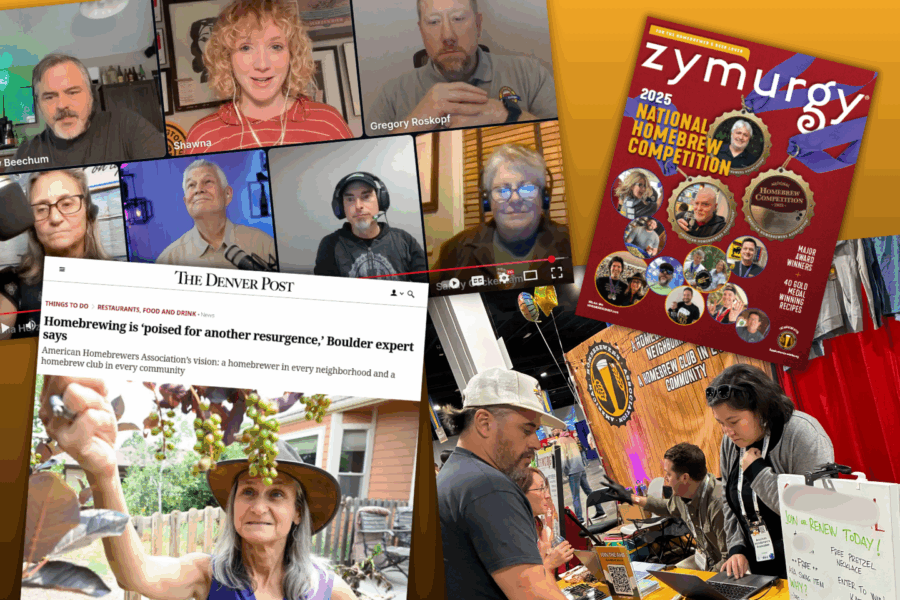
The American Homebrewers Association (AHA) has officially entered a transformative era, marking 2025 as a watershed year in its decades-long history by achieving full independence as a stand-alone nonprofit organization. This strategic pivot, characterized by the establishment of an autonomous governing body and the separation of operational infrastructures, signals a renewed commitment to the million-plus homebrewers across the United States. With the cooling of the autumn weather and the seasonal uptick in fermentation activity, the association has unveiled a comprehensive roadmap aimed at revitalizing the hobby through a new vision: placing a homebrewer in every neighborhood and a homebrew club in every community.
A Historical Context: From Foundation to Autonomy
To understand the magnitude of the AHA’s transition in 2025, one must look back to its inception in 1978. Founded by Charlie Papazian in Boulder, Colorado, the AHA was instrumental in the "Homebrew Renaissance" that eventually birthed the modern American craft beer movement. For much of its existence, the AHA operated under the umbrella of the Brewers Association (BA), a powerful trade group representing professional craft brewers. While this partnership provided stability and shared resources, the evolving landscape of the beverage industry necessitated a shift.
By late 2024, leadership within the brewing community recognized that the needs of the hobbyist—focused on education, local community building, and legislative advocacy for personal production—had diverged from the commercial interests of large-scale craft breweries. The move to a stand-alone nonprofit status allows the AHA to dedicate 100% of its revenue and organizational focus toward the amateur brewer. This independence is not merely administrative; it represents a fundamental reclaiming of the association’s grassroots identity.
Strategic Accomplishments and Operational Milestones
Since the landmark board update in April 2024, the AHA has moved with significant velocity to secure its foundations. The transition to an independent nonprofit required a massive overhaul of the organization’s backend systems. According to the association’s latest progress report, several key milestones have been achieved:
- Governance Independence: The formation of a dedicated AHA Founding Board has been completed. This body is composed of veteran homebrewers, industry experts, and community leaders who are tasked with steering the organization without the conflicting pressures of professional trade interests.
- Financial and Digital Decoupling: The AHA has successfully migrated its financial systems, member databases, and digital assets away from the Brewers Association infrastructure. This move is intended to streamline the member experience and ensure that membership dues are reinvested directly into hobbyist-centric programs.
- The 2024 Event Cycle: Despite the logistical challenges of independence, the association successfully executed the 2024 National Homebrew Competition (NHC) and the annual Homebrew Con. These events serve as the "Gold Standard" for the hobby, providing a platform for rigorous feedback and technical education.
The association’s new Strategic Plan serves as the North Star for these efforts. By shifting the focus toward "neighborhood-level" engagement, the AHA is moving away from a centralized top-down model toward a decentralized approach that empowers local homebrew clubs—the lifeblood of the hobby.
Data-Driven Insights: The Current State of Homebrewing
The drive for independence comes at a critical juncture for the hobby. Market data from the early 2020s suggested a plateau in homebrewing participation as the "pandemic boom" faded and the availability of diverse craft beer at retail reached an all-time high. However, the AHA’s internal metrics suggest a shift in the demographic of the modern brewer.
While the "traditional" homebrewer remains a core pillar, there is a rising trend in "maker culture" enthusiasts who view brewing through the lens of culinary art and sustainable DIY practices. The AHA’s focus on "validated recipes" from the NHC is a direct response to this demand for high-level technical accuracy. Furthermore, the association continues to manage a database of thousands of AHA Member Deals, which provides a tangible return on investment for members by offering discounts at local homebrew shops (LHBS) and breweries.
The health of the Local Homebrew Shop remains a primary concern for the association. The "AHA Shop Support" initiatives are designed to bolster these small businesses, which serve as the primary entry point for new hobbyists. By fostering a "homebrew club in every community," the AHA aims to create a sustainable ecosystem that supports both the hobbyist and the local supply chain.
Chronology of the Transition
The path to 2025 has been marked by several key phases:
- Late 2023: Initial feasibility studies on the separation of the AHA from the Brewers Association are conducted.
- April 2024: The AHA Board provides a formal update to the membership, outlining the intent for independence and the preliminary vision for the new nonprofit structure.
- June 2024: The National Homebrew Competition concludes with record-breaking entries in specific categories like Hazy IPA and Historical Ales, proving the technical vitality of the membership.
- November 5, 2024: A special "Zymurgy Live" session is scheduled, opening the platform to both members and non-members to discuss the future of the association. This event serves as a town hall for the community to engage with the Founding Board.
- January 2025: Full operational independence is achieved, with the AHA functioning as its own legal and financial entity.
Implications for Advocacy and Legal Frameworks
One of the most significant advantages of the AHA’s new independence is its ability to engage more directly in legislative advocacy. While homebrewing was legalized federally in 1978 and in all 50 states by 2013, many local regulations remain restrictive regarding the transport of homebrew and its presence at public festivals.
As a stand-alone nonprofit, the AHA can more effectively lobby for "Homebrew-Friendly" legislation. This includes clarifying laws regarding the serving of home-produced beverages at nonprofit events and competitions. The association’s independence allows it to take stances that are purely in the interest of the hobbyist, without needing to balance those positions against the regulatory concerns of commercial breweries.
Future Outlook: The 2026 Roadmap
Looking ahead to 2026, the AHA has teased a "simmering" list of upgrades designed to modernize the member experience. Central to this is a significant investment in digital infrastructure. Members can expect:
- Enhanced Digital Benefits: A more robust online portal for accessing Zymurgy Magazine archives and the NHC recipe database.
- Member Service Upgrades: Improved response times and more personalized support for club leaders and individual brewers.
- Global Community Integration: While "American" is in the name, the AHA’s resources are used globally. The 2026 plan includes better integration for international members and clubs.
The association has also signaled a shift in how it delivers content. Zymurgy Magazine, long considered the premier publication for technical brewing, will continue to evolve, blending high-level science with accessible community stories. The goal is to ensure that the magazine remains an "unmatched reason" for membership in an era of free, albeit often unreliable, internet information.
Analysis of the Impact on the Craft Beer Industry
The independence of the AHA is likely to have a ripple effect across the broader craft beer industry. Historically, homebrewers have been the most informed and loyal consumers of craft beer. They are the "influencers" in their social circles, driving trends and supporting local taprooms. By strengthening the homebrewing community, the AHA is indirectly supporting the commercial craft beer sector by cultivating a more educated and passionate consumer base.
Furthermore, the homebrewing community remains the primary "R&D lab" for the professional industry. Many of the most popular styles today—from American IPA to Pastry Stouts—had their origins in the experimental carboys of homebrewers. A thriving, independent AHA ensures that this pipeline of innovation remains open and well-supported.
Conclusion: A Community-Led Future
The message from the AHA Founding Board is clear: the association exists for the members and because of the members. The transition to an independent nonprofit is a bold bet on the future of the hobby. It acknowledges that while the "Gold Rush" era of craft beer may have matured, the fundamental human desire to create, share, and perfect a craft remains as strong as ever.
As the association moves toward its 50th anniversary in the coming years, the 2025 independence movement will likely be viewed as the moment the AHA secured its long-term viability. By focusing on neighborhoods, communities, and the technical excellence of the individual brewer, the American Homebrewers Association is not just preserving a hobby—it is ensuring that the culture of fermentation continues to thrive for generations to come. Members and prospective brewers are encouraged to join this movement, participate in the upcoming "Zymurgy Live" sessions, and take an active role in shaping the next chapter of brewing history.