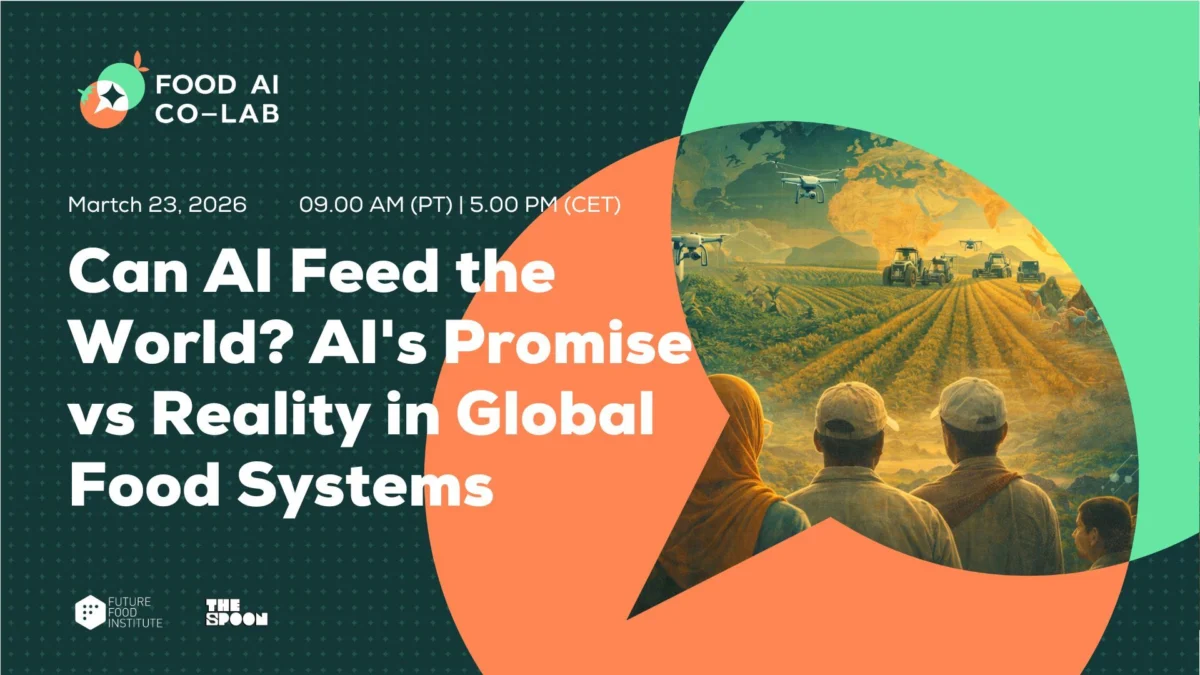

The global food system faces profound challenges, and while Artificial Intelligence (AI) holds immense promise for transformation, its equitable application, particularly in regions with limited infrastructure, remains a critical concern. This was the central theme of a recent discussion hosted by The Spoon, featuring David Laborde, Director of the Agrifood Economics Division at the Food and Agriculture Organization of the United Nations (FAO). The event, titled "Food AI Co-Lab," aimed to shift the conversation beyond the technological hubs of developed economies to address the complex realities of food security worldwide.
The stark reality of global hunger and malnutrition underscores the urgency of this discussion. As of the latest FAO reports, an estimated 673 million people still face hunger, and over 2.6 billion lack access to a healthy diet. These figures highlight a systemic crisis exacerbated by a confluence of factors, including climate change, geopolitical conflicts, and persistent economic instability. While the allure of cutting-edge AI solutions is undeniable, their effectiveness and accessibility in diverse global contexts are far from guaranteed.
Shifting the AI Narrative: From Tech Hubs to Global Realities
The prevailing narrative surrounding AI in the food sector often originates from innovation centers in major economies. This perspective, while valuable for understanding product development and market trends, can overlook the nuanced challenges faced by billions. The "Food AI Co-Lab" sought to broaden this perspective, posing critical questions about how AI can genuinely benefit those most vulnerable in the global food chain.
David Laborde, with his extensive experience at the FAO, brought a crucial on-the-ground perspective to the discussion. The FAO, a specialized agency of the United Nations, is dedicated to achieving food security for all and ensuring that everyone has regular access to enough high-quality food to lead active, healthy lives. Laborde’s insights are informed by years of working on agricultural economics, policy, and development, often in regions where basic infrastructure, such as reliable internet connectivity and robust data systems, remains a significant hurdle.
The Co-Lab, which commenced at 9 AM Pacific Time, was designed as an interactive conversation, inviting participants to engage directly with the complexities of AI implementation in diverse environments. The format was chosen to foster a deeper understanding and collaborative approach to identifying actionable solutions.
Key Discussion Points: Data, Rights, and Resilience
The core of the conversation revolved around several interconnected themes crucial for the ethical and effective deployment of AI in the global food system:
-
Data Ownership and Farmer Rights: In many developing regions, smallholder farmers are the backbone of food production. Discussions surrounding AI often overlook the critical issue of data ownership. Who owns the data generated by AI-powered agricultural tools? How can farmers retain control over their data, and how can they be assured that this data will be used to benefit them rather than exploit them? The Co-Lab explored frameworks for ensuring data sovereignty and protecting the rights of farmers, particularly concerning the proprietary nature of AI algorithms and data analytics. Without clear guidelines, there is a risk that AI could exacerbate existing power imbalances, with large corporations benefiting at the expense of individual farmers.
-
Inequality and Access: The digital divide remains a significant barrier to AI adoption. Many farmers in low-income countries lack access to the necessary hardware, software, and digital literacy to utilize advanced AI tools. The discussion highlighted the need for accessible, affordable, and contextually relevant AI solutions. This includes developing AI applications that can function with limited connectivity, are designed for low-cost devices, and are presented in local languages with clear, understandable interfaces. The risk of AI widening the gap between technologically advanced agricultural producers and those struggling with basic resources was a central concern.

-
Building Resilient and Sustainable Systems: The global food system is inherently vulnerable to shocks, from extreme weather events driven by climate change to supply chain disruptions caused by conflicts. AI has the potential to enhance resilience by providing early warning systems for pests and diseases, optimizing resource management (water, fertilizer), and improving crop yields. However, the Co-Lab emphasized that AI solutions must be integrated into broader strategies for building resilient agricultural systems. This involves not only technological innovation but also policy interventions, investment in infrastructure, and community-based approaches. The focus was on how AI can support adaptation to climate change and mitigate its impacts on food security.
-
The Role of International Organizations and Policy: The FAO, as a key player in global food security, plays a vital role in shaping policies and facilitating the adoption of beneficial technologies. Laborde’s participation underscored the importance of international cooperation in developing ethical AI guidelines, promoting research and development in relevant areas, and supporting capacity-building initiatives in developing countries. The discussion touched upon the need for policy frameworks that incentivize the development and deployment of AI for public good, rather than solely for commercial gain.
A Timeline of Innovation and Challenge
The journey of AI in agriculture and food systems has been a gradual but accelerating one. Early applications focused on data analysis for large-scale farming operations, such as precision agriculture. Over time, AI has expanded into areas like supply chain optimization, food safety monitoring, and even the development of novel food products.
- Early 2000s: Initial research into machine learning for agricultural data analysis, primarily in academic and large-scale commercial settings.
- Mid-2010s: Emergence of AI-powered sensors, drones, and imaging technologies for crop monitoring and early disease detection. Focus on yield prediction and resource optimization.
- Late 2010s: Increased investment in AI startups within the agritech sector. Expansion into supply chain logistics, food quality control, and personalized nutrition.
- Early 2020s: Growing awareness of AI’s potential to address global food security challenges, alongside concerns about equity, data ethics, and accessibility. The COVID-19 pandemic highlighted vulnerabilities in global food supply chains, further emphasizing the need for resilient and adaptable systems, where AI could play a role.
- Present: The "Food AI Co-Lab" represents a critical juncture, aiming to bridge the gap between technological potential and real-world impact, particularly for those most affected by food insecurity.
Supporting Data and Context
The challenges discussed are backed by substantial data:
- Global Food Production Efficiency: While global food production has increased significantly over the past decades, a substantial portion of food is lost or wasted. Estimates from the FAO suggest that approximately one-third of all food produced globally for human consumption is lost or wasted each year. AI has the potential to reduce these losses through better inventory management, optimized transportation, and improved forecasting.
- Climate Change Impact: The Intergovernmental Panel on Climate Change (IPCC) has consistently warned of the devastating impact of climate change on agriculture. Rising temperatures, changing precipitation patterns, and increased frequency of extreme weather events threaten crop yields and livestock. AI-powered climate modeling and early warning systems are becoming increasingly crucial for adaptation.
- Smallholder Farmer Contribution: Smallholder farmers produce a significant portion of the world’s food, particularly in developing countries. They often operate with limited resources and are highly vulnerable to environmental and economic shocks. Their integration into the AI revolution is paramount for achieving global food security. According to the International Fund for Agricultural Development (IFAD), smallholder farmers cultivate up to 80% of the food in some regions of Africa and Asia.
Official Responses and Broader Implications
The FAO’s engagement through David Laborde’s participation signifies a high-level recognition of AI’s dual potential and challenges. International bodies like the FAO are crucial in setting standards and fostering collaborative efforts. Other organizations are also increasingly focusing on responsible AI development in agriculture. For instance, initiatives by the World Economic Forum and various national agricultural ministries are exploring policy frameworks for digital agriculture and AI.
The implications of effectively harnessing AI for global food security are far-reaching:
- Poverty Reduction: By improving agricultural productivity and reducing food waste, AI can contribute to increased incomes for farmers and more affordable food for consumers, thereby alleviating poverty.
- Improved Public Health: Enhanced access to nutritious food can lead to better health outcomes, reducing the burden of malnutrition-related diseases.
- Environmental Sustainability: AI can support sustainable agricultural practices, optimizing resource use and minimizing environmental impact, contributing to climate change mitigation and biodiversity conservation.
- Economic Growth: A more efficient and resilient food system can foster economic growth, create new job opportunities, and enhance trade.
Conclusion: A Call for Inclusive Innovation
The "Food AI Co-Lab" served as a vital platform for a more inclusive and globally conscious discussion on AI in the food sector. The event underscored that the transformative power of AI in addressing hunger and malnutrition will only be realized if its development and deployment are guided by principles of equity, accessibility, and farmer empowerment. As the world grapples with an increasingly complex food landscape, the lessons learned from this Co-Lab offer a roadmap for ensuring that AI becomes a tool for a hunger-free future, rather than a driver of further inequality. The call to register and join the conversation was not merely an invitation to an event, but a call to participate in shaping the future of food for all.