
The landscape of personal health and wellness has undergone a profound transformation, moving from rudimentary self-assessment based on subjective feelings to a sophisticated ecosystem of wearable technologies and digital tracking tools. Today, individuals can monitor an extensive array of physiological metrics—from heart rate variability and step count to exercise intensity and sleep architecture—often consolidated within a single, sleek device. This technological evolution marks a significant paradigm shift, offering a powerful bridge between an individual’s subjective perception of their well-being and objectively quantifiable data. This convergence of personal intuition and empirical measurement represents a remarkable advancement in proactive health management.
The human capacity for precise self-quantification is inherently limited. Our subjective feelings, while crucial to our experience, are not always reliable indicators of our physiological state or behavioral patterns. We are prone to cognitive biases and often struggle to accurately recall or estimate our activities with the cold precision that objective data can provide. A common example illustrates this perfectly: an individual might genuinely believe they adhere to a strict dietary caloric intake, only to discover through meticulous tracking that seemingly innocuous additions, such as a generous serving of barbecue sauce, contribute an unexpected 500 calories daily. Such discrepancies highlight the inherent challenges in our intuitive self-assessment.
While most individuals exhibit this tendency, there are rare exceptions. The Canadian sprinter Ben Johnson was famously reported to possess an uncanny ability to predict his 100-meter sprint times within a tenth of a second of the official stopwatch readout. This exceptional self-awareness is an outlier, prompting a fundamental question for the average person: How adept are we at assessing our own physical and mental states? More importantly, how can we leverage the intelligent application of technology, such as fitness trackers, to enhance our accuracy and consequently make more informed decisions about our health and lifestyle? This article will delve into these critical questions, examining the efficacy of modern tracking devices and outlining strategies for integrating them wisely to foster improved self-understanding and sustained well-being.
The Rise of the Quantified Self: A Historical Perspective
The concept of self-tracking is not entirely new; humans have long attempted to monitor aspects of their lives, from logging harvests to keeping personal diaries. However, the advent of digital technology has catalyzed a movement known as the "Quantified Self," where individuals utilize technology to gather data on their biological, physical, behavioral, and environmental information. This movement gained significant traction in the early 21st century, evolving from rudimentary pedometers in the 1980s to the sophisticated multi-sensor wearables of today.
The timeline of wearable technology development reveals a rapid progression:
- Early 2000s: Basic digital pedometers become widely available, primarily tracking step count.
- Late 2000s: Companies like Fitbit emerge, introducing early activity trackers that could sync data to computers, adding metrics like calories burned and sleep duration.
- Early 2010s: The rise of smartphones with integrated accelerometers and GPS capabilities allows for app-based tracking without dedicated devices. Smartwatches begin to appear, initially as extensions of smartphones.
- Mid-2010s: Advanced smartwatches (e.g., Apple Watch, Garmin Fenix series) and dedicated fitness trackers (e.g., Whoop, Oura Ring) integrate more sophisticated sensors, including optical heart rate monitors, pulse oximeters, and even rudimentary ECG capabilities. These devices offer metrics like heart rate variability (HRV), recovery scores, and more detailed sleep stage analysis.
- Late 2010s-Present: Miniaturization and improved battery life lead to more discreet form factors like smart rings. Artificial intelligence and machine learning play an increasingly crucial role in interpreting raw sensor data, providing personalized insights and predictive analytics. The market for wearables has expanded exponentially, with global revenue projected to continue its upward trajectory, underscoring their widespread adoption.
Assessing the Reliability of Data Trackers: Not All Metrics Are Created Equal
A critical first step in leveraging technology for self-assessment is understanding the accuracy and limitations of the data it provides. The notion that "not all data is created equal" holds profound truth in the realm of fitness trackers. Device performance is influenced by a confluence of factors, including hardware quality, the sophistication of proprietary software algorithms, and the underlying datasets used for calibration.
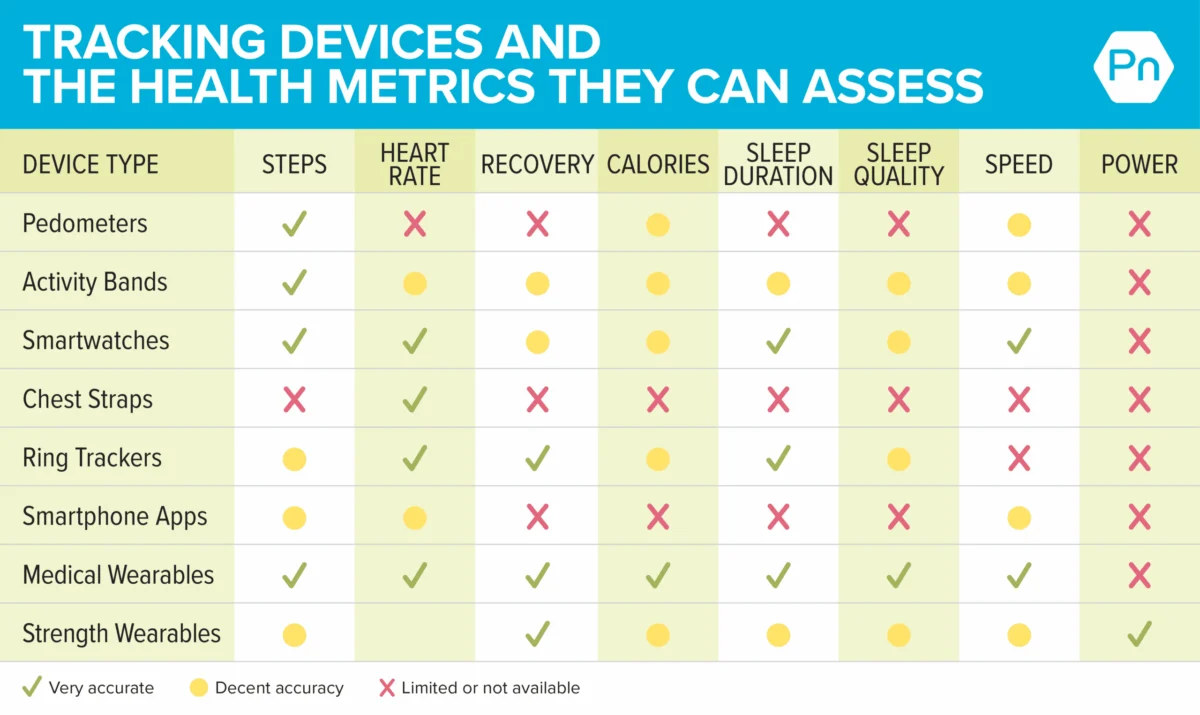
Certain physiological metrics are generally more amenable to accurate quantification by current wearable technology. Heart rate and step count data, for instance, are widely considered reliable across a range of reputable devices. Optical heart rate sensors, common in wrist-worn wearables, perform well during rest and moderate activity, though their accuracy can diminish during high-intensity exercise or with certain skin tones due to motion artifacts and sensor limitations. Chest strap monitors, which use electrical signals (ECG), remain the gold standard for heart rate accuracy in dynamic conditions. Step counting, typically managed by accelerometers, is also quite robust.
However, other outputs often come with substantial margins for error. Calorie expenditure estimates, for example, are notoriously challenging to quantify precisely. These calculations typically rely on generalized algorithms that factor in basic user data (age, sex, weight, height), heart rate, and activity type, but often fail to account for individual metabolic rates, body composition variations, or the specific biomechanics of an activity. Consequently, calorie burn figures should often be treated as directional estimates rather than absolute truths. Similarly, metrics like movement velocity (without dedicated GPS or accelerometers in specific positions) or advanced recovery scores can have varying degrees of reliability depending on the device and its underlying algorithms.
Industry research and academic studies consistently evaluate the accuracy of these devices. While leading brands have made significant strides, particularly in heart rate and step tracking, metrics like sleep stage detection (distinguishing between light, deep, and REM sleep) and calorie expenditure often show greater variability when compared to clinical gold standards (e.g., polysomnography for sleep, indirect calorimetry for energy expenditure). This ongoing refinement means that consumers must be discerning, recognizing that a device’s utility lies not just in its ability to collect data, but in the intelligent interpretation and application of that data.
The Paradox of Information: When Tracking Helps and Hinders Decision-Making
While tracking devices offer an unprecedented wealth of data about our behaviors and bodies, this abundance presents a peculiar paradox: too much information can be as detrimental to effective decision-making as too little. As Samantha Kleinberg, a computer scientist specializing in decision-making, observes, "even a tiny amount of surplus information has a big negative effect on our decision-making." This phenomenon can be graphically represented by an inverted U-shaped curve, where optimal decision-making occurs at a "sweet spot" of relevant information. Below this point, insufficient data hinders insight; beyond it, information overload leads to analysis paralysis and cognitive fatigue.

In today’s hyper-connected world, it is surprisingly easy to cross into the territory of too much information. Consider the common experience of "analysis paralysis" when faced with hundreds of restaurant reviews: what began as a simple desire for a good meal quickly devolves into an overwhelming task, leaving one more confused than enlightened. In health and fitness, where the market is saturated with devices and apps promising ever more science, customization, and complexity, distinguishing actionable insights from noise becomes an art form.
The fundamental question for individuals contemplating or utilizing tracking technology should be: "Does tracking genuinely enhance my well-being and performance?" A clear "yes" or "no" provides straightforward guidance. However, for those in the fuzzy middle, specific indicators can help determine whether the data is a beneficial tool or a counterproductive burden.
Sign #1: Tracking Reduces Stress and Validates Methods.
When data aligns with desired outcomes or validates a chosen methodology, it can significantly reduce anxiety and build confidence. For example, an individual committed to "zone 2" cardio, which feels deceptively easy, might initially doubt its effectiveness. However, observing a consistent decrease in resting heart rate and improved recovery times on their heart rate monitor provides objective validation. This data-driven reassurance can enable them to relax into the process, leading to further physiological improvements. For coaches, objective data can empower clients who might otherwise underestimate their progress, offering tangible proof of their achievements. The growing trend of continuous glucose monitors (CGMs) among non-diabetics, for instance, can provide immediate feedback on dietary choices, potentially validating healthy eating patterns or highlighting individual glycemic responses to certain foods. However, this application can also lead to undue stress or be a waste of resources if not approached thoughtfully.
Bad Omen: Tracking Increases Stress or Negatively Affects Performance.
Conversely, data can be detrimental when it generates stress without offering actionable solutions or when the metrics are beyond immediate control. A new parent, for instance, might experience heightened anxiety from a "poor sleep quality" score on their tracker, despite the unavoidable reality of caring for a newborn. In such scenarios, where circumstances or priorities preclude immediate behavioral change, tracking can be counterproductive, creating unnecessary psychological burden. It is crucial to recognize that tracking has a time and a place; revisiting it when circumstances allow for meaningful action is a more prudent approach.
Sign #2: Clear Feedback Enhances Motivation and Ability.
Behavioral psychology posits that for a desired action to occur, three elements are essential: motivation, ability, and a prompt. Fitness trackers excel at providing prompts and reinforcing motivation when ability is present. Consider Margaret, who believed her nightly glass of wine aided sleep. Her sleep tracker, however, consistently showed poorer sleep quality on nights she imbibed. This objective "prompt"—her sleep score—provided clear feedback, motivating her to adjust her behavior. By highlighting critical data points, trackers can clarify the consequences of choices, making the path toward desired behavioral change more evident. As the saying goes, "Once you see it, you can’t un-see it." This principle was powerfully demonstrated by Precision Nutrition’s CEO, Tim Jones, who leveraged feedback from various lifestyle trackers to significantly reduce his genetically high cholesterol levels, transforming his health in the process.
Bad Omen: Data Collection Decreases Motivation or Ability.
The pursuit of numbers can sometimes eclipse the intrinsic enjoyment or purpose of an activity, leading to burnout. Jan, an avid recreational cyclist, initially found motivation in breaking local trail records. However, his relentless focus on speed and performance metrics eventually led to overtraining, under-recovery, and a complete loss of enjoyment in cycling. When workouts become solely about quantifiable metrics, overshadowing technique, experience, or the sheer pleasure of movement, tracking has likely become a hindrance rather than a help.
Sign #3: Tracking Fosters Greater Self-Understanding.
The adage "the harder you work, the better your results" is a common but often misleading belief. While effort is vital, simply pushing harder can lead to "junk volume," where fatigue accumulates without commensurate performance gains, potentially even inhibiting recovery. Data can help individuals, particularly "grinders," understand their actual capacity and recovery needs, preventing overtraining. Conversely, many people chronically underestimate their effort and potential; here, data can serve as an objective gauge, encouraging them to safely push their boundaries. For instance, in high-intensity interval training (HIIT), prescribed rest periods are often generalized estimates. Heart rate data, however, can provide an individualized picture of actual recovery needs, indicating when the body is truly ready for the next intense effort. This allows for more personalized and efficient training.
Bad Omen: Over-reliance on Data Leads to Disconnection from Internal Senses.
An excessive reliance on external data risks dulling our innate ability to tune into our body’s internal signals—hunger, fullness, energy levels, fatigue, or stress. A notable incident, humorously dubbed "The Great My Fitness Pal Blackout," occurred in January 2019 when the popular calorie-tracking app (with over 200 million users) experienced a day-long outage. Many users reported feeling a mild panic, unable to make dietary decisions without the app’s precise caloric guidance. This incident starkly revealed how an over-reliance on external metrics can disconnect individuals from their own interoceptive and proprioceptive cues, leaving them feeling adrift without technological mediation. Re-establishing connection with internal signals, alongside thoughtful use of technology, is crucial for balanced well-being.
Calibrating Intuition with Technology: Three Strategies for Enhanced Self-Assessment
Before diving into practical strategies, it’s essential to underscore the enduring importance of "felt experience." While objective data provides invaluable feedback, human motivation is complex. Progress on a scale, increased lift capacity, or improved race times are powerful extrinsic motivators. However, these objective results inevitably plateau or even regress at times. During such periods, motivation rooted purely in external goals often wanes.
Exercisers who cultivate an appreciation for intrinsic aspects—feelings of mindfulness, mastery, meaning, and enjoyment—develop a far more resilient and sustainable practice. They find satisfaction not just in the outcome, but in the process itself, whether it’s the rhythm of running, the challenge of lifting, the tranquility of winding down for sleep, or the simple pleasure of a meal. Therefore, to reap the full benefits of any health practice—encompassing both enjoyment and tangible results—maintaining a robust connection with one’s felt experience is paramount. The good news is that fitness trackers can actually serve as powerful tools to calibrate and even enhance our ability to accurately sense what is happening within our bodies.
Here are three practical ways to achieve this synergy:

1. Prioritize Internal Check-ins Before Reviewing Data.
Imagine asking someone about their vacation and having them pause to scroll through photos before offering an answer. This scenario mirrors the disconnect that occurs when individuals rely solely on external data to interpret their own experiences. Whether the metric is distance biked, calories consumed, or heart rate, the most mindful approach is to first pause, take a breath, and engage with your brain’s powerful, albeit sometimes inaccurate, prediction-making capabilities. Ask yourself: "How do I feel? What do I think my heart rate was? How well did I sleep?" Only after this internal assessment should you consult your fitness tracker. By consistently comparing your subjective feeling with the objective data, you can gradually narrow the gap between the two, refining your internal compass. Regularly updating device apps is also important, as algorithms are continually refined for improved predictive accuracy.
2. Develop Mental Shortcuts as Substitutes for Constant Objective Measurement.
Coaches often ask clients to estimate their strength boundaries, such as how many more repetitions they could perform at a given weight before failure (Reps in Reserve, RIR). Novices typically struggle with this, often being off by five or more reps. However, with occasional calibration against objective data or skilled coaching, most individuals can dramatically improve their accuracy. While advanced tools like accelerometers or blood lactate measurements exist, coaches often employ simpler, intuitive prompts. For example, asking, "For a million dollars a rep, how many more reps do you think you could do?" can serve as a powerful mental shortcut to help clients understand maximal effort. This question effectively leverages the Rate of Perceived Exertion (RPE), a highly validated sensory-driven approach that quantifies how hard one feels they are working. While not everyone is inherently adept at estimating RPE, consistent practice, coupled with periodic objective data calibration, significantly enhances this crucial skill.
3. Continuously Cultivate and Refine Your Sensory Intelligence.
Modern trackers are equipped with sophisticated components like accelerometers, GPS, gyroscopes, and optical sensors to collect data on speed, distance, movement, and physiological states. However, the human body is an unparalleled sensory instrument. We possess an incredibly rich and complex network of sensory information, including:
- Proprioception: The sense of our body’s position and movement in space.
- Interoception: The sense of the internal state of our body, including hunger, thirst, heart rate, and pain.
- Vestibular sense: Our sense of balance and spatial orientation.
- Touch (Tactile sense): Pressure, temperature, vibration.
- Sight, Sound, Smell, Taste: Our primary exteroceptive senses.
This extensive network feeds into the brain’s powerful pattern-recognition machinery. To continue honing your ability to effectively utilize this rich sensory information, make it a regular practice to check in with what and how you are feeling. By learning to calibrate your own profound internal senses with the precision of objective data, you can harness all the remarkable advancements in wearable technology while steadfastly keeping your unique human experience, intuition, and well-being at the forefront. This integrated approach allows for a truly holistic and informed path to health.
Broader Implications and the Future of Personalized Health
The synergistic relationship between human intuition and technological data carries significant implications for the future of personalized health. As wearable technology becomes even more sophisticated, integrating advanced AI and machine learning algorithms, the potential for predictive health insights and highly individualized interventions will expand. However, this future also necessitates careful consideration of ethical concerns, including data privacy, security, and the potential for the "medicalization" of normal human experiences. Ensuring that technology remains a tool for empowerment rather than an arbiter of self-worth will be crucial. The ultimate goal is not to replace human intuition or the wisdom of our bodies, but to augment and refine our self-awareness, enabling us to make better, more informed decisions for a healthier, more fulfilling life. The journey from ancestral senses to smart gadgets is not a replacement, but an evolution towards a more enlightened self-assessment.
References
Click here to view the information sources referenced in this article.
If you’re a coach, or you want to be…
You can help people build sustainable nutrition and lifestyle habits that will significantly improve their physical and mental health—while you make a great living doing what you love. We’ll show you how.
If you’d like to learn more, consider the PN Level 1 Nutrition Coaching Certification. (You can enroll now at a big discount.)