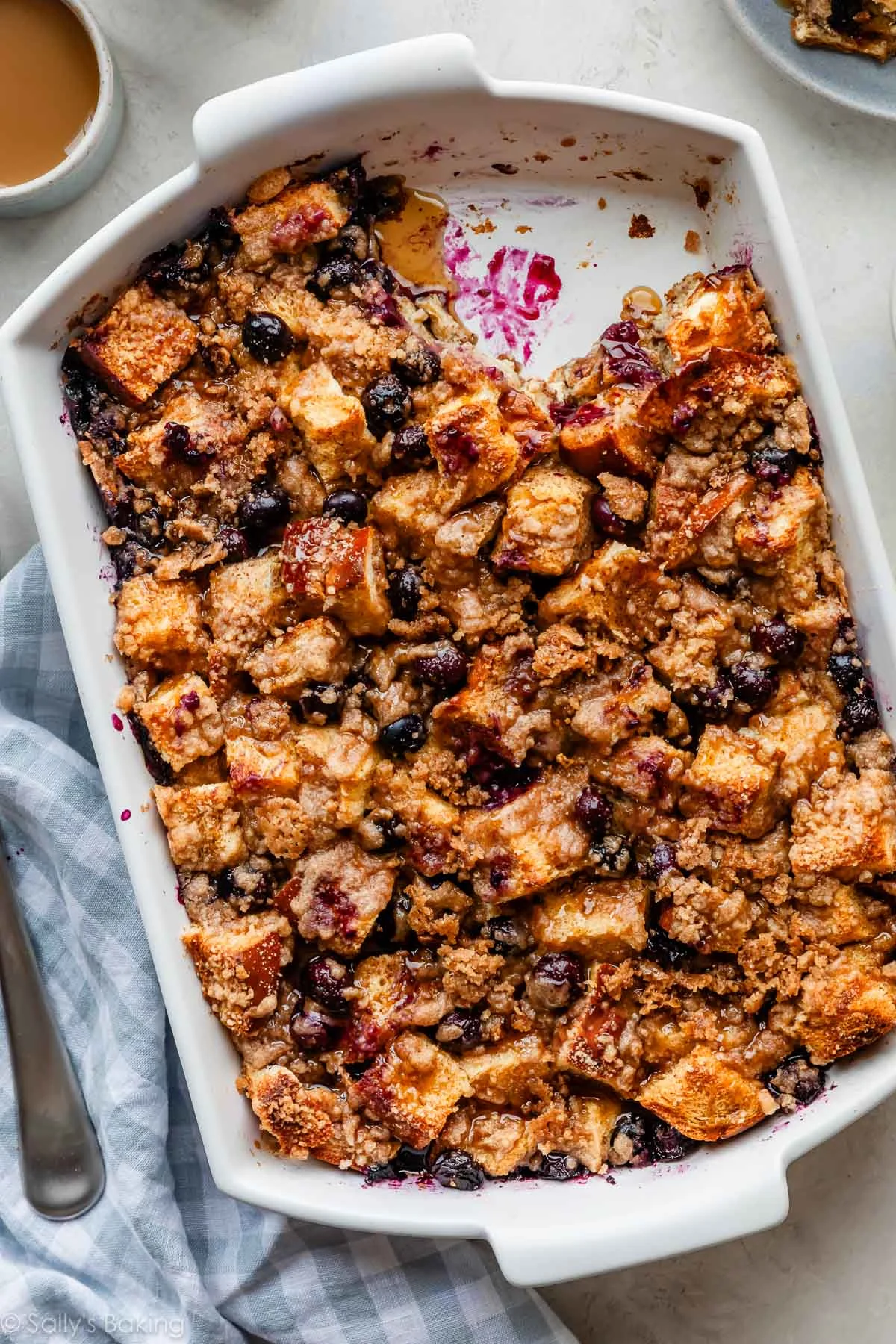

A culinary phenomenon, the Blueberry French Toast Casserole, has solidified its position as a quintessential make-ahead breakfast, celebrated for its intricate blend of textures and flavors. Each serving promises a harmonious experience, from the yielding, custard-infused bread and the vibrant burst of juicy blueberries to the satisfying crunch of a golden-brown sugar streusel. This revered recipe, known for its strategic overnight refrigeration, streamlines morning preparations, allowing hosts and home cooks to simply transfer it from the refrigerator to the oven for a stress-free, delicious start to the day.
A Legacy of Culinary Excellence: From Blog to Bestseller
The journey of this particular Blueberry French Toast Casserole began in 2015, when it first graced the digital pages of a prominent baking blog. Its initial publication marked the genesis of what would become a consistently top-performing recipe. Over the years, in response to evolving culinary standards and user feedback, the recipe underwent significant updates, incorporating enhanced photography and comprehensive success tips designed to empower home bakers. This iterative refinement process underscores a commitment to quality and user experience, critical factors in maintaining a recipe’s relevance and popularity in the fast-paced digital culinary landscape.
The widespread acclaim and sustained engagement from a dedicated readership ultimately propelled this recipe beyond its digital origins. Its inclusion in Sally’s Baking 101, a published cookbook, signifies a significant milestone, validating its status as a foundational and beloved dish within the broader culinary community. This transition from a free online resource to a curated print collection highlights the recipe’s enduring value and the author’s expertise, confirming its place as a reliable staple for breakfast and brunch occasions.
The Evolution of Breakfast: Prioritizing Convenience and Quality
For decades, the allure of freshly baked goods has been a cornerstone of comforting morning routines. While traditional options like homemade cinnamon rolls have long held a special place, the Blueberry French Toast Casserole represents a modern evolution in breakfast preparation, offering a sophisticated alternative that prioritizes both convenience and gourmet quality. The core advantage of this casserole lies in its make-ahead design, allowing the laborious aspects of slicing, whisking, and combining ingredients to be completed the day prior. This strategic planning culminates in a simple morning task: adding an easy crumb streusel and baking. This methodology dramatically contrasts with the more demanding process of preparing individual French toast slices over a griddle, a factor that significantly contributes to its appeal, particularly for busy families and during holiday gatherings.
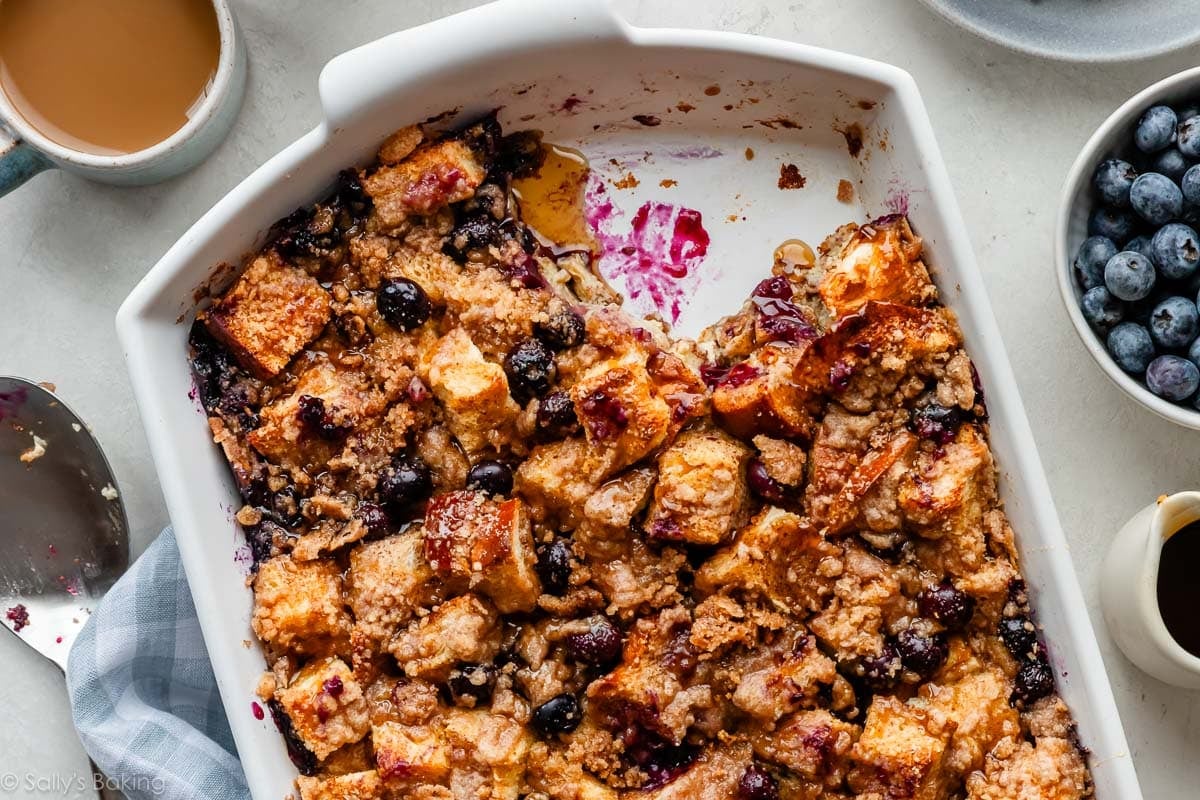
The resulting dish is a testament to thoughtful culinary construction, presenting layers of nuanced flavor and diverse textures. The soft, custardy bread serves as the base, perfectly complemented by the sweet and tangy notes of blueberries. The crowning glory, a crisp brown sugar streusel, adds a delightful textural contrast and a hint of caramelized sweetness. The aromatic experience alone, as the casserole bakes, is often cited by enthusiasts as a powerful draw, capable of luring household members into the kitchen with its irresistible fragrance. This blend of sensory appeal and practical preparation has made the overnight French toast bake an indispensable part of celebratory meals, from Christmas breakfast and Easter brunch to Mother’s Day and relaxed weekend family breakfasts.
Driving Factors Behind Enduring Popularity: Consumer Insights
The sustained success of the Blueberry French Toast Casserole is not merely anecdotal; it is firmly rooted in consistent positive feedback from a diverse audience of home cooks. This widespread endorsement is a crucial indicator of its superior quality and practicality.
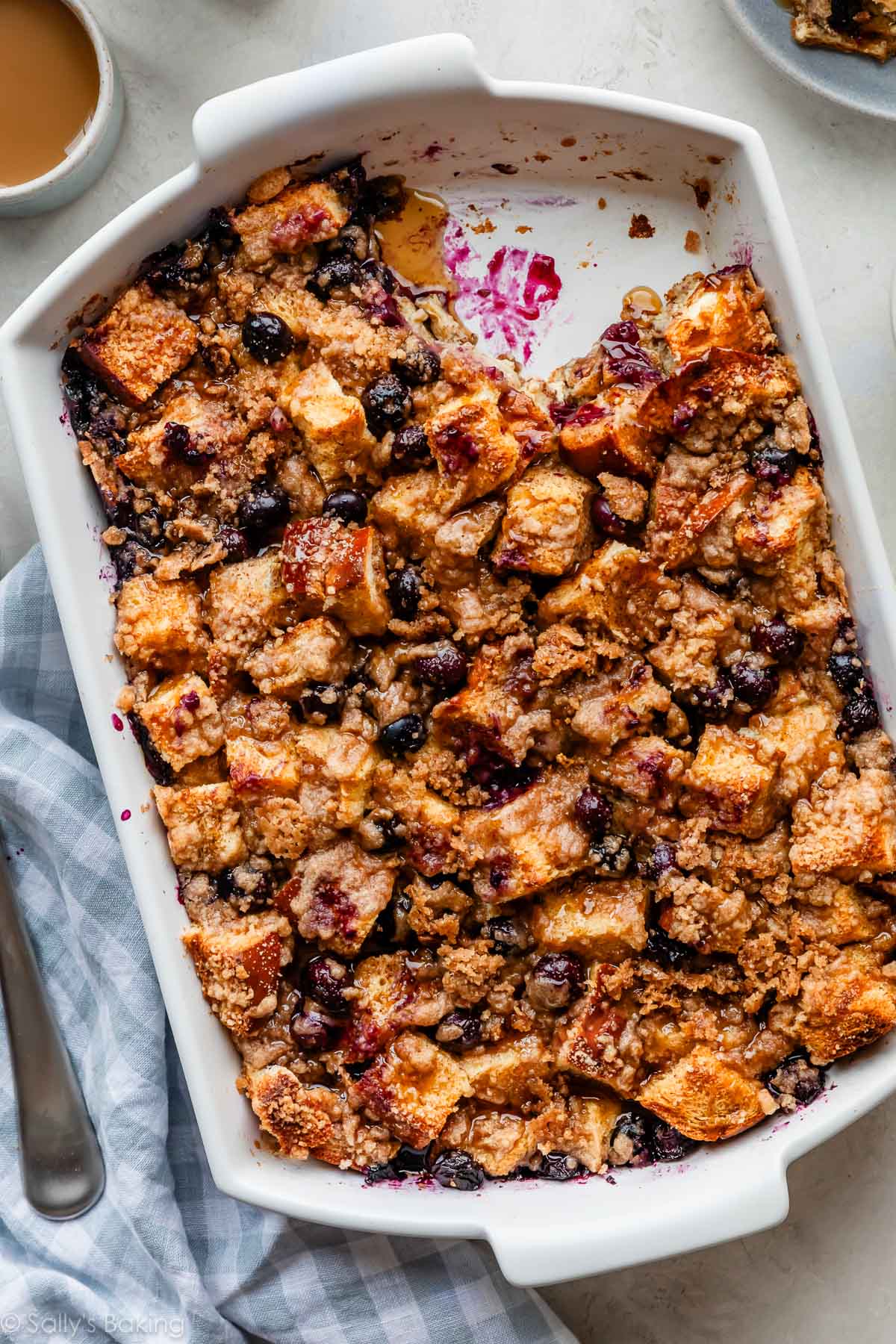
One devoted reader, Carole, emphatically stated, "The best French toast casserole I have ever made—and I’ve made several! My family loved it." This testimonial highlights the recipe’s ability to surpass expectations even among those familiar with similar dishes, underscoring its unique appeal.
Another satisfied individual, Michelle, recounted her experience: "I made this for Easter brunch. It was sooooo good! I wasn’t sure about the blueberries at first, but it was delicious! Everyone loved it! It was the only dish everyone went back to for seconds. Definitely recommend making this!" Michelle’s comment is particularly insightful, revealing that the blueberry component, initially a point of hesitation for some, ultimately becomes a celebrated element, driving repeat consumption and universal approval. The fact that it was the sole dish prompting second servings speaks volumes about its undeniable deliciousness.
A long-term advocate, Cieta, further cemented the recipe’s legacy: "I have been making this recipe for 10 years now. Thank you! It is always the most popular brunch item, the best!" This decade-long commitment to the recipe by a loyal user demonstrates its reliability and consistent ability to impress, securing its status as a perennial favorite for special occasions and everyday indulgence alike. These collective sentiments illustrate a recipe that consistently delivers on its promise of flavor, convenience, and crowd-pleasing appeal, reinforcing its status as a culinary benchmark.
The Foundation: Selecting the Ideal Bread
The integrity of any French toast casserole hinges significantly on the choice of bread. It serves as the foundational element, requiring a sturdy and flavorful variety capable of absorbing the custard mixture without disintegrating during the soaking and baking processes. Optimal selections for this particular casserole include:

- Challah: Renowned for its rich, eggy texture and slight sweetness, challah provides a luxurious base that becomes incredibly tender when soaked.
- Brioche: Similar to challah but often richer due to higher butter and egg content, brioche offers a decadent, pillowy texture.
- French Bread or Baguette: These options provide a robust crust and an airy interior, which, when cubed, offers excellent structural integrity and absorption capabilities.
- Sourdough: For those who prefer a tangier note, sourdough offers a distinct flavor profile and a hearty crumb that stands up well to the custard.
- Day-old White Sandwich Bread (Sturdy Variety): While generic sandwich bread is typically discouraged, a high-quality, sturdy white loaf can work, provided it’s adequately dried out.
Conversely, flimsy sliced sandwich bread should be avoided. Its delicate structure is prone to becoming overly saturated and falling apart, leading to an undesirable mushy texture rather than the desired custardy consistency.
The Critical Role of Stale Bread: A Culinary Imperative
Regardless of the chosen bread type, a crucial success tip emphasizes the use of slightly stale and crusty bread. The recommended preparation involves slicing the bread into cubes and allowing them to air-dry for approximately one day before use. This seemingly minor step is, in fact, a culinary imperative.
The scientific rationale behind this recommendation is straightforward: slightly stale bread exhibits enhanced absorption capabilities. Its drier cellular structure acts like a sponge, readily soaking up the egg mixture. Fresh bread, with its higher moisture content, struggles to fully absorb the custard, leading to a common pitfall in French toast casseroles: a dry top layer coupled with a soggy, unappealing bottom. This principle is not unique to casseroles; it is also a fundamental guideline for preparing classic brioche French toast, where day-old bread ensures optimal texture and flavor.
For situations where time constraints prevent natural air-drying, a practical shortcut exists. Bread cubes can be spread evenly on a lined baking sheet and lightly toasted in a 300°F (149°C) oven for about 10 minutes. This brief exposure to heat effectively dries out the bread, rendering it ready to absorb the luscious egg custard, thus salvaging the recipe without compromising its textural integrity.
Crafting the Custard and Streusel: The Heart of the Casserole
Beyond the foundational bread, the excellence of the Blueberry French Toast Casserole is attributed to its meticulously balanced custard and the irresistible streusel topping. Once the suitably stale bread cubes are prepared, the next step involves whisking together the rich custard.
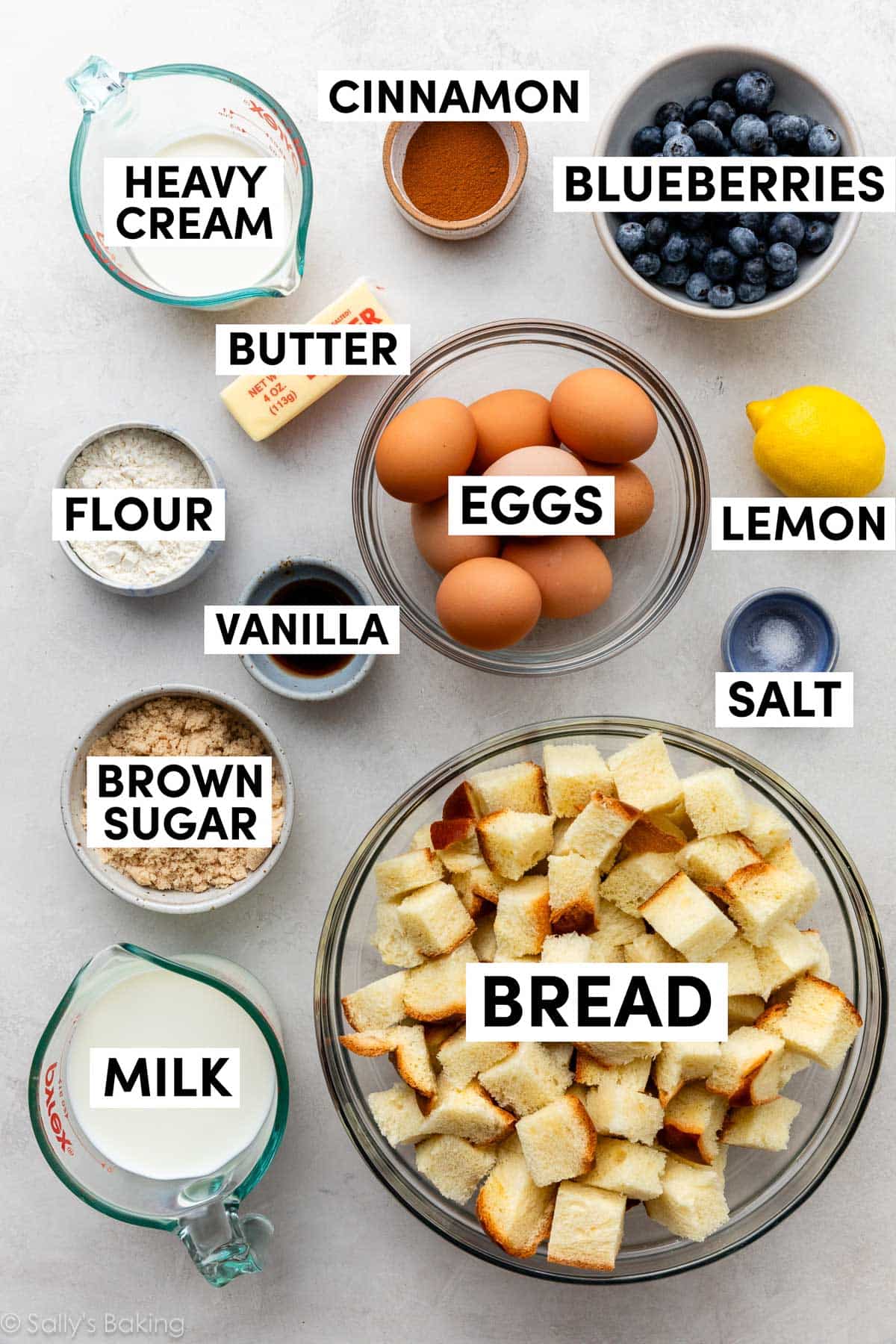
The custard typically comprises:
- Large Eggs: Providing structure and richness.
- Whole Milk and Heavy Cream: A blend that ensures a luxuriously creamy and tender interior.
- Granulated Sugar: For sweetness.
- Vanilla Extract: Enhancing the overall aroma and flavor profile.
- Ground Cinnamon and Nutmeg: Warming spices that complement the bread and blueberries.
- Lemon Zest: A bright, aromatic counterpoint to the sweetness, cutting through the richness and enhancing the blueberry flavor.
- Pinch of Salt: To balance and amplify all the flavors.
These ingredients are carefully combined to create a flavorful liquid that infuses the bread with moisture and taste during the overnight soak. The blueberries are then folded in, ensuring even distribution throughout the casserole.
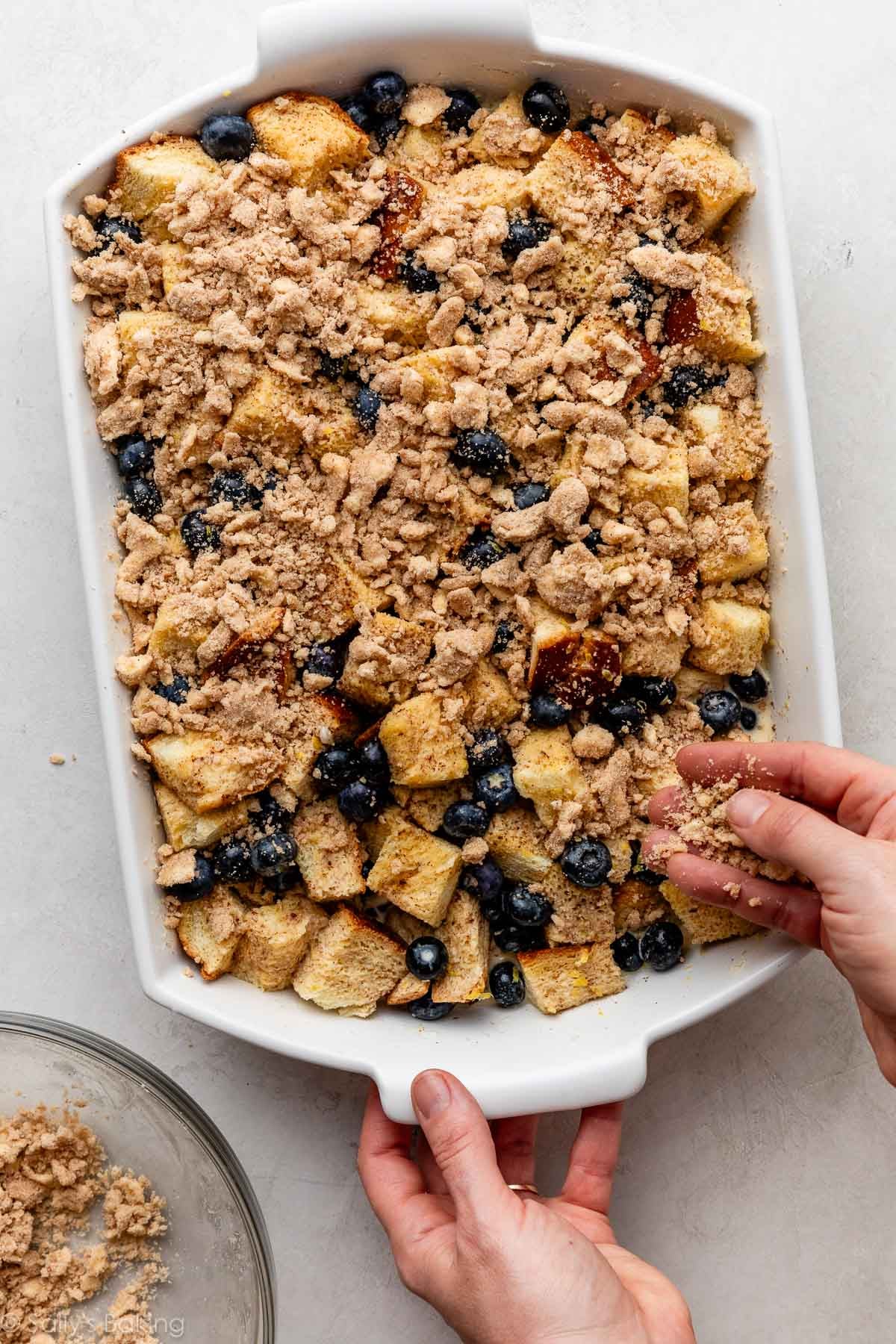
The brown sugar streusel topping is a pivotal component that elevates this casserole from merely good to truly exceptional. Despite its simple composition—typically brown sugar, all-purpose flour, ground cinnamon, and cold butter—its impact on the final dish is profound. When baked, this mixture transforms into a lightly crisp, buttery layer that provides a crucial textural contrast to the soft, custardy bread beneath. This delightful crunch is integral to the casserole’s multi-sensory appeal. The preparation of the streusel is straightforward, often involving a pastry blender or two forks to cut the cold, cubed butter into the dry ingredients until a crumbly mixture forms. Similar to the casserole base, the streusel can also be prepared in advance and chilled overnight, then sprinkled over the casserole just before baking, further enhancing the make-ahead convenience. This method is analogous to the streusel preparation used in popular coffee cake recipes, demonstrating its versatility and effectiveness.

Presentation and Accompaniments: Enhancing the Dining Experience
The serving of Blueberry French Toast Casserole presents an opportunity to further elevate the dining experience. Traditional accompaniments often include a generous drizzle of warm maple syrup, which complements the sweetness of the blueberries and the richness of the custard. For those desiring an additional fresh element, a scattering of extra fresh berries—such as raspberries, strawberries, or more blueberries—adds visual appeal and a burst of fresh flavor.
For a more gourmet touch, a homemade blueberry sauce topping can be prepared, offering a concentrated burst of fruit flavor and a silky texture. Alternatively, a simple dusting of confectioners’ sugar provides an elegant finish and a subtle extra layer of sweetness. These various serving options allow for customization, catering to individual preferences and the specific occasion.
Flexibility and Customization: Adapting the Recipe
The inherent versatility of the Blueberry French Toast Casserole is another aspect contributing to its broad appeal. The recipe is highly adaptable, allowing for various modifications to suit different tastes and seasonal availability.
- Speeding Up Bread Preparation: For those who find themselves without naturally stale bread, a quick oven toast at 300°F (149°C) for 10 minutes effectively dries out the bread chunks, preparing them to absorb the custard optimally.
- Berry Substitutions: While blueberries are the star, the recipe readily accommodates other berries. Strawberries, raspberries, or blackberries can be used interchangeably, or a medley of berries can create a vibrant mix, as seen in "berries & cream French toast casserole" variations. In autumn, cranberries or thinly sliced apples or pears offer seasonal alternatives, broadening the casserole’s appeal throughout the year.
- Omitting Berries: For a classic, plain French toast casserole, the berries and lemon zest can be omitted entirely. Cookbooks, such as Sally’s Baking 101, often feature variations, including a gingerbread version perfect for the holiday season, showcasing the core recipe’s flexibility.
- The Importance of Advance Preparation: While not strictly mandatory, preparing the casserole in advance is strongly recommended. A minimum rest of 3 hours allows the bread to begin soaking up the custard, but an overnight rest is considered ideal. This extended soaking period ensures maximum absorption, leading to a uniformly moist and flavorful casserole. This "good night’s rest" for both the cook and the casserole is a key element in its design, promising a superior outcome with minimal morning effort.
In conclusion, the Blueberry French Toast Casserole transcends its simple description to become a cultural touchstone in modern breakfast and brunch cuisine. Its journey from a popular blog post to a featured cookbook recipe, coupled with consistent reader accolades, underscores its exceptional quality and the growing demand for convenient, yet gourmet, home-cooked meals. By combining classic flavors with strategic make-ahead preparation, this casserole offers a compelling solution for enriching morning meals, cementing its status as an enduring favorite for generations of home cooks.