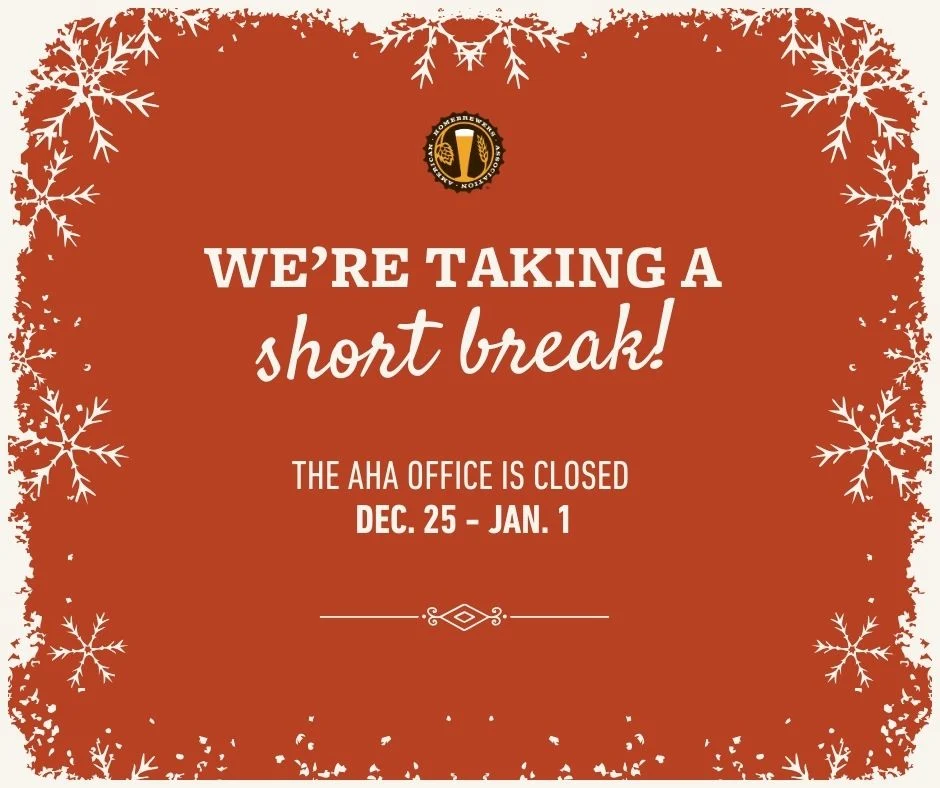

The American Homebrewers Association (AHA), the preeminent representative body for the tens of thousands of individuals who brew beer, cider, and mead at home in the United States and abroad, has officially announced its annual winter closure. Following a year characterized by significant technological advancements in brewing equipment and a resurgence in community-based fermentation projects, the Boulder, Colorado-based organization will pause its administrative operations starting December 25, 2025. This planned hiatus is scheduled to conclude on January 1, 2026, with the team slated to resume full operational capacity on January 2. During this period, the association’s headquarters will be closed to the public, and member support services will be temporarily suspended as the staff engages in a week-long period of rest and strategic preparation for the upcoming fiscal year.
This seasonal closure is a longstanding tradition within the Brewers Association (BA), the parent organization of the AHA. It serves as a vital restorative period for a staff that manages one of the most complex hobbyist networks in the world. The AHA, which serves more than 37,000 members, utilizes this year-end break to transition between the heavy logistical demands of the autumn competition season and the planning phases for the spring’s legislative and educational initiatives. While the physical and administrative offices remain closed, the organization’s digital infrastructure—including its extensive archive of brewing recipes, the Zymurgy magazine digital edition, and the member-only forum—will remain accessible to the global community of fermenters.
Strategic Context and Organizational Role
The American Homebrewers Association was founded in 1978 by Charlie Papazian and Charlie Matzen in Boulder, Colorado. Since its inception, the organization has evolved from a small group of enthusiasts into a powerful advocacy group that has been instrumental in the legalization and regulation of homebrewing across all 50 U.S. states. The winter hiatus marks the end of a particularly active year for the AHA, as 2025 saw a heightened focus on diversifying the hobby and addressing the economic pressures facing homebrewing supply shops.
As the non-profit arm of the Brewers Association dedicated to non-commercial brewers, the AHA provides the foundational education that often serves as the pipeline for the professional craft brewing industry. Data from the Brewers Association suggests that approximately 90% of professional brewers began their careers as homebrewers. Consequently, the health of the AHA is often viewed as a leading indicator for the future of the $28 billion U.S. craft beer market. The decision to close for the holidays reflects a modern corporate wellness strategy aimed at retaining the specialized talent required to manage national competitions and legislative lobbying efforts.
A Chronology of the 2025 Homebrewing Year
To understand the necessity of this year-end pause, one must examine the rigorous schedule maintained by the AHA throughout 2025. The year began with a heavy focus on legislative advocacy, with the AHA working alongside state-level guilds to modernize laws regarding the transport of homebrewed beverages for competitions and club meetings.
In May 2025, the AHA celebrated "Big Brew," an annual event held on the first Saturday of May to mark National Homebrew Day. This year’s event saw record participation, with an estimated 50,000 gallons of beer brewed simultaneously across the globe. The logistics of coordinating hundreds of registered "Big Brew" sites required months of administrative preparation, which the staff successfully executed.
Following the spring festivities, the AHA managed the 47th annual National Homebrew Competition (NHC), the world’s largest international homebrew competition. The 2025 circuit involved multiple regional judging sites, culminating in the Final Round where thousands of entries were evaluated by certified judges. The administrative burden of processing entry fees, managing shipping logistics, and certifying results for hundreds of winners in dozens of categories represents the peak of the organization’s operational output.
The late summer and autumn months were dedicated to the "Learn to Homebrew Day" initiatives and the continued publication of Zymurgy, the association’s flagship magazine. By the time December arrived, the organization had overseen dozens of sanctioned competitions and processed thousands of membership renewals, making the winter hiatus a critical period for equipment maintenance and digital system updates.
Supporting Data and Industry Implications
The significance of the AHA’s influence is backed by substantial industry data. According to the most recent "Homebrewer Profile" survey, the average homebrewer in 2025 is increasingly tech-savvy, with a growing segment of the population utilizing automated electric brewing systems. This shift has required the AHA to update its educational resources and competition categories to reflect new brewing methodologies.
Economic data from 2025 indicates that while the hobby remains robust, the cost of raw materials—specifically malt and specific proprietary hop varieties—has seen a 4% inflationary increase. The AHA spent much of the year developing "budget-friendly brewing" guides to help members navigate these costs. Furthermore, the association reported a 12% increase in memberships among the under-30 demographic, suggesting that homebrewing is successfully attracting a new generation of enthusiasts interested in DIY fermentation and artisanal beverages.
The closure of the AHA office also coincides with a period of high activity for local homebrew shops (LHBS). While the national association takes a break, these small businesses often see their highest sales volumes of the year as hobbyists receive brewing kits as holiday gifts and utilize their time off work to engage in "holiday brew days." The AHA’s proactive announcement of their closure allows these local retailers to direct their customers to the association’s online FAQs and automated resources during the peak period.
Official Stance and Community Reaction
In communications leading up to the December 25 closure, the AHA leadership emphasized the importance of work-life balance for the staff who support the brewing community. While official statements are typically focused on the logistical aspects of the break, the underlying message is one of gratitude toward the membership base. The association has encouraged members to use the hiatus as an opportunity to share their "holiday pours" on social media, fostering a sense of decentralized community that operates independently of the central office.
Industry analysts note that such closures are standard for high-output non-profits. "The American Homebrewers Association operates with a lean team that manages a disproportionately large impact on the beverage industry," noted one industry consultant. "Giving the staff a full week to disconnect ensures that they return in January with the energy required to launch the 2026 competition season, which is vital for the hobby’s visibility."
Broader Impact on the 2026 Outlook
The return of the AHA on January 2, 2026, will signal the start of a pivotal year for the organization. Several major initiatives are expected to launch in the first quarter, including a revamped digital platform for competition entries and a new series of educational seminars focused on non-alcoholic homebrewing—a trend that saw a 20% growth in interest among members during 2025.
The implications of this week-long closure extend beyond mere office hours. It represents a "strategic reset" for the homebrewing movement. By pausing operations, the AHA allows the narrative of the hobby to shift back to the individual brewer and the local club. It is a period where the "home" in homebrewing is prioritized over the "association."
As the AHA team recharges, the organization remains a steadfast pillar of the craft beer world. The 2025 winter hiatus is not merely a break from work, but a transition point between a year of recovery and a year of anticipated expansion. When the doors reopen in early 2026, the association will be tasked with navigating a landscape that is increasingly interested in sustainability, local sourcing, and the traditional techniques that have defined the hobby for nearly half a century.
In conclusion, the American Homebrewers Association’s holiday closure from December 25, 2025, to January 1, 2026, is a planned operational pause that follows a year of significant achievement and community engagement. As the staff prepares for the challenges and opportunities of the new year, the global homebrewing community continues to thrive, supported by the digital resources and legislative foundations established by the AHA over the past 47 years. The organization’s message remains clear: while the office may be closed, the spirit of homebrewing remains as active as ever during the festive season.