
The landscape of American casual dining has suffered another major blow as O’Charley’s, the once-prominent Southern-rooted restaurant chain, abruptly shuttered its remaining company-owned locations across the United States. The sudden closures, which took employees and local communities by surprise with as little as 24 hours’ notice, mark the near-total disappearance of a brand that once operated nearly 250 establishments across multiple states. For loyal patrons and long-serving staff members, the swift end to the 55-year-old culinary institution arrived with deafening silence from corporate leadership in Nashville, Tennessee.
As doors locked for the final time at 8 p.m. on a Wednesday evening, workers were left scrambling for answers, unpaid wages, and alternative employment. The coordinated nationwide shutdown highlights the ongoing, acute pressures facing the mid-tier casual-dining sector, which has struggled to recover from post-pandemic economic shifts, inflationary pressures, and changing consumer habits.
An Abrupt and Silent Departure
The manner of the closures has drawn widespread criticism from former employees, local officials, and industry observers alike. Throughout Tuesday and Wednesday, staff members at numerous O’Charley’s locations across states such as Tennessee, Kentucky, Illinois, and Ohio were pulled aside by general managers and informed that their shifts that day would be their last.
In Middle Tennessee, the chain’s home turf, local television station WKRN reported that managers at six of the eight regional restaurants confirmed their locations were slated to close permanently at 8 p.m. Wednesday. Workers at a location in Manchester, Tennessee, which had faithfully served the local community for nearly 20 years, noted they were given merely a single day’s warning before the lights went out for good. Similar accounts emerged from Marion, Illinois, where a 24-year-old O’Charley’s staple shut its doors following a Wednesday morning briefing, and from Hopkinsville, Kentucky, where staff members confirmed that nearly the entire enterprise was winding down operations simultaneously.
As the physical restaurants went dark, digital footprints vanished concurrently. By Wednesday afternoon, O’Charley’s official Facebook and Instagram accounts had been completely deactivated. However, in an ironic twist characteristic of chaotic corporate wind-downs, the chain’s corporate website remained operational well into Wednesday evening, still listing locations and accepting digital inquiries as if business were proceeding as usual. Corporate representatives in Nashville failed to respond to repeated, urgent requests for comment from regional news outlets and national industry publications.
The exception to the immediate shutdown appeared to be limited to franchised locations. For instance, a franchised O’Charley’s operating in Niles, Ohio, announced it would remain open temporarily, aiming for a final closing date of September 27, according to local reporting by the Columbus Dispatch. This distinction underscored that the sweeping Wednesday closures targeted company-owned assets directly controlled by the parent organization and its primary stakeholders.
A Half-Century History: From Vanderbilt Roots to National Footprint
To fully understand the weight of the current collapse, it is necessary to examine the trajectory of O’Charley’s from its humble beginnings to its peak and subsequent decline. The brand was established in 1971 by founder Charlie Watkins, who opened the original restaurant on 21st Avenue South near Vanderbilt University in Nashville, Tennessee.
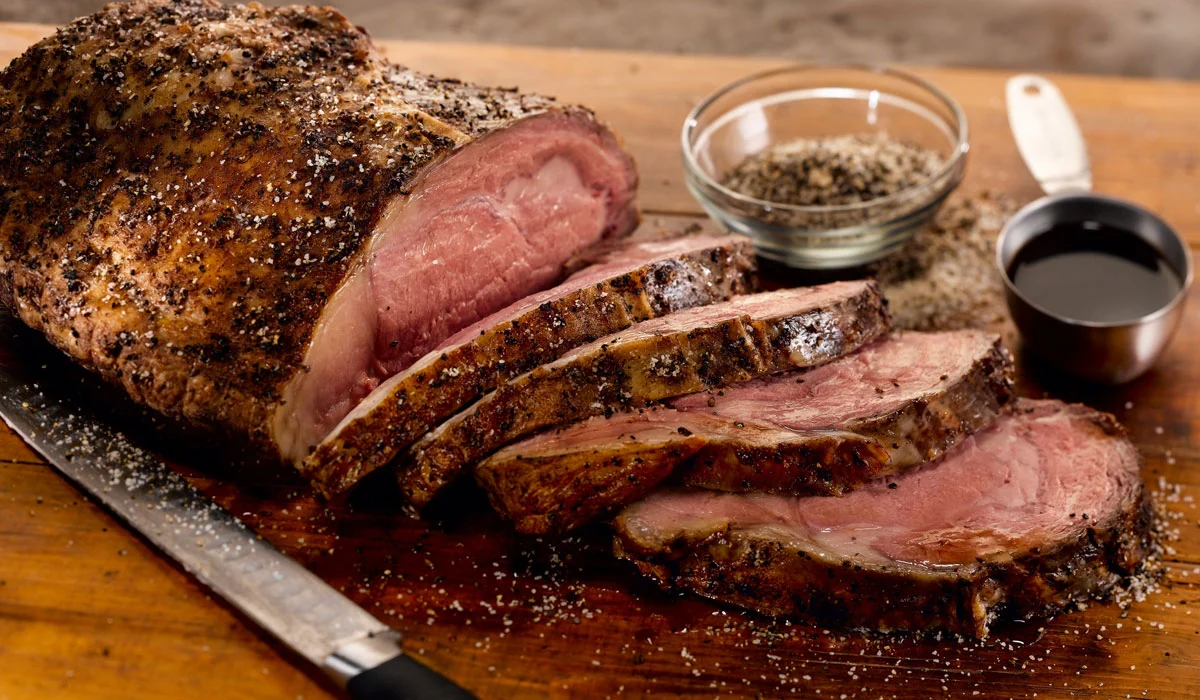
Watkins envisioned a neighborhood gathering place anchored by quality American fare, friendly service, and a welcoming, casual atmosphere. The concept resonated strongly with diners, paving the way for gradual regional expansion throughout the American South and Midwest. Known particularly for its unpretentious menu items—including hand-cut steaks, slow-roasted prime rib, chicken tenders, and complimentary signature rolls served with honey—O’Charley’s carved out a distinct niche in the burgeoning family-style and casual-dining segment of the late 20th century.
As the brand scaled over the decades, ownership shifted. By 2010, at the height of its operational footprint, O’Charley’s reported managing 244 locations spread across 19 states. This peak portfolio comprised 234 company-owned restaurants and 10 franchised units, employing thousands of hospitality workers and serving millions of meals annually.
However, changing consumer preferences in the 2010s began to challenge traditional sit-down chains. The rise of fast-casual alternatives, third-party food delivery services, and shifting generational dining habits placed immense pressure on legacy casual-dining brands. In subsequent years, O’Charley’s underwent various corporate restructurings, ownership changes, and private equity interventions. In recent years, the concept came under the control of Cannae Holdings, a diversified holding company that manages various restaurant and hospitality assets. Despite strategic efforts to revitalize the menu, streamline operations, and reduce overhead, the brand faced persistent financial headwinds, leading to a steady, multi-year contraction that steadily whittled down its store count long before Wednesday’s final cascade of closures.
Chronology of a Slow Decline and Sudden Fall
The deterioration of O’Charley’s retail footprint was not an overnight phenomenon, though the final execution of the shutdown certainly felt like one. The chronology of the brand’s struggles highlights the broader systemic issues plaguing legacy sit-down chains over the past decade and a half:
- 2010: O’Charley’s reaches its modern peak with 244 locations spanning 19 states, maintaining a robust mix of company-operated and franchised stores.
- 2012–2019: Facing mounting competition from fast-casual chains and rising real estate and labor costs, the brand begins pruning underperforming units, slowly reducing its geographic footprint.
- 2020–2022: The COVID-19 pandemic severely disrupts the casual-dining industry. Extended dining room closures, labor shortages, and skyrocketing supply chain costs strain the company’s financial reserves, accelerating the pace of closures.
- 2023–2025: Ownership attempts various cost-cutting measures, menu simplifications, and localized marketing campaigns under the oversight of Cannae Holdings, but foot traffic fails to return to pre-pandemic baselines.
- September 2026: The final wave of closures is triggered. Corporate leadership opts for an unannounced, simultaneous shutdown of nearly all remaining company-owned locations, leaving employees with 24 hours’ notice and effectively ending the brand’s 55-year run as a national chain.
Human Impact and Community Reactions
The human cost of the sudden liquidation has been profound. For communities that hosted O’Charley’s locations for two decades or more, the restaurant was often viewed as a local institution where families celebrated birthdays, sports teams gathered after games, and seniors met for weekly meals.
More immediate and severe, however, is the impact on the workforce. Because employees were informed of the closures on a Tuesday or Wednesday for immediate termination that same evening, hundreds of workers across multiple states were instantly deprived of their primary source of income without a standard transition period, severance packages, or advance notice required by the Worker Adjustment and Retraining Notification (WARN) Act in larger corporate layoffs. State agencies and local workforce boards in Tennessee, Kentucky, and Illinois have begun fielding inquiries from displaced workers seeking emergency unemployment benefits and job placement assistance in tight local labor markets.
Broader Implications for the Casual-Dining Sector
The demise of O’Charley’s serves as a cautionary tale and a stark indicator of the ongoing structural evolution within the American restaurant industry. Economists and hospitality analysts point out that mid-tier casual-dining chains—often referred to as "family-friendly" or "bar-and-grill" concepts—are being squeezed from multiple directions.
On the supply side, operators face relentless increases in the costs of food commodities, particularly beef and poultry, alongside escalating minimum wage requirements and persistent labor shortages. On the demand side, consumers grappling with cumulative inflation have grown increasingly selective about discretionary spending. Many diners have pivoted toward fast-casual eateries that offer speed and lower price points without the expectation of tipping, or conversely, have reserved their traditional sit-down dining budgets for premium, experiential culinary concepts.
Furthermore, the failure of corporate leadership to communicate transparently with employees and the public during the final wind-down has drawn sharp criticism from industry peers, who note that ethical communication during corporate distress is vital for protecting brand equity and supporting the hardworking staff who built the enterprise.
As the dust settles on the final evening of operations, the once-proud red awnings and welcoming neon signs of O’Charley’s are going dark across the American landscape. While a small handful of independent franchisees may attempt to keep isolated outposts afloat for a brief transition period, the closure of the company-owned network effectively draws the curtain on a 55-year chapter of Southern casual dining, leaving behind empty dining rooms, out-of-work staff, and a sobering reminder of the unforgiving economic realities shaping modern retail and hospitality.