
The science of sourdough baking extends far beyond simple ingredient measurements, with dough hydration standing out as one of the most critical yet misunderstood variables in the artisanal bread-making process. Defined as the total amount of water in a recipe expressed as a percentage of the total flour weight, hydration serves as the fundamental bridge between dry ingredients and a living, structural dough matrix. Professional bakers and culinary scientists have long recognized that mastering this percentage is essential for controlling crumb structure, crust texture, and overall loaf volume.
The Mathematical Foundation of Dough Hydration
At its core, the calculation of dough hydration utilizes baker’s percentages, a standardized system that allows recipes to be scaled and analyzed with precision. The formula requires dividing the total weight of the water by the total weight of the flour, then multiplying the result by 100. For instance, a formulation incorporating 1,000 grams of flour and 700 grams of water yields a 70% hydration dough.
However, professional baking authorities emphasize that hydration figures are dynamic guidelines rather than absolute physical laws. Flour is a naturally hygroscopic and variable agricultural product. Variations between milling facilities, wheat harvests, grain varieties, and storage conditions mean that two identical bags of flour can react entirely differently to the exact same amount of water. Furthermore, environmental factors such as ambient kitchen humidity and atmospheric pressure play subtle yet notable roles in how water interacts with starches and proteins during the mixing phase.
Anatomical Breakdown of Hydration Spectrums
The choice of hydration directly dictates the physical characteristics of the finished loaf, governing everything from internal gas retention during fermentation to the thickness and coloration of the crust.
Lower-hydration doughs, typically ranging from 60% to 68%, yield stiffer mixtures that exhibit high structural stability and resistance. These denser doughs are exceptionally manageable during manual shaping and handling, making them ideal for high-tension items like bagels, pretzels, and traditional hearth loaves. The resulting bread generally features a thicker, more substantial crust and a tighter, more uniform interior crumb structure.
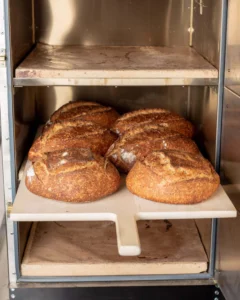
Conversely, higher-hydration doughs, spanning 75% to 85% and above, transform the physics of bread production. Water acts as a plasticizer for the gluten network, and higher volumes produce a slack, extensible dough capable of trapping voluminous gases generated by wild yeasts and lactic acid bacteria during fermentation. When baked correctly, high-hydration loaves develop a thin, brittle crust and a tender, open, custardy interior crumb. However, exceeding optimal thresholds can introduce structural failure, resulting in excessively soft textures, premature staling, and a gummy crumb incapable of supporting its own weight post-bake.
Technological Advancements in Mixing: The Method of Bassinage
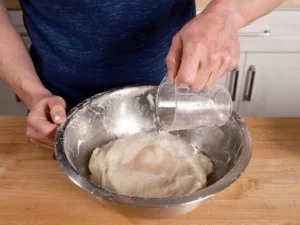
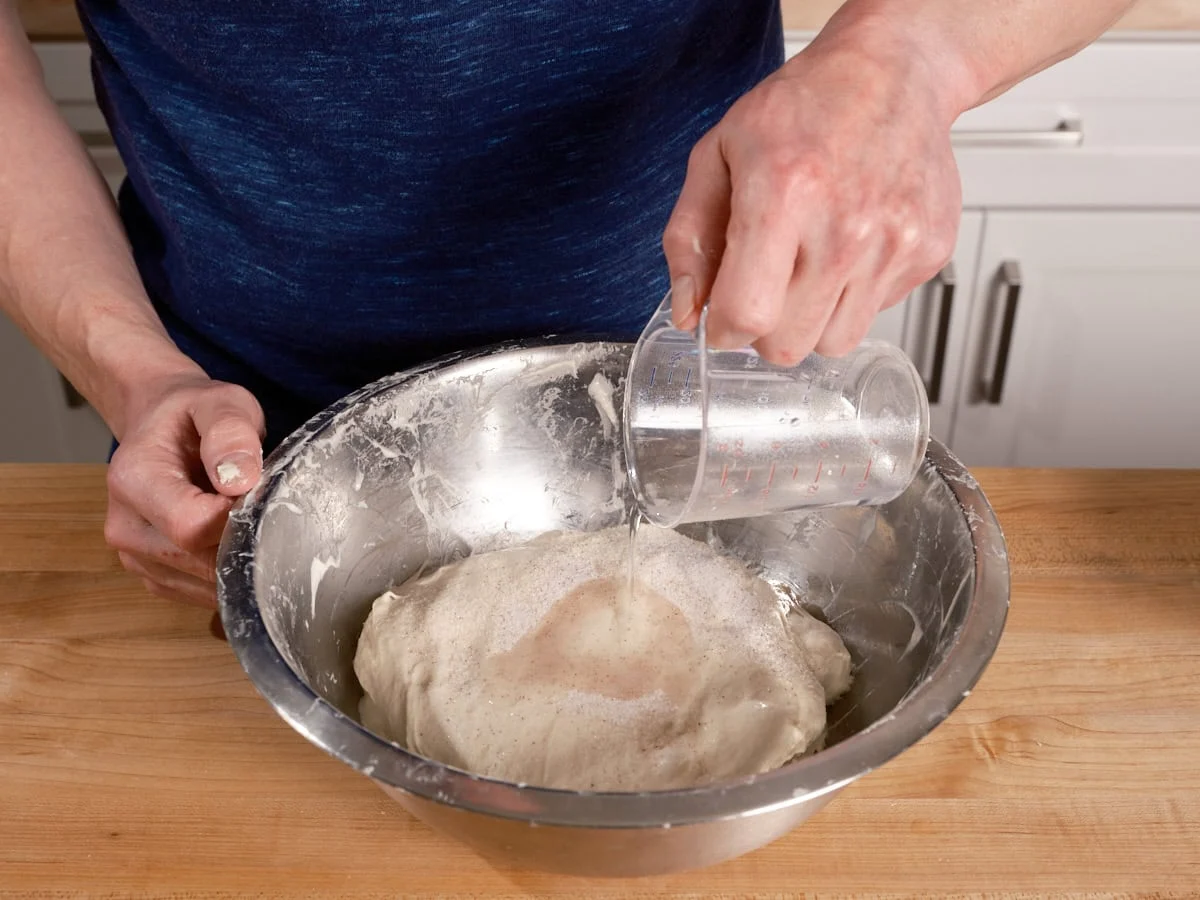
To successfully navigate high-hydration formulations without compromising dough integrity, professional bakers frequently employ a technique known as bassinage, or double hydration. Rather than incorporating the total volume of water at the onset of mixing, the baker retains a specific fraction—typically 10% to 20%—while mixing the primary dough to initial gluten development.
This staged incorporation offers two distinct operational advantages. First, it accelerates initial gluten development. When water content is excessively high during the earliest stages of mixing, friction is severely reduced, making it difficult for the protein chains of gliadin and glutenin to align and bond efficiently. By developing a rudimentary gluten matrix with a lower initial water volume, the dough gains the structural scaffolding necessary to absorb and lock in the remaining water during subsequent mixing stages. Second, bassinage provides the baker with real-time diagnostic control. If a dough appears overly slack or saturated after the initial mixing phase, the retained water can be omitted entirely, preventing structural collapse.
Environmental and Agricultural Variables Impacting Water Demand
Achieving consistent results across different kitchens requires evaluating the specific raw materials and environmental conditions at play. Protein content within flour directly correlates with water absorption capacity. High-protein flours, particularly North American bread flours containing 12% to 14% protein, form robust gluten networks capable of binding significant amounts of water. Conversely, lower-protein European and domestic soft wheats demand reduced hydration levels to maintain workable dough consistency.
Whole grain flours, including whole wheat, rye, and ancient grains, introduce coarse bran and germ particles that act like sponges, absorbing substantially higher volumes of moisture compared to refined white flour. Consequently, high-extraction and whole-grain formulations necessitate elevated hydration levels, often requiring deliberate staging via bassinage to ensure even moisture distribution. Furthermore, regional climates dictate adjustments; arid, high-altitude environments frequently require higher overall hydration to counteract rapid evaporation during bulk fermentation, while humid coastal climates demand cautious water management.
Troubleshooting Common Baking Obstacles
Sticky dough is universally cited as the most frequent frustration among home bakers, typically stemming from inadequate gluten development, excessive hydration relative to the flour’s absorption threshold, or improper fermentation pacing. Contrary to popular intuition, correcting an excessively wet dough by haphazardly adding more dry flour disrupts the precise baker’s percentages of salt, leaven, and overall hydration, often resulting in an unbalanced final loaf.
Professional consensus dictates that managing dough consistency relies heavily on cultivating tactile intuition—learning to evaluate the elasticity, extensibility, and resistance of the dough by touch rather than relying solely on numerical recipes. Maintaining detailed baking logs that record flour types, ambient temperatures, water temperatures, and final hydration percentages remains the most effective methodology for diagnosing inconsistencies and refining technique over time.