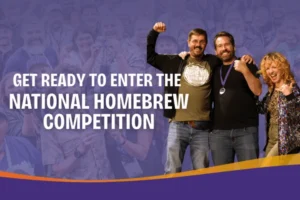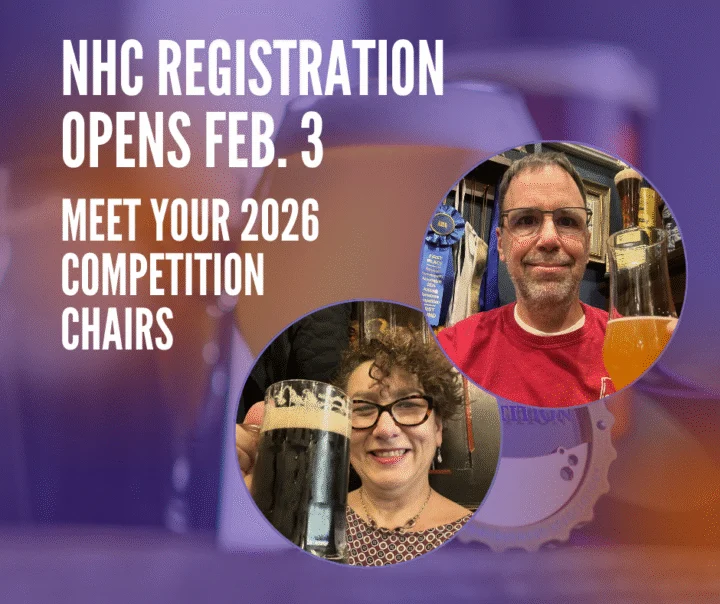

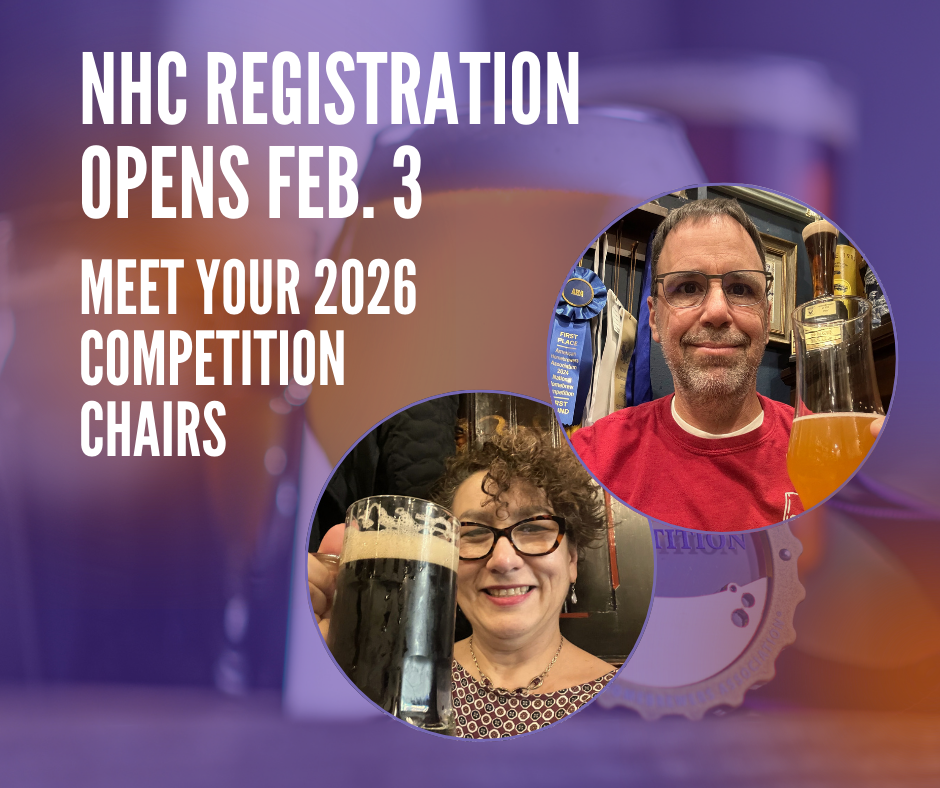
The American Homebrewers Association (AHA) has officially announced the appointment of its new leadership team for the prestigious National Homebrew Competition (NHC), widely recognized as the largest and most competitive international event celebrating excellence in amateur beer, mead, and cider production. Charlie Harr has been named to the position of NHC Chair, while Jen Pereira will step into the role of Deputy Chair. This leadership transition marks a critical moment for the member-driven association as it prepares for the upcoming 2026 competition cycle, with official entry submissions slated to open on February 3 and close on February 25.
Harr and Pereira bring decades of combined operational, educational, and judging expertise to their respective offices. Their appointments reflect a strategic effort by the AHA to fortify the structural integrity, logistical execution, and educational mission of the NHC. Operating under the umbrella of a member-directed association that has championed homebrewing culture since 1978, the newly appointed chairs will work closely with the broader NHC Subcommittee—led by dedicated AHA members Sandy Cockerham and Amanda Burkemper—to manage the immense scale of the global tournament.
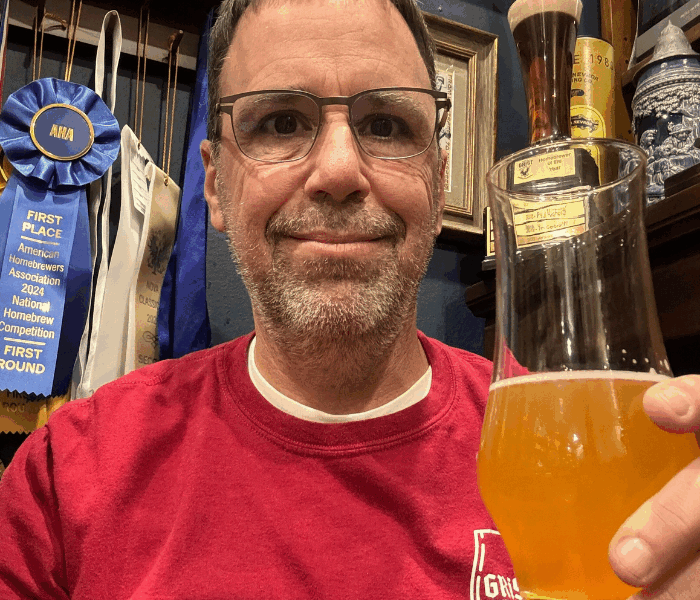
Profile of NHC Chair Charlie Harr
Charlie Harr steps into the role of NHC Chair equipped with more than twenty years of comprehensive experience in professional operations and large-scale event management. Beyond his corporate and logistical background, Harr has cultivated a profound dedication to brewing education and the meticulous administration of sanctioned beer competitions.
Currently serving as the head judge for the Virginia Craft Brewers Guild, Harr is no stranger to the high-pressure environment of large-scale beverage evaluations. In this capacity, he has successfully overseen numerous competitions sanctioned by both the AHA and the Beer Judge Certification Program (BJCP). His responsibilities have routinely encompassed complex logistical coordination, meticulous judge recruitment, rigorous entry tracking, and the mobilization of dedicated volunteer teams. Furthermore, Harr is actively pursuing his BJCP National Judge certification, underscoring his personal commitment to sensory analysis and standard-setting within the brewing community. As a long-standing AHA member and a veteran competitor who has previously entered the NHC as a participant, Harr possesses a holistic understanding of the competition from both the organizer’s desk and the brewer’s bench.
Reflecting on his new appointment, Harr emphasized the synergy between his professional background and his passion for the craft. His extensive experience managing complex, multi-tiered events uniquely positions him to address the operational demands of the world’s premier homebrewing competition while fostering continuous education among participants.
Profile of Deputy Chair Jen Pereira
Joining Harr at the helm is Jen Pereira, who assumes the role of Deputy Chair with more than twenty-five years of distinguished experience in beverage education, sensory evaluation, and competition leadership. Pereira’s credentials within the fermented beverage industry are extensive; she holds the esteemed title of BJCP National Beer Judge, is a Certified Cicerone®, and possesses a Wine & Spirit Education Trust (WSET) Diploma, reflecting a deeply rounded mastery of global fermentation arts.
Pereira’s contributions to the homebrewing and professional craft brewing landscapes extend well beyond the judging table. As the founder of both the Ocean State Home Brew Competition and the Rhode Worthy Cup, she has demonstrated a sustained commitment to creating accessible, high-standard platforms for amateur brewers to showcase their liquid art. For more than two decades, Pereira has also shared her wealth of knowledge as an associate professor at Johnson and Wales University, shaping the next generation of hospitality and culinary professionals. Having served as an NHC judge in previous years and maintaining an active profile as an avid homebrewer, Pereira bridges the gap between academic rigor and practical brewing passion.
In her remarks regarding her new leadership post, Pereira highlighted the cyclical nature of community engagement, noting that stepping up as Deputy Chair provides a meaningful avenue to give back to an industry and hobby that have profoundly shaped her professional and personal life.
The Official Timeline and Critical Deadlines for the 2026 Competition
With the leadership structure firmly established, the AHA has turned its immediate attention to the operational timeline for the 2026 National Homebrew Competition. The event calendar is structured to give brewers adequate time to finalize their recipes, brew their batches, and prepare their entries for shipping or drop-off at designated regional sites.
The 2026 NHC schedule dictates that the official submission window opens on February 3. Prospective participants must ensure their entries are fully registered and accounted for before the strict closing date of February 25. To maintain eligibility within the competition, entrants must hold an active membership with the American Homebrewers Association. The organization has strongly encouraged participants to begin their brewing processes well in advance of the February deadlines and to monitor the official HomebrewersAssociation.org portal for real-time updates, style guidelines, and logistics announcements.
Leadership and Community Reactions
The announcement of Harr and Pereira has elicited enthusiastic support from the highest levels of the American Homebrewers Association, signaling a unified vision for the future of the organization. Julia Herz, Executive Director of the AHA, expressed profound confidence in the newly appointed leadership team, emphasizing the collaborative nature of the competition ecosystem.
According to Herz, the association is exceptionally fortunate to have industry veterans of Harr and Pereira’s caliber stepping forward to guide the NHC. She underscored that the continued success of the competition relies heavily on a symbiotic partnership between the central leadership, the collective body of volunteer judges, regional competition organizers, subcommittee members, and the tens of thousands of AHA members who submit their meticulously crafted entries each year. This collaborative spirit remains the foundational bedrock of the homebrewing community.
Historical Context and Evolution of the National Homebrew Competition
To fully appreciate the scope of the National Homebrew Competition under its new leadership, one must examine its remarkable historical trajectory. Founded in 1978, the American Homebrewers Association was established with a singular, visionary mission: to foster a culture where there is "a homebrewer in every neighborhood and a homebrew club in every community." Just one year after the association’s inception, the very first iteration of the NHC was launched in 1979, drawing a modest total of just 34 entries.
Over the ensuing decades, what began as a small gathering of enthusiastic hobbyists burgeoned into the largest and most prestigious homebrewing competition on earth. The NHC has continuously served as the ultimate litmus test for amateur brewers seeking validation for their technical skill, recipe formulation, and mastery of traditional and experimental styles spanning beer, mead, and cider.
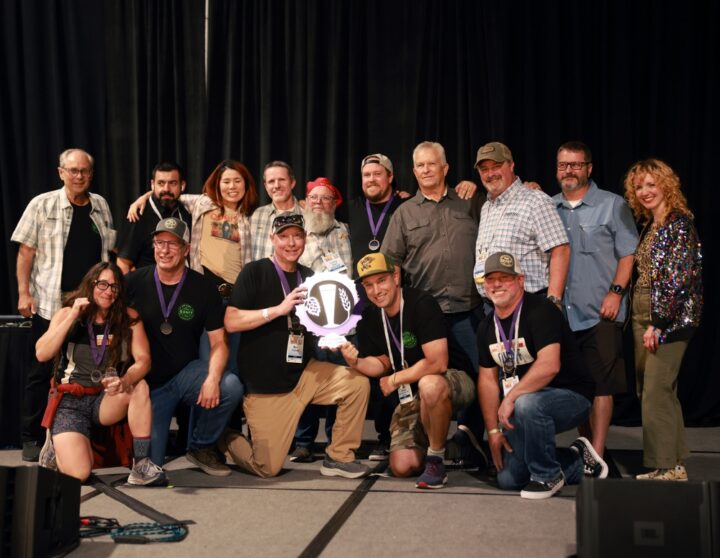
In recent years, the scale of the competition has reached staggering heights. Since 2025, the NHC has regularly evaluated nearly 170,000 cumulative entries annually when factoring in local, regional, and final round evaluations. This monumental logistical undertaking relies on a vast network of top-tier beer judges, specialized stewards, and dedicated volunteer leaders who dedicate their time to upholding the rigorous sensory standards established by the BJCP.
The Broader Impact and Economic Implications of Homebrewing Leadership
The appointment of experienced leadership like Harr and Pereira carries broader economic and cultural implications for the broader craft beverage sector. Homebrewing has long served as the foundational R&D incubator for the commercial craft beer industry. Countless professional craft breweries operating today trace their lineage back to a homebrewer experimenting in a garage or kitchen with rudimentary equipment before scaling up their recipes for commercial distribution.
By maintaining the rigorous standards of the NHC, the AHA ensures that the amateur brewing community continues to push the boundaries of flavor, technical precision, and stylistic innovation. Competitions of this magnitude elevate the baseline of brewing knowledge, encouraging participants to study chemistry, microbiology, and culinary arts in pursuit of the perfect pour. Furthermore, the operational excellence demanded by large-scale events like the NHC instills a deep appreciation for quality control, sanitation, and consistency—skills that frequently translate into professional success should homebrewers choose to transition into commercial brewing ventures.
Association Benefits and Ongoing Resources
Beyond the National Homebrew Competition, the American Homebrewers Association continues to deliver comprehensive value to its global membership base. Founded on principles of education and community, the AHA provides members with an array of specialized resources designed to elevate their brewing craft.
Members receive regular editions of Zymurgy Magazine, the premier publication for homebrewing techniques, historical deep-dives, and equipment reviews. Additionally, the association curates an extensive database of NHC-validated recipes, instructional guides, and technical whitepapers hosted directly on HomebrewersAssociation.org. Members also enjoy tangible economic and social perks, including exclusive AHA Member Deals at participating craft breweries and businesses across the country, eligibility for Annual Recognition Awards, and the chance to earn medals and accolades through the NHC framework.
As the February 3 opening date for 2026 NHC entries rapidly approaches, the combination of Charlie Harr’s operational mastery and Jen Pereira’s educational pedigree ensures that the competition remains in exceptionally capable hands. Homebrewers worldwide are currently putting the finishing touches on their fermentation profiles, aiming for a coveted spot on the podium at the world’s most definitive celebration of amateur fermentation.