
The American Homebrewers Association (AHA) has officially announced the release of the May/June 2026 issue of Zymurgy, its flagship publication dedicated to the art and science of home fermentation. This latest edition marks a significant shift toward a more globalized perspective on brewing, featuring in-depth explorations of regional styles from Ukraine, Italy, and Germany, alongside a groundbreaking intersection of zymurgy and virology. As the homebrewing hobby continues to evolve from a domestic pastime into a sophisticated global community, this issue serves as a comprehensive guide to the technical advancements and cultural narratives shaping the industry in the mid-2020s.

The focal point of the issue is the emergence of the Ukrainian Golden Ale as a distinct and internationally recognized style. Authored by Lana Svitankova, a prominent beer educator and judge, the cover story details the specific sensory profile that differentiates this ale from its European counterparts. Positioned between the lighter British Golden Ale and the more potent Belgian Golden Strong Ale, the Ukrainian variant is characterized by its unique balance of strength and approachable malt sweetness. The inclusion of this style reflects a broader movement within the Beer Judge Certification Program (BJCP) and the Brewers Association to acknowledge Eastern European brewing traditions that have historically been overlooked in Western literature.
The Evolution of Regional Styles and Technical Mastery
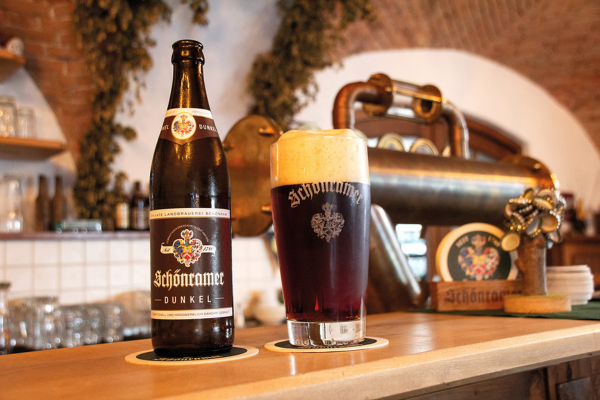
The May/June 2026 issue provides a rigorous technical analysis of several classic and contemporary styles, emphasizing the importance of regional ingredients and traditional techniques. A featured segment on German Dunkel explores the delicate equilibrium required to produce a beer that is rich in melanoidins and toasted malt complexity while maintaining high drinkability. Brewers are guided through the nuances of Munich malt selection and the potential benefits of decoction mashing—a traditional process that, while labor-intensive, is often cited as the key to achieving the specific depth of flavor found in Bavarian dark lagers.

In addition to German traditions, the magazine highlights the vibrant craft and homebrewing culture of Italy. Carlo Sesia, a gold medalist in the National Homebrew Competition, provides a masterclass on brewing Belgian-style Saisons from his base in Northern Italy. This feature underscores the "Italian School" of brewing, which often involves the creative integration of local agricultural products. This theme is further expanded in a report on the Homebrewers Fiorentini, a club based in Tuscany. The group’s members have gained recognition for utilizing regional "terroir" in their fermentations, incorporating grape must from local vineyards, honey from Tuscan apiaries, and aging beers on oak previously used for wine production. This practice mirrors the official recognition of the Italian Grape Ale (IGA) as a style, showcasing how homebrewers often act as the vanguard for professional industry trends.
The Intersection of Biotechnology and Brewing
One of the most significant contributions to this issue is a report on the work of Chris Buck, an American virologist and avid homebrewer. Buck has successfully leveraged the biological properties of Saccharomyces cerevisiae—standard brewer’s yeast—to develop a vaccine for polyomaviruses. These viruses are known to cause severe diseases in immunocompromised individuals, and Buck’s research utilizes the yeast’s ability to produce complex proteins to create virus-like particles (VLPs).

This synthesis of brewing and biotechnology highlights the sophisticated level of scientific literacy within the modern homebrewing community. The use of yeast as a "cell factory" is a well-established concept in the pharmaceutical industry, but Buck’s narrative bridges the gap between a hobbyist’s fermentation vessel and a medical laboratory. This feature provides readers with a factual look at how the same organisms responsible for carbonation and alcohol production are being engineered to address global health challenges, reinforcing the magazine’s commitment to the "science" aspect of its title.
Organizational Impact and the American Homebrewers Association
Since its founding in 1978 by Charlie Papazian, the American Homebrewers Association has been the primary advocate for the hobby in the United States. The publication of the May/June 2026 issue of Zymurgy continues the organization’s mission of education and community building. Under the editorial leadership of Dave Carpenter, who has served as Editor-in-Chief since 2019, the magazine has increasingly focused on "validated recipes"—formulas that have been tested and peer-reviewed to ensure consistency and quality for the home brewer.
The 14 recipes included in this issue are designed to cater to a wide range of skill levels, from extract-based brewing to advanced all-grain systems. These recipes are more than mere instructions; they represent the culmination of experimental data collected from competition-winning brewers and professional consultants. By providing these resources, the AHA continues to lower the barrier to entry for new brewers while providing the technical depth required by seasoned veterans.
Historical Context and Economic Significance of Homebrewing
The context of this issue is set against a backdrop of a stabilizing but highly specialized craft beer market. In the decades following the federal legalization of homebrewing in 1978, the hobby has served as the research and development arm of the professional craft beer industry. Many of the most successful commercial breweries in the United States, including Sierra Nevada and Dogfish Head, began as homebrewing experiments.

As of 2026, the economic impact of homebrewing remains substantial. While the "homebrew boom" of the early 2010s has transitioned into a more mature market phase, the demand for high-quality ingredients—specifically hop varieties with unique aromatic profiles and specialized yeast strains—continues to drive innovation in the agricultural sector. The May/June issue’s focus on international styles suggests a market that is looking outward for inspiration, seeking to replicate the authenticity of global traditions while utilizing the precision of modern homebrewing equipment.
Chronology of the May/June 2026 Release and Membership Benefits
The release of this issue follows a structured timeline designed to maximize engagement within the brewing community. The digital preview was made available in early April 2026, allowing members to plan their brewing schedules ahead of the summer season. The physical distribution of the magazine coincides with the lead-up to the National Homebrewers Conference, an annual event that serves as the largest gathering of fermentation enthusiasts in the world.
Access to the full content of Zymurgy remains a primary benefit of AHA membership. The organization employs a tiered access model, where certain technical articles and the complete recipe database are reserved for members. This model supports the AHA’s advocacy work, which includes lobbying for fairer homebrewing laws at the state level and supporting small-scale fermentation research. The $4.99 subscription mentioned in the publication materials is part of an ongoing effort to make professional-grade brewing education accessible to a digital-first audience.
Broader Implications for the Future of Fermentation
The contents of the May/June 2026 issue of Zymurgy suggest that the future of homebrewing lies in the intersection of tradition and high-technology. The inclusion of the Ukrainian Golden Ale signifies an era of "style diplomacy," where brewing becomes a medium for cultural exchange and recognition. Simultaneously, the "vaccine beer" feature points toward a future where the boundaries between domestic hobbies and professional scientific research become increasingly porous.

From a journalistic perspective, the magazine’s shift toward global reporting and complex biological science reflects the increasing sophistication of its readership. The modern homebrewer is no longer just a consumer of beer but a student of microbiology, history, and international culture. By documenting the rise of regional styles in Italy and Ukraine alongside the technical rigors of German lagering, Zymurgy reinforces the idea that beer is a universal language with deep local roots.
As the industry moves forward, the data and narratives presented in this issue will likely influence the next generation of professional brewers. The techniques described by Carlo Sesia and the historical research presented by Lana Svitankova provide a roadmap for innovation that honors the past while embracing the technical possibilities of the future. The May/June 2026 issue stands as a testament to the enduring relevance of homebrewing as a pillar of both community and scientific inquiry.