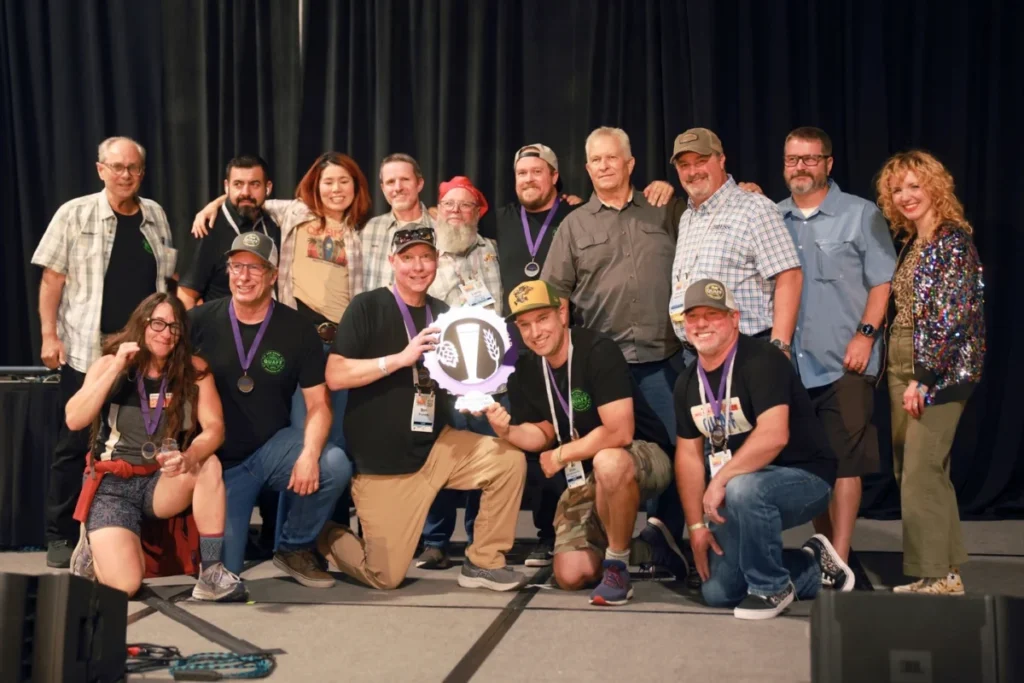

The American Homebrewers Association (AHA) has recently taken a prominent position in the national conversation regarding the future of DIY fermentation, following a comprehensive feature in the Denver Post highlighting Executive Director Julia Herz and the organization’s evolving mission. Published on October 10, the feature underscores a pivotal moment for the homebrewing community, particularly in Colorado, a state long considered the epicenter of American craft beer culture. Herz, a veteran of the brewing industry and a vocal advocate for independent craft beer, articulated a vision that moves beyond the simple act of making beer at home, framing homebrewing as a vital tool for community building, agricultural connection, and culinary innovation.
The core of the AHA’s new strategic direction, as detailed by Herz, is the ambitious goal of establishing a homebrewer in every neighborhood and a homebrew club in every community across the United States. This mission comes at a time when the broader craft beer industry faces a maturing market and changing consumer habits, leading many to look back at the grassroots hobby that birthed the multi-billion-dollar craft sector. Herz suggests that homebrewing is poised for a significant resurgence, driven by a desire for authentic, hands-on experiences and a deeper understanding of the science and art behind fermentation.
The Historical Context of American Homebrewing
To understand the significance of Herz’s current advocacy, it is necessary to examine the trajectory of homebrewing in the United States. The hobby was effectively prohibited for decades following the repeal of Prohibition in 1933, due to a clerical error in the drafting of the 21st Amendment that failed to legalize home beer production even as it legalized home winemaking. It was not until 1978 that President Jimmy Carter signed H.R. 1337, which created a federal exemption for taxes on beer brewed at home for personal or family use.
This legislative milestone was the catalyst for the modern craft beer revolution. In the wake of legalization, the American Homebrewers Association was founded in 1978 by Charlie Papazian in Boulder, Colorado. Papazian’s philosophy, famously encapsulated in the mantra "Relax, don’t worry, have a homebrew," laid the groundwork for a culture of sharing and education. Throughout the 1980s and 1990s, homebrewers were the primary innovators in the American beer scene, experimenting with styles and ingredients—such as aggressive hopping and high-gravity brewing—that were ignored by the industrial lagers of the time.
The Denver Post feature highlights that this history is not just a matter of record but a living foundation for the current movement. Many of the most successful craft breweries in Colorado and the wider U.S. began as small-scale home operations. By championing homebrewing today, Herz and the AHA are effectively nurturing the next generation of professional brewers and industry innovators.
Julia Herz: A Leadership Profile in Fermentation
Julia Herz’s return to the American Homebrewers Association as Executive Director in 2021 marked a significant homecoming. Herz previously spent nearly two decades with the Brewers Association (the parent organization of the AHA), where she served as the Craft Beer Program Director and the face of CraftBeer.com. Her expertise in beer education, sensory analysis, and legislative advocacy has made her one of the most recognizable figures in the industry.
In her interview with the Denver Post, Herz emphasized that her passion for brewing is lifelong. Her approach combines the technical rigor of a BJCP (Beer Judge Certification Program) judge with a populist belief that anyone can, and should, engage with the fermentation process. Herz’s leadership is defined by an emphasis on inclusivity and the "big tent" philosophy, aiming to attract younger, more diverse demographics to a hobby that has historically been dominated by a specific subset of the population.
Under her guidance, the AHA is focusing on the "joy of fermentation" more broadly. While beer remains the primary focus, the association is increasingly embracing mead, cider, and other fermented beverages, recognizing that the skills required for homebrewing are transferable to a wide array of culinary pursuits.
The Socio-Economic Impact of Homebrewing
The implications of a homebrewing resurgence extend beyond the kitchen or the garage. According to data from the Brewers Association, there are approximately 1.1 million homebrewers in the United States, who collectively produce more than 1.4 million barrels of beer annually. This represents about 1% of the total U.S. beer production, a staggering figure for a non-commercial hobby.
The economic impact is also felt in the retail sector. Homebrew supply shops (LHBS) are essential hubs in their local economies, providing specialized equipment, fresh grain, hops, and yeast. However, these shops have faced challenges in recent years due to the rise of e-commerce and the convenience of professional craft beer. Herz’s vision of a "homebrewer in every neighborhood" is partly a call to revitalize these local businesses, which serve as the physical infrastructure for the homebrewing community.
Furthermore, homebrewing fosters a unique connection to American agriculture. Brewers are often the first to experiment with new hop varieties or heirloom malts, providing a niche market for small-scale farmers. By brewing at home, individuals gain a firsthand understanding of the supply chain, from the soil to the glass. This "slow beer" movement mirrors the "slow food" movement, emphasizing quality, locality, and transparency over mass production.
Community and the "Third Space"
One of the most profound points raised by Herz in the recent feature is the role of homebrewing in fostering human connection. In a digital age where "third spaces"—social environments separate from home and work—are increasingly scarce, homebrew clubs offer a vital sense of belonging.
There are currently over 1,500 registered homebrew clubs in the AHA’s network. These clubs are more than just social groups; they are educational collectives where members share recipes, troubleshoot fermentation issues, and engage in blind tastings to improve their palates. Herz noted that the act of brewing is inherently social. "Whether you brew with people or not, you’re almost always going to share it," she told the Denver Post. This culture of sharing is a counter-narrative to the competitive nature of many modern industries, prioritizing communal knowledge over proprietary secrets.
Timeline of Key Milestones in the Homebrewing Movement
To understand the current state of the AHA and Herz’s goals, it is helpful to look at the chronology of the movement’s development:
- 1920–1933: Prohibition in the U.S. Homebrewing of "near beer" occurs in shadows, but legal protections are non-existent.
- 1978: President Jimmy Carter signs H.R. 1337. The American Homebrewers Association is founded in Boulder, Colorado.
- 1979: The first National Homebrew Competition is held.
- 1984: The AHA publishes the first edition of "The Complete Joy of Homebrewing" by Charlie Papazian, which becomes the "bible" of the hobby.
- 2013: Homebrewing becomes legal in all 50 states after Mississippi and Alabama pass legislation.
- 2021: Julia Herz is named Executive Director of the AHA, tasked with modernizing the organization for a post-pandemic world.
- 2024: The AHA launches new initiatives to integrate homebrewing with local community development and agricultural awareness.
Technical Analysis: Why the Resurgence is Happening Now
The predicted resurgence of homebrewing is not merely a result of nostalgic marketing. Several technical and cultural factors are aligning to make the hobby more attractive to a new generation.
First, the technology available to homebrewers has advanced significantly. The "all-in-one" electric brewing systems (such as those from Grainfather, Clawhammer, or Anvil) have lowered the barrier to entry, allowing for precise temperature control and repeatable results in a compact footprint. This has made brewing accessible to apartment dwellers and those who previously found the "propane and pots" method too cumbersome.
Second, the availability of ingredients has never been better. Homebrewers can now purchase the same high-quality Cryo Hops and liquid yeast strains used by world-class professional breweries. This "professionalization of the hobby" allows enthusiasts to produce beer that is often indistinguishable from, or even superior to, commercial offerings.
Third, the rising cost of living and inflation have made the cost-per-pint of homebrewed beer increasingly attractive. While the initial investment in equipment can be high, the marginal cost of producing five gallons of beer is significantly lower than purchasing the equivalent amount of premium craft beer at retail prices.
Implications for the Future of the AHA
As the AHA moves forward under Herz’s leadership, the organization is positioning itself as more than just a hobbyist group; it is an advocate for the "art, science, and joy of fermentation." This broader mandate includes defending the rights of homebrewers at the legislative level and providing educational resources that keep pace with modern brewing science.
The AHA membership benefits, as mentioned in the Denver Post feature, are designed to create a "knowledgeable community." These benefits include access to Zymurgy magazine, a massive database of award-winning recipes, and discounts at breweries and homebrew shops nationwide. By providing these tools, the AHA ensures that the resurgence is built on a foundation of quality and competence.
The focus on Colorado in the recent feature is also symbolic. As the home of the Great American Beer Festival and the Brewers Association, Colorado serves as a laboratory for what the future of beer culture can look like. If Herz can successfully implement the "homebrewer in every neighborhood" vision in Colorado, it will serve as a blueprint for the rest of the country.
Conclusion: The Cultural Significance of the Homebrew
The story of Julia Herz and the AHA is ultimately a story about the democratization of production. In an era where much of what we consume is processed and packaged by distant corporations, homebrewing offers a way to reclaim agency over one’s own sustenance.
As Herz noted, homebrewing connects the individual to the process, the community, and the earth. It is a hobby that rewards patience, curiosity, and generosity. With the support of the American Homebrewers Association and the visibility provided by major outlets like the Denver Post, the movement is well-positioned to transition from a niche interest into a cornerstone of American community life. The "resurgence" Herz speaks of is not just about more people making beer; it is about a more connected, creative, and knowledgeable society, one batch at a time.