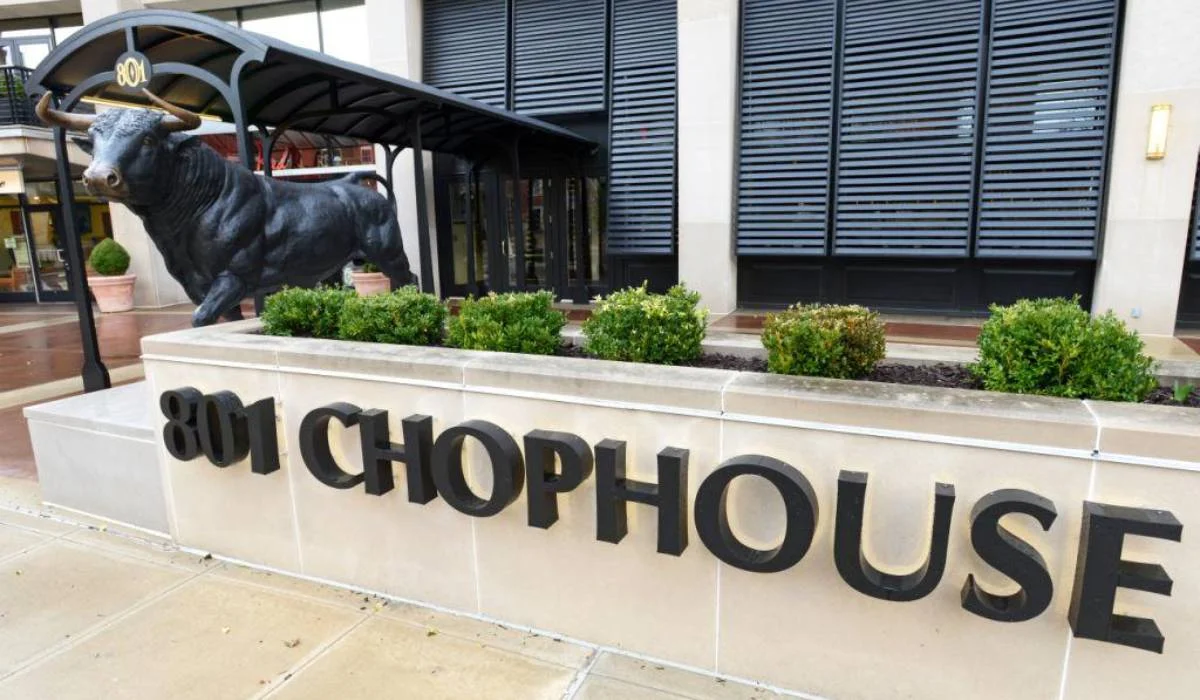

801 Restaurant Group, the parent company of the acclaimed 801 Chophouse and 801 Fish brands, has officially sought federal bankruptcy protection as it navigates a complex landscape of rising operational costs and shifting consumer habits. The Des Moines-based hospitality firm filed for Chapter 11 bankruptcy in a move designed to allow the company to restructure its debt and stabilize its remaining portfolio. According to the court filings, the group has listed both assets and liabilities in the range of $10 million to $50 million, highlighting the significant financial weight the organization is currently managing.
The decision to enter restructuring follows a period of aggressive expansion and subsequent retraction, particularly in the competitive Minneapolis market. While the company intends to keep its core locations operational, the filing serves as a stark indicator of the broader pressures facing the upscale dining sector in an era of unprecedented food price volatility. The brand, which has been a staple of the Midwestern fine-dining scene for over three decades, now faces the challenge of reconciling its high-end service model with a supply chain that has become increasingly hostile to steakhouse margins.
Historical Context and Brand Evolution
The story of 801 Restaurant Group began in 1993 when James P. Lynch opened the first 801 Chophouse in Des Moines, Iowa. At the time, the concept was designed to fill a specific niche: the classic, New York-style steakhouse experience transported to the heart of the American Grain Belt. The flagship location quickly earned a reputation for its USDA Prime beef, extensive wine list, and formal service, becoming a preferred destination for business power lunches and celebratory dinners.
For twenty years, the brand maintained a steady, measured growth trajectory. The success of the Des Moines location provided a blueprint for expansion into other major metropolitan areas across the Midwest and beyond. The group eventually established a presence in Kansas City, Missouri; Denver, Colorado; Minneapolis, Minnesota; St. Louis, Missouri; Omaha, Nebraska; Leawood, Kansas; and Tysons Corner, Virginia. Each location was designed to mirror the original’s upscale aesthetic—featuring dark wood, leather booths, and white-tablecloth service—while adapting slightly to the local architecture and market demands.
In 2013, the group diversified its portfolio with the launch of 801 Fish. This contemporary seafood concept was intended to apply the same high standards of the chophouse to the world of oceanic cuisine, focusing on fresh catches and a sophisticated raw bar. While 801 Fish found a stable home in St. Louis, the group’s attempts to replicate that success in other markets proved more difficult, eventually contributing to the financial strain that led to the current bankruptcy filing.
The Minneapolis Misstep and Recent Closures
The catalyst for the group’s recent financial reevaluation can be traced back to its struggles in the Minneapolis market. In late 2023, 801 Restaurant Group opened a high-profile 801 Fish unit on Nicollet Mall, a prominent pedestrian thoroughfare in downtown Minneapolis. The location was intended to be a flagship for the seafood brand, capitalizing on the city’s vibrant culinary scene. However, the unit struggled to gain the necessary traction, facing a combination of high overhead costs and a slow post-pandemic recovery in the downtown business district.
In an attempt to pivot and save the location, the company rebranded the space as "801 on Nicollet" in 2025. This new concept was designed to be more versatile, blending elements of the steakhouse and seafood brands to appeal to a wider audience. Despite the rebranding efforts, the location failed to meet revenue targets. The concept lasted less than six months before the company made the difficult decision to shutter the doors permanently earlier this year. The closure of the Nicollet location not only resulted in significant capital loss but also signaled the need for a more comprehensive restructuring of the company’s corporate debt.
The Beef Inflation Crisis: A Data-Driven Decline
While localized operational challenges played a role, the primary headwind facing 801 Restaurant Group is a systemic crisis within the American beef industry. As a brand built on the foundation of premium steaks, 801 Chophouse is uniquely vulnerable to fluctuations in cattle pricing. Recent data from the U.S. Bureau of Labor Statistics and the Department of Agriculture paints a grim picture for steakhouse operators.
At the start of 2026, the U.S. cattle herd reached its lowest level in 75 years. This contraction is the result of several years of persistent drought in key grazing regions, which forced ranchers to liquidate herds earlier than planned. Furthermore, the rising costs of grain and feed have made it prohibitively expensive to maintain large populations of cattle. With supply at historic lows, the cost of procurement has skyrocketed.
By March 2026, steak prices had surged by 16 percent year-over-year, reaching a national average of $12.73 per pound. Ground beef, often used for high-end burgers and secondary menu items, saw an even more dramatic increase of 11.8 percent, climbing to $6.86 per pound. For an upscale steakhouse that prides itself on sourcing only the top 2% of beef produced in the country, these price hikes represent a direct assault on profit margins. Unlike casual dining chains, fine-dining establishments have a limited ability to pass these costs on to consumers without risking the loss of their core clientele, who may already be tightening their belts in response to broader economic cooling.
Restructuring Under Chapter 11
The filing for Chapter 11 bankruptcy is a strategic move intended to provide 801 Restaurant Group with "breathing room." Unlike Chapter 7, which involves the total liquidation of assets, Chapter 11 allows a business to continue its daily operations while it works with the court and its creditors to create a plan for debt repayment. This often involves renegotiating leases, reducing interest rates on loans, and potentially closing underperforming units to preserve the health of the overall enterprise.
In a statement provided to USA Today, representatives for 801 Restaurant Group emphasized that the filing is not an end, but a transition. "Chapter 11 is not expected to have any impact on the remaining locations," the company stated. This reassurance is vital for maintaining staff morale and consumer confidence across its eight Chophouse units and the remaining Fish unit in St. Louis. By addressing its liabilities now, the company aims to emerge as a leaner, more resilient entity capable of weathering the current inflationary cycle.
Legal experts suggest that the restructuring will likely focus on the group’s real estate portfolio. High-end steakhouses often occupy prime real estate with expensive long-term leases. If the group can successfully renegotiate these terms, it will significantly lower its monthly "burn rate," allowing more capital to be diverted toward the rising costs of inventory and labor.
Broader Industry Implications and Analysis
The plight of 801 Restaurant Group is not an isolated incident but rather a bellwether for the entire fine-dining industry. The "steakhouse model," which has remained largely unchanged for decades, is being tested by a convergence of negative factors. In addition to beef inflation, the industry is grappling with a persistent labor shortage and the rising cost of skilled kitchen staff.
Furthermore, consumer behavior in 2026 reflects a shift toward "approachable luxury." While there is still a market for $100 ribeyes and $200 bottles of Cabernet, the frequency with which even affluent diners visit these establishments has shifted. Many consumers are opting for "bistro-style" dining or high-end casual concepts that offer a similar quality of food without the formal overhead.
Analysts believe that for 801 Restaurant Group to succeed post-bankruptcy, it may need to innovate its menu to include more cost-effective protein options or "small plate" offerings that maintain the brand’s premium feel while utilizing less expensive cuts of meat. The challenge will be doing so without alienating the traditionalists who expect the classic 801 experience.
The Road Ahead for 801 Chophouse
As the bankruptcy proceedings move forward in the coming months, the industry will be watching closely to see how 801 Restaurant Group manages its transition. The company’s deep roots in the Midwest and its long-standing reputation for quality provide a solid foundation for a potential recovery. The brand’s presence in stable markets like Des Moines, Omaha, and Kansas City offers a buffer against the more volatile urban centers like Minneapolis.
For now, the remaining nine locations remain open for business, and the company continues to honor reservations and gift cards. The goal of the Lynch family and the group’s executive leadership is to ensure that 801 Chophouse remains a premier name in American dining for another thirty years. However, the path to that future requires navigating a period of significant financial and operational recalibration.
The success of this restructuring will depend heavily on the stabilization of the beef market and the group’s ability to maintain its high standards of service under a more disciplined financial framework. If 801 Restaurant Group can successfully navigate the Chapter 11 process, it may provide a roadmap for other independent fine-dining groups facing similar pressures in a rapidly changing economic environment. For the loyal patrons of 801 Chophouse, the hope is that the "classic steakhouse" remains a viable part of the American culinary landscape, even as the industry around it undergoes a profound transformation.