
The American Homebrewers Association (AHA), a foundational pillar of the global craft beer movement, has officially entered a new era of governance and operational strategy following its transition into a fully independent nonprofit organization. In a significant move to solidify its long-term viability, the AHA announced the selection of Strategic Association Management (SAM) as its Association Management Company (AMC). This transition, which began in July 2024, marks the conclusion of a multi-year evaluation of the association’s structure and its historical ties to the Brewers Association (BA). By partnering with SAM, an accredited management firm based in Austin, Texas, the AHA aims to streamline its day-to-day operations while refocusing its resources on member-driven initiatives, legislative advocacy, and the preservation of homebrewing culture.
The restructuring comes at a critical juncture for the hobby of homebrewing, which has faced shifting demographics and economic pressures in the post-pandemic landscape. Under the leadership of Executive Director Julia Herz, the AHA is positioning itself to address these challenges through a modernized management model that emphasizes efficiency and scalability. The selection of SAM provides the AHA with access to specialized professional support in areas such as financial management, membership recruitment, and technological infrastructure, allowing the association’s core leadership to focus on high-level strategic goals.
The Evolution of Independence: From 1978 to 2024
To understand the significance of the AHA’s current independence, it is necessary to examine the organization’s historical trajectory. Founded in 1978 by Charlie Papazian in Boulder, Colorado, the AHA was established shortly after the federal legalization of homebrewing in the United States via the Cranston Act. For its first few years, the AHA operated as the primary voice for amateur fermenters, fostering a community that would eventually give birth to the modern craft brewing industry.
In 1982, the AHA’s operational path merged with the broader professional brewing industry through the formation of the Association of Brewers, which later evolved into the Brewers Association. For over four decades, the AHA functioned as a division of the BA, benefiting from the larger organization’s resources and industry influence. However, as the craft brewing industry matured and the needs of professional brewers diverged from those of amateur hobbyists, the dual-mission structure began to present complexities.
The decision to seek independence was not a sudden reaction but the result of a deliberate and thorough transition process initiated in early 2024. The Brewers Association, facing its own set of post-pandemic economic realities and a need to focus on its trade-association core, collaborated with the AHA leadership to ensure a stable separation. By reclaiming its status as a standalone nonprofit, the AHA can now dedicate 100% of its revenue and organizational energy toward the specific needs of the homebrewing community, free from the competing priorities of a professional trade guild.
Strategic Association Management: A Modern Operational Model
The appointment of Strategic Association Management (SAM) represents a shift toward the "AMC model," a standard practice for mid-sized nonprofit organizations seeking to maximize impact without the overhead costs of a large, permanent staff. SAM is an accredited AMC, a designation held by only a small percentage of management firms globally, signifying adherence to rigorous professional standards in association governance.
Under this partnership, SAM oversees the administrative and operational backbone of the AHA. This includes managing the association’s database for its 20,000 members, handling financial reporting, and providing the technological framework for member communications. For a nonprofit of the AHA’s size, the AMC model offers "fractional" expertise—access to high-level specialists in marketing, IT, and event planning who might be cost-prohibitive as full-time employees.
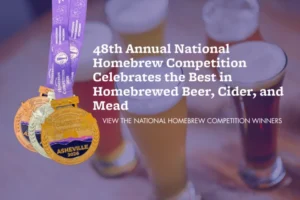
This efficiency is intended to provide "room to pursue big, lofty goals," according to Executive Director Julia Herz. These goals include expanding the reach of the National Homebrew Competition, the world’s largest amateur brewing contest, and enhancing the digital resources available to members. By outsourcing the "back-office" functions to SAM’s Austin-based team, the AHA’s internal leadership remains lean and focused on the mission of promoting the hobby.
Editorial Continuity and the Future of Zymurgy
Central to the AHA’s value proposition is its flagship publication, Zymurgy magazine. Since its inception in 1978, Zymurgy has served as the journal of record for the homebrewing community, providing peer-reviewed recipes, technical brewing science, and industry news. As part of the restructuring, the AHA has moved to secure the talent responsible for the magazine’s reputation for excellence.
Amahl Turczyn will continue in his role as Editor-in-Chief, providing a steady hand and deep technical knowledge to the publication. Adriana Torres remains as the magazine’s copyeditor, ensuring the high standards of journalistic integrity and clarity that members expect. In a move welcomed by long-time readers, the AHA has also brought back Dave Harford as Art Director. Harford’s return is seen as a commitment to the aesthetic quality and visual storytelling that defines the magazine’s identity.
The preservation of the Zymurgy team is a strategic priority, as the magazine remains one of the most cited benefits of AHA membership. In an era where digital content is often ephemeral, the AHA is doubling down on the magazine as a tangible, high-quality resource for fermenters of all skill levels.
Data and Market Analysis: The State of Homebrewing
The AHA’s transition to independence occurs against a backdrop of significant change within the hobby. According to historical data from the AHA and industry analysts, homebrewing saw a massive surge in interest during the late 2000s and early 2010s, coinciding with the "craft beer revolution." However, as craft beer became ubiquitous and easily accessible in retail markets, the "necessity" of brewing at home to access high-quality beer diminished.
Current estimates suggest there are approximately 1.1 million homebrewers in the United States. While the total number of hobbyists has stabilized, the demographic makeup is shifting. Younger generations are increasingly interested in "alternative" fermentation, including mead, cider, kombucha, and sake. The AHA’s mandate as an independent nonprofit involves expanding its educational scope to include these diverse fermentation practices, a move reflected in Julia Herz’s "Immaculate Fermentation" outreach.
Furthermore, the homebrew supply industry—the retail shops that provide malt, hops, and equipment—has faced consolidation. The AHA’s independence allows it to act as a neutral advocate for these small businesses, which serve as the "third places" and community hubs for local brewing clubs. Strengthening the relationship between the national organization and local homebrew clubs is a primary objective for the SAM-managed operations.
Chronology of the Transition
The path to the AHA’s current status followed a specific timeline of events:
- Early 2024: The Brewers Association and the AHA Board of Directors initiate a formal review of the association’s structure, concluding that independence is the most viable path for long-term growth.
- Spring 2024: A call for member comment is issued, allowing the 20,000-strong membership base to provide feedback on the proposed separation.
- July 2024: Strategic Association Management (SAM) officially begins overseeing the day-to-day operations of the AHA.
- August 2024: The AHA publicly announces the selection of SAM and confirms the retention of its core editorial team for Zymurgy.
- Late 2024/Early 2025: The AHA moves toward a fully member-driven governance model, overseen by its founding board and Executive Director Julia Herz.
Broader Implications for the Brewing Industry
The independence of the AHA is more than a localized administrative change; it reflects a broader trend in the nonprofit sector where specialized communities are seeking more direct control over their advocacy and resources. For the craft beer industry at large, a healthy and independent AHA is a vital "incubator." A significant percentage of professional brewers began as homebrewers, and the AHA provides the educational foundation that maintains the high standards of the American brewing scene.
From a legislative perspective, the AHA’s independence allows for more focused lobbying efforts. While the Brewers Association focuses on tax parity and distribution laws for commercial breweries, the AHA can focus on "Homebrew Transport" laws and the legality of serving homebrew at festivals—issues that are often secondary to trade organizations but primary to hobbyists.
As the AHA embarks on this new chapter, the combination of Julia Herz’s leadership, the technical expertise of the Zymurgy team, and the operational efficiency of SAM creates a robust framework for the future. The association’s 20,000 members now belong to an organization that is not only a witness to the history of homebrewing but is once again a self-determined architect of its future. The "big, lofty goals" of the AHA are now backed by a professional management structure designed to ensure that the hobby of fermentation remains a vibrant, legal, and celebrated part of American culture for decades to come.