
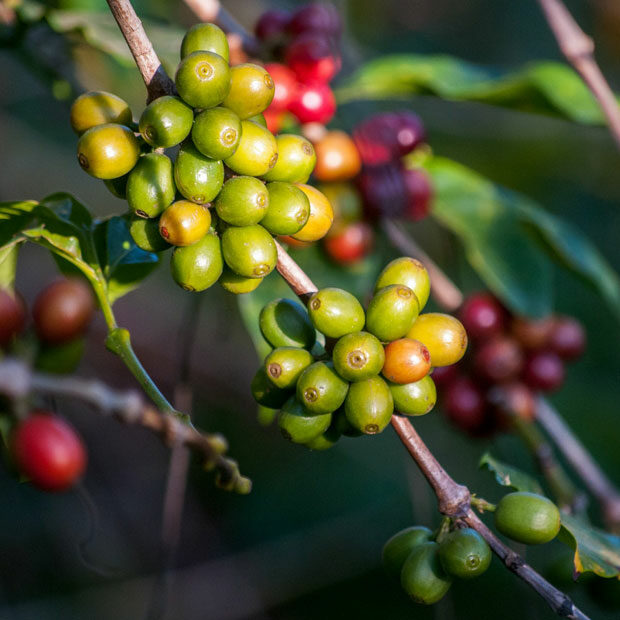
The pursuit of an exceptional cup of coffee has evolved significantly, moving from a simple daily ritual to a sophisticated scientific endeavor. Driven by the "Third Wave of Coffee" movement, consumers and professionals alike are increasingly dissecting every variable in the brewing process, from bean to cup, to unlock optimal flavor profiles. This shift emphasizes transparency, ethical sourcing, and, critically, a deep understanding of extraction chemistry and physics.
The Rise of Specialty Coffee and the Scientific Approach
The "Third Wave of Coffee," originating in the early 2000s, revolutionized how coffee is perceived, cultivated, roasted, and brewed. Unlike previous waves that focused on mass consumption and convenience, the third wave champions coffee as an artisanal product, akin to fine wine. Key tenets include traceability of origin, appreciation for single-estate or single-origin beans, lighter roasts that highlight inherent bean characteristics, and precise brewing methods. Scandinavia, in particular, has emerged as a global hub for this movement, fostering a vibrant scene of specialty roasters and dedicated baristas who champion meticulous preparation. This environment has naturally led to a growing fascination among enthusiasts with the technical aspects of brewing, transforming daily coffee preparation into an experimental science. The recent global emphasis on home-based activities, such as during the 2020 pandemic, further accelerated this trend, prompting many to invest in equipment and knowledge to refine their domestic brewing capabilities. The journey often begins with a realization that achieving reproducible, high-quality results requires moving beyond intuition and embracing quantifiable parameters.
Unpacking the Fundamentals of Coffee Extraction

At its core, coffee brewing is an extraction process, where hot water dissolves soluble compounds from ground coffee beans. The complexity of coffee’s flavor arises from hundreds of chemical compounds, including acids, sugars, lipids, and volatile aromatics. Optimizing their extraction is key to a balanced, flavorful cup. Recent advancements, including accessible measuring tools and a surge in scientific publications, have demystified many aspects of this process, allowing enthusiasts to approach brewing with unprecedented precision.
1. Brew Ratio (BR): The Foundation of Strength
The brew ratio defines the proportion of water to coffee grounds. It is a fundamental parameter, often expressed as the mass of water in grams per gram of coffee grounds. A commonly cited starting point, often referred to as the "Golden Ratio" by the Specialty Coffee Association (SCA), is approximately 1:16.7 (60 grams of coffee for 1000 grams of water). Brew ratios for black coffee typically range from 1:15 to 1:25, with espresso ratios being much lower (e.g., 1:2). This ratio serves as a concise recipe guideline, enabling consistent scaling of batches and providing a baseline for experimentation. Understanding and consistently applying the brew ratio is the first step in controlling coffee strength.
2. Total Dissolved Solids (TDS) and Strength Measurement
Total Dissolved Solids (TDS) quantifies the concentration of coffee solubles in the final beverage. Expressed as a percentage, TDS directly correlates with the perceived strength of the coffee. While TDS does not inherently measure flavor quality, it is an indispensable metric for understanding and adjusting brew strength. A common range for filter coffee is 1.2-1.5% TDS (12-15 grams of dissolved solids per liter).
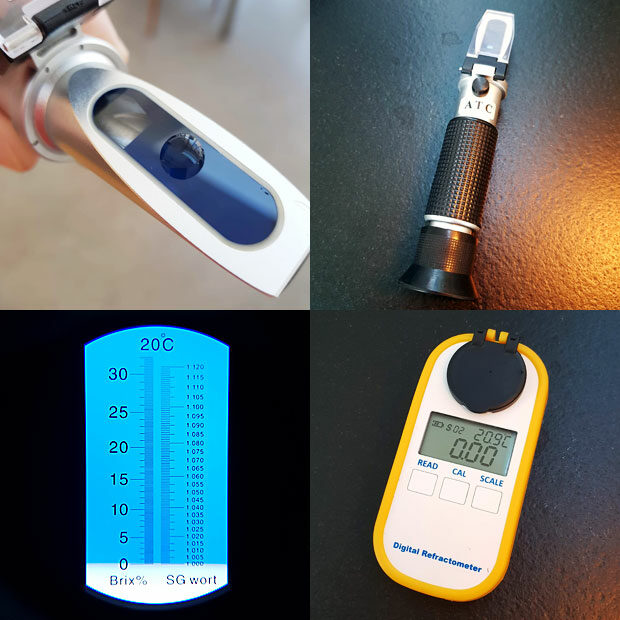
Traditionally, TDS measurement involved gravimetric analysis—evaporating a precisely weighed coffee sample to determine the mass of residual solids. This method, while accurate for non-volatile solids, is impractical for home use due to the need for high-precision balances (accurate to 0.0001 g) and the time-consuming process.
A more accessible and widely adopted method utilizes refractometry. Refractometers measure the refractive index of a liquid, which changes based on the concentration of dissolved solids. Analog handheld refractometers, often calibrated in Brix (%Brix), offer an economical entry point. A conversion factor (e.g., %TDS = %Brix x 0.85) allows approximation of TDS. While handheld models typically offer a resolution of 0.1-0.2 %Brix, sufficient to confirm if a brew is within a general range, they lack the precision for fine-tuning. Digital refractometers, especially those specifically designed for coffee (e.g., VST, Atago), provide higher accuracy (0.01 %Brix readout) and automatic TDS conversion, though at a significantly higher cost.
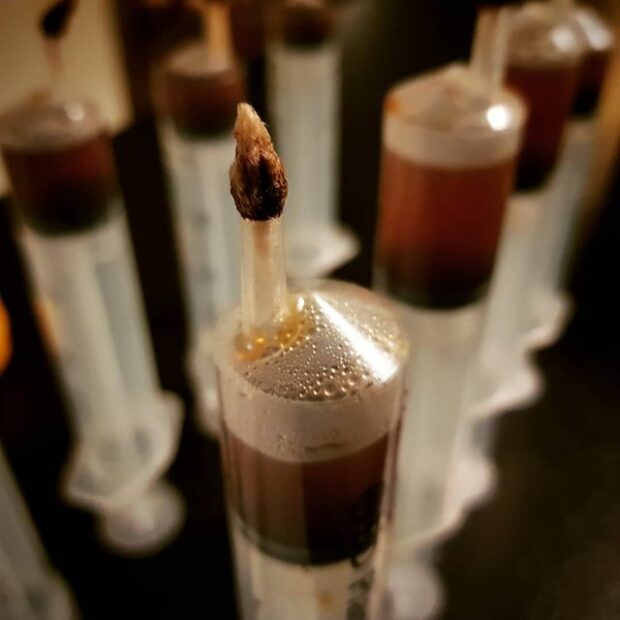
For home brewers, a practical and cost-effective method for preparing samples for refractometry involves hot filtering and cooling. Using plastic syringes with a cotton plug allows for rapid filtration to halt extraction, followed by complete cooling to prevent evaporation and ensure accurate readings, as temperature affects refractive index. This DIY approach minimizes waste and replicates laboratory-grade sample preparation without the expense.
3. Extraction Yield (EY and EEY): Efficiency and Flavor Profile
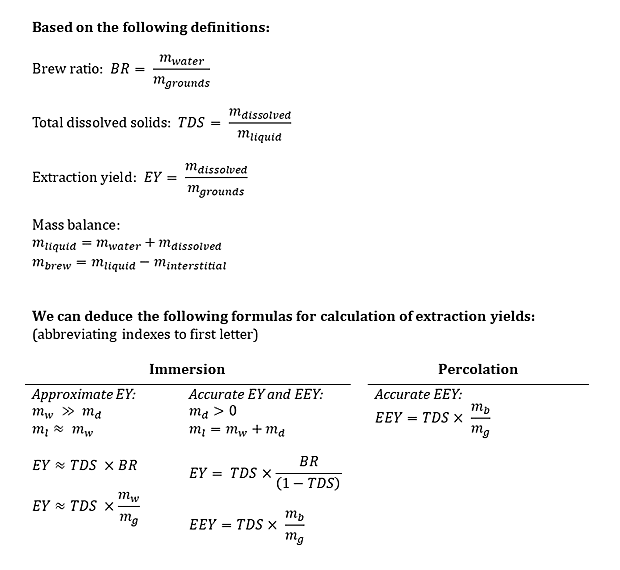
Extraction Yield (EY) measures the percentage of the dry coffee grounds that have been dissolved into the water. It provides insight into how efficiently compounds have been removed from the coffee. The SCA’s "Coffee Brewing Control Chart" visually represents the relationship between TDS (strength) and EY, defining an "ideal" brewing window (typically 18-22% EY and 1.15-1.35% TDS for filter coffee).
Calculating EY can be complex, especially for percolation brews where some liquid remains trapped within the grounds (interstitial liquid). To simplify, two primary definitions are useful:
- Extraction Yield (EY): The total mass of dissolved solids divided by the initial mass of dry coffee grounds. This reflects what has been removed from the grounds.
- Effective Extraction Yield (EEY): The mass of dissolved solids in the final cup divided by the initial mass of dry coffee grounds. This is particularly relevant from an economic perspective and for assessing what the consumer actually tastes.
For immersion brews (e.g., French press), the entire liquid mass is considered, simplifying EY calculations. For percolation brews (e.g., pour-over), the interstitial liquid, which never reaches the cup, complicates the precise definition of EY. Some methodologies, like those proposed by prominent coffee scientists Scott Rao and Jonathan Gagné, offer detailed approaches to account for this. A practical interpretation suggests that for percolation, EY often equals EEY when focusing on the solids delivered to the cup.
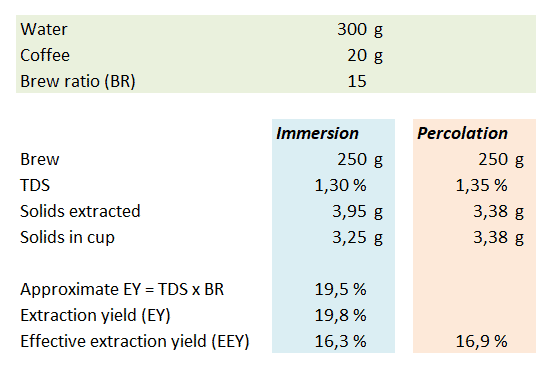
A key insight from these calculations is that different brewing methods can lead to varying EYs and, consequently, distinct flavor profiles. For example, a percolation brew might deliver fewer total extracted solids from the grounds than an immersion brew, but concentrate those solids more effectively in the cup, leading to perceived differences in taste and body. The subtle variations in the composition of these extracted solids, even for a difference of half a gram, can significantly alter the sensory experience.
Factors like evaporation during brewing also affect brew ratio and, by extension, extraction yield, though they are often disregarded in simplified calculations. The inherent water content of roasted coffee beans (1-4%) also represents a variable for ultra-precise yield determination. The accuracy of TDS measurements and coffee ground weighing directly impacts the reliability of EY calculations, underscoring the need for precision in all steps.
4. Grind Size and Particle Size Distribution (PSD): The Surface Area Factor
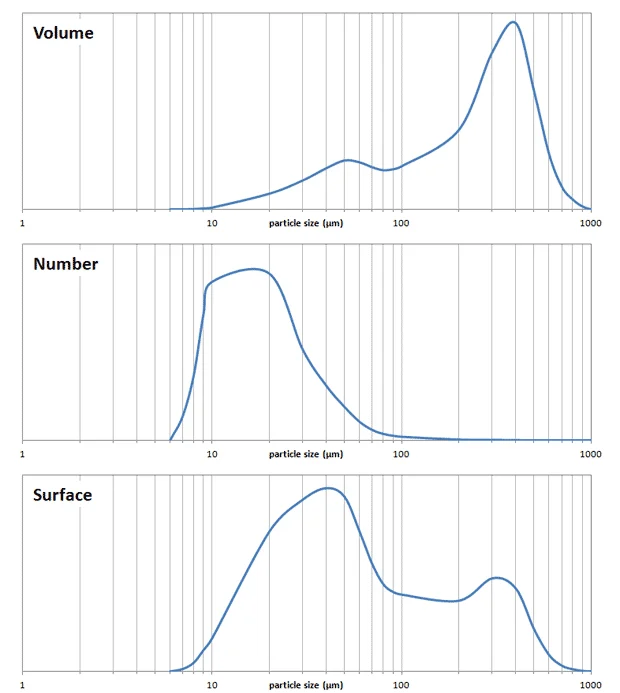
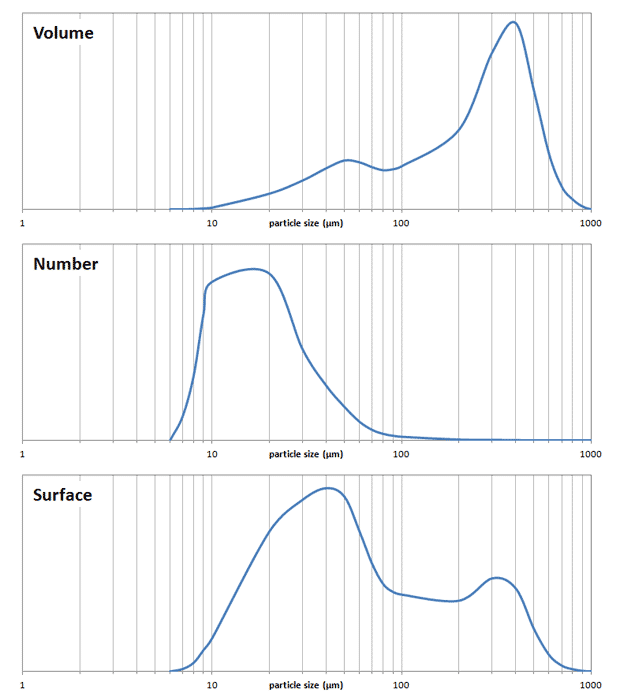
Grinding coffee beans shatters them into a range of particles, from large "boulders" to extremely small "fines" (generally defined as particles under 100 µm). This Particle Size Distribution (PSD) is critical because extraction occurs primarily from the surface area of the coffee particles.
Visualizing PSD can be misleading. A volume distribution might suggest fines are negligible, but a particle number distribution reveals their vast quantity. Most importantly, a surface area distribution demonstrates that a significant portion of the extraction (often more than half) occurs from the surface of these fine particles. This is particularly relevant given preliminary research by Matt Perger of Barista Hustle, suggesting that coffee particles are only extracted to a depth of approximately 100 µm. This implies that the core of larger particles remains unextracted, representing "wasted" coffee. Larger particles, however, are crucial for forming a stable filter bed in pour-over methods, preventing clogging and ensuring adequate flow rates.
The choice of grinder profoundly influences PSD. Cheap blade grinders produce an inconsistent grind with an excessive amount of fines and boulders, leading to both over-extraction (bitterness from fines) and under-extraction (sourness from boulders). Burr grinders, which crush coffee between abrasive surfaces, are superior. These come in various designs (flat vs. conical) and materials. High-end flat burrs, often with larger diameters and specialized geometries, are favored for their ability to produce more uniform grinds, particularly for pour-over, where a narrow PSD minimizes fines and maximizes flow. Conical burrs are common in hand grinders due to their compact design.
Industrial grinding processes, such as those using cylindrical grinders, can achieve extremely narrow PSDs. This suggests that professionally pre-ground coffee, when immediately packaged in an inert atmosphere, could theoretically offer a more consistent grind than many home setups. However, the rapid oxidation of ground coffee, even in days, often negates this advantage for specialty coffee enthusiasts who prioritize freshness.
Experimentation with grinding techniques, such as double grinding (a coarse grind followed by a finer one), could potentially narrow the PSD at home, reducing fines and improving extraction consistency. However, accurately evaluating such methods requires specialized tools like particle sifters (e.g., Kruve) or image analysis software. For pour-over brewing, the goal is often the finest possible grind that still allows for an optimal draw-down time, avoiding clogging, while Aeropress circumvents this issue with pressure-assisted filtration.
5. Freshness of Beans: The Battle Against Oxidation
Freshness is paramount. Roasted coffee beans contain delicate volatile aromatic compounds and oils that are highly susceptible to degradation. Upon roasting, beans undergo complex chemical reactions, including the release of CO2. As beans age, these volatile compounds diminish, and the oils oxidize, leading to stale, rancid flavors. Storing beans in airtight, opaque containers, ideally with one-way valves to allow CO2 release while preventing oxygen ingress, is crucial. For longer-term storage, freezing can significantly slow oxidation.
Grinding coffee massively increases its surface area, accelerating oxidation. Therefore, grinding only immediately before brewing is a non-negotiable rule for specialty coffee. The flavor degradation of ground coffee can occur within minutes, and significant staling is observable within hours.
6. Water Composition: The Unsung Hero of Flavor
Water, comprising over 98% of a brewed cup, is far from a neutral solvent; its mineral content profoundly influences extraction and flavor. Key minerals include:
- Magnesium (Mg²⁺): Often linked to enhancing fruity and acidic notes.
- Calcium (Ca²⁺): Contributes to body and mouthfeel.
- Bicarbonates (HCO₃⁻): Act as buffers, influencing pH and moderating acidity in the cup. High bicarbonate levels (high alkalinity) can flatten acidity, while very low levels can make coffee taste overly sour.
The SCA provides recommended water parameters for brewing, including specific ranges for total hardness, alkalinity, and pH. Many regions, like Norway, have very soft water, requiring mineral additions to optimize for coffee. Conversely, regions with hard water may benefit from filtration or using distilled water as a base for custom mineral recipes. The concept of "DIY mineral waters," where specific salts (e.g., magnesium sulfate, calcium chloride, potassium bicarbonate) are added to distilled or tap water, empowers brewers to tailor their water chemistry to specific coffees or desired taste profiles. This scientific approach to water is increasingly recognized as one of the most impactful, yet often overlooked, variables in brewing.
7. Temperature: Controlling Extraction Kinetics
Water temperature is a critical driver of extraction. Higher temperatures generally increase the solubility of compounds and accelerate diffusion rates, leading to faster and more comprehensive extraction. The SCA recommends brewing temperatures between 90-96°C (195-205°F). While maximizing extraction might seem desirable, extremely high temperatures can rapidly extract less desirable bitter compounds.
Temperature also dictates the types of compounds extracted. Cold brew, for instance, utilizes cold water over extended periods (12-24 hours). This slower, lower-temperature extraction yields a coffee with reduced acidity and bitterness, often described as smoother and sweeter, due to the preferential extraction of certain compounds and reduced solubility of others at cold temperatures.
Beyond extraction, the serving temperature of coffee significantly impacts sensory perception. Sweetness and bitterness are attenuated as a beverage cools, while sourness and saltiness tend to remain more stable. Therefore, comparing hot and cold brews, or even different hot brews, should ideally involve tasting them at similar temperatures to isolate the impact of brewing variables. Maintaining consistent temperature throughout the pour-over process, for example, is a crucial skill.
8. Filter Material: Clarity, Body, and Chemical Neutrality
Filter material significantly impacts the final cup, primarily by controlling the retention of fine particles and oils.
- Paper Filters: These are the most common and effective at removing microscopic particles and oils, resulting in a "cleaner" cup with lower body and brighter acidity. The difference is stark when comparing a paper-filtered pour-over (e.g., Chemex with its thick filter) to a French press, which allows fines and oils to pass, resulting in a "muddy" or "full-bodied" texture. The "just notable difference" for particle size in beverages can be as low as 5 µm, underscoring our sensitivity to microscopic particulate matter.
- Bleached vs. Unbleached: Modern bleached paper filters are chemically neutral, with chlorine largely replaced by environmentally safer oxidizing agents. They are preferred for their lack of flavor transfer. Unbleached filters, containing more lignin and hemicellulose, can impart papery notes if not thoroughly rinsed.
- Pore Size: Different paper filters (e.g., Hario, Cafec, Whatman) vary in pore size and thickness, affecting flow rate and particle retention. Wetting the filter causes cellulose fibers to swell, altering pore dynamics during brewing.
- Metal Filters: These allow all oils and most fine particles to pass into the cup, contributing to a heavier body and more intense mouthfeel. They are reusable and often favored for espresso, where crema formation benefits from retained oils.
- Cloth/Nylon Filters: Less common but also reusable, they offer a compromise between paper and metal, though they can absorb flavors and discolor over time.
Prioritizing the Path to Perfection
For the aspiring home barista, navigating these variables can be daunting. A logical progression for experimentation, from most impactful to more nuanced, would involve:
- Brew Ratio, TDS, and Extraction Yield: Mastering these interconnected parameters is foundational. Without control over strength and extraction, even the finest beans will not yield their full potential. Tools like the "Coffee Compass" from Barista Hustle offer a sensory guide for adjusting these parameters based on taste feedback (e.g., too strong/bitter, too weak/sour).
- Grind Size and Particle Size Distribution: Once brew strength is consistent, refining the grind quality with a good burr grinder dramatically improves flavor clarity and consistency.
- Freshness of Beans: Using freshly roasted and freshly ground beans is crucial to ensure the raw material itself is optimal.
- Temperature: Consistent temperature control during brewing prevents erratic extraction.
- Water Composition: This represents a more advanced step, tailoring water chemistry to specific beans or desired profiles.
- Filter Material: Experimenting with different filter types can fine-tune the body and clarity of the brew.
The scientific exploration of coffee brewing has transformed it from a mere routine into a captivating blend of art and science. By systematically understanding and manipulating these core parameters, coffee enthusiasts can unlock a world of flavor, consistently crafting brews that rival professional standards and deepen their appreciation for this complex beverage. This pursuit not only elevates the personal coffee experience but also contributes to a broader culture of quality, sustainability, and innovation within the global coffee industry.