
The global seafood industry, a multi-billion dollar market, faces a persistent challenge: delivering fish from the ocean to consumers at its peak freshness. While consumers often assume freshness is determined by the speed of distribution after a catch, Shinkei, a venture-backed startup, asserts that the critical juncture lies in the immediate moments after a fish is caught. By integrating advanced robotics and artificial intelligence directly onto fishing vessels, Shinkei is pioneering a new paradigm that promises not only superior taste and quality but also a significant reduction in food waste.
The Criticality of Onboard Handling: A New Frontier in Seafood Quality
For consumers, the experience of purchasing fish from a grocery store often falls short of expectations. Even in bustling port cities like Seattle, where rapid transit to market is a given, the fish displayed may not represent the pinnacle of freshness. Shinkei’s CEO, Saif Khawaja, explained in a recent interview that the conventional handling of fish on fishing boats contributes significantly to this quality deficit. When fish are left to "flop around" after being caught, they experience physiological stress responses that accelerate the degradation of their flesh.
"Most fish available at a mass market retailer were handled on the boat in a way that releases stress hormone, lactic acid," Khawaja stated. "This stuff makes the meat more acidic, primes bacteria growth, and in turn speeds the shelf life and decay of meat quality." This physiological cascade, triggered by prolonged stress, leads to a less palatable product and a shorter shelf life, ultimately contributing to substantial food waste throughout the supply chain.
Poseidon: The AI-Driven Solution for Humane and Rapid Processing
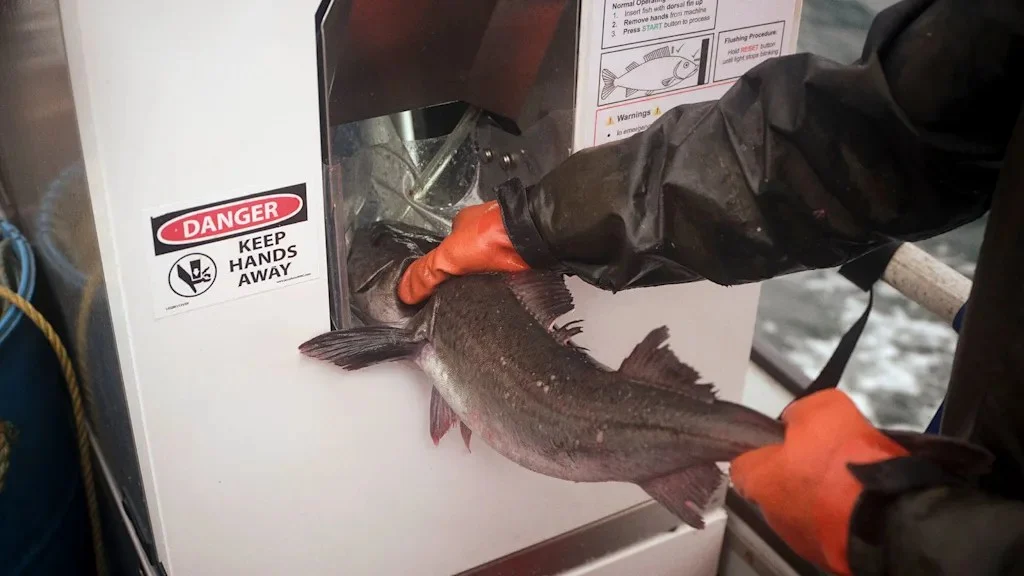
Shinkei’s innovative approach centers on a proprietary robotic system named Poseidon. This computer-vision-powered machine is designed to intervene the moment a fish is brought aboard, while it is still alive. Poseidon utilizes AI-driven computer vision to rapidly assess each fish, determining the most efficient and least stressful method for immediate processing.
The sequence is swift and precise: within approximately six seconds, Poseidon performs a humane brain spike to euthanize the fish as quickly as possible, followed by a gill cut to facilitate rapid blood drainage. This expedited processing aims to minimize the release of stress hormones and acids into the fish’s muscle tissue. Khawaja emphasized the importance of integrating fish into this system within roughly one minute of landing, before any significant quality degradation can occur.
While the process might appear stark, Khawaja argues that it is fundamentally more humane than traditional methods. Fish experience immense stress from the moment they are caught. By rapidly moving towards humane euthanasia and effective bleeding, Shinkei’s technology not only enhances the quality of the fish but also addresses ethical concerns surrounding animal welfare in commercial fishing.
Transforming the Supply Chain: From Boat to Table with Unprecedented Freshness
The impact of Shinkei’s technology extends far beyond immediate taste. A significant benefit is its potential to dramatically reduce food waste. Traditionally, a suffocated fish might enter rigor mortis within approximately seven hours. However, Shinkei’s rapid processing extends this timeframe to as much as 60 hours, creating a considerably wider window before decomposition begins.
This extended shelf life offers a tangible advantage for distributors and retailers. For instance, Shinkei reports that black cod, which typically lasts four to five days when handled conventionally, can remain fresh for up to two weeks when processed by their system. This dramatic extension is attributed to the dual benefits of reduced stress (leading to less acidification) and the efficient removal of blood, which otherwise acts as a breeding ground for bacteria.
The extended shelf life has profound logistical implications. It allows for more flexible transportation options, potentially enabling fish to be trucked rather than relying on costly and carbon-intensive air freight. This can translate into cost savings that are ultimately passed on to consumers, potentially making high-quality, sustainably sourced seafood more accessible.

A Unique Business Model: Building a Premium Brand, Not Just Selling Hardware
Shinkei’s strategic vision deviates from a traditional hardware sales model. Instead of selling its Poseidon machines outright to fishermen and processors, the company employs a unique lease and exclusive purchasing agreement. Shinkei places its robotic systems on partner vessels under a zero-cost lease arrangement, retaining ownership of the machinery. In return, Shinkei secures exclusive rights to purchase the catch processed by its equipment.
This integrated approach allows Shinkei to maintain stringent quality control from catch to consumer. The company then markets and sells the processed fish under its premium brand, Seremony. The goal is to establish "Seremony grade" as a recognized certification of exceptional quality and freshness within the industry.
Seremony has already made significant inroads into high-end culinary circles, supplying fish to Michelin-starred restaurants globally. More recently, the brand has expanded its reach to major retail channels, including Wegmans in Manhattan and FreshDirect, a prominent online grocery delivery service in New York. This dual approach targets both the discerning palates of top chefs and the growing consumer demand for high-quality, traceable seafood.
Technological Underpinnings: Sophisticated AI and Real-Time Data Integration
At the heart of Shinkei’s innovation lies its sophisticated in-house developed AI technology. The company has invested heavily in building its own AI models, collecting proprietary data, and establishing a data pipeline informed by research in areas such as facial recognition – albeit applied to fish faces.
The computer vision stack within Poseidon performs a series of critical inferences: accurately identifying fish species, detecting key anatomical points, and generating precise cutting paths for optimal processing. This level of detail ensures that each fish is handled according to its specific characteristics, maximizing both quality and efficiency.
Beyond Poseidon, Shinkei is actively developing complementary technologies to further enhance its operations. Kronos, a weight-estimation model embedded within the processing machine, provides real-time catch data to Shinkei’s sales team. This allows for proactive sales engagement, enabling the company to begin marketing and selling fish even before it reaches the dock, thereby optimizing sales cycles and minimizing holding times.
Another promising development is Nira, a system that leverages sensor data to predict the shelf life of fish. By integrating various sensor inputs, Shinkei aims to generate accurate, real-time assessments of shelf life and quality at any point in the supply chain. This predictive capability will further refine logistics, reduce spoilage, and provide consumers with greater transparency regarding the freshness of their seafood.
Funding and Future Trajectory: Fueling Growth and Industry Transformation
Shinkei’s ambitious vision has garnered significant investor confidence. The company recently announced a $22 million Series A funding round, co-led by Founders Fund and Interlagos. The round also saw participation from notable investors including Yamato Holdings, Shrug, CIV, Jaws, and Mantis. This substantial capital infusion is poised to accelerate Shinkei’s expansion, further development of its technology, and broader market penetration.
While Shinkei remains focused on building its brand and establishing "Seremony grade" as a benchmark for quality, the long-term implications of its technology are considerable. The company’s commitment to retaining ownership of its hardware and controlling the supply chain through its branded model underscores a strategy centered on delivering a consistently superior product.
The success of Shinkei’s approach could serve as a powerful catalyst for change across the entire seafood industry. By demonstrating the tangible benefits of AI-driven robotics and meticulous onboard handling, Shinkei is not just selling fish; it is setting a new standard for freshness, sustainability, and ethical practices in the global pursuit of truly exceptional seafood. The company’s current operations involve eight fishing vessels, sourcing species such as black cod, rockfish (including vermilion rockfish), and red snapper, along with occasional catches of salmon and black sea bass. These vessels operate along the U.S. West Coast, from Alaska to California, as well as in Texas and Massachusetts, highlighting the geographically diverse application of their innovative technology.