
The American Homebrewers Association (AHA), the primary advocacy and educational body for home fermentation enthusiasts in the United States, has officially entered a new operational phase by selecting Strategic Association Management (SAM) as its Association Management Company (AMC). This announcement, made from the organization’s new operational hub in Austin, Texas, marks a pivotal milestone in the AHA’s transition to a fully independent nonprofit entity. Following its separation from the Brewers Association earlier this year, the AHA has tasked SAM with overseeing its daily operations, member services, and the implementation of an ambitious multi-year strategic plan designed to revitalize the hobby of homebrewing across North America.
The selection of SAM, an accredited AMC known for its expertise in empowering mission-driven organizations, follows a rigorous search for a partner capable of providing the administrative infrastructure necessary for a national-scale nonprofit. SAM began its oversight of AHA operations in July 2024, bringing a specialized team to support the association’s founding board of directors and executive leadership. This move is intended to streamline costs while providing the AHA with access to high-level professional services in areas such as financial management, marketing, event planning, and member recruitment.
The Path to Independence: A Chronological Overview
The transition of the American Homebrewers Association from a subsidiary branch to an independent nonprofit has been a multi-stage process rooted in a desire for greater autonomy and specialized focus. For decades, the AHA operated under the umbrella of the Brewers Association (BA), a powerful trade group representing professional craft brewers. While this relationship provided significant resources, the evolving needs of the homebrewing community necessitated a dedicated organizational structure.
In January 2025, the AHA officially finalized its independence from the Brewers Association. This separation involved several foundational legal and administrative steps. First, the AHA incorporated as a standalone entity in the state of Colorado. Subsequently, it seated its first independent founding board of directors, a group of dedicated homebrewers and industry veterans tasked with steering the organization through its nascent period of autonomy. The organization also initiated the complex process of applying for federal 501(c) nonprofit status, a designation that will allow it to better serve its educational and advocacy mission through tax-exempt activities and donor engagement.
By July 2024, the need for a professional management partner became clear as the board sought to offload daily administrative burdens to focus on high-level strategy. The partnership with Strategic Association Management represents the final piece of the foundational puzzle, providing the AHA with a "back-office" engine to power its national initiatives.
Strategic Realignment and the 2025 Vision
With the partnership with SAM now in place, the AHA is moving forward with a bold strategic plan aimed at addressing the contemporary challenges facing the homebrewing hobby. Under the leadership of Executive Director Julia Herz and Founding Board Chair Shawna Cormier, the organization has identified four primary pillars of focus for 2025 and beyond.
First, the AHA is prioritizing operational health. By leveraging SAM’s shared-resource model, the association can access professional management talent at a fraction of the cost of hiring a full-scale, dedicated staff. This fiscal prudence is essential for a nonprofit seeking to maximize the impact of member dues and sponsorship revenue.
Second, the organization is committed to expanding its educational programming. As the science of fermentation continues to evolve, the AHA aims to remain the definitive source for validated recipes, technical resources, and brewing innovations. This includes modernizing its digital platforms and ensuring that its long-running publication, Zymurgy, remains the gold standard for homebrewing literature.
Third, there is a renewed emphasis on growing volunteer leadership. The AHA has historically relied on a vibrant network of homebrew clubs and individual volunteers. The new strategic plan seeks to formalize these pathways, creating more opportunities for members to serve on committees and lead local initiatives.
Finally, the AHA is focused on positioning the organization for long-term sustainability. This involves not only attracting new, younger demographics to the hobby but also ensuring that the organizational structure is resilient enough to withstand shifts in the craft beverage market.
The Role of the Association Management Company (AMC) Model
The decision to hire Strategic Association Management reflects a growing trend among mid-sized nonprofits to utilize the AMC model. Unlike traditional organizations that hire their own direct employees and lease their own office space, an organization using an AMC shares these costs with other nonprofits managed by the same firm.
SAM’s accreditation by the AMC Institute is a critical factor in this partnership. This accreditation is awarded only to firms that demonstrate a commitment to high-level professional standards and undergo regular independent audits of their internal processes. For the AHA, this provides a layer of security and professional rigor that is often difficult for newly independent nonprofits to achieve on their own.

By relocating its operational heart to Austin, Texas—a city with a thriving craft beer scene and a robust professional services sector—the AHA is well-positioned to tap into new networks of talent and influence. The SAM team now serves as the primary point of contact for the AHA’s thousands of members, handling everything from membership renewals to the logistical coordination of the National Homebrew Competition.
Industry Context: Challenges and Opportunities in Homebrewing
The reorganization of the AHA comes at a critical juncture for the homebrewing hobby. In the early 2010s, homebrewing saw an explosion in popularity, fueled by the craft beer revolution and a growing "maker" culture. However, the industry has faced headwinds in recent years. The proliferation of high-quality craft beer in retail environments and the rise of alternative beverages like hard seltzers and ready-to-drink (RTD) cocktails have provided consumers with more choices, sometimes at the expense of DIY brewing.
Furthermore, the aging demographic of the traditional homebrewing community has prompted a need for more inclusive and diverse outreach. Julia Herz, the AHA’s Executive Director, has been vocal about these challenges, noting that the hobby must adapt to remain relevant. "The hobby of homebrewing faces real challenges," Herz stated during the announcement. "Independence gives the AHA freedom and focus to grow… The partnership [with SAM] ensures that the AHA has the operational support needed to build on its legacy."
Despite these challenges, the data suggests a resilient core of enthusiasts. According to industry estimates, there are still over one million people in the United States who brew their own beer, mead, or cider at home. These individuals contribute significantly to the economy through the purchase of ingredients, equipment, and educational materials. Moreover, homebrewing remains the primary "R&D lab" for the professional craft beer industry; many of the world’s most successful commercial breweries began as small-scale homebrew operations.
Leadership and Governance
The success of this new chapter rests largely on the shoulders of the AHA’s founding board and its executive leadership. Shawna Cormier, as the Founding Board Chair, has emphasized that the move to independence is more than a legal shift—it is a cultural one. "This is more than a transition—it’s a movement," Cormier remarked. "We’re creating a stronger, more inclusive AHA rooted in collaboration, fun, and volunteer leadership."
The board is comprised of individuals who represent various facets of the brewing world, from technical experts and competitive brewers to community organizers. Their primary fiduciary responsibility is to ensure that the AHA remains true to its mission: to celebrate and promote the art, science, and joy of fermentation.
By partnering with SAM, the board can delegate the "how" of association management—such as database maintenance and contract negotiations—to professionals, allowing the directors to focus on the "what" and "why" of the association’s mission. This separation of governance and operations is a hallmark of successful modern nonprofits.
The Legacy of the American Homebrewers Association
Founded in 1978 by Charlie Papazian, the author of the seminal book The Complete Joy of Homebrewing, the AHA has been the vanguard of the movement for nearly half a century. At the time of its founding, homebrewing was still technically illegal under federal law, a vestige of the Prohibition era. The AHA played a crucial role in the advocacy efforts that led to the 1978 legalization of homebrewing at the federal level, signed into law by President Jimmy Carter.
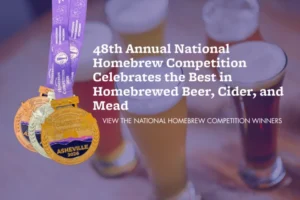
Since then, the AHA has grown to host the world’s largest homebrewing competition and the premier annual conference for enthusiasts, Homebrew Con. Its magazine, Zymurgy, has provided generations of brewers with the technical knowledge to move from "bucket brewing" to advanced all-grain systems.
As the organization looks toward 2025 and beyond, its vision remains clear: "A homebrewer in every neighborhood and a homebrew club in every community." The partnership with SAM is designed to provide the stability and professional expertise necessary to turn that vision into a reality in an increasingly complex cultural and economic landscape.
Broader Implications for the Craft Beverage Sector
The independence of the AHA and its new partnership with SAM have implications that extend beyond the hobbyist community. For the broader craft beverage sector, a healthy and vibrant AHA serves as a vital pipeline for talent and innovation. As homebrewers experiment with new hop varieties, yeast strains, and ancient fermentation techniques, they push the boundaries of what is possible in commercial brewing.
Furthermore, the AHA’s focus on education and "validated" recipes helps to elevate the overall quality of beer produced in the U.S. By fostering a knowledgeable consumer base, the AHA indirectly supports professional brewers who prioritize quality and traditional craftsmanship.
In conclusion, the selection of Strategic Association Management represents a strategic realignment that provides the American Homebrewers Association with the professional infrastructure needed to navigate its new status as an independent nonprofit. By combining the passion and expertise of its volunteer board with the operational excellence of an accredited AMC, the AHA is positioning itself to lead the homebrewing community through its next fifty years of growth and innovation. The move signifies a maturation of the organization, ensuring that the "joy of fermentation" remains a permanent fixture of the American cultural landscape.