
A comprehensive summary detailing two decades of groundbreaking research from the monthly molecular gastronomy seminars in Paris has been released by its esteemed co-founder, Hervé This. This significant compilation, which distills twenty years of rigorous scientific inquiry into culinary practices, is now publicly available, offering an invaluable resource for both professional chefs and food scientists globally. The document, initially circulated via email by This, underscores a commitment to open science, with recipients encouraged to widely disseminate its findings. Available in both French and English, this collection provides succinct insights into countless experiments, challenging conventional kitchen wisdom and fostering a deeper, scientific understanding of food preparation. While the English edition offers a direct translation, This himself recommends consulting the original French version for the most precise scientific nuances, noting potential minor discrepancies in translation. This release serves as a monumental digital archive, complementing the extensive, detailed documentation from each seminar already available in French, representing a veritable "treasure trove" for anyone dedicated to the intersection of gastronomy and chemistry.
The Genesis of Molecular Gastronomy: A Scientific Revolution in the Kitchen
The release of these seminar summaries provides a timely opportunity to revisit the origins and foundational principles of molecular gastronomy, a scientific discipline that has profoundly reshaped culinary thought and practice. The term "molecular gastronomy" was formally coined over three decades ago, in 1988, by Hervé This, a French physical chemist at INRA (Institut National de la Recherche Agronomique), and the late Nicholas Kurti, a Hungarian-born physicist at Oxford University. Their collaboration stemmed from a shared curiosity: to scientifically investigate the physical and chemical transformations that ingredients undergo during cooking. Prior to their pioneering work, much of culinary knowledge was passed down through tradition, often relying on anecdotal evidence or unverified claims. This and Kurti sought to apply the rigorous methodologies of physics and chemistry to demystify these processes, challenging assumptions and providing empirical explanations for everything from the perfect soufflé to the emulsification of mayonnaise.
Molecular gastronomy, as This has consistently emphasized, is not a style of cooking or a set of techniques, but rather a scientific endeavor. Its primary objective is to understand the "why" behind culinary phenomena, studying the mechanisms of cooking at a molecular level. This contrasts sharply with the often-misunderstood "molecular cuisine," a term This actively discourages, which refers to the practical application of scientific insights in the kitchen to create novel dishes or experiences, frequently employing modern tools and ingredients like liquid nitrogen, hydrocolloids, and spherification techniques. The foundational work of This and Kurti laid the intellectual groundwork for a generation of chefs and food scientists to approach cooking with a newfound precision and analytical rigor, transforming kitchens into de facto laboratories and culinary creation into a form of applied science.
Two Decades of Discovery: The Paris Seminar Chronology
The monthly molecular gastronomy seminars in Paris, which form the bedrock of the recently released summary, have been a consistent platform for this scientific exploration for over two decades. Though the exact inaugural date of these specific seminars is not explicitly stated in the summary, the "20 years" mentioned imply a consistent series of gatherings likely commencing in the early 2000s, possibly around 2000-2004. These seminars, primarily hosted at AgroParisTech, a leading French institute of higher education and research in agricultural and environmental sciences, have functioned as a vibrant intellectual hub. Each session is dedicated to rigorous experimentation, meticulously testing long-held culinary beliefs and exploring new hypotheses about food preparation.
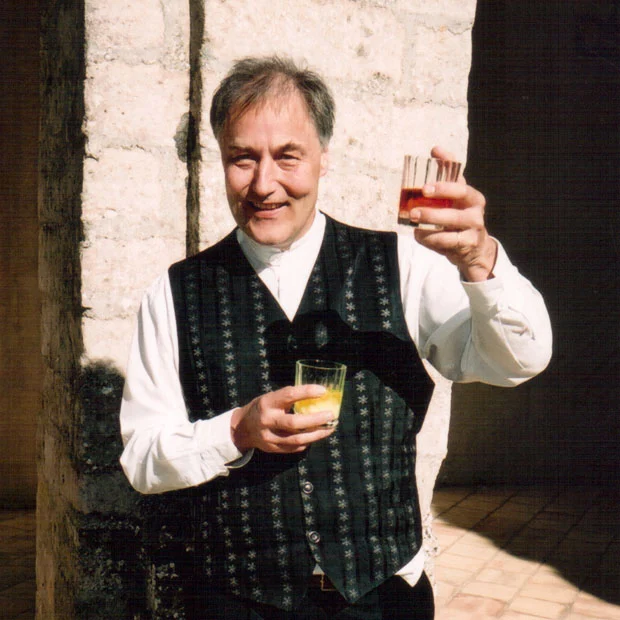
A significant milestone predating these ongoing seminars was the establishment of the "International Workshop on Molecular Gastronomy" in Erice, Italy. Co-founded by Hervé This in 1992, this workshop served as a crucial early forum for scientists and chefs to converge, share insights, and formalize the nascent field. The Erice workshops, held periodically, brought together luminaries from various scientific disciplines and the culinary world, fostering an interdisciplinary dialogue that was essential for the growth of molecular gastronomy. The photograph accompanying the summary, depicting Hervé This at the 2004 Erice workshop, serves as a poignant reminder of this pivotal event, illustrating the continuous thread of scientific inquiry that has characterized his work. The Paris seminars, therefore, represent a sustained, localized continuation of this global intellectual movement, translating theoretical discussions into practical, repeatable experiments that systematically build a robust body of culinary science. The regular cadence of these seminars, along with their emphasis on hands-on experimentation and thorough documentation, stands as a testament to the sustained commitment of Hervé This and his collaborators to advancing the scientific understanding of cooking.
Unearthing Culinary Truths: The Rigor of Experimental Findings
The core value of the recently released summary lies in its distilled presentation of the numerous experimental findings from the Paris seminars. These findings, though presented concisely, challenge established culinary wisdom and offer scientifically verified insights. For instance, one notable conclusion states, "The taste of chocolate does not depend on its origin, but on the presence of fat." This challenges a deeply ingrained belief among many chocolate connoisseurs who often attribute distinct flavor profiles solely to geographical origin. The seminar’s findings suggest that while origin can influence subtle notes, the primary perception of chocolate taste is more fundamentally tied to its fat content and how that fat interacts with flavor compounds, influencing texture and release of volatiles. This insight has profound implications for chocolate manufacturers and chefs, suggesting that manipulation of fat content could be a more direct route to desired taste profiles than solely focusing on sourcing.
Another intriguing finding states, "The color of an egg yolk does not depend on the feeding of the hen." This directly contradicts a common consumer perception that vibrant yellow or orange yolks signify a healthier, more naturally fed hen. While a hen’s diet does influence the nutritional composition and the presence of carotenoids which give color, the seminar’s research likely indicates that controlled dietary additives or specific feed formulations can artificially enhance yolk color without necessarily reflecting overall health or "naturalness" of the hen’s diet in the way consumers often assume. This finding serves to educate consumers and provide a more accurate understanding of food production.
Other examples from the seminar findings include:
- "No, adding fat to water for cooking pasta does not prevent sticking, but it changes the texture." This debunks a widespread kitchen hack, demonstrating that while fat might alter mouthfeel, its primary purpose of preventing adhesion is largely ineffective. Sticking is more often related to starch release and insufficient water volume or agitation.
- "The addition of sodium bicarbonate to boiled vegetables helps maintain their green color." This is a chemically sound observation, as bicarbonate raises the pH of the cooking water, which helps to stabilize chlorophyll, the pigment responsible for green color, preventing it from breaking down into drab pheophytin.
- "Foams are dispersions of gas in a liquid or solid, and their stability depends on the presence of surfactants." This provides a fundamental scientific explanation for a widely used culinary technique, elucidating the role of proteins or other emulsifiers in creating and maintaining stable foams.
- "The aroma of coffee depends on the roasting process and the grinding fineness." This highlights the critical parameters influencing coffee flavor, moving beyond simple bean origin to the precise physical and chemical treatments that unlock aromatic compounds.
These examples, while seemingly simple, illustrate the core methodology of molecular gastronomy: to question, to test, and to document. Each finding represents a methodical approach to understanding the ‘how’ and ‘why’ of cooking, contributing to a growing empirical database of culinary science. The rigor applied in these experiments provides a reliable foundation for chefs to innovate with confidence and for consumers to make more informed choices.
A Treasure Trove for Innovation: Data and Documentation
The significance of Hervé This’s initiative extends beyond merely summarizing findings; it lies in the comprehensive documentation available, particularly in French, which provides full experimental conditions. This level of detail transforms the summary from a list of facts into a robust educational and research tool. For aspiring chefs and culinary students, it offers a tangible framework for understanding the scientific principles underlying various cooking techniques. Instead of merely following recipes, they can delve into the chemistry and physics involved, empowering them to adapt, innovate, and problem-solve in the kitchen. For instance, understanding why adding bicarbonate to vegetables maintains green color allows a chef to apply this principle not just to green beans but to any green vegetable, or to explore other pH-modulating ingredients.
For chemists and food scientists, the detailed documentation serves as a launching pad for further research. The specific experimental conditions, including ingredient ratios, temperatures, times, and analytical methods, allow for replication, verification, and expansion of the studies. This fosters a collaborative scientific environment, where findings can be built upon and integrated into broader food science research. The seminars’ focus on rigorous methodology also provides an excellent pedagogical model for science projects and chemistry lab exercises, demonstrating the practical application of scientific principles in an accessible and engaging context. It democratizes scientific inquiry in the culinary realm, making advanced food science concepts approachable for a wider audience. The extensive online archive in French further cements its status as a vital academic resource, providing the depth necessary for scholarly review and continued investigation.
Beyond the Kitchen: Broader Implications and Legacy
The impact of Hervé This’s work and the molecular gastronomy seminars transcends the immediate culinary and scientific communities, radiating outwards to influence broader aspects of food culture, education, and industry.
Culinary Innovation and Precision: The most direct implication is the continued evolution of professional cooking. By providing a scientific foundation, molecular gastronomy has empowered chefs to move beyond intuition, allowing for greater precision and control over ingredients and processes. This has led to the development of new techniques, textures, and flavor combinations that were previously unimaginable. While This himself distinguishes between the science and its application, the principles elucidated by molecular gastronomy have undeniably influenced the avant-garde movement in fine dining, pushing the boundaries of what is possible in a kitchen.
Scientific Literacy and Public Engagement: The accessible nature of molecular gastronomy, applying scientific inquiry to an everyday activity like cooking, serves as an excellent vehicle for promoting scientific literacy. It demystifies scientific concepts, showing how chemistry and physics are not confined to laboratories but are inherent in our daily lives. This can inspire a new generation to pursue careers in science, particularly in the interdisciplinary field of food science. The seminars’ findings also encourage a more critical approach to information, prompting individuals to question long-held beliefs and seek evidence-based explanations, a valuable skill in an age of misinformation.
Food Industry and Product Development: The insights gleaned from molecular gastronomy have significant implications for the food industry. Understanding the precise chemical and physical properties of ingredients and their interactions during processing can lead to the development of new food products, improved textures, enhanced flavors, and more stable formulations. This can also contribute to addressing global food challenges, such as developing sustainable food sources, reducing food waste, and improving nutritional profiles through scientifically informed processing.
Education and Training: The methodical approach of the Paris seminars offers a blueprint for culinary and food science education. Integrating molecular gastronomy principles into curricula can equip future chefs and food scientists with a deeper theoretical understanding, fostering critical thinking and problem-solving skills essential for innovation. It encourages an experimental mindset, viewing the kitchen as a place of continuous learning and discovery.
Challenging Culinary Dogma: Perhaps one of the most profound legacies of Hervé This’s work is its persistent challenge to culinary dogma. By systematically testing assumptions, the seminars consistently highlight that many traditional cooking rules are either based on superstition, flawed observation, or are simply not universally applicable. This ongoing process of questioning and verification ensures that culinary practices remain dynamic and evidence-based, rather than static and tradition-bound.
In conclusion, the release of the twenty-year summary of molecular gastronomy seminars from Paris is more than just an archival exercise; it is a reaffirmation of the enduring power of scientific inquiry in the culinary arts. Hervé This, through his tireless dedication, has not only coined a term but has spearheaded a movement that continues to inspire, educate, and innovate, solidifying molecular gastronomy’s place as a vital interdisciplinary field that bridges the gap between the laboratory and the plate, enriching both science and society.