
In a significant leap forward for the seafood industry, Shinkei, a venture-backed startup, is poised to redefine freshness and quality in fish markets worldwide. Leveraging advanced robotics and artificial intelligence, Shinkei’s innovative technology aims to deliver what they claim are Michelin-quality fish at prices comparable to standard market rates. This breakthrough addresses a long-standing challenge in the industry: the degradation of fish quality that begins the moment it is caught, often resulting in suboptimal freshness by the time it reaches consumers.
The conventional journey of fish from sea to plate frequently involves a loss of quality that goes unnoticed by the average consumer until they experience it firsthand. Even in locales renowned for their fishing industries, like Seattle, the critical factor determining a fish’s ultimate freshness isn’t solely the speed of its transit to market, but rather the immediate handling it receives upon being brought aboard. Shinkei’s CEO, Saif Khawaja, elaborated on this crucial point, explaining that the traditional methods employed on fishing vessels often lead to significant stress responses in the fish. This stress, he detailed, triggers the release of hormones and lactic acid, which in turn increases the acidity of the fish’s flesh, creating a more hospitable environment for bacterial growth and accelerating the decline in quality and shelf life.
The Poseidon System: A Swift, Humane, and High-Quality Intervention
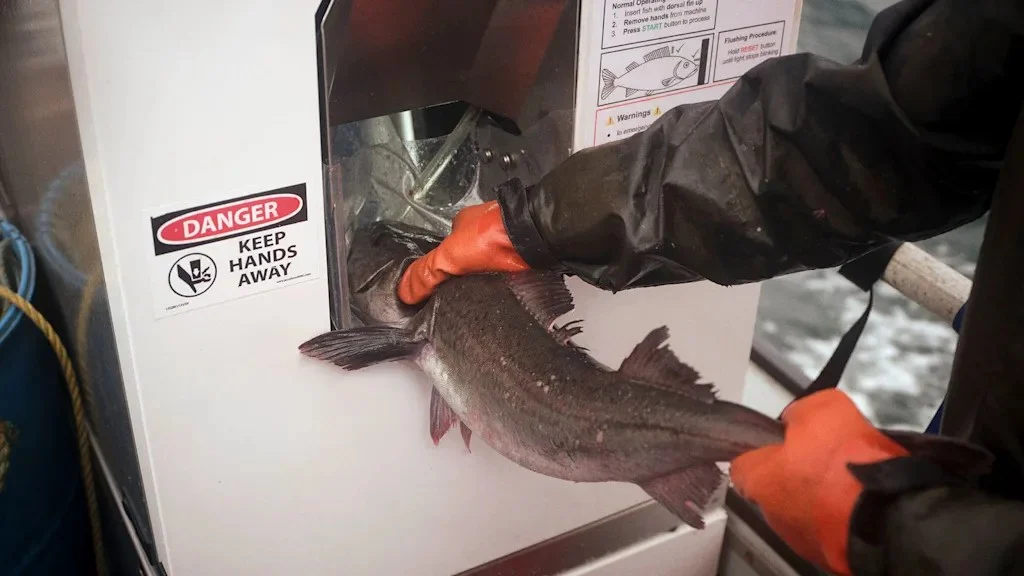
At the heart of Shinkei’s solution is a sophisticated robotic system named Poseidon. This machine, powered by computer vision and AI, is designed to intervene in the critical moments after a fish is caught. The process begins with live fish being placed into the Poseidon machine. Using advanced computer vision algorithms, the AI rapidly scans each fish to determine the most efficient and least stressful method for processing. This immediate assessment allows for a swift sequence of actions: a precise brain spike to ensure instantaneous euthanasia, followed by a gill cut to facilitate rapid blood drainage.
While the description might sound stark, Khawaja emphasizes that this rapid intervention is, in fact, a more humane approach. Fish experience considerable stress from the moment they are caught. By accelerating the euthanization process, Shinkei’s system not only minimizes suffering but also crucially preserves the quality of the fish. Each fish is processed within an astonishing six seconds. The company’s overarching goal is to integrate the catch into the Poseidon system within approximately one minute of landing on the boat, thereby preempting any significant degradation in quality.
This rapid processing is paramount. The stress hormones and lactic acid released by struggling fish, as Khawaja explained, "makes the meat more acidic, primes bacteria growth, and in turn speeds the shelf life and decay of meat quality." By neutralizing these effects almost immediately, Shinkei aims to retain the fish’s pristine condition.
Reducing Waste Through On-Boat Efficiency
The implications of Shinkei’s technology extend beyond enhanced taste and texture; it presents a compelling solution to the pervasive issue of food waste within the seafood supply chain. Khawaja highlighted that the conventional method of fish handling, which often involves suffocation, can lead to rigor mortis setting in within approximately seven hours. In stark contrast, the Shinkei process significantly extends this window, pushing rigor mortis back by up to 60 hours. This substantial buffer before the onset of decomposition provides distributors with a much larger margin for error and logistical flexibility.
The impact on shelf life is particularly dramatic when considering specific species. Khawaja cited the example of black cod, a species that, when handled traditionally, might remain fresh for four to five days. With Shinkei’s technology, the same fish can maintain its peak freshness for up to two weeks. This extension is attributed to the dual benefits of reduced stress (leading to less acidification) and the efficient removal of blood, which, if left to diffuse through the meat, can accelerate bacterial proliferation.
The extended shelf life offered by Shinkei’s system has profound logistical implications. It allows for more cost-effective transportation methods, enabling fish to be trucked across greater distances rather than relying on expensive air freight. This shift can lead to both cost savings for distributors and a reduced carbon footprint for the industry.

A Novel Business Model: Direct-to-Consumer Branding
Interestingly, Shinkei has opted for a unique business model that diverges from simply selling its hardware. Instead of offloading the Poseidon machines to fishermen and processors, Shinkei retains ownership. The company places its robotic systems on partner fishing boats through a zero-cost lease agreement. This strategic decision is intrinsically linked to Shinkei’s ambition to build a branded, direct-to-consumer model.
Under this arrangement, Shinkei secures exclusive rights to purchase the catch processed by its machinery. This allows the company to maintain complete control over the quality of the fish it brings to market. The fish are then sold under the brand name Seremony, with the company actively working to establish "Seremony grade" as a recognized certification of exceptional quality.
Khawaja confirmed that Seremony fish have been supplied to some of the world’s most esteemed culinary establishments, including Michelin three-star restaurants across multiple countries. More recently, the brand has made its debut in prominent retail outlets such as Wegmans in Manhattan and FreshDirect in New York, signaling a growing consumer appetite for high-quality, traceable seafood.
Technological Underpinnings and Future Innovations
The sophisticated AI and robotics behind Shinkei’s success are the result of significant in-house development. Khawaja revealed that the company has built its AI models from the ground up, meticulously collecting its own data and establishing a development pipeline informed by research in areas such as facial recognition—specifically, fish facial recognition. The computer vision stack within the Poseidon system is capable of performing a range of critical inferences: accurately identifying fish species, detecting key anatomical points, and generating precise cutting paths for optimal processing.
Shinkei is not resting on its laurels and is actively developing new technologies to further enhance its platform. Two such projects are particularly noteworthy:
- Kronos: This is a weight-estimation model integrated directly into the Poseidon machine. Kronos provides real-time catch data to the Shinkei sales team, enabling them to begin the sales process for fish even before the boat reaches the dock. This pre-dock sales capability promises to further streamline the supply chain and reduce lead times.
- Nira: This project focuses on shelf-life prediction. By utilizing a network of sensors, Nira analyzes various data points to forecast the remaining shelf life and quality of the fish at any given stage of the supply chain. "We integrate sensor data into a model, and we will be able to generate ground truth at any point in the supply chain for what shelf life and quality is for that fish," Khawaja stated. This predictive capability will empower distributors and retailers to manage inventory more effectively and minimize spoilage.
Funding and Future Outlook
The innovative approach and promising results of Shinkei have attracted significant investor interest. The company recently secured $22 million in Series A funding, a round co-led by Founders Fund and Interlagos. Additional investments came from prominent entities such as Yamato Holdings, Shrug, CIV, Jaws, and Mantis. This substantial capital infusion is expected to fuel Shinkei’s expansion and further development of its groundbreaking technology.
Regarding potential future diversification, Shinkei remains firmly committed to its current direct-to-consumer branding strategy. While the possibility of licensing its hardware to fishermen who do not wish to integrate with the Seremony pipeline was raised, Khawaja emphatically shut down such an option. "We’re focused on building the brand and basically establishing and making ceremony-grade as a certification," he asserted. This singular focus underscores Shinkei’s long-term vision to establish Seremony as a benchmark for premium seafood quality, driven by its proprietary technological advancements.
Currently, Shinkei collaborates with eight fishing vessels, sourcing a variety of species including black cod, rockfish (such as vermilion rockfish), and red snapper, alongside opportunistic catches like salmon and black sea bass. These vessels operate along the U.S. West Coast, from Alaska down to California, as well as in Texas and Massachusetts, demonstrating the broad applicability of Shinkei’s technology across diverse fishing grounds and species. The company’s trajectory suggests a significant disruption in how seafood is produced, distributed, and consumed, with a future where consumers can consistently expect unparalleled freshness and quality from their fish.