
A prolonged hiatus on digital platforms often belies a period of sustained activity in other spheres, a reality exemplified by the recent re-emergence of a popular culinary blog after more than three years. Far from idleness, this period has been marked by continued culinary engagement, with countless dishes and desserts prepared and enjoyed. Central to this sustained productivity, particularly in the domestic kitchen, is a meticulously developed system of weekly dinner planning and an accompanying, highly personalized grocery list. This approach underscores a growing trend among busy individuals and families to leverage structured methods to navigate the complexities of modern household management, particularly against the backdrop of what Norwegians term "tidsklemma" – the persistent time crunch experienced by those balancing full-time work and family obligations.
The Genesis of an Optimized System: A Six-Year Iteration
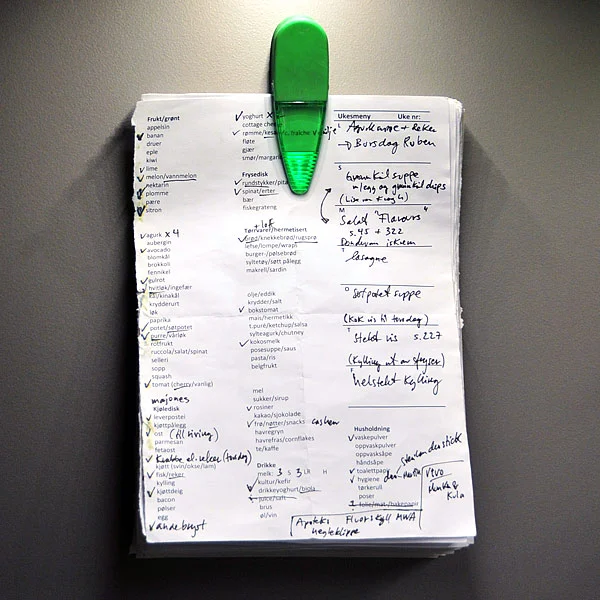
The foundation of this highly efficient domestic system lies in a reusable grocery list, a departure from the common practice of drafting a new list from scratch each week. Developed and refined over six years, this generic list serves as a dynamic template, allowing users to simply mark off needed items while providing ample space for additions and specific requirements. Its design is rooted in a deep understanding of consumer behavior and supermarket logistics: items are organized by food categories and aligned with the physical layout of the local grocery store. This strategic arrangement significantly reduces shopping time, minimizes backtracking, and enhances overall efficiency. The list is not static; it is a living document, continuously adjusted to reflect evolving family preferences, dietary changes, and the current availability of products in the local market, making it inherently adaptable for diverse household needs.
The development of such a system is a testament to the principles of continuous improvement and personalized optimization. Initially, the process involved observing weekly shopping habits, categorizing frequently purchased items, and mapping them against the store’s aisle structure. Over time, as family dynamics shifted – for instance, as children grew older and their dietary needs or preferences changed – items were added or removed. This iterative process ensures the list remains relevant and maximally effective, embodying a practical application of agile methodology within household management.
The Enduring Appeal of Analog: Paper’s Unrivaled Resolution
In an era dominated by digital solutions, the proponent of this system staunchly advocates for the tangible benefits of a paper-based grocery list. While numerous grocery list applications are available, offering features like cloud syncing, voice input, and automatic suggestions, the argument for paper rests on its "superb resolution." This refers to the ability to view an entire weekly menu and shopping list on a single, compact A5-sized piece of paper. This comprehensive overview is often fragmented or requires scrolling on digital devices, potentially hindering quick mental processing and recall.
Research into cognitive processing suggests that writing by hand can enhance memory retention and engagement with the material compared to typing. For tasks requiring quick glances and cross-referencing, a physical list offers an immediate, undistracted interface. The ability to fold the paper and pocket it, coupled with ample space for notes and the option to utilize the reverse side, further enhances its practicality. Unlike digital devices, a paper list is immune to battery drain, screen glare, or the distractions of notifications, ensuring an uninterrupted shopping experience. This preference for analog tools for specific tasks highlights a broader consumer trend where the perceived "simplicity" and "reliability" of traditional methods outweigh the advanced features of digital alternatives, particularly when those features introduce complexity rather than streamline a process.
Strategic Meal Planning: A Bulwark Against "Tidsklemma" and Food Waste
The integration of a weekly dinner plan directly onto the grocery list is a critical component of this system. Instead of merely listing ingredients, the menu serves as an additional mnemonic device during shopping. A quick glance at the planned meals can often trigger memories of forgotten items or specific ingredients required for a particular recipe. For recipes sourced from cookbooks, a simple page number suffices, leveraging the shopper’s familiarity with their culinary library.
This structured approach to meal planning is a powerful antidote to "tidsklemma," a Norwegian term encapsulating the chronic lack of time experienced by modern individuals due to demanding work schedules and family responsibilities. While there’s no direct English equivalent, it speaks to a global phenomenon of feeling perpetually pressed for time. Without a pre-determined plan, daily meal preparation can become a source of stress, leading to last-minute decisions, impulse purchases, and often, less healthy or more expensive takeaway options.
Studies consistently demonstrate the manifold benefits of meal planning. Economically, it leads to significant savings by reducing impulse buys and minimizing food waste. According to the Food and Agriculture Organization (FAO) of the United Nations, approximately one-third of all food produced globally for human consumption is lost or wasted, amounting to 1.3 billion tons per year. Household food waste is a major contributor to this figure. A well-planned grocery list, tied to a menu, ensures that purchases are intentional and aligned with specific culinary needs, drastically cutting down on unused ingredients that spoil. Research from organizations like the Natural Resources Defense Council (NRDC) in the United States highlights that the average American household wastes about $1,500 worth of food annually. Effective meal planning can reduce this significantly, sometimes by as much as 20-30%.
Beyond economics, meal planning contributes to improved nutritional outcomes, as it encourages the preparation of home-cooked meals, often incorporating a wider variety of fresh ingredients. It also reduces decision fatigue, a common psychological burden in modern life, freeing up mental energy for other tasks.
The Iterative Cycle: Adapting to Life’s Flux
The practice of archiving printed grocery lists offers a unique form of personal consumption data. By reviewing lists from previous weeks, one can identify recurring needs, seasonal shifts in diet, or items that have become obsolete. This iterative review process allows for continuous refinement of the generic list, ensuring it remains optimized for the household’s current lifestyle. For example, items frequently purchased when children were younger might be removed as they grow, only to be potentially replaced by new preferences. This fluid adaptation acknowledges that a family’s needs are never static, and a truly effective system must evolve alongside them.
This iterative approach extends to the principle of flexibility within the plan itself. While planning dinners a week ahead significantly boosts the likelihood of cooking at home, the system acknowledges the unpredictability of life. Spontaneous invitations, unexpected exhaustion, or simply a craving for something different might lead to deviations, such as dining out or ordering takeaway. This pragmatic acceptance of flexibility prevents the system from becoming overly rigid and unsustainable, striking a balance between structure and spontaneity. The primary goal is not absolute adherence but a significant increase in home-cooked meals compared to an unplanned approach.
Broader Implications: Economic, Environmental, and Societal Impact
The seemingly simple act of creating and utilizing an optimized grocery list has far-reaching implications beyond individual household efficiency.
- Economic Impact: For families, the immediate financial benefit is substantial. Reduced food waste and fewer impulse purchases directly translate into lower grocery bills. Over a year, these savings can amount to hundreds or even thousands of dollars, freeing up resources for other priorities. For the broader economy, a shift towards more mindful consumption could impact retail inventory management and reduce supply chain waste.
- Environmental Impact: The reduction of household food waste is a critical environmental imperative. Food waste contributes significantly to greenhouse gas emissions, particularly methane, when it decomposes in landfills. By minimizing waste at the consumer level, such systems contribute directly to combating climate change. Furthermore, efficient shopping reduces the carbon footprint associated with multiple small trips to the store, promoting a more sustainable lifestyle.
- Societal and Health Implications: A greater reliance on home-cooked meals, facilitated by meal planning, is generally associated with healthier diets, reduced intake of processed foods, and better management of dietary restrictions or allergies. Psychologically, reducing the daily stress of meal planning can improve mental well-being and free up cognitive resources. For families, cooking together can foster stronger bonds and teach valuable life skills to children. The "tidsklemma" often pushes individuals towards convenience foods; a structured system helps reclaim control over one’s diet and time.
Adopting the System: A Template for Personalized Efficiency
For those inspired to adopt a similar approach, the creator generously offers downloadable templates in various formats (Norwegian A4, English A4, and legal size Word documents). This accessibility lowers the barrier to entry, allowing individuals to customize a pre-structured list rather than starting from scratch.
Implementing such a system requires a few key steps:
- Observation: Pay attention to your family’s eating habits and frequently purchased items over a few weeks.
- Categorization: Group similar items together (e.g., dairy, produce, grains).
- Mapping: Arrange categories to roughly match the layout of your primary grocery store.
- Trial and Error: Start with a basic list and refine it weekly based on experience. Add space for unique or occasional purchases.
- Meal Planning Integration: Dedicate a section for your weekly menu, even if it’s just a placeholder for recipe names or page numbers.
The success of this system lies in its personalization and iterative nature. No two households will develop identical lists, reflecting the unique dietary preferences, schedules, and local market conditions of each family. However, the underlying principles of organization, foresight, and continuous refinement remain universally applicable, offering a powerful tool for managing domestic life with greater efficiency and less stress. This blend of traditional methods with a systematic approach represents a compelling solution for navigating the demands of contemporary living, proving that sometimes, the simplest tools, when intelligently applied, yield the most profound results.