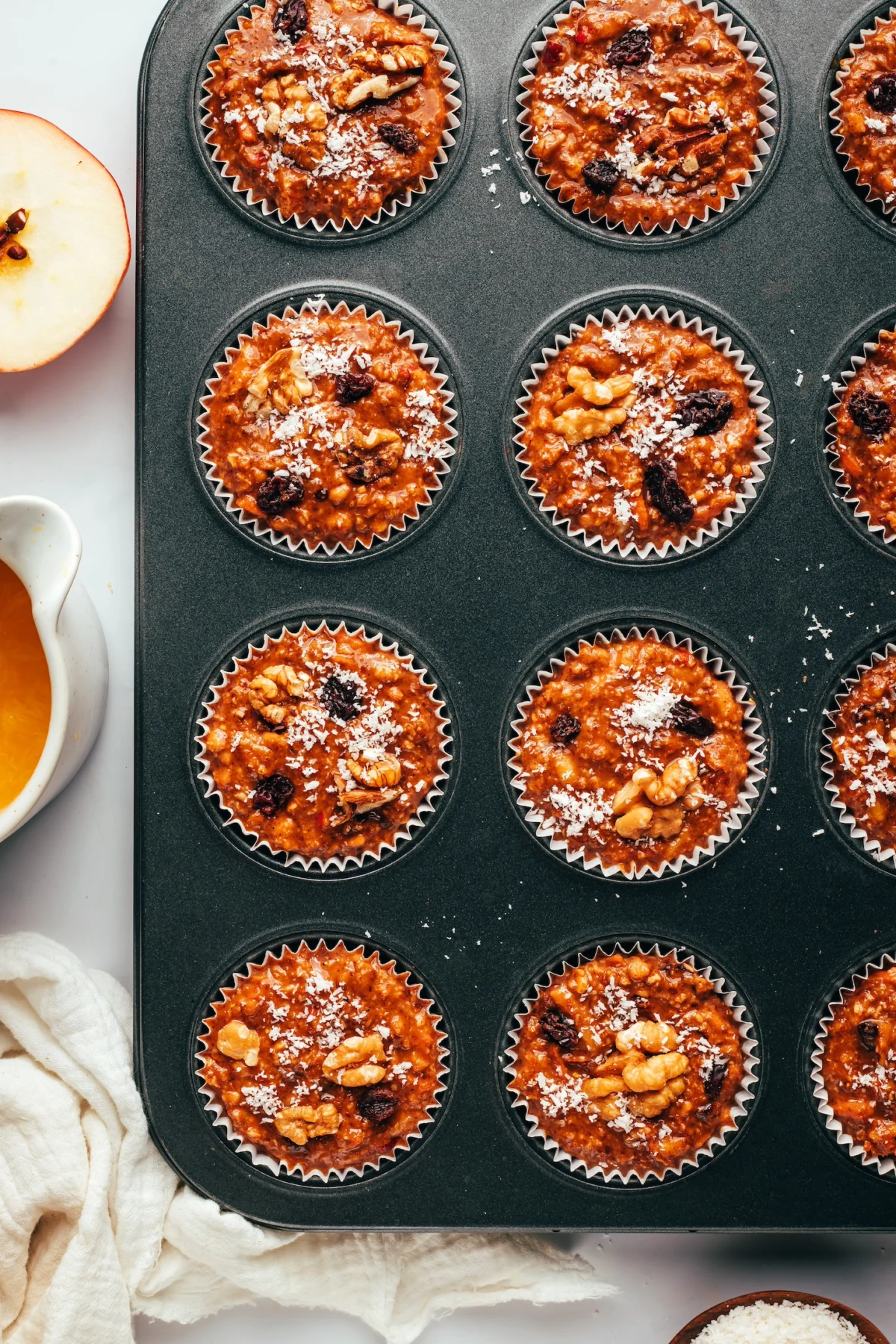

The culinary landscape of American breakfast pastry underwent a significant transformation in the late 1970s with the introduction of the Morning Glory muffin, a nutrient-dense alternative to the traditional sugar-laden varieties of the era. Originally conceptualized in 1978 by chef Pam McKinstry for her establishment, the Morning Glory Cafe in Nantucket, Massachusetts, the recipe gained national prominence after being published in Gourmet magazine in 1981. In the decades since, the recipe has become a staple of communal baking, prized for its "everything-but-the-kitchen-sink" approach to ingredients. Contemporary dietary shifts toward plant-based and gluten-sensitive lifestyles have necessitated a rigorous re-engineering of this classic. The modern iteration—a vegan and gluten-free version—retains the complex flavor profile of the original while utilizing innovative structural substitutes to accommodate modern health requirements.

Historical Context and the Evolution of the Morning Glory Muffin
The original 1978 recipe was a reflection of the burgeoning health-food movement of the late 1970s, which emphasized the inclusion of whole vegetables, fruits, and nuts in daily diets. McKinstry’s creation was characterized by a dense, moist crumb achieved through a combination of grated carrots, apples, raisins, pecans, and shredded coconut. Unlike the light, cake-like muffins common in commercial bakeries, the Morning Glory was designed to be a "wholesome and satisfying" meal replacement.
By the early 2020s, the demand for gluten-free and vegan alternatives reached an all-time high. Market research indicates that the global gluten-free bakery market is projected to grow at a compound annual growth rate (CAGR) of approximately 8-10% through 2030, driven by increased diagnoses of celiac disease and a general consumer perception of gluten-free products as "cleaner" options. Similarly, the vegan food market has expanded beyond a niche demographic into the mainstream. This shift has challenged culinary developers to replicate the binding properties of eggs and the structural integrity of wheat gluten using plant-derived alternatives.

Technical Analysis of Ingredient Substitutions
The transition from a traditional wheat-and-egg-based muffin to a vegan, gluten-free version requires a sophisticated understanding of food chemistry. In the absence of gluten, which provides the "scaffolding" for baked goods, this recipe utilizes a strategic blend of oat flour and potato starch.
- Structural Integrity: Oat flour is selected for its high protein and fiber content, which mimics the weight of whole wheat flour. However, oat flour alone can result in a crumbly texture. To counteract this, potato starch is introduced. As a refined starch, it acts as a tenderizer and provides the necessary "spring" or elasticity often missing in gluten-free baking.
- Binding Agents: The removal of eggs—which traditionally serve as both a leavening agent and a binder—necessitates the use of a "flax egg." This is a mixture of ground flaxseed meal and liquid (in this case, orange juice). When flaxseeds are hydrated, they release mucilage, a viscous substance that creates a structural matrix similar to egg whites.
- Moisture and Leavening: The acidity in the orange juice serves a dual purpose. Beyond providing natural sweetness, it reacts with the baking soda to create carbon dioxide bubbles, facilitating the "rise" of the muffin in the absence of heavy mechanical aeration. Avocado oil is utilized as the primary lipid source, chosen for its neutral flavor profile and high smoke point, ensuring a moist interior without the saturated fats found in butter.
Nutritional Profile and Data-Driven Health Benefits
The vegan and gluten-free Morning Glory muffin is positioned as a nutrient-dense snack, providing a significant departure from the nutritional empty calories found in many processed breakfast items. According to standardized nutritional estimates, a single muffin contains approximately 244 calories, with a macronutrient breakdown of 35.7 grams of carbohydrates, 11.2 grams of fat, and 2.5 grams of protein.

The inclusion of raw produce significantly enhances the micronutrient density of the final product. Grated carrots are a primary source of beta-carotene, which the body converts into Vitamin A, essential for ocular health and immune function. One serving of these muffins provides approximately 214 IU of Vitamin A. Furthermore, the use of walnuts contributes polyunsaturated fats, including omega-3 fatty acids, which are linked to cardiovascular health and reduced systemic inflammation.
The fiber content—recorded at 2.8 grams per serving—is largely derived from the oat flour, flaxseed, and the skins of the grated apples. High-fiber diets are clinically associated with improved digestive health and more stable blood glucose levels, a factor that distinguishes this recipe from traditional muffins that rely on refined white flours.

Chronology of the Baking Process
The preparation of these muffins follows a streamlined "one-bowl" methodology, designed to minimize kitchen labor and improve accessibility for home practitioners. The process is divided into three distinct phases: preparation, integration, and thermal processing.
Phase I: Hydration and Prep (0-15 minutes)
The process begins with the creation of the binding matrix. Orange juice and flaxseed meal are combined and allowed to rest. This period is critical for the development of the mucilaginous properties of the flax. Simultaneously, the carrots and apples are grated. Technical accuracy at this stage—specifically using the large holes of a box grater—ensures that the produce retains enough structure to provide "bite" without releasing excessive moisture that could lead to a "gummy" texture.

Phase II: Batter Integration (15-20 minutes)
The wet ingredients, including avocado oil, almond milk, and coconut sugar, are whisked into the flax mixture. The dry ingredients—oat flour, potato starch, cinnamon, baking soda, and salt—are then folded in. The final step involves the manual incorporation of the "goodies": the raisins, shredded coconut, and chopped walnuts. This sequence prevents the over-mixing of the batter, which is a common cause of toughness in gluten-free baking.
Phase III: Thermal Processing (20-40 minutes)
The batter is portioned into a standard 12-cup muffin tin. The baking occurs at a regulated temperature (typically 375°F or 190°C), allowing for the Maillard reaction to occur on the exterior, creating a golden-brown crust, while the interior reaches an internal temperature sufficient to set the starches. A cooling period of at least 10 minutes is required post-baking; gluten-free structures are notoriously fragile when hot and require cooling to fully solidify.

Market Impact and Consumer Trends
The rise of recipes like the Vegan Gluten-Free Morning Glory Muffin reflects a broader trend toward "functional foods"—products that provide health benefits beyond basic nutrition. In the United States, the "better-for-you" snack category has seen a 15% increase in market share over the last five years. Consumers are increasingly seeking transparency in ingredient lists, favoring whole-food components like carrots and nuts over synthetic preservatives and high-fructose corn syrup.
Culinary influencers, such as the team at Minimalist Baker, have played a pivotal role in democratizing these complex dietary adaptations. By simplifying the "Morning Glory" formula into a one-bowl process, they have lowered the barrier to entry for consumers who may feel intimidated by the perceived difficulty of gluten-free baking.

Implications for the Baking Industry
The success of these adaptations suggests a permanent shift in the baking industry’s approach to inclusivity. Commercial bakeries are increasingly adopting "universal" recipes that can satisfy multiple dietary restrictions—vegan, gluten-free, and refined sugar-free—simultaneously. This "all-in-one" approach reduces the need for separate production lines and caters to the growing number of households with mixed dietary needs.
Furthermore, the move away from almond flour in this specific recipe highlights an emerging awareness of allergen management and sustainability. While almond flour has been the "gold standard" for gluten-free baking for years, the high water usage associated with almond farming and the prevalence of tree nut allergies have led developers to explore oat-based alternatives. This shift indicates a maturation of the gluten-free market, where texture and environmental impact are considered alongside the absence of gluten.

Conclusion
The Vegan Gluten-Free Morning Glory Muffin represents more than just a dietary modification; it is a testament to the durability of Pam McKinstry’s original vision. By maintaining the core philosophy of "wholesome abundance" while utilizing modern culinary science, this version ensures that the Morning Glory legacy continues to be a relevant and nutritious component of the global breakfast repertoire. As dietary trends continue to evolve, the emphasis on whole-food ingredients and efficient preparation remains a constant, securing the muffin’s place as a cornerstone of contemporary baking.