
The quest for truly fresh seafood, from the ocean’s depths to the consumer’s plate, has long been a challenge marked by compromises. Consumers often settle for fish that has already begun its journey of degradation by the time it reaches the grocery store, a reality that belies the careful efforts of many in the fishing industry. However, a pioneering venture-backed startup, Shinkei, is poised to redefine seafood quality by focusing on a critical, often overlooked, juncture: the immediate moments after a fish is caught. Through the integration of advanced robotics and artificial intelligence, Shinkei aims to deliver "Michelin-quality" fish at commodity prices, drastically reducing waste and elevating the consumer experience.
The Criticality of On-Board Handling
Saif Khawaja, CEO of Shinkei, elucidated the core problem plaguing the seafood industry: conventional handling practices on fishing vessels. "Most fish available at a mass-market retailer were handled on the boat in a way that releases stress hormones and lactic acid," Khawaja explained in a recent interview. "This stuff makes the meat more acidic, primes bacterial growth, and in turn speeds the shelf life and decay of meat quality." This physiological response, triggered by the stress of being caught and handled roughly, initiates a cascade of quality deterioration that is difficult to reverse. The common practice of allowing fish to "flop around" on deck, while seemingly a minor detail, has profound implications for the final product’s taste, texture, and shelf life.
Poseidon: The AI-Powered Solution
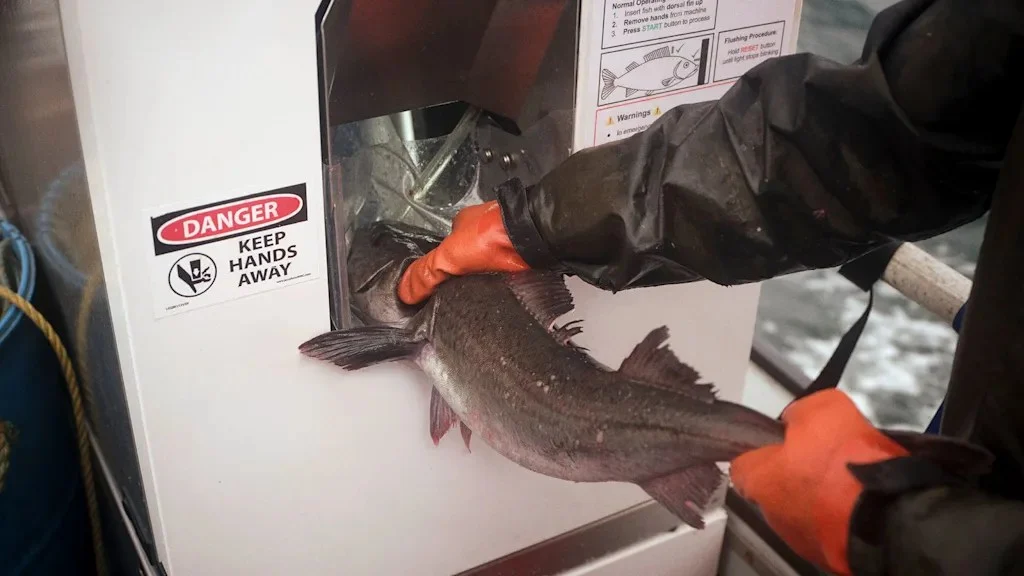
Shinkei’s innovative approach centers on its proprietary robotic system, dubbed "Poseidon." This advanced machine is designed to intervene immediately upon a fish’s arrival on the boat. While still alive, the fish are placed into Poseidon, where a sophisticated computer vision AI scans them. This scan determines the most rapid and least stressful method for euthanization. The system then executes a swift, precise sequence: a brain spike to ensure immediate and humane dispatch, followed by a gill cut to facilitate efficient blood drainage.
The seemingly abrupt nature of this process is, according to Khawaja, a more humane and effective approach. "Fish caught are experiencing high stress from the time they’re caught," he stated. "The faster the fisherman can move towards euthanization, the more humane (and ultimately fresher and better tasting the fish)." The entire processing cycle for each fish takes approximately six seconds. Shinkei’s ambitious goal is to have fish enter the Poseidon system within roughly one minute of being landed, thereby minimizing the window for quality degradation.
Extending Shelf Life and Combating Food Waste
Beyond enhancing taste and texture, Shinkei’s technology offers a significant solution to the pervasive problem of food waste in the seafood supply chain. Khawaja highlighted that their system dramatically extends the shelf life of fish, a crucial factor in reducing losses at the retail and distribution levels.
Traditionally, a suffocated fish might enter rigor mortis within approximately seven hours. Shinkei’s rapid processing, however, extends this period to up to 60 hours. This extended timeframe creates a substantial buffer, delaying the onset of decomposition and offering distributors greater flexibility. For instance, black cod handled traditionally might remain fresh for four to five days, whereas Shinkei-processed fish can maintain peak quality for up to two weeks.
This remarkable shelf-life extension is attributed to two primary factors: the reduction of stress-induced acidification and the efficient removal of blood. Blood, if not properly drained, can diffuse into the flesh, providing a nutrient-rich medium for bacterial growth. By mitigating these issues, Shinkei’s process not only preserves the fish’s intrinsic quality but also allows for more logistical efficiencies. Khawaja noted that the extended shelf life enables fish to be transported via more cost-effective trucking rather than requiring expensive air freight.
A Unique Business Model: Brand Building Over Hardware Sales
While the technological prowess of Poseidon might suggest a straightforward hardware sales model to fishermen and processors, Shinkei has adopted a distinct strategy. Instead of selling the machinery outright, the company implements a branded direct-to-consumer model. Shinkei places its Poseidon machines on partner boats under a zero-cost lease agreement, retaining ownership of the hardware. This arrangement is coupled with an exclusive buying agreement, granting Shinkei the first right of refusal to purchase the catch processed by its machinery.

This integrated approach allows Shinkei to maintain strict control over the quality of the seafood it brings to market. The company then markets this premium fish under its brand, "Seremony." The aspiration is for "Seremony grade" to become a recognized mark of exceptional quality and freshness in the industry. Shinkei has already made significant inroads, supplying its fish to high-end restaurants globally, including establishments with Michelin three-star ratings across multiple countries. Recently, the brand has also expanded its reach into the retail sector, with its products available at Wegmans in Manhattan and through FreshDirect in New York.
Technological Underpinnings and Future Innovations
The AI powering Poseidon is a testament to Shinkei’s commitment to in-house development. The company has meticulously built its AI models from the ground up, collecting proprietary data and developing a robust pipeline informed by research in areas such as facial recognition – in this case, applied to fish. The computer vision stack performs a critical set of inferences, including species identification, detection of key anatomical points, and the generation of precise cutting paths for optimal processing.
Shinkei is not resting on its laurels and is actively developing new technologies to further enhance its operations. Two key projects are currently underway:
- Kronos: This is a weight-estimation model integrated directly into the Poseidon machine. Kronos transmits real-time catch data to the Shinkei sales team, enabling them to begin marketing and pre-selling fish even before it reaches the dock. This proactive approach streamlines the sales cycle and further optimizes logistics.
- Nira: This project leverages sensor technology to predict the remaining shelf life of fish. By integrating sensor data into predictive models, Shinkei aims to provide accurate "ground truth" assessments of shelf life and quality at any point in the supply chain. This granular insight will empower distributors and retailers to manage inventory more effectively and further reduce waste.
Funding and Strategic Growth
Shinkei’s innovative approach and promising market potential have attracted significant investment. The company recently secured $22 million in Series A funding, co-led by Founders Fund and Interlagos. Additional investments were contributed by Yamato Holdings, Shrug, CIV, Jaws, and Mantis. This substantial funding round underscores investor confidence in Shinkei’s vision and its ability to disrupt the traditional seafood industry.
Regarding future expansion, Khawaja remains steadfast in his commitment to the Seremony brand. While the company acknowledges the potential for its technology to benefit a broader market, its immediate focus is on solidifying the Seremony brand and establishing "Seremony grade" as a definitive certification of superior seafood quality. This deliberate strategy emphasizes brand building and the creation of a traceable, high-quality supply chain, rather than a broad-based hardware licensing model.
Current Operations and Species Focus
Currently, Shinkei collaborates with eight fishing vessels. The company sources a variety of species, including black cod, rockfish (such as vermilion rockfish), and red snapper, along with occasional catches of salmon and black sea bass. The fishing operations are concentrated along the U.S. West Coast, spanning from Alaska down to California, with additional operations in Texas and Massachusetts. This diversified sourcing allows Shinkei to offer a range of high-quality seafood options to its clientele.
Broader Implications for the Seafood Industry
Shinkei’s model represents a significant paradigm shift for the seafood industry. By prioritizing on-board processing and leveraging AI and robotics, the company is not only enhancing product quality but also addressing critical sustainability issues. The reduction in food waste has both economic and environmental benefits, contributing to a more efficient and responsible global food system.
The success of Shinkei could inspire similar innovations across other perishable food sectors, demonstrating the transformative potential of integrating advanced technology into traditional supply chains. As consumer demand for transparency, freshness, and sustainability continues to grow, companies like Shinkei are setting a new standard for what is possible in bringing the bounty of the oceans to our tables. The company’s journey from a promising startup to a recognized purveyor of premium seafood is a testament to the power of innovation in tackling long-standing industry challenges.