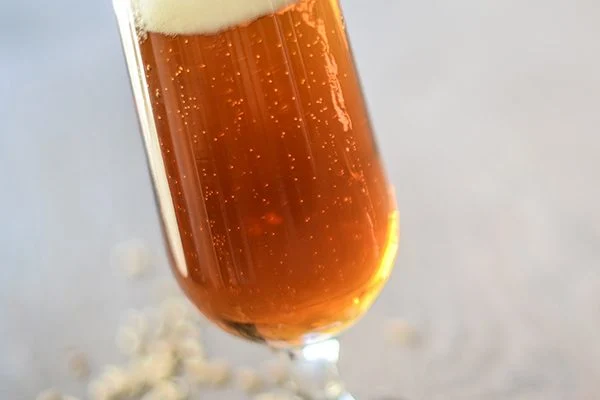

Tony Hamric, an accomplished homebrewer hailing from Leland, North Carolina, and a dedicated member of the regional brewing club Wort City Brewers, has achieved national recognition by securing a gold medal in Category 22: Strong British Ale at the final round of the 2026 National Homebrew Competition. Hamric triumphed over an exceptionally competitive field, emerging victorious from a pool of 69 meticulously crafted entries in his category. This victory underscores the rigorous standards, growing technical expertise, and dedication present within regional American homebrewing communities.
The National Homebrew Competition, organized annually by the American Homebrewers Association (AHA), represents the world’s largest international amateur brewing competition. Every year, thousands of amateur brewers from across the United States and various international locales submit their finest creations to be evaluated by a panel of expert judges certified by the Beer Judge Certification Program (BJCP). Winning a medal in this prestigious event requires an extraordinary command of brewing science, precise ingredient selection, and strict adherence to style guidelines. Hamric’s gold-medal-winning brew in the Strong British Ale category highlights his deep understanding of traditional brewing techniques, balancing complex malt profiles with the subtle nuances characteristic of classic British beer styles.
Background and Context of the National Homebrew Competition
Established decades ago, the National Homebrew Competition serves as the ultimate benchmark for amateur brewing excellence. The competition operates through a rigorous multi-tiered judging structure. Prior to reaching the final round where Hamric secured his gold medal, entries must first successfully navigate highly competitive first-round regional competitions held across multiple zones nationwide. Only the top-scoring beers from these preliminary events advance to the final judging round, ensuring that every entry evaluated at the national level represents the pinnacle of amateur craftsmanship.
The competition evaluates beers across dozens of distinct categories, ranging from traditional ales and lagers to experimental hybrid styles, meads, and ciders. Each entry is judged blindly against established style guidelines, with judges scoring entries based on aroma, appearance, flavor, mouthfeel, and overall impression. Category 22, encompassing Strong British Ales—which traditionally include styles such as Old Ales, Wee Heavy Scotch Ales, and English Barleywines—demands exceptional technical precision. These styles are notoriously challenging to brew due to their high alcohol content, complex malt sweetness, and the potential for off-flavors if fermentation temperatures are not meticulously managed.
Chronology of the 2026 Competition Season
The road to the 2026 National Homebrew Competition final round spans nearly a year of preparation, brewing, and regional evaluation. The timeline leading up to Hamric’s victory reflects the dedication required of modern homebrewers:
Early Planning and Recipe Formulation: Months before submission deadlines, participating brewers like Hamric design, test, and refine their recipes. For a Strong British Ale, this phase involves sourcing specific base malts, specialty grains, traditional British yeast strains, and hops that contribute earthy, floral, or herbal profiles without overpowering the rich malt backbone.
Brewing and Fermentation: Brewers execute brew days with surgical precision, monitoring mash temperatures, boil durations, and fermentation parameters. Given the higher gravity of Strong British Ales, managing yeast health and fermentation temperature is critical to prevent the production of excessive higher alcohols and unwanted esters.
First-Round Regional Judging: Entries are submitted to designated regional centers early in the competition cycle. BJCP-certified judges evaluate thousands of beers, providing comprehensive feedback sheets and selecting top contenders to advance.
Final Round Evaluation: The surviving entries converge on the final judging location, where elite judges conduct rigorous blind panels to determine the ultimate gold, silver, and bronze medalists across all categories.
The Announcement and Industry Implications: The final results are formally announced, celebrating the finest amateur talent and providing winners with industry-wide recognition.
The Role of Regional Clubs: Wort City Brewers

Hamric’s success is not only a personal triumph but also a testament to the collaborative and supportive nature of local homebrewing organizations. As a member of the Wort City Brewers—an active community of brewing enthusiasts based in North Carolina—Hamric benefits from an environment of shared knowledge, constructive peer review, and collective passion for the craft.
Regional homebrewing clubs play a vital role in elevating the quality of amateur beer across the United States. These organizations routinely host club brew sessions, educational seminars, and internal competitions where members critique one another’s batches. This rigorous peer feedback loop often bridges the gap between novice brewing and award-winning execution. For local clubs, having a member win a national gold medal validates their community’s educational initiatives and inspires newer members to refine their own brewing processes.
Analysis of Strong British Ales and Brewing Science
Category 22, designated as Strong British Ales, holds a revered place in brewing history. Originating in the United Kingdom, these beers were traditionally brewed to showcase rich, bready, biscuity, and caramel malt flavors, often balanced by moderate bitterness and a warming alcohol presence. Achieving excellence in this category requires mastery over several complex variables:
Malt Selection: Brewers typically rely on Maris Otter or other British pale ale malts as a base, supplemented by crystal and caramel malts to impart deep color and flavors reminiscent of toffee, dark fruit, and biscuits.
Water Chemistry: Replicating the distinct mineral profiles of historical British brewing centers—such as Burton-on-Trent—is often necessary to accentuate the malt profile while providing a crisp finish that prevents the beer from becoming cloying.
Fermentation Control: High-gravity worts require careful pitching rates of healthy yeast. British ale strains are renowned for producing expressive ester profiles, but excessive heat during fermentation can lead to solvent-like flavors that will immediately penalize an entry during professional judging.
Hamric’s ability to navigate these scientific and artistic challenges among 69 fierce competitors in his category demonstrates a level of expertise that frequently rivals professional craft brewers. In fact, many successful commercial craft breweries trace their origins directly to the homebrewing community, using competitions like the National Homebrew Competition as a springboard for launching professional careers.
Community and Economic Impact of Homebrewing
The homebrewing hobby remains a significant cultural and economic driver within the broader beverage industry. Beyond fostering personal creativity and community engagement, homebrewing serves as an incubator for culinary innovation. Many commercial craft breweries operating today were founded by individuals who honed their craft in home kitchens, garages, and basements before scaling up their operations.
Organizations like the American Homebrewers Association continue to provide educational resources, legislative advocacy—such as legalizing homebrewing across all 50 U.S. states—and platforms for amateur brewers to showcase their skills. Achievements by dedicated practitioners like Tony Hamric reinforce the vitality of the hobby and highlight the sophisticated level of craftsmanship existing outside of commercial facilities.
Looking Forward
As the 2026 homebrewing season concludes, the achievements of medalists like Tony Hamric will serve as inspiration for amateur brewers nationwide. With comprehensive resources, validated recipes, and community networks continuing to expand, the standard of homebrewing in the United States remains at an all-time high. Hamric’s gold medal in Category 22 stands as a notable milestone for North Carolina’s brewing community and a personal triumph of skill, patience, and dedication to the timeless art of brewing.