
The precise measurement of water relative to flour weight, universally known in professional baking as dough hydration, remains one of the most critical yet frequently misunderstood variables in artisanal bread production. While beginners often treat hydration percentages as rigid mandates etched in stone, master bakers and technical instructors increasingly view hydration as a dynamic ratio requiring constant calibration. This delicate balance dictates everything from crumb structure and crust formation to the overall handling characteristics of the fermenting dough.
Understanding the mathematical foundation of hydration is the primary step in mastering the craft. Dough hydration represents the total weight of water in a given formula expressed as a percentage of the total flour weight. This metric is calculated by dividing the weight of the water by the total weight of the flour, then multiplying the resulting quotient by one thousand—or more accurately, dividing water weight by flour weight and multiplying by 100. For instance, a formula calling for 1,000 grams of flour and 700 grams of water yields a 70% hydration dough. This standardized calculation allows professional and home bakers alike to anticipate how a dough will behave during mixing, bulk fermentation, and final shaping before a single ingredient is combined.
The Evolution of Baking Science and Dynamic Variables
Historically, traditional bread making relied entirely on tactile feedback and generational knowledge rather than precise metrics. As the craft of sourdough baking transitioned into a more scientific discipline over the past several decades, the standardization of baker’s percentages allowed for greater consistency across different kitchens. However, this shift introduced a common pitfall: the assumption that a higher hydration percentage automatically correlates with superior bread quality. Modern baking analysis demonstrates that flour is a biological, highly variable ingredient rather than a static chemical compound. Grain origin, milling techniques, protein content, and ambient environmental conditions mean that a 75% hydration dough mixed in a dry, high-altitude climate will possess entirely different physical properties than the exact same formula mixed in a humid coastal environment.
Furthermore, seasonal shifts and daily weather fluctuations directly influence how flours absorb moisture. Atmospheric humidity dictates the baseline moisture content stored within dry flour sacks before mixing begins. Consequently, experienced bakers emphasize that hydration targets must remain flexible. A skilled artisan reads the physical cues of the dough—evaluating its tension, tackiness, and structural integrity—rather than relying solely on the numerical targets printed in a recipe.
The Spectrum of Hydration: From Dense Crusts to Custardy Interiors
The water content integrated into a dough formula fundamentally alters the physical architecture of the final loaf. Water acts as the essential catalyst that transforms inert dry flour into a viscoelastic matrix capable of trapping carbon dioxide and ethanol produced during yeast and bacterial fermentation.
At the lower end of the spectrum, doughs formulated between 60% and 68% hydration exhibit distinct mechanical behaviors. These lower-hydration mixtures produce tight, resilient doughs that are exceptionally easy to handle, shape, and score. The resulting baked loaves typically feature a thick, substantial crust accompanied by a chewy, uniform crumb structure. These parameters are historically favored for structural items such as bagels, pretzels, and traditional hearth breads where structural stability during freestanding baking is paramount.
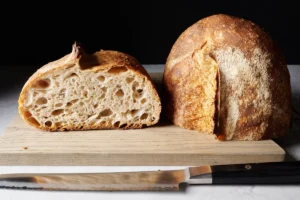
Conversely, pushing hydration levels into the 75% to 85%+ range yields drastically different physical results. High-hydration doughs require advanced manipulation techniques to compensate for decreased structural stability. When executed correctly, these formulations produce loaves characterized by an exceptionally thin, brittle crust and a tender, open, custard-like interior. However, crossing the threshold into excessive water content introduces significant trade-offs. Breads pushed to extreme hydration levels—such as 90% or 100% without adequate protein reinforcement—frequently suffer from a gummy crumb texture, structural collapse during baking, and accelerated staling rates post-bake.
Technical Innovations: The Role of Bassinage in Gluten Development
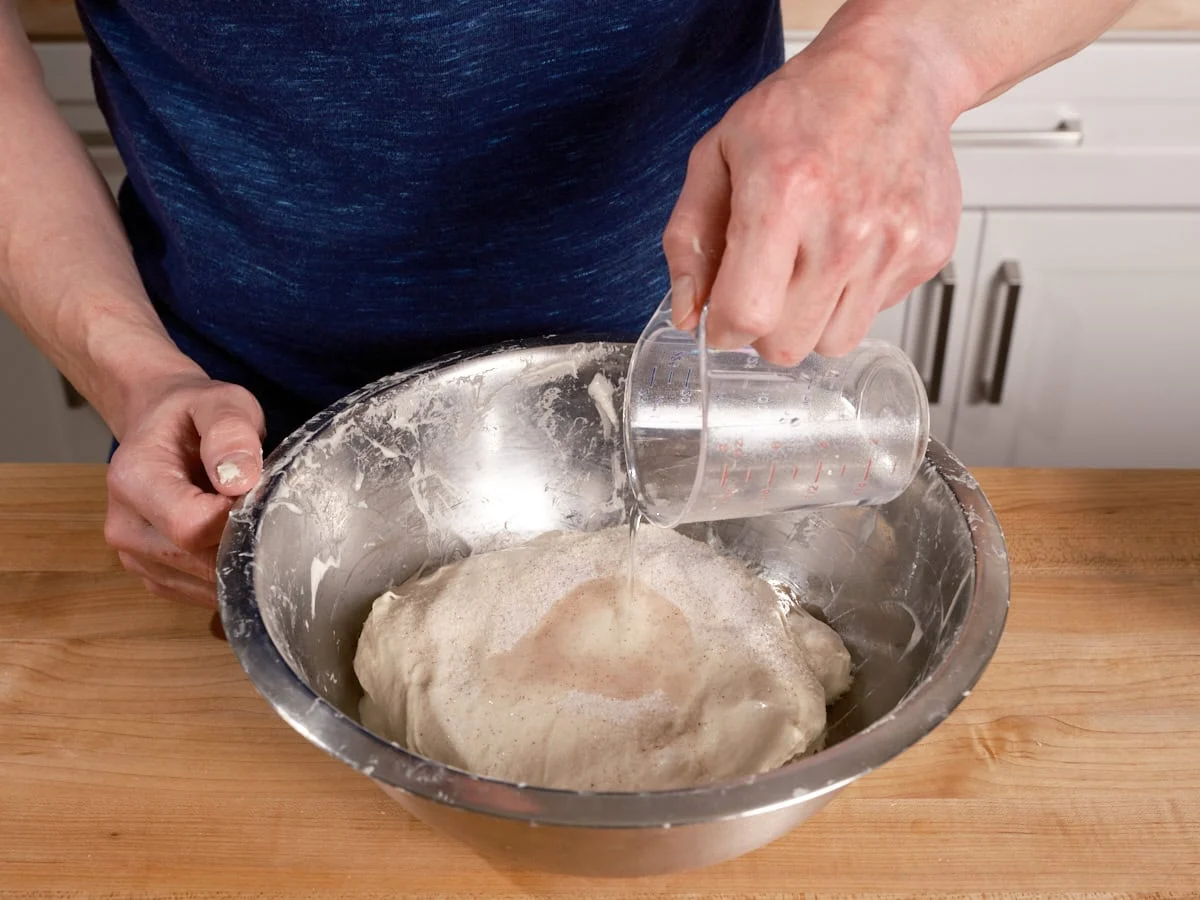
To successfully integrate higher volumes of water without compromising the structural integrity of the gluten network, professional bakers frequently employ a specialized incorporation technique known as bassinage, or double hydration. Rather than combining the totality of the water during the initial mixing phase, the baker holds a predetermined percentage of the water in reserve.
The initial phase of mixing utilizes roughly 80% to 90% of the total water weight combined with the flour, salt, and levain. This restricted water volume increases mechanical friction during the early stages of gluten development, allowing the protein chains (gliadin and glutenin) to rapidly bond and form a strong elastic scaffolding. Once this primary gluten network has been established, the reserved water is slowly introduced and kneaded into the dough in gradual increments.
This multi-stage approach yields two distinct technical advantages. First, it prevents the frustrating phenomenon where an overly wet initial mixture slips and slides within the mixing vessel, preventing effective gluten formation. Second, it grants the baker real-time diagnostic control. If the dough feels slack, overly wet, or structurally compromised after the first incorporation phase, the reserved water can be withheld entirely, thereby saving the batch from terminal degradation.
Chemical and Environmental Factors Dictating Water Demand
Multiple material and environmental factors dictate how much water a specific batch of dough can successfully absorb. Foremost among these variables is the protein content and quality inherent to the flour. Flours possessing high protein percentages—typically ranging between 12% and 14%, commonly classified as high-gluten or strong bread flours—require significantly more water to hydrate properly. The abundance of protein creates a robust gluten network capable of binding and retaining large volumes of moisture. Conversely, lower-protein European and regional flours demand reduced hydration levels to prevent unmanageable, sticky doughs.
Whole grain flours introduce an entirely different set of physical dynamics. Components such as wheat bran and germ act like tiny sponges, absorbing substantial amounts of water while simultaneously physically disrupting the continuity of the developing gluten matrix. Recipes incorporating high percentages of whole wheat, rye, or ancient grains routinely demand elevated hydration levels—often exceeding 80%—to prevent the final loaf from turning out dense and dry.
Furthermore, freshly milled flour behaves fundamentally differently than commercially aged flour. Freshly milled grains exhibit high enzymatic activity and increased water absorption capacities, necessitating upward adjustments in formula hydration even when the bran and germ have been partially bolted out through sifting.
Troubleshooting Common Hydration Challenges
The prevalence of sticky, unmanageable dough remains the single most common complaint among developing sourdough bakers. Technical analysis indicates that stickiness is rarely the result of a single flaw, but rather a cascading failure involving inadequate gluten development, excessive water addition, or insufficient bulk fermentation time. When a dough lacks the structural tension required to trap moisture internally, free water migrates to the surface, resulting in a sloppy mass that clings persistently to hands, countertops, and proofing baskets.
Mitigating these issues requires a disciplined approach to fermentation management and dough handling. Bakers working with high-hydration formulas must rely on frequent stretch-and-fold intervals during the early stages of bulk fermentation to artificially build strength in the absence of mechanical kneading. Additionally, reducing bench flour usage during shaping and utilizing appropriate proofing temperatures ensures that the delicate gas-retention properties of the dough remain intact.
Comparative Analysis of Hydration Tiers
| Hydration Level | Physical Characteristics | Recommended Applications |
|---|---|---|
| 60% – 65% | Stiff consistency, highly manageable, thick crust | Bagels, pretzels, pizza crusts, standard pan loaves |
| 65% – 70% | Balanced structure, easy to score, moderate chew | Classic country sourdough, beginner-friendly loaves |
| 70% – 75% | Moderately open crumb, thin crust, balanced crumb | Traditional boules, batards, baguettes |
| 75% – 80% | Tender interior, requires advanced shaping skill | Ciabatta, focaccia, open-crumb hearth breads |
| 80%+ | Custardy crumb, highly extensible, structurally fragile | Specialized high-hydration artisan loaves |
Expert Perspectives and Industry Standards
Prominent baking educators and culinary institutions consistently emphasize that numerical hydration targets should serve as navigational waypoints rather than absolute laws. Master artisans point out that consumer preferences and structural shelf-life must always take precedence over aesthetic trends. While ultra-high-hydration loaves with cavernous crumb structures dominate social media feeds, traditional bakers stress that bread must ultimately serve as a functional food source. Loaves engineered strictly for visual novelty often degrade rapidly, exhibiting accelerated staling and poor structural integrity once sliced.
Industry consensus suggests that developing bakers begin their journey within the moderate 68% to 70% hydration window utilizing reliable, high-protein bread flour. This foundational range provides a forgiving margin of error, allowing practitioners to develop tactile familiarity with fermentation milestones and gluten elasticity before attempting high-hydration formulations.
Ultimately, mastering dough hydration requires cultivating what experienced practitioners term baker’s intuition—an intimate, sensory-based understanding of how ingredients react within a specific local environment. By carefully documenting variables such as ambient temperature, flour source, water temperature, and seasonal humidity in a baking journal, practitioners transition from blindly executing recipes to engaging in an intuitive, responsive dialogue with their dough.