
The resurrection of a defunct brand is a rare feat in the volatile world of American casual dining, particularly when that brand has undergone the finality of a Chapter 7 bankruptcy. For Paul Mangiamele, the 73-year-old Chairman and CEO of Legendary Restaurant Brands, the challenge was not merely a business proposition but a personal mission rooted in the discipline of the boxing ring. Mangiamele, a former boxer who trained under the legendary Cus D’Amato—the mentor to world champions Floyd Patterson and Mike Tyson—has spent the last decade proving that heritage brands like Bennigan’s and Steak and Ale possess a "get-up" mentality that defies industry expectations.
When Mangiamele and his wife, Gwen, acquired the assets of Bennigan’s and Steak and Ale in 2015, the brands were widely considered relics of a bygone era. Skeptics within the investment community were blunt, telling Mangiamele that he was wasting both time and capital on concepts that had effectively "died" years prior. However, Mangiamele’s response was a succinct, New York-inflected challenge: "Watch us." Today, with a debt-free balance sheet and an aggressive international expansion strategy, the comeback of these two iconic chains is being studied as a masterclass in "newstalgia"—the blending of nostalgic brand equity with modern operational efficiency.
The Collapse of an Empire: A Chronology of Decline
To understand the magnitude of Mangiamele’s undertaking, one must look back to July 2008, a period of immense economic upheaval for the United States. S&A Restaurant Corp., then the parent company of Bennigan’s and Steak and Ale, filed for Chapter 7 bankruptcy protection. Unlike Chapter 11, which allows for reorganization and continued operation, Chapter 7 is a liquidation process. Overnight, 150 corporate-owned Bennigan’s locations and all remaining Steak and Ale restaurants shuttered their doors, leaving thousands of employees jobless and franchise owners in a state of precarious uncertainty.
The collapse was the result of a "perfect storm" of factors: the burgeoning Great Recession, rising food and labor costs, and a lack of innovation within the concepts themselves. Bennigan’s, founded in 1976, and Steak and Ale, founded in 1966, were both creations of Norman Brinker, the visionary often cited as the father of casual dining. By 2008, however, the "fern bar" aesthetic and heavy menus that had defined the 1980s felt out of step with a consumer base moving toward fast-casual efficiency and healthier options.
Following the bankruptcy, the brands were whittled down to a handful of international and domestic franchises. Atalaya Capital Management initially brought Mangiamele on as CEO to lead a turnaround, but it wasn’t until 2015 that Mangiamele transitioned from an executive role to an owner, acquiring the brands from Fortress Investment Group. His goal was not just to manage a slow decline, but to orchestrate a full-scale revival of the "Brinker legacy."

The Strategic Pivot: Defining "Newstalgia"
Mangiamele’s strategy centered on a concept he calls "newstalgia." This approach acknowledges that while the brands have deep-seated emotional resonance with Generation X and Baby Boomers, they cannot survive on memory alone. The revival required a comprehensive redefinition of value.
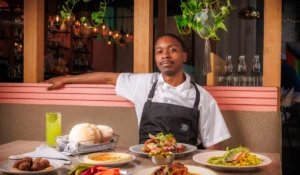
In the traditional sense, value in the restaurant industry is often equated with deep discounting and low-price promotions. Mangiamele argues that the modern consumer defines value through the "comprehensive experience." For Bennigan’s, this has meant maintaining signature items like the World Famous Monte Cristo and tableside Irish Coffee, while simultaneously upgrading the quality of ingredients and modernizing the decor. For Steak and Ale, it meant bringing back the iconic salad bar and scratch-made bread with honey butter, but at a price point—approximately $18 for a full meal including an entrée and sides—that remains competitive in an inflationary environment.
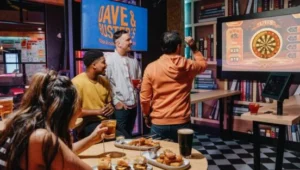
This focus on experience over transaction has yielded tangible results. Bennigan’s recently celebrated its 50th anniversary, reporting double-digit same-store sales increases over the last several years. These gains are attributed to a combination of menu engineering, bundling strategies, and a renewed focus on "experiential" dining elements, such as tableside preparation, which provide a sense of theater that quick-service restaurants (QSR) cannot replicate.
Operational Discipline and the "Bennigan’s University"
A significant portion of Mangiamele’s turnaround success is rooted in his insistence on operational discipline and training. He often cites his time at the Naval Academy and his training under Cus D’Amato as the foundation of his leadership style. "Whatever you want to do, you don’t do. That’s discipline. And whatever you don’t want to do, you make yourself do. That’s discipline," Mangiamele recalls D’Amato telling him.
This philosophy led to the creation of a "University" platform—a digital training ecosystem that allows managers and staff to master every aspect of the business, from "soup to nuts." Because Legendary Restaurant Brands is debt-free, Mangiamele has the luxury of investing in these long-term human capital projects rather than being forced to meet the short-term demands of high-interest lenders or private equity firms seeking immediate exits.
The "Bennigan’s school" of management has a storied history in the industry. Many of the leaders who built modern casual dining powerhouses began their careers within the Brinker system. For instance, the late Kent Taylor, founder of Texas Roadhouse, managed a Bennigan’s in Dallas in the 1980s. Current Texas Roadhouse CEO Jerry Morgan and former COO Steve Ortiz also trace their professional roots back to Bennigan’s. Mangiamele views the preservation of this culture not just as a tribute to the past, but as a competitive advantage in recruiting top-tier talent today.

Global Expansion and the "On The Fly" Model
While the traditional full-service model remains the core of the business, Legendary Restaurant Brands has adapted to the changing real estate and labor landscape by introducing "Bennigan’s On The Fly." This model is a flexible, smaller-footprint version of the brand designed for high-traffic, non-traditional locations such as airports, hotels, and hospitals.
The company currently has approximately 50 "On The Fly" units under agreement, including a 30-unit project via a partnership with Franklin Junction, a "host kitchen" platform. This hybrid model allows the brand to enter markets where a full-service footprint might be cost-prohibitive, providing a scalable revenue stream that supports the brand’s broader visibility.
On the international front, the brands are seeing significant traction. Legendary Restaurant Brands has signed master franchisee agreements to scale into the triple-digits in India and has executed multi-store deals for Panama and Central America. The company is also moving into Guyana and looking toward further expansion in the Middle East and South Korea. Currently, the company claims to have more than 100 stores either open or under contract globally, a stark contrast to the single-digit store count that existed in the immediate aftermath of the 2008 bankruptcy.
The Return of Steak and Ale: A Case Study in Demand
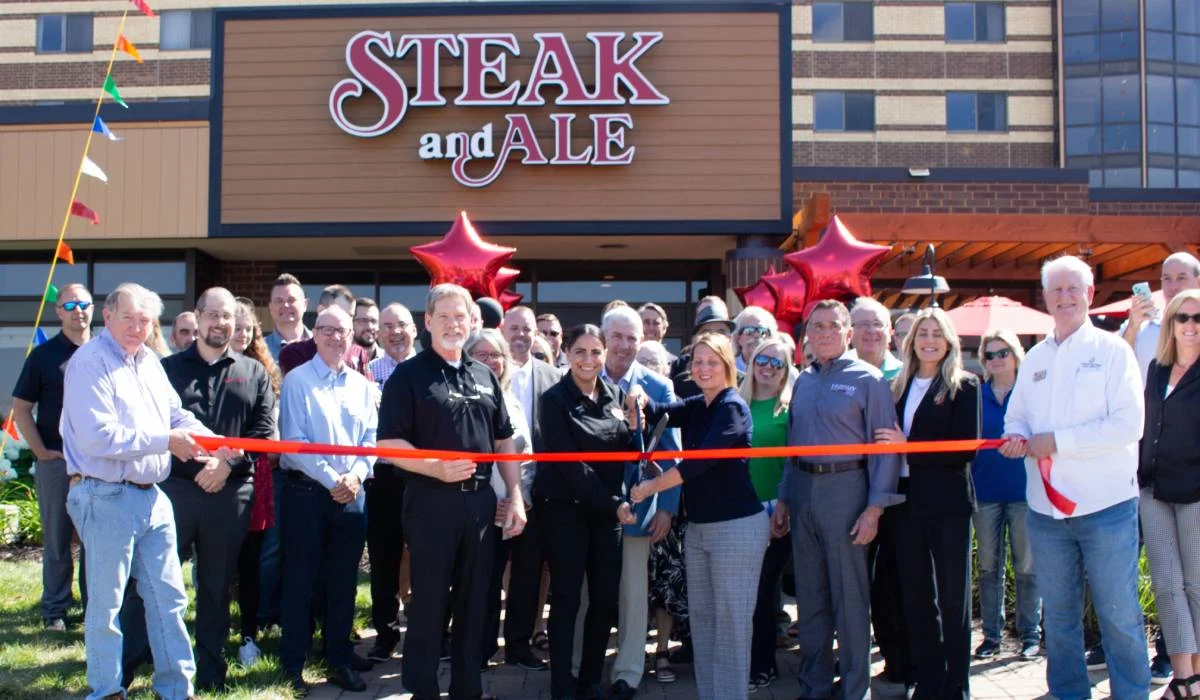
Perhaps the most dramatic element of Mangiamele’s portfolio is the return of Steak and Ale. The brand had essentially vanished from the American landscape for 16 years until July 2024, when a new location opened in Burnsville, Minnesota. Despite the long hiatus, the brand maintained a cult-like following; a Facebook group dedicated to the return of Steak and Ale boasts over 61,000 members.
The challenge with Steak and Ale was stewardship. Mangiamele was deliberate in the brand’s relaunch, ensuring that the fixtures, the service style (such as the preparation of Caesar salads at the table), and the pricing reflected the original brand’s DNA while meeting modern standards. The success of the Burnsville opening has paved the way for future locations in Grand Prairie, Texas, and Anderson, South Carolina, with further expansion planned for Oklahoma and Kansas.
Market Analysis and Future Outlook
The broader casual dining sector has faced significant headwinds over the last decade, with many legacy brands struggling to remain relevant in the face of the "fast-casual" revolution led by brands like Chipotle and Panera. However, Mangiamele argues that the market for casual dining is currently "wide open."

Industry data suggests that while consumers are indeed "pocket watching" due to inflation, they are not necessarily abandoning sit-down dining. Instead, they are becoming more selective, gravitating toward brands that offer a distinct experience and high perceived value. Mangiamele’s observation that "the guest never gave up on casual dining—casual dining gave up on the guest" highlights a failure of innovation across the sector that he is now seeking to exploit.
By maintaining a debt-free balance sheet, Legendary Restaurant Brands can afford a measured pace of growth. Mangiamele targets opening three to four full-service restaurants per year, a pace he describes as "healthy" and "practical." This avoids the pitfalls of hyper-expansion that often lead to a dilution of quality and eventual financial instability.
Conclusion: The Righteous Mission
At 73, Paul Mangiamele shows no signs of slowing down, frequently stating that his passion for the industry makes him feel 33. His journey from a 9-year-old dishwasher in his uncle’s New York City trattoria to the owner of two of the most storied brands in American dining is a testament to the power of persistence.
Mangiamele’s "righteous mission" is to prove that legacy brands can be resurrected and thrive in the 21st century if they are managed with a focus on people, culture, and "newstalgic" innovation. As the company continues its domestic and international march, the "watch us" attitude that Mangiamele adopted in 2015 remains the driving force behind a comeback that was once deemed impossible by the industry’s elite. For the survivors of the 2008 Chapter 7 liquidation, the return of Bennigan’s and Steak and Ale is more than just a business success—it is a restoration of a significant chapter in American culinary history.