
The global foodservice industry is currently navigating a period of profound transformation, driven by a consumer base that is increasingly educated, health-conscious, and demanding of transparency. As diners move away from highly processed ingredients and excessive sugar, restaurant operators are being forced to recalibrate their menus to stay competitive. This shift is not merely a passing trend but a fundamental change in the relationship between the consumer and the hospitality sector. Recent market data indicates that the demand for "better-for-you" (BFY) products has moved from the periphery of the health food niche into the mainstream, creating both a challenge and a significant revenue opportunity for operators who can successfully balance flavor innovation with nutritional integrity.
The Shifting Paradigm of Consumer Wellness and Transparency
The modern consumer’s journey is increasingly defined by the "clean label" movement—a term that refers to food and beverage products containing natural, familiar, and simple ingredients that are easy to recognize and pronounce. According to data from Ingredion, approximately 56 percent of consumers reported a willingness to pay a premium for clean-label products. This willingness to spend more highlights a critical insight for the industry: health and transparency are no longer just preferences; they are value-drivers that can directly impact a business’s bottom line.
Parallel to the clean-label movement is a widespread effort to reduce sugar consumption. Research from the International Food Information Council (IFIC) reveals that 76 percent of consumers are actively seeking to limit or entirely eliminate sugar from their diets. This creates a complex puzzle for beverage directors and chefs who have traditionally relied on sugar-laden syrups and additives to provide the bold flavors that drive customer satisfaction. The industry is now tasked with finding flavor-driving solutions that provide the same sensory impact as traditional ingredients but without the caloric or chemical baggage.
Navigating the Sober Curious Revolution
One of the most significant shifts in the beverage sector over the last five years has been the rise of the "sober curious" movement. This demographic consists of individuals who are not necessarily abstinent from alcohol but are intentionally reducing their intake for health, clarity, or lifestyle reasons. A survey by casinos.us found that 67 percent of Americans are actively attempting to reduce their alcohol consumption.
This shift has elevated the status of the mocktail from a secondary menu item to a primary focus. Consumers now expect non-alcoholic beverages to offer the same complexity, presentation, and "elevated experience" as high-end craft cocktails. The challenge for operators lies in creating these sophisticated drinks without adding significant labor costs or requiring specialized training for staff. In an era of high labor turnover and rising wages, the ability to produce a high-quality, consistent, and "Instagrammable" alcohol-free beverage in a matter of seconds is a major operational advantage.
Innovation Through Operational Efficiency: The TruFlavour Solution
In response to these converging trends, industry leaders are developing products that bridge the gap between fresh ingredient quality and operational simplicity. Monin, a global leader in flavor solutions, recently introduced TruFlavour, a line of unsweetened, naturally colored, and clean-label flavors. This product line is designed specifically to address the needs of operators who must deliver bold taste profiles while adhering to strict health and operational guidelines.
Sabrina Godfrey, director of marketing communications at Monin, notes that operators today must balance creativity with efficiency. The TruFlavour range consists of 15 distinct flavors, including trend-forward options such as coconut, hibiscus, and even savory notes like pickle and jalapeño. Unlike traditional syrups, these products contain no added sugars or artificial sweeteners, allowing beverage creators and chefs to control the level of sweetness in their recipes independently of the flavor intensity.
This level of control is vital for "flavor layering"—a technique used by top-tier mixologists to build complex taste profiles. By using a concentrated, unsweetened flavor, an operator can add the floral notes of hibiscus to a lemonade or the tropical essence of coconut to a refresher without doubling the sugar content of the drink.
Bridging the Gap Between the Bar and the Kitchen
The utility of these modern flavor solutions extends far beyond the beverage program. One of the most effective ways for a restaurant to increase profitability is through the cross-utilization of ingredients. When a single product can be used in both the front-of-house (beverages) and back-of-house (culinary), it streamlines inventory, reduces waste, and ensures menu cohesion.

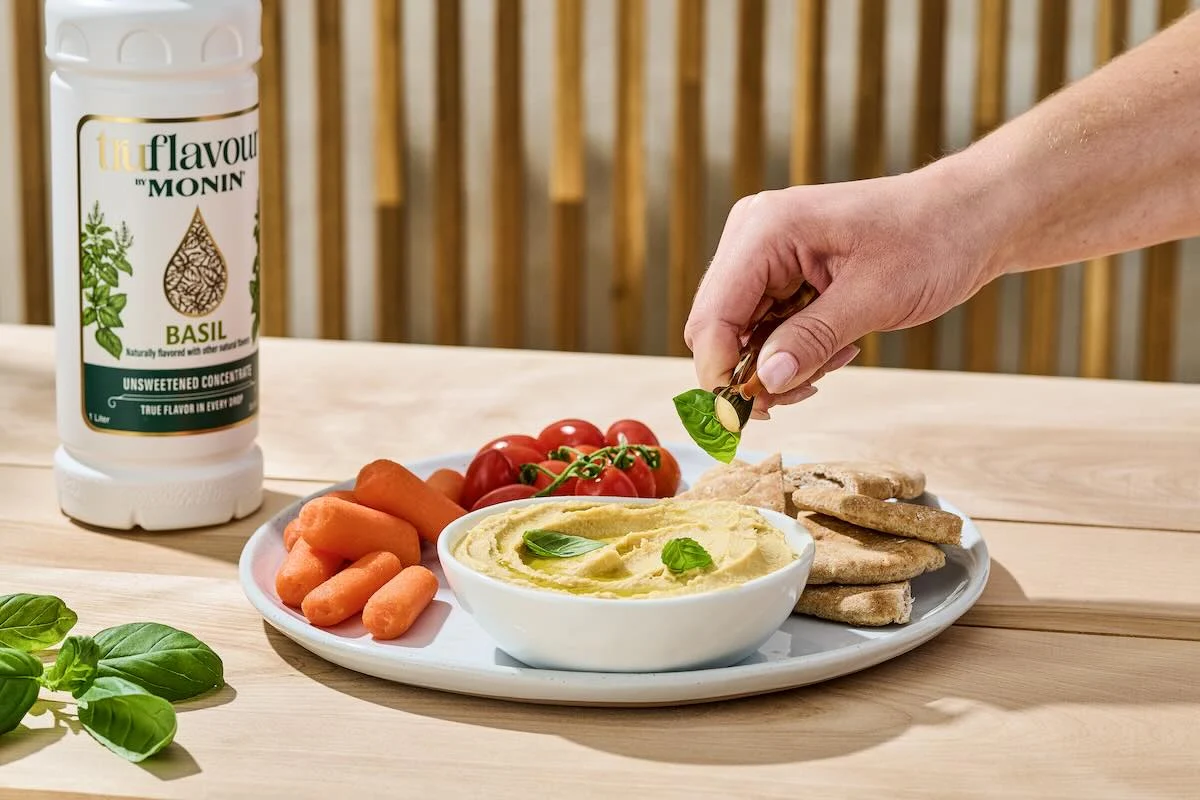
The TruFlavour line includes culinary-specific profiles such as oak barrel, basil, and mushroom. These can be used to enhance dips, sauces, and marinades. For instance, the jalapeño flavor can be utilized to create a spicy ranch dressing or a signature guacamole in the kitchen, while simultaneously serving as the heat component for a "skinny" spicy margarita or a "swicy" (sweet and spicy) lemonade at the bar.
The mushroom flavor, in particular, represents a growing interest in umami—the savory "fifth taste." Adding a concentrated mushroom essence to a sauce can deepen the flavor profile without the labor-intensive process of reducing fresh mushrooms or managing the spoilage risks associated with fresh produce. This "liquid form" innovation allows for consistent results across multiple shifts and locations, which is a cornerstone of successful restaurant scaling.
The Strategic Advantage of Shelf-Stable Versatility
Seasonality has long been a hurdle for the foodservice industry. While consumers crave fresh strawberry flavors in the winter or tropical coconut notes in the autumn, sourcing high-quality fresh produce out of season is expensive and often yields inconsistent results. Furthermore, fresh ingredients require significant prep time—washing, cutting, blending, and straining—which adds to labor costs.
By utilizing shelf-stable, high-concentration flavorings, operators can offer a consistent product year-round. Godfrey points out that in beverage applications, as little as one-quarter ounce (a single pump) is sufficient to deliver a balanced flavor. In culinary applications, the standard starting point is approximately two tablespoons per cup of base ingredient. This precision minimizes waste and ensures that the guest receives the same experience every time they visit, regardless of who is working in the kitchen or behind the bar.
Moreover, the ability to test limited-time offerings (LTOs) without committing to large volumes of perishable goods allows for greater menu experimentation. If a "Pickle-Infused Iced Tea" or a "Hibiscus Glazed Salmon" is a hit, the operator can easily scale it. If it doesn’t resonate, there is no loss of expensive, spoiled fresh inventory.
Broader Market Implications and Future Projections
The move toward clean labels and sugar reduction is expected to accelerate through 2030. Industry analysts suggest that the "functional beverage" market—drinks that offer health benefits beyond basic nutrition—will continue to merge with the traditional restaurant space. We are likely to see more ingredients like ginger, turmeric, and botanical extracts becoming standard menu fixtures.
The economic impact of this shift is twofold. First, it allows operators to capture a larger share of the "health-conscious" wallet, a segment that has traditionally been underserved by mainstream dining establishments. Second, it addresses the ongoing labor crisis by simplifying the "craft" aspect of the menu. When the complexity is built into the ingredient rather than the preparation process, the barrier to entry for new staff is lowered, and the speed of service is increased.
As the industry moves forward, the intersection of health, flavor innovation, and operational efficiency will remain the primary battleground for market share. Consumers are no longer willing to compromise; they want drinks and meals that are as good for their bodies as they are for their palates. For operators, the adoption of versatile, clean-label, and unsweetened flavor solutions is not just an aesthetic choice—it is a strategic requirement for long-term viability in a rapidly evolving market.
In conclusion, the success of modern foodservice operators depends on their ability to innovate without adding complexity. Products like TruFlavour represent a significant step toward a future where "healthy" and "flavorful" are no longer mutually exclusive terms. By embracing these tools, the industry can meet the high expectations of the modern diner while maintaining the rigorous efficiency required to thrive in a competitive global landscape.