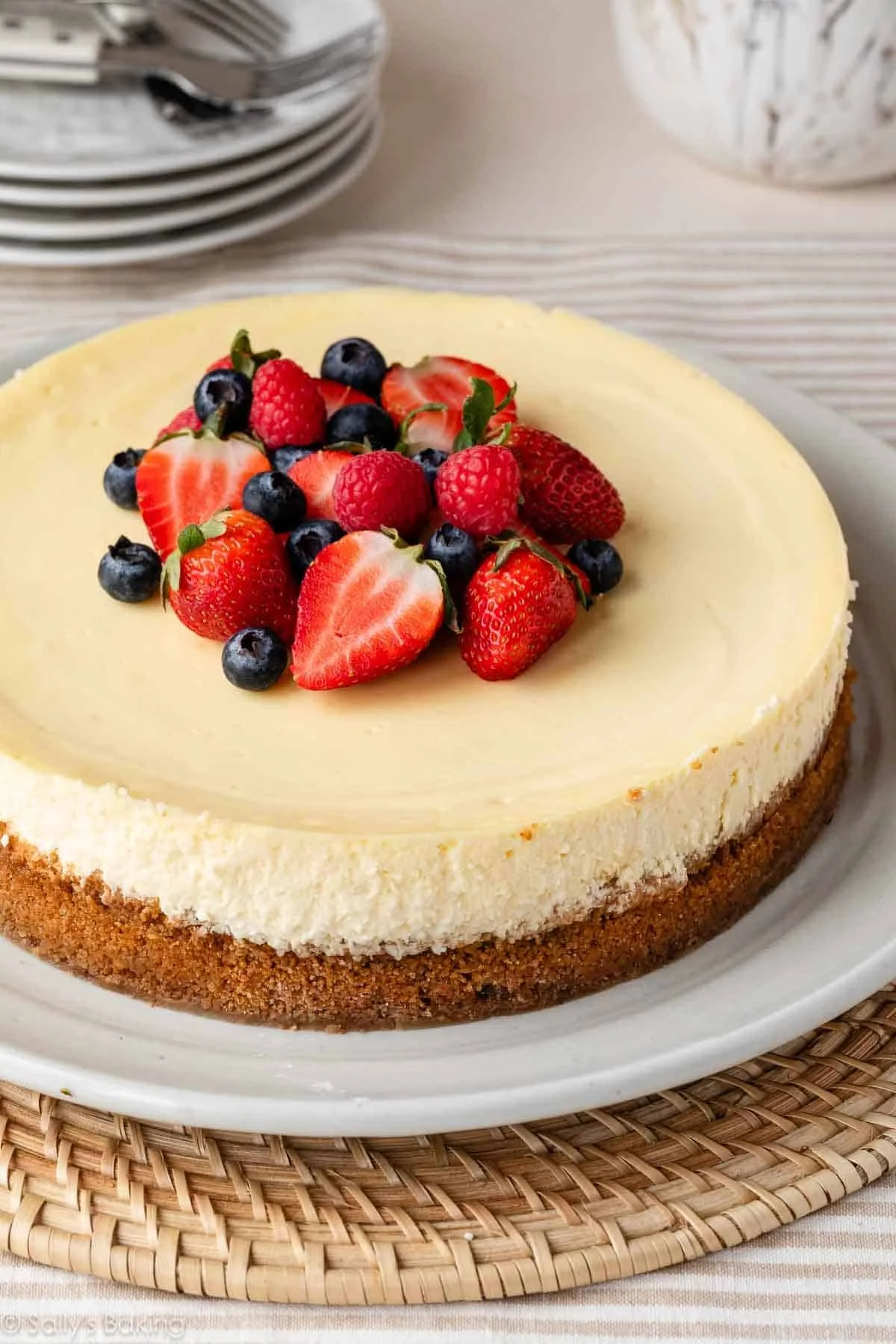

The culinary world is abuzz with the enduring appeal of the classic cheesecake, a dessert revered for its creamy texture and rich flavor profile. A particularly celebrated rendition, originally published in 2018 and subsequently refined, has cemented its place as a staple for home bakers seeking perfection. This definitive classic cheesecake recipe, lauded for its ultra-smooth filling and signature buttery graham cracker crust, has transcended its digital origins to become a highlight in the New York Times best-selling cookbook, Sally’s Baking 101, attesting to its widespread acclaim and proven success.
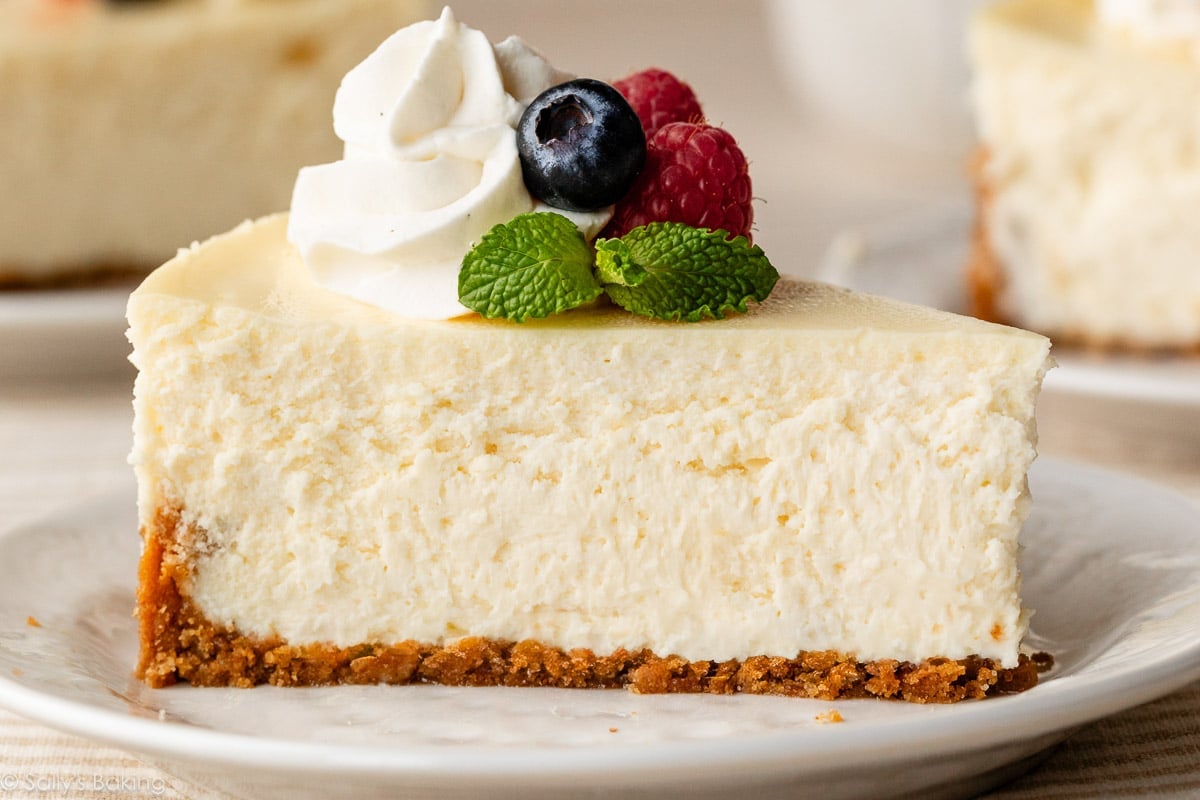
The recipe, initially introduced to a global audience through Sally’s Baking Addiction, has undergone meticulous updates, including refreshed photography and expanded success tips. Its inclusion in a New York Times best-selling publication underscores its authority and popularity within the baking community. For many, cheesecake represents the pinnacle of dessert indulgence, and this particular recipe promises a flawless experience: a smooth, crack-free surface, no water leaks from the springform pan, and elimination of common baking uncertainties. This promise is echoed in testimonials from a dedicated readership, with one enthusiastic baker, Randy, declaring it "the best cheesecake I have ever had! I’m from New York and nothing there beats this—even in the fanciest of restaurants." Such feedback highlights the recipe’s ability to surpass even regionally renowned versions, solidifying its reputation for exceptional quality and irresistible taste. The sheer demand from those who have sampled it—"everyone I’ve shared it with wants me to make more and more"—speaks volumes about its universal appeal and simple, yet profound, decadence.
The Enduring Legacy of Cheesecake: A Brief History and Modern Interpretations
Cheesecake boasts a rich and ancient lineage, with historians tracing its origins back to ancient Greece, where it was served at the Olympic Games as an energy source. The Romans adopted and adapted the recipe, spreading it across their empire. The modern cheesecake, as we largely recognize it today, began to take shape in the 18th century with the introduction of new leavening agents, and later, the commercialization of cream cheese in the late 19th and early 20th centuries, particularly with the advent of Philadelphia Cream Cheese in 1872. This period marked a significant shift, leading to the development of the denser, richer varieties often associated with New York-style cheesecake.
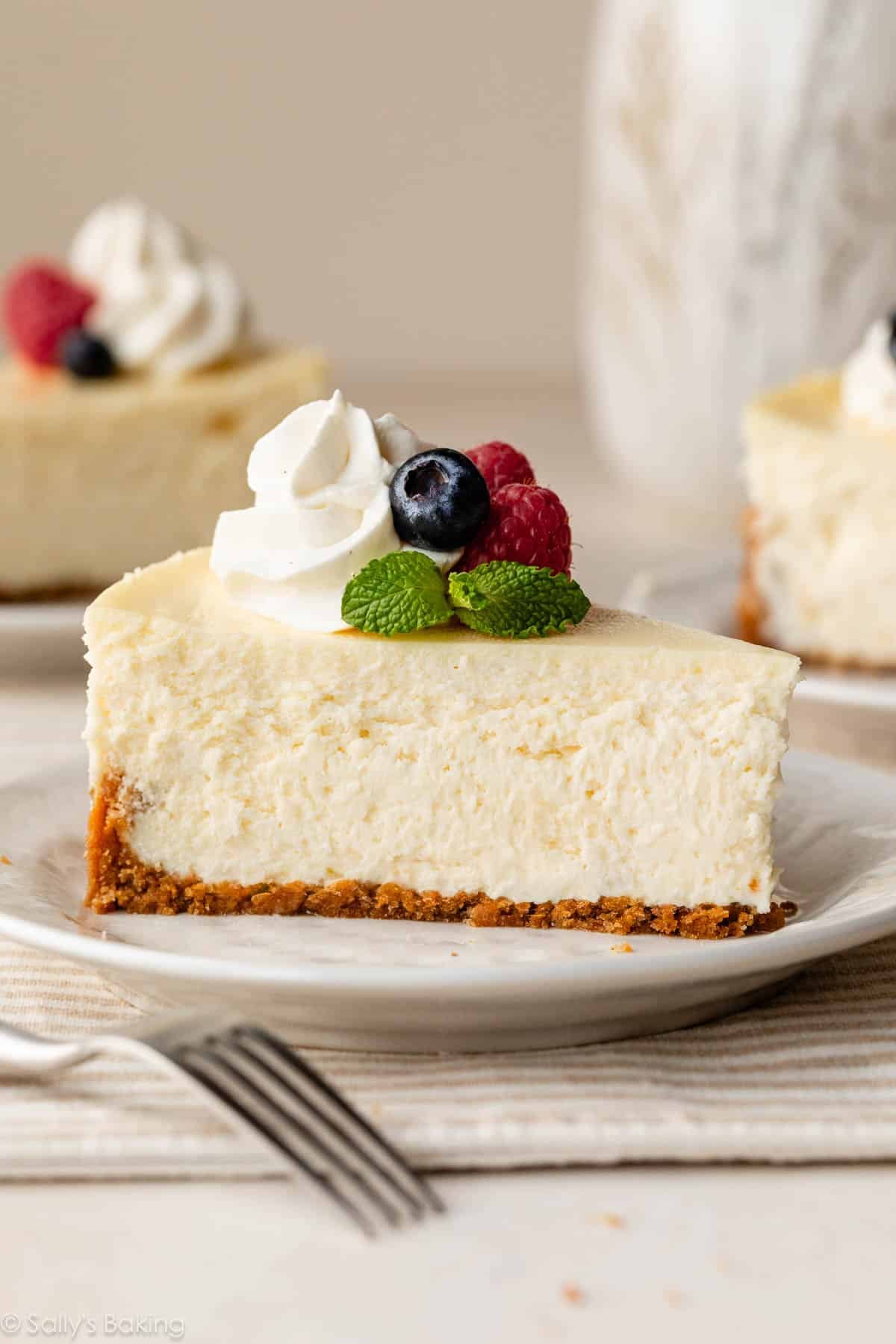
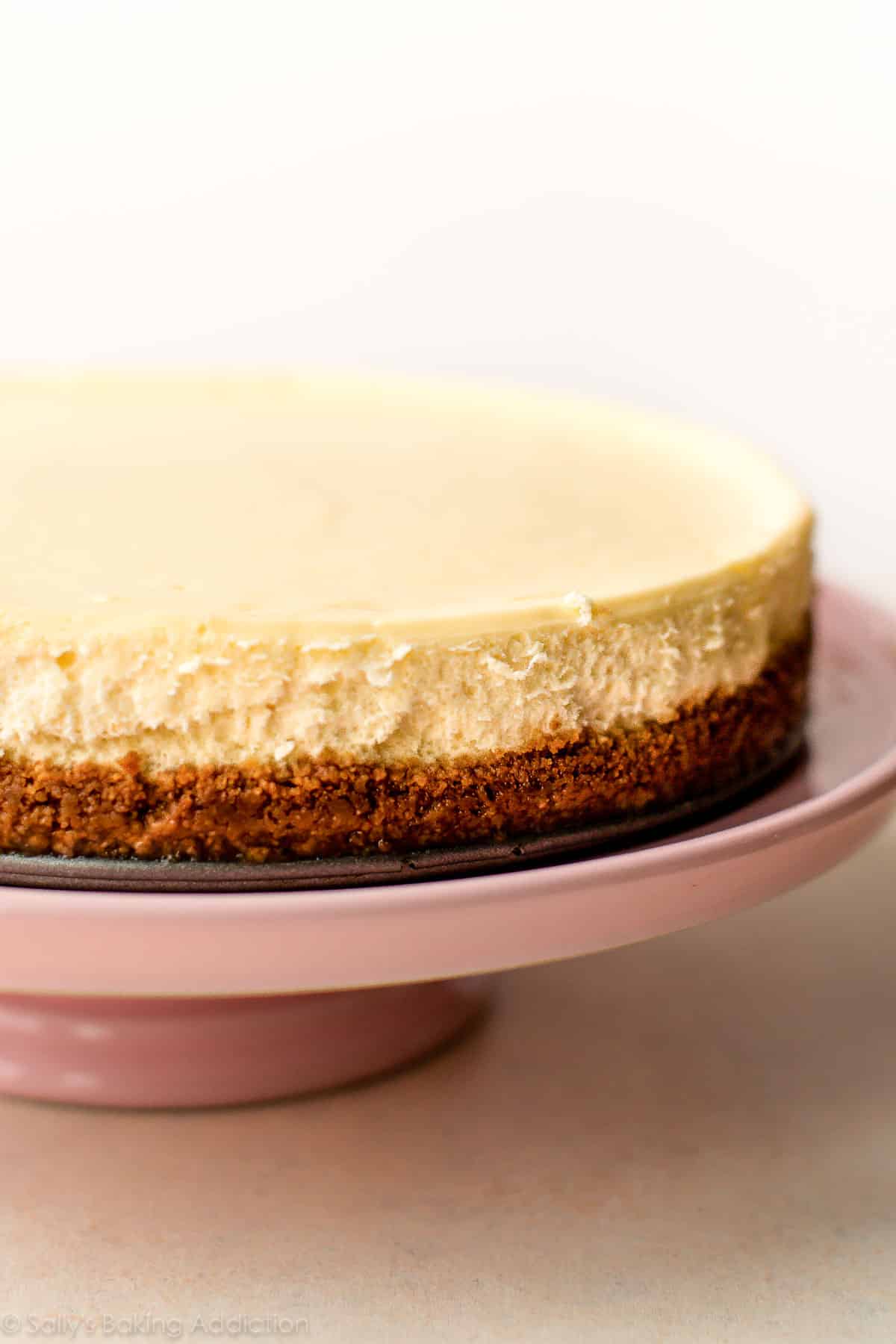
Sally’s classic cheesecake, while paying homage to these traditions, offers a distinct character. It is intentionally crafted to be creamy, rich, and smooth, distinguishing itself from the extreme density often found in traditional New York cheesecakes. This balance creates a velvety texture that is profoundly decadent without being overly heavy. The recipe captures the essence of what many envision as the quintessential cheesecake experience—a dessert so universally beloved it even inspired an iconic scene in the popular sitcom Friends, where characters Chandler and Rachel famously (and accidentally) share a stolen cheesecake. The author eloquently suggests that this recipe embodies the taste of that memorable, fictional treat, emphasizing its nostalgic and comforting appeal. Despite its lack of "chunks, swirls, and sprinkles," this "ivory crowned jewel" is far from plain; its beauty lies in its elegant simplicity and the flawless execution of fundamental baking principles.
Mastering the Craft: The Science Behind a Flawless Cheesecake
Achieving cheesecake perfection is often perceived as a daunting task for home bakers, primarily due to several common pitfalls, including surface cracking, springform pan leakage during a water bath, and issues with under or over-baking. However, this recipe provides comprehensive, expert-backed guidance to navigate these challenges, ensuring a rewarding outcome. The preparation of the cheesecake batter itself is relatively straightforward, yet the baking process demands precision and understanding of key techniques.
The Indispensable Water Bath (Bain-Marie)
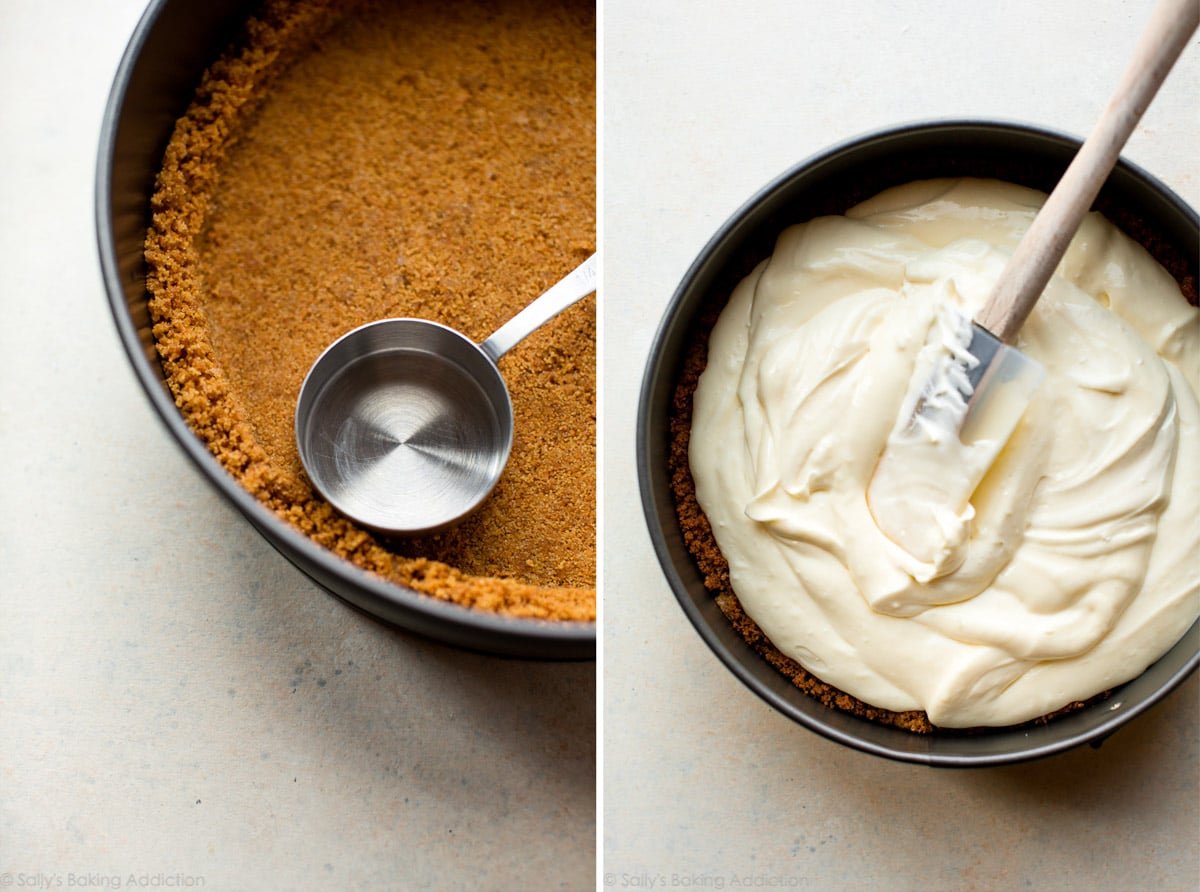
Central to the success of this recipe is the recommended use of a water bath, also known as a bain-marie. This technique, while seemingly an extra step, is crucial for delicate desserts like custards and cheesecakes. The scientific principle behind it is simple yet effective:
- Even Heat Distribution: The water surrounding the springform pan acts as a thermal buffer, ensuring that the cheesecake bakes gently and evenly from all sides. Direct dry heat from an oven can cause the outer edges to cook too quickly, leading to a tough texture and potential curdling, while the center remains undercooked. The water bath mitigates these temperature fluctuations.
- Humidity Control: The steam generated by the hot water creates a humid environment within the oven. This humidity is vital for preventing the cheesecake’s surface from drying out and cracking. Cracks typically form when the top layer sets and dries too rapidly compared to the slower-setting interior, causing tension and breakage. The steam helps the cheesecake rise slowly and uniformly.
- Prevents Sinking: By promoting slow and even baking, the water bath also helps to stabilize the cheesecake’s structure. This prevents the common issue of the cheesecake sinking significantly in the center as it cools, maintaining its pristine, level surface.
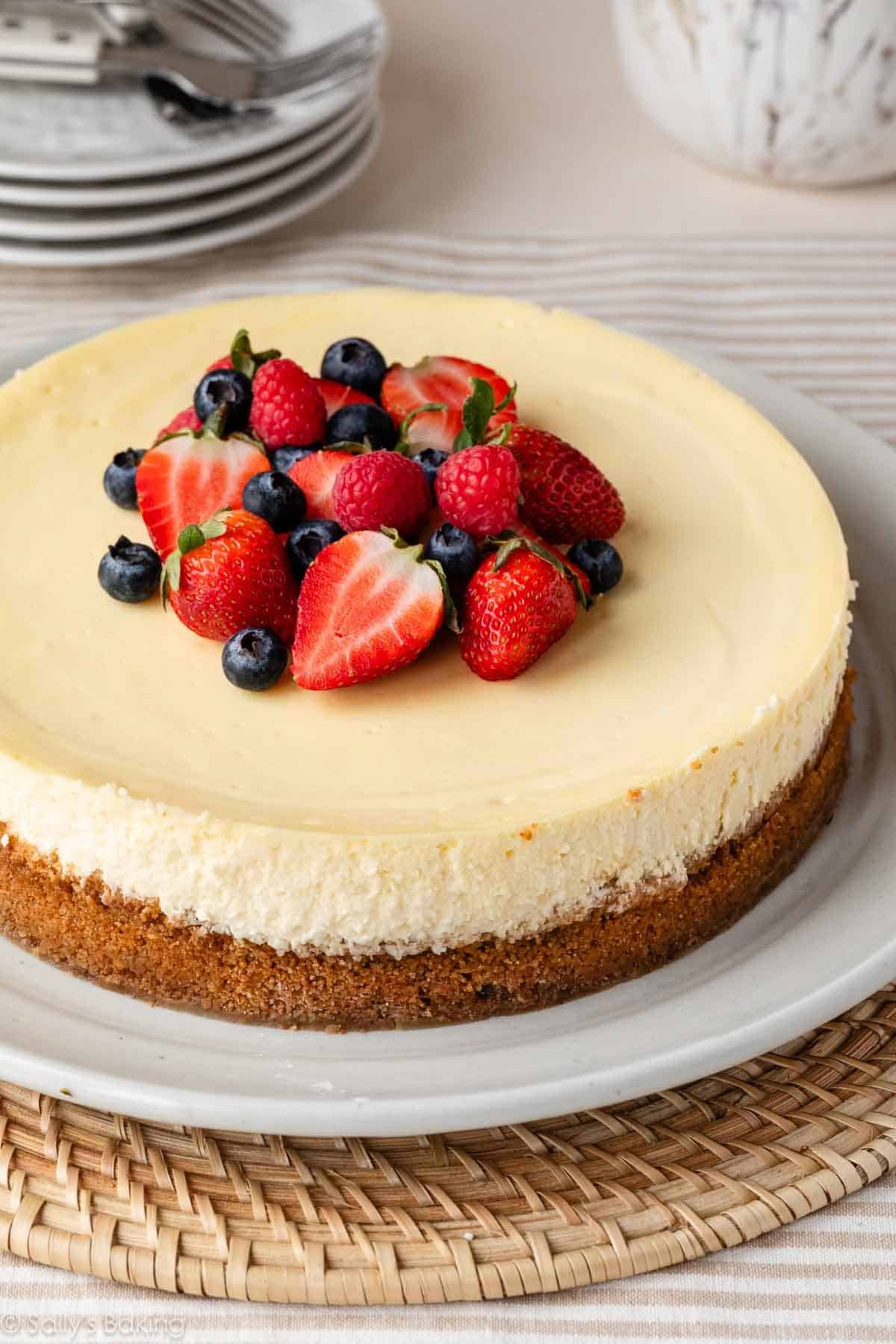
While it is possible to bake cheesecake without a water bath, the author strongly advises against it, citing a higher likelihood of a drier texture, a browned surface, and, most notably, cracks. The minimal extra effort involved in setting up a water bath—simply placing the foil-wrapped springform pan into a larger roasting pan filled with hot water—is overwhelmingly justified by the superior results it yields.
The Critical Role of Room Temperature Ingredients
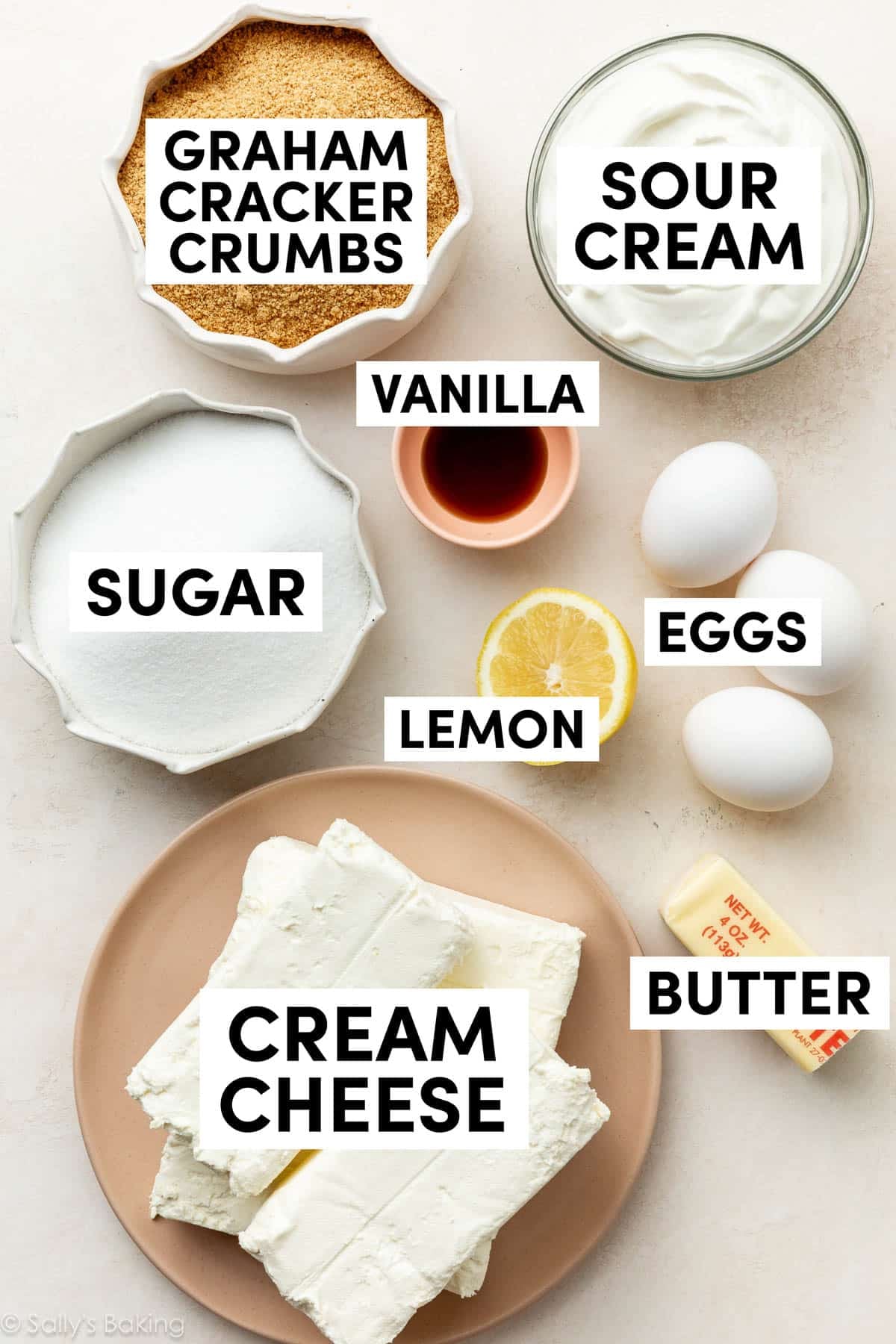
A foundational principle for this recipe, and indeed for most baking endeavors involving dairy and eggs, is ensuring all cheesecake batter ingredients are at room temperature. This is not merely a suggestion but a critical step that directly impacts the final texture of the cheesecake.
- Smooth Emulsification: Cold cream cheese, eggs, and sour cream are stiff and resistant to blending. When cold ingredients are mixed, they do not emulsify properly, leading to a lumpy, inconsistent batter. Room temperature ingredients, conversely, are softer and incorporate smoothly and quickly, forming a homogeneous mixture.
- Prevents Over-Beating: A chunky batter often prompts bakers to continue mixing, which can lead to over-beating. Over-beating incorporates too much air into the batter, resulting in a cheesecake that rises too high during baking and then inevitably collapses and cracks as it cools. By starting with room temperature ingredients, a smooth batter can be achieved with minimal mixing, preserving the dense, velvety texture characteristic of a classic cheesecake.
Crafting the Foundation: The Graham Cracker Crust
The classic cheesecake’s allure begins with its foundation: the graham cracker crust. This recipe adheres to tradition, utilizing a simple yet effective graham cracker base. A slight modification from the author’s original graham cracker crust recipe—a reduction of one tablespoon of butter—ensures a slightly crunchier texture, preventing any potential sogginess often associated with cheesecake crusts. Essential steps for a successful crust include packing it in tightly and pre-baking it, both of which contribute to its structural integrity and prevent moisture absorption from the filling.
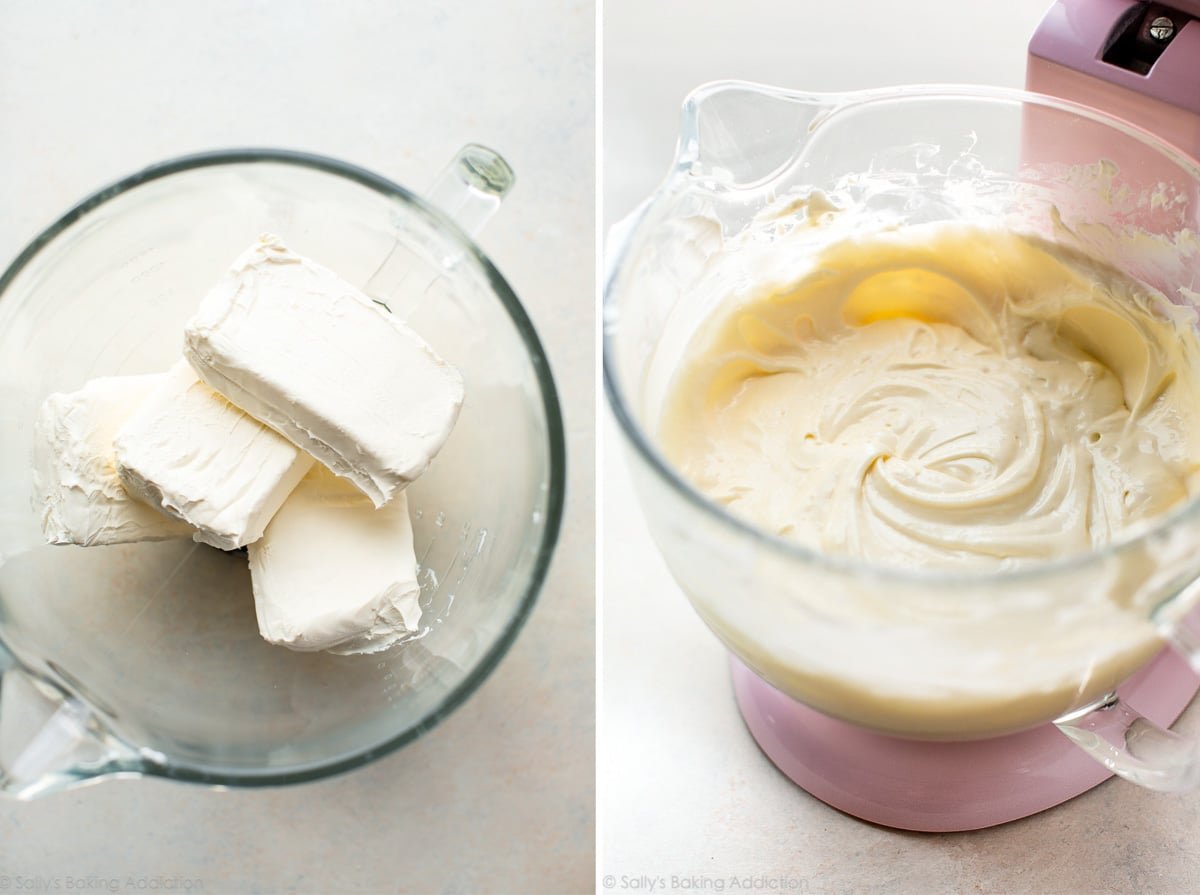
For those seeking variations, the recipe notes the adaptability of the crust. An Oreo cookie crust or even a Biscoff pie crust can be substituted with minimal adjustments. When opting for an Oreo crust, a light greasing of the springform pan’s bottom is recommended to prevent sticking. The use of a springform pan—a specialized baking pan with removable sides—is paramount for cheesecakes, allowing for effortless removal and presentation without inversion or damage. The author specifically endorses reliable 9-inch or 10-inch springform pans that mitigate the common issue of leakage during a water bath, further simplifying the baking process for home cooks.
The Delicate Dance of Cooling and Chilling
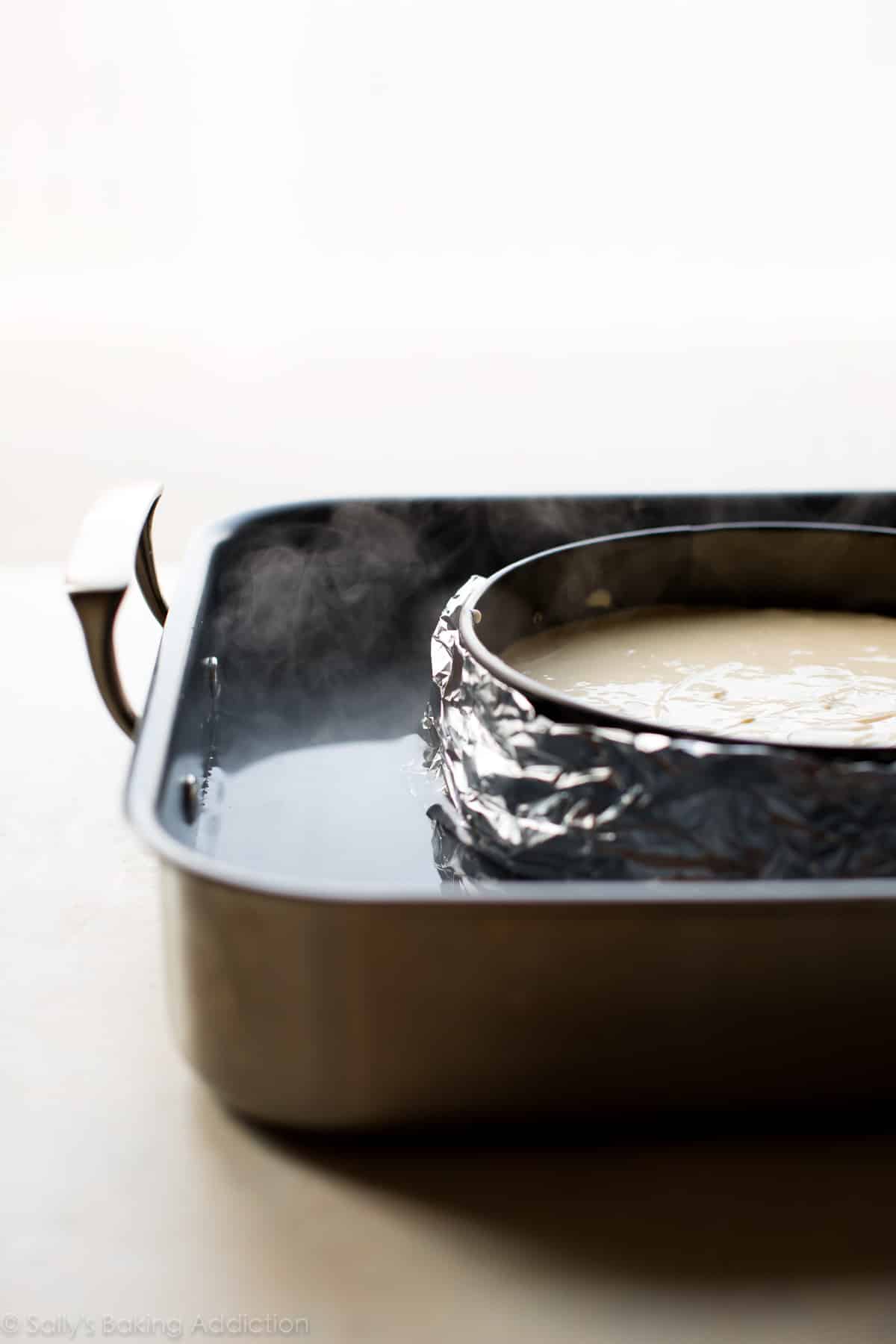
Beyond the baking itself, the post-oven process is equally critical in preventing cracks and achieving the desired texture. A drastic change in temperature is detrimental to a cheesecake’s delicate structure, causing it to contract rapidly and crack.
- Gradual Oven Cooling: Upon completion of baking, the oven should be turned off, and the oven door should be cracked open. The cheesecake is then left inside for one hour. This gradual cooling within a diminishing heat environment allows the cheesecake to slowly adjust to a lower temperature, minimizing thermal shock.
- Room Temperature and Refrigeration: Following the oven cooling, the cheesecake is transferred to a counter to cool completely to room temperature. This is another crucial phase of slow temperature adjustment. Finally, a prolonged chill in the refrigerator—for at least four hours, or ideally overnight—is essential. This chilling period allows the cheesecake to fully set, firm up, and develop its signature dense, creamy texture and depth of flavor. This waiting period, though a test of patience, is unequivocally worth the anticipation, culminating in a truly exceptional dessert experience.
Beyond the Classic: Sally’s Diverse Cheesecake Portfolio
While this classic cheesecake serves as a foundational masterpiece, the author, Sally McKenney of Sally’s Baking Addiction, has cultivated an extensive repertoire of cheesecake creations over the years, demonstrating a profound understanding of the dessert’s versatility. Her collection spans an impressive array of flavors and formats, including peanut butter, blueberry swirl, Snickers, pumpkin swirl, lemon, and Amaretto cheesecakes. Furthermore, her published cookbooks feature even more innovative variations. This broad spectrum of recipes highlights her expertise in adapting the core principles of cheesecake baking to diverse flavor profiles, catering to a wide range of palates and occasions.
For those seeking simpler or quicker alternatives without compromising on flavor, the author also provides recipes for cheesecake pie and pumpkin cheesecake pie. And for ultimate convenience, a no-bake cheesecake recipe is available, completely bypassing the baking and cooling process, yet still delivering a delightful cheesecake experience. This comprehensive approach ensures that whether a baker is seeking the ultimate traditional challenge or a speedy, satisfying treat, there is a cheesecake recipe to meet their needs.
Impact and Implications for Home Baking
The meticulous detail and comprehensive guidance offered within this recipe, from ingredient selection to precise cooling instructions, have significant implications for the landscape of home baking. In an era where culinary enthusiasm is high—evidenced by the sustained growth of the home baking market, particularly since 2020—recipes that demystify complex techniques are invaluable. This cheesecake recipe serves as a prime example of how expert guidance can empower amateur bakers to achieve professional-level results. The clear, actionable tips on water baths, room temperature ingredients, and gradual cooling transform what could be a frustrating endeavor into a rewarding culinary achievement.
Moreover, the recipe’s widespread adoption and its status as a New York Times best-seller contributor reflect a broader consumer trend: a return to classic, comforting desserts executed with excellence. While experimental and fusion desserts have their place, the timeless appeal of a perfectly made classic cheesecake remains unparalleled. This recipe not only provides a delicious dessert but also educates and builds confidence in the home baker, fostering a deeper appreciation for the craft and science of baking. It reinforces the idea that with the right instructions and a little patience, anyone can create a dessert that elicits rave reviews, even from self-proclaimed New York cheesecake aficionados.
Key Success Factors for Achieving Cheesecake Perfection
To reiterate and consolidate the essential insights for crafting this exemplary classic cheesecake, here are the critical factors to observe:
- Room Temperature Ingredients: Ensure all dairy and egg components are at room temperature to facilitate smooth, lump-free batter formation and prevent over-mixing, which can introduce excess air and lead to cracks.
- Pre-bake the Crust: Lightly pre-baking the graham cracker crust helps to firm it up and create a barrier against moisture, preventing it from becoming soggy under the creamy filling.
- Utilize a Water Bath: The bain-marie technique is paramount. The humid environment and even heat distribution it provides are crucial for preventing cracks, ensuring a smooth surface, and promoting a consistent, velvety texture throughout the cheesecake.
- Gradual Cooling: Avoid abrupt temperature changes after baking. Allow the cheesecake to cool slowly within the turned-off oven (with the door ajar) for an hour, followed by cooling to room temperature on the counter, and then an extended chilling period in the refrigerator. This controlled cooling process is fundamental to preventing cracks and achieving the ideal set.
- Do Not Over-mix: Mix the batter only until just combined. Over-mixing incorporates too much air, which can cause the cheesecake to puff up excessively during baking and then collapse and crack as it cools.
Enhancing the Experience: Toppings and Storage
Once perfectly baked and chilled, the classic cheesecake serves as an exquisite canvas for a variety of toppings, allowing for both creative expression and simple elegance. Traditional choices include fresh berries such as strawberries, blueberries, or raspberries, which provide a vibrant contrast in color and a refreshing tartness. Other popular enhancements include chocolate ganache, caramel sauce, or a homemade fruit compote, like the cherry sauce recipe thoughtfully included in Sally’s Baking 101. Whether opting for minimalist presentation or an elaborate embellishment, the intrinsic quality of the cheesecake ensures an impressive culinary statement.
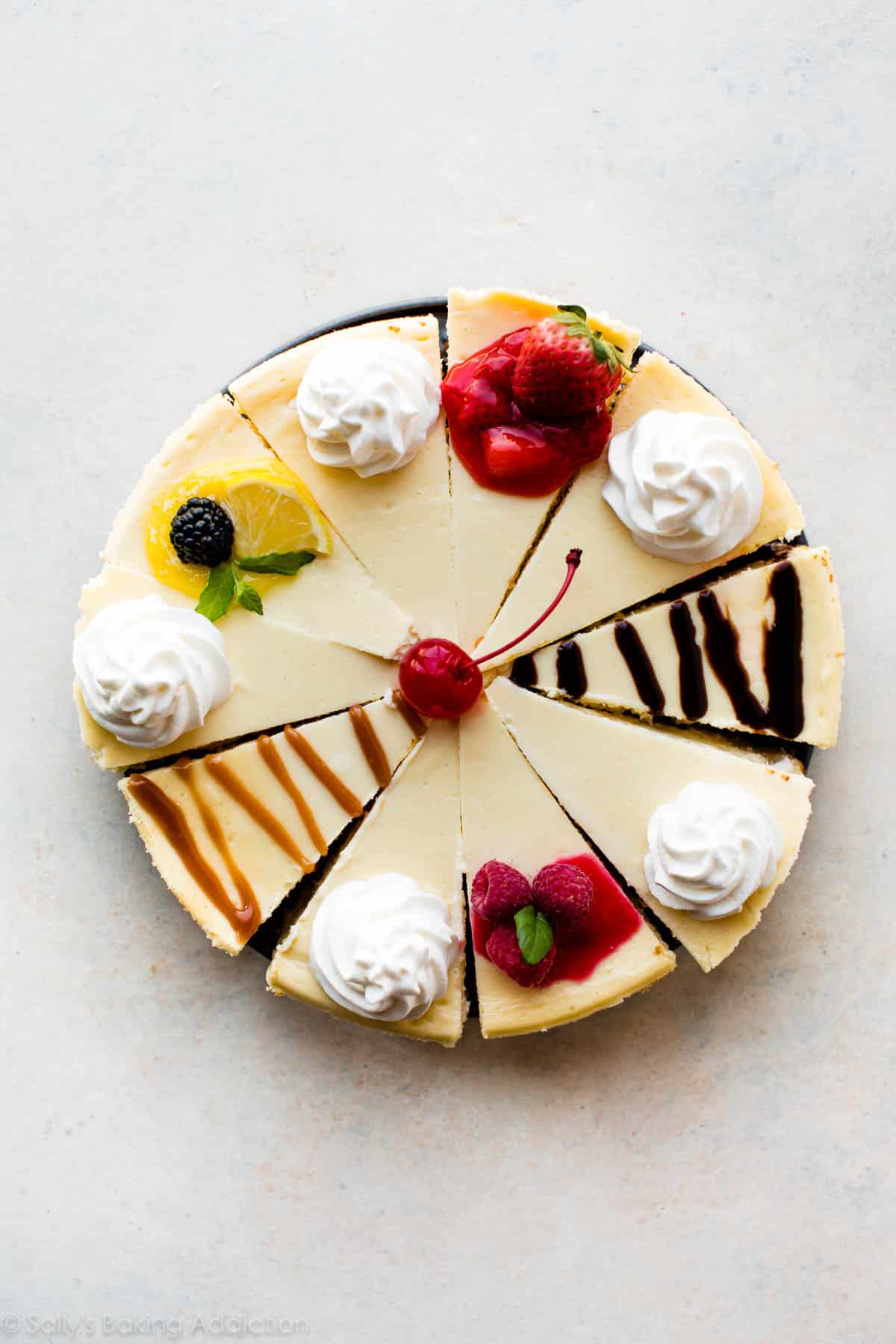
For those planning ahead or wishing to savor their creation over time, cheesecake is an excellent make-ahead dessert. It can be prepared several days in advance and stored in the refrigerator, allowing its flavors to meld and deepen. Furthermore, cheesecake freezes exceptionally well. To freeze, ensure the cheesecake is completely cooled and chilled. It can be frozen whole or in individual slices. For whole cheesecakes, place it uncovered in the freezer until firm, then wrap tightly in plastic wrap followed by aluminum foil to prevent freezer burn. Slices can be wrapped individually. Properly frozen cheesecake maintains its quality for up to 1-2 months, offering a convenient option for future indulgence.
In conclusion, this classic cheesecake recipe from Sally’s Baking Addiction stands as a testament to the power of well-crafted instructions combined with a deep understanding of baking science. It empowers bakers of all skill levels to achieve a dessert that is not only visually stunning but also delivers an unparalleled sensory experience, solidifying its status as a truly quintessential culinary achievement.