
The pursuit of the perfect cup of coffee is a complex journey, deeply rooted in the intricate chemistry of extraction, where the precise interplay of numerous variables dictates the final flavor profile, body, and aroma. Coffee brewing, far from being a simple act, is a sophisticated process that engages both art and science, demanding a nuanced understanding of how soluble compounds are selectively drawn from roasted beans. This scientific endeavor reveals why methods like pour-over, with its seemingly endless adjustable parameters, offer unparalleled control but also introduce significant variability, while immersion brewing provides a robust, repeatable alternative.
The Science of Extraction: A Delicate Balance
At its core, coffee brewing is about extracting desirable compounds from ground coffee. A previous examination of coffee’s chemical composition highlights that concentrations of various compounds can span nine orders of magnitude, each possessing a unique solubility and extraction rate. This inherent variability is not a flaw but a fundamental feature, enabling the diverse range of brewing techniques and flavor outcomes. If all compounds extracted uniformly, the creative scope for baristas and home brewers would be severely limited.
An exhaustive extraction, where the goal is to dissolve the maximum soluble content, would involve grinding coffee as finely as possible, steeping for extended periods, and potentially boiling. Such a method, akin to a Turkish coffee without added sugar or spices, can achieve an extraction yield approaching 30% of the bean’s dry mass. While potent, this approach often results in a brew that is strong but not necessarily the most palatable, as it indiscriminately extracts both desirable and undesirable compounds.
The true artistry in coffee brewing lies in selective extraction, a process where compounds are not extracted to the same degree. Contrary to the intuitive notion of "even extraction" for a good cup, chemical principles suggest that an uneven extraction is often what yields the most nuanced and flavorful coffee. This selective process is most effectively achieved through percolation, commonly known as pour-over brewing, which should not be confused with the historical coffee percolator that utilizes convection.
Pour-Over: The Art and Science of Percolation
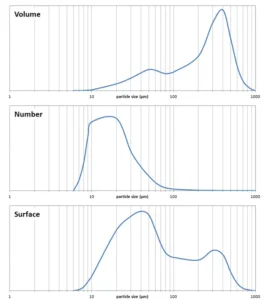
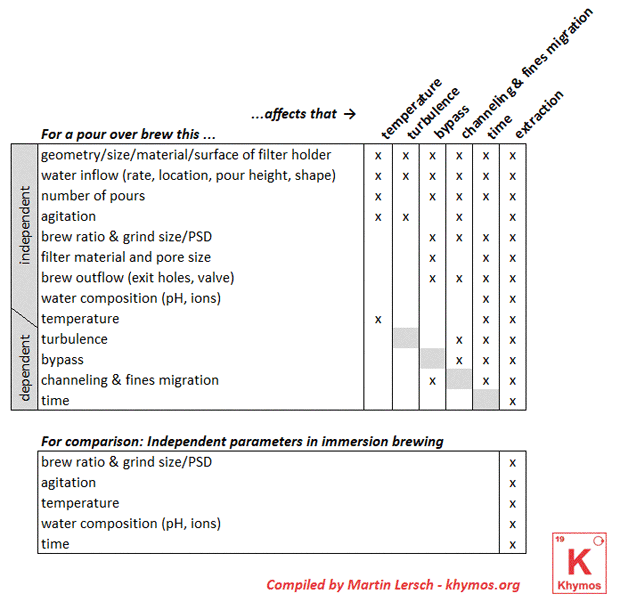
Pour-over brewing, while appearing deceptively simple – pouring hot water over ground coffee to drip through a filter – is an immensely complex system with a surprising number of adjustable parameters. Beyond fundamental factors like brew ratio, grind size, particle size distribution (PSD), water composition, and temperature, numerous other elements profoundly influence the final cup. These include the geometry of the filter holder, the specific filter material and its pore size, the flow rate of water, the turbulence within the coffee bed, and even the surrounding atmospheric pressure and humidity.
The complexity is further compounded by the intricate correlations between these parameters. For instance, a finer grind size not only increases the total surface area for extraction but also significantly slows down water flow, thereby increasing contact time. This can lead to filter clogging, further impeding outflow. Moreover, grind size and PSD can influence "channeling," where water preferentially flows through paths of least resistance rather than saturating the entire coffee bed. This phenomenon is exacerbated by the principle that "water is lazy"; it will always seek the easiest route, potentially bypassing significant portions of the coffee grounds. This bypass, where water flows around rather than through the coffee bed, dilutes the brew without contributing to extraction.
The proliferation of YouTube tutorials and specialized equipment for pour-over brewing underscores the method’s inherent complexity and the continuous quest for precise control. Despite these challenges, the pour-over method remains popular among professionals and enthusiasts alike due to the extensive control it offers over the final outcome. However, this complexity also introduces unintended variations, leading to common brewing myths and inconsistencies, where even identical recipes may yield vastly different results due to unquantified parameters.
A Historical Perspective on Brewing Innovation
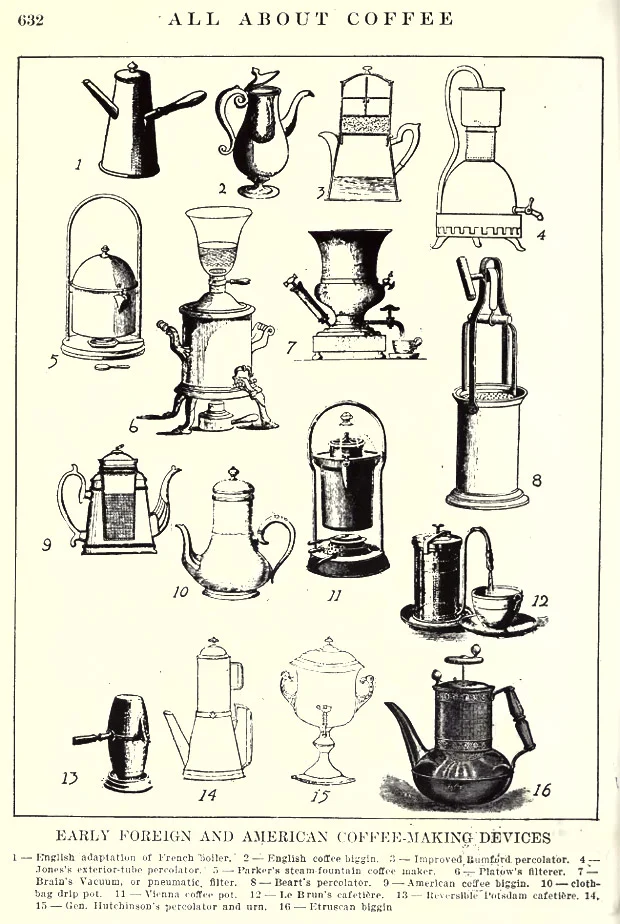
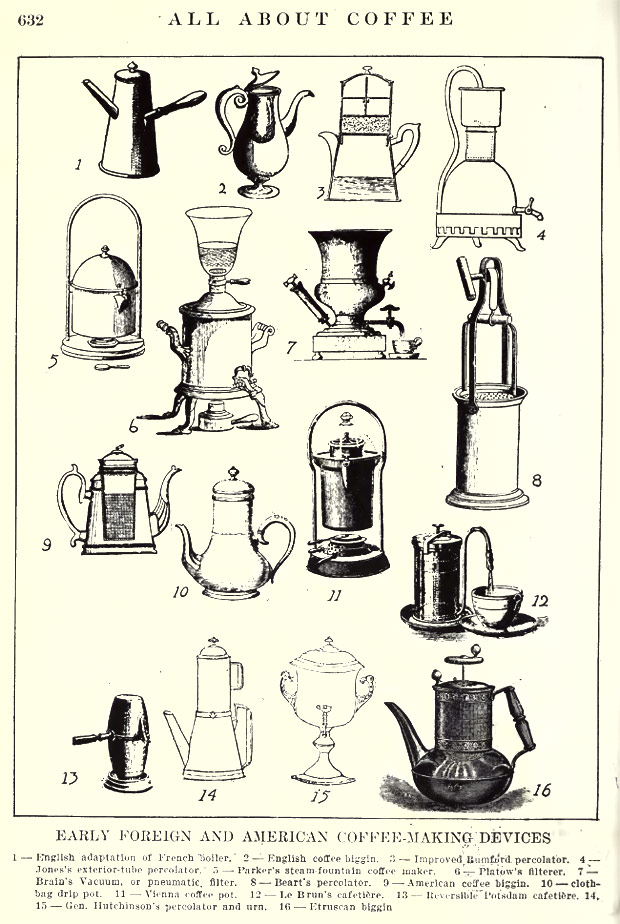
The exhaustive exploration of coffee brewing methods is not a modern phenomenon. Historical texts, such as "All About Coffee" by W. A. Ukers, published in 1922, reveal a long-standing fascination with optimizing coffee makers. Illustrations from this era depict a wide array of devices, demonstrating that inventors have been grappling with the "coffee knot"—the challenge of achieving consistent and exceptional extraction—for centuries.
The evolution of coffee makers has been a continuous cycle of innovation, with each new design attempting to address specific challenges in extraction. From the early percolators invented over 200 years ago to the popular models of the 1970s, the drive to perfect coffee brewing has been relentless. This historical context provides a foundation for understanding the diversity of modern pour-over devices.
Modern Pour-Over Devices: Engineering for Precision
Today’s market features an almost endless array of pour-over brewers, each with subtle design differences engineered to influence extraction dynamics. Key design considerations include:
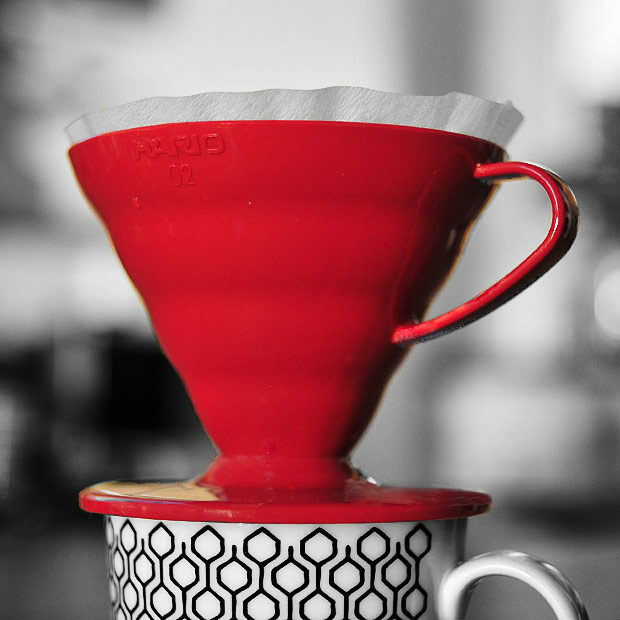
- Material and Insulation: Maintaining a high brewing temperature is crucial. Materials like plastic (e.g., Hario V60) or ceramic are favored for their limited heat loss and sturdiness, while metal can be problematic unless vacuum-insulated (e.g., Stagg X/XF) or possessing significant thermal mass. Glass, while aesthetically pleasing, is often too fragile for frequent handling.
- Shape and Geometry: The shape of the filter holder (trapezoid, cone, flat-bottom) dictates the coffee bed’s geometry, which in turn influences water flow. A high, narrow cylindrical bed maximizes coffee-water contact but slows flow, while a flat bed allows faster flow but increases the risk of channeling.
- Inside Wall Surface: The presence of ridges or patterns on the inner wall of a filter holder (common in Hario V60 or Origami) allows water to flow through the filter paper even when it clings to the surface, preventing blockage. Devices like the Chemex, with its smooth walls, intentionally block side flow, minimizing bypass at the cost of slower filtration.
- Filter Type: Paper is the most common filter material, tailored to fit various shapes. Cylindrical brewers like the Aeropress use plain discs. Fluted or W-folded filters (e.g., Kalita Wave) increase surface area, mitigating clogging by coffee fines. The rare Karlsbader brewer uses a coarse ceramic grating, allowing more fines and oils into the cup.
- Inflow Control: Uncontrolled pouring can disturb the coffee bed, leading to channeling. Gooseneck kettles are designed to provide precise, slow pouring. Accessories like the Gabi Dripmaster B or Melodrip distribute water evenly over the coffee bed through multiple small holes, ensuring a flat bed and minimizing disturbance, though sometimes at the cost of temperature stability.
- Exit Holes and Outflow Control: The number and size of exit holes, alongside filter holder geometry, determine the overall flow rate. Single large holes with ridges (Hario V60) maximize flow, while fewer/smaller holes or smooth surfaces can restrict it. Some brewers feature a shut-off valve (e.g., Clever, Hario Switch, December Dripper), allowing for an initial immersion phase followed by a controlled percolation, offering significant control over extraction time and enabling easier scaling of recipes.
- Bypass Mitigation: Water that bypasses the coffee bed dilutes the coffee without contributing to extraction. Designs that minimize filter contact with the walls or use smooth surfaces (like Chemex) aim to reduce bypass. Jonathan Gagné’s research on optimal percolation emphasizes the importance of minimizing bypass. Brewers where the filter is entirely below the coffee bed (e.g., Aeropress, Tricolate, Proper, Vietnamese Phin) are designed to virtually eliminate bypass, ensuring that only the coffee bed restricts water flow, which is arguably ideal for precise extraction.
Immersion Brewing: The Pursuit of Repeatability
In contrast to the intricate dance of pour-over, immersion brewing offers a robust and repeatable method. Here, coffee grounds are steeped entirely in water for a set duration, typically with all water added at once and an initial stir to release gas bubbles. After steeping, the brew is separated from the grounds, often by pressure filtration (e.g., French Press, Aeropress in inverted method).
The primary advantage of immersion brewing is its relative insensitivity to minor variations in technique. Because the coffee grounds are fully submerged, the extraction process tends toward an equilibrium between the dissolved compounds in the water and those remaining in the grounds. This makes immersion brewing highly repeatable; two individuals following the same recipe are likely to produce very similar cups. Brewing time can be controlled largely independently of grind size, influencing Total Dissolved Solids (TDS) and Extraction Yield (EY). While not as finely selective as a perfectly executed pour-over, immersion still offers a selective extraction within its parameters, often yielding a delightful cup.
The French Press, a quintessential immersion brewer, is characterized by its relatively coarse wire mesh filter. This allows a significant amount of fines and oils into the cup, contributing to a full body and rich texture, often leaving a noticeable sediment. While some appreciate this mouthfeel, these fines can also contribute to undesired bitterness. Filtering French Press coffee through paper can remove fines and oils, resulting in a cleaner, clearer taste, demonstrating the impact of particle separation on the final profile. However, immersion coffee, even when filtered, can sometimes present as more "muted" compared to the bright clarity achievable with pour-over.
The Ongoing Quest for the "Ultimate Cup"
The ongoing innovation in coffee brewing technology, exemplified by the detailed design considerations of various brewers and the scientific inquiry into extraction dynamics, reflects a universal longing for the "very best cup of coffee we have ever tasted." The complexity of pour-over and the robustness of immersion each offer distinct pathways to achieving this goal.
This scientific understanding has significant implications for both the coffee industry and consumers. For equipment manufacturers, it drives the development of new brewers that offer greater control, repeatability, or a unique flavor profile. For professional baristas, it provides a deeper toolkit for understanding and manipulating extraction to craft bespoke beverages. For home brewers, it demystifies the brewing process, enabling more informed choices about equipment and technique, bridging the gap between casual consumption and a more profound appreciation for coffee’s chemical artistry. The journey to the ultimate cup is continuous, propelled by both scientific rigor and passionate exploration, promising further innovations in the quest for coffee perfection.