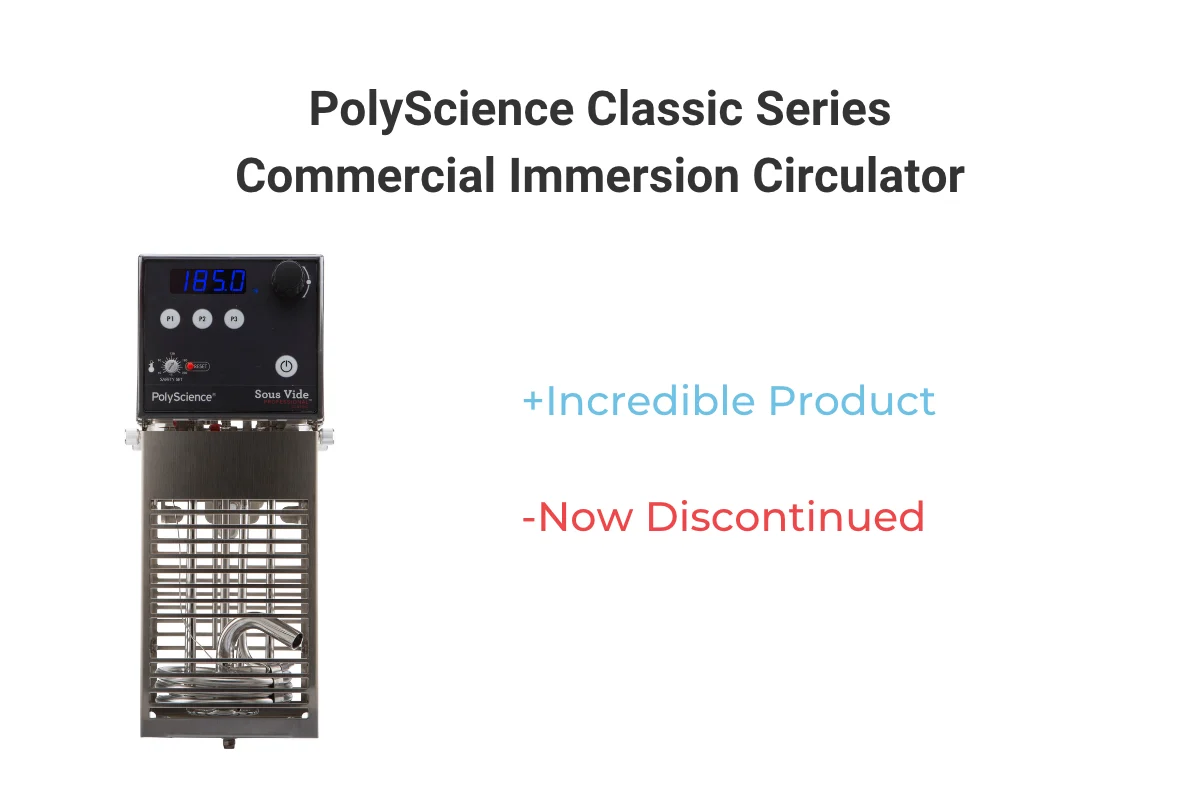

A decade spent navigating the demanding environment of professional kitchens has offered an intimate perspective on the tools that define culinary excellence. Among these, the PolyScience Classic Series Immersion Circulator stands out as a benchmark, a device that consistently delivered precision and reliability, earning its place as a favored instrument for countless chefs. While this particular model is no longer in production, its legacy as a gold standard in commercial sous vide technology continues to resonate, particularly for those who may encounter it on the secondary market, often at considerable savings from closing restaurants or equipment auctions.
The discontinuation of the PolyScience Classic Series, while a loss for those seeking its specific attributes, has paved the way for advancements in immersion circulator technology. Current commercial models, as noted by industry observers and equipment reviewers, often surpass their predecessors in terms of compactness, power, and cost-effectiveness. This evolution reflects the dynamic nature of professional kitchen equipment, where innovation continually seeks to optimize performance and accessibility. For home cooks, the landscape of sous vide machines has also expanded significantly, with numerous options tailored to domestic use, offering a spectrum of features and price points.
The Enduring Legacy of PolyScience’s Classic Immersion Circulator
PolyScience, a name historically synonymous with high-quality culinary equipment, cemented its reputation with the Classic Series immersion circulator. This device was not merely an appliance; it was a workhorse that found its way into the kitchens of many of the world’s most acclaimed restaurants. Its robust construction and unwavering performance were instrumental in achieving the consistent, perfectly cooked results that define fine dining. While contemporary immersion circulators have adopted sleeker, more compact designs, the Classic Series remains a touchstone for its exceptional accuracy and inherent durability in professional settings.
The operational capabilities of the Classic Series were, and remain, impressive. It was engineered to manage water baths of up to eight gallons, a capacity suitable for high-volume food preparation. A crucial feature for maintaining consistent cooking temperatures was its auto-restart function, ensuring that a power interruption would not compromise a delicate sous vide process. Furthermore, its dual-speed water pump offered granular control over water circulation, a vital element for uniform heat distribution throughout the bath, thereby preventing hot or cold spots and ensuring every piece of food is cooked to the precise desired temperature.
Unrivaled Precision and Thoughtful Design
Where the PolyScience Classic Series truly distinguished itself was in its meticulous attention to temperature accuracy and its intuitive design. This model boasted a temperature precision of within 0.09°F, a fractional improvement over its successor, the Chef Series (now rebranded as the "Creative" series), which maintained temperatures within 0.1°F. While this minuscule difference might seem negligible in everyday culinary applications, it underscored PolyScience’s commitment to engineering for the most discerning professional environments where absolute precision is paramount. This level of accuracy is a testament to the rigorous standards that defined the brand.
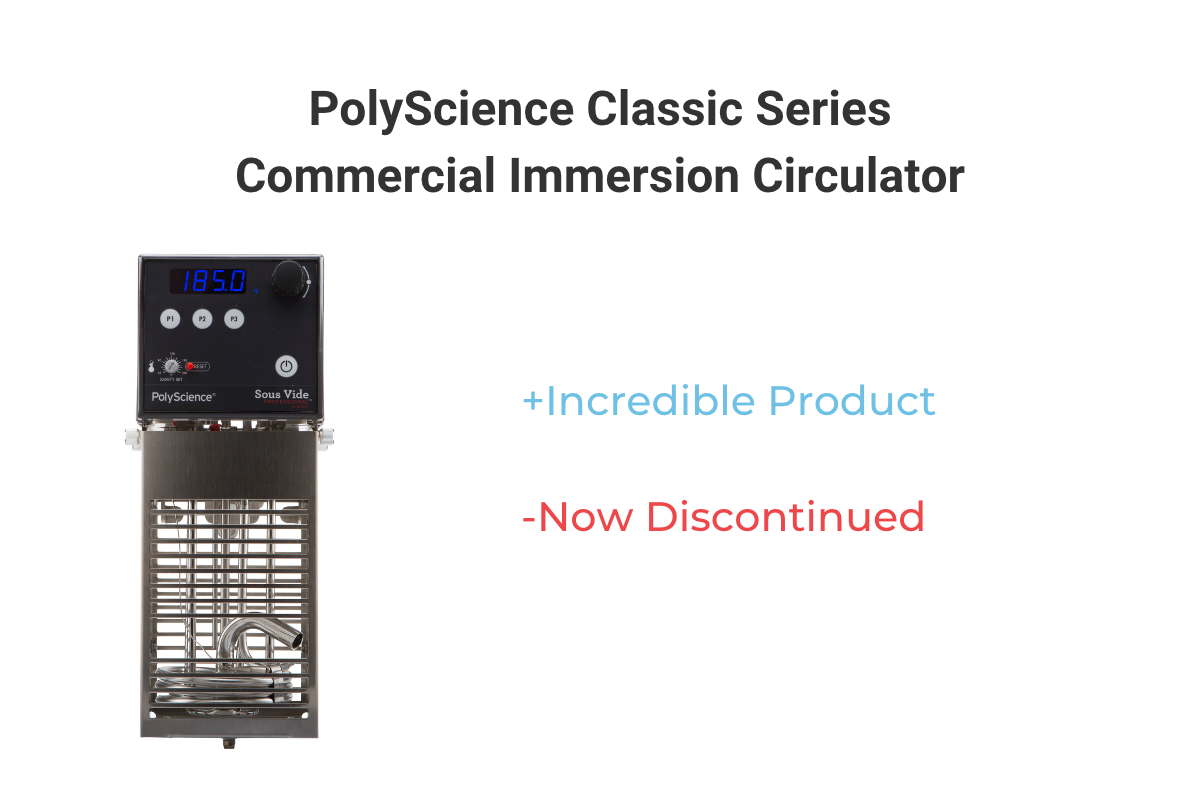
The industrial aesthetic of the Classic Series was both functional and indicative of its professional pedigree. Its open metal cage design allowed for a clear view of the stainless steel heating coil and the water pump, facilitating easy monitoring of the unit’s operation. This cage was also ingeniously designed to be quickly removable, simplifying the often-tedious tasks of cleaning and maintenance. This feature is a significant consideration in fast-paced professional kitchens where downtime is a critical concern.
Control of the Classic Series was managed through a single, intuitive rotating knob. This minimalist interface allowed for straightforward temperature setting and the activation of a "lock-out" mode. This lock-out feature was particularly valuable in a commercial setting, preventing accidental adjustments to the set temperature during the cooking cycle, thus safeguarding the integrity of the dish. Adding to its user-friendly nature were three programmable preset functions. These presets allowed chefs to store and recall frequently used temperature settings with ease, streamlining the preparation of signature dishes and ensuring consistency across multiple servings.
Performance Metrics and Capacity
The performance of the PolyScience Classic Series immersion circulator was characterized by its robust heating element and efficient circulation system. Capable of heating and maintaining precise temperatures in baths up to 8 gallons, it provided the necessary capacity for professional catering and restaurant operations. The dual-speed pump allowed for adjustments to water flow, catering to different food items and bath sizes. For instance, a lower speed might be preferred for delicate items to prevent agitation, while a higher speed would ensure rapid and uniform heating of larger volumes or denser food items.
The temperature stability, a cornerstone of sous vide cooking, was a particular strength of this model. Maintaining temperatures within a 0.09°F variance meant that even the most sensitive proteins, such as fish or eggs, could be cooked to their exact desired doneness without the risk of overcooking or uneven results. This level of control is crucial for restaurants aiming to deliver consistent quality and execute complex menus with precision.
The Evolution of Sous Vide and Commercial Alternatives
The culinary equipment market is characterized by continuous innovation, and the sous vide sector is no exception. The PolyScience Classic Series, despite its excellence, has been superseded by newer technologies. Breville’s acquisition of PolyScience culinary products led to the phasing out of the Classic Series, a move that, while lamentable for enthusiasts of the original, signaled a transition towards more modern designs and potentially more accessible price points.
The Breville PolyScience Creative Series is a direct successor, offering a more compact and portable design. While it may not possess the exact same industrial aesthetic or the minute temperature accuracy of its predecessor, it retains the brand’s commitment to quality and performance. This new generation of immersion circulators often incorporates Wi-Fi or Bluetooth connectivity, allowing for remote monitoring and control via smartphone applications, a feature that aligns with the increasing integration of technology in professional kitchens.
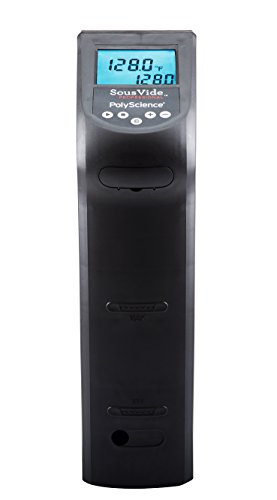
For establishments looking to equip themselves with commercial-grade sous vide technology today, a range of options exists. Many contemporary commercial immersion circulators are designed with smaller footprints, making them ideal for kitchens where space is at a premium. These units also frequently offer enhanced power, enabling faster heating times and more efficient operation. The cost-effectiveness of these newer models is another significant factor, allowing businesses to invest in high-quality equipment without the prohibitive expense associated with some older, high-end commercial units.
Broader Implications for the Culinary Industry
The story of the PolyScience Classic Series immersion circulator is emblematic of broader trends within the professional culinary landscape. The enduring appeal of a well-built, reliable piece of equipment, even after its discontinuation, speaks to the value placed on durability and consistent performance. The subsequent evolution of such technology highlights the industry’s drive for efficiency, innovation, and adaptation to changing operational needs.
The availability of high-quality sous vide equipment, both new and on the resale market, has democratized access to techniques previously confined to elite kitchens. This has had a ripple effect, enabling a wider range of culinary establishments to experiment with and master sous vide cooking, leading to greater diversity and sophistication in menu offerings. The integration of smart technology in newer models further suggests a future where culinary operations are increasingly interconnected and data-driven.
Recommendations for Modern Culinary Professionals
For professionals seeking to replicate the performance and reliability of the PolyScience Classic Series, the Breville PolyScience Creative Series presents a compelling option. It represents a modernization of the beloved original, offering enhanced portability and connectivity while maintaining a strong emphasis on precise temperature control. Its compact design makes it suitable for a variety of kitchen setups, and its robust performance ensures it can handle the demands of professional use.
Furthermore, the successful execution of sous vide cooking is often enhanced by complementary equipment. A high-quality commercial vacuum sealer, for instance, is essential for properly packaging food items to be cooked sous vide, ensuring efficient heat transfer and optimal texture. Investing in reliable sealing technology is as crucial as selecting the right immersion circulator for achieving consistent, restaurant-quality results.
In conclusion, while the PolyScience Classic Series immersion circulator may now be a part of culinary history, its impact on professional cooking is undeniable. Its legacy serves as a benchmark for quality and performance, and its eventual successors continue to push the boundaries of what is possible in the realm of sous vide cooking, ensuring that precision and excellence remain at the forefront of the modern kitchen.