
The past year brought an unprecedented focus on exponential growth, predominantly in the somber context of the SARS-CoV-2 virus’s rapid dissemination. Exponential growth, a concept inherently counterintuitive, often masks its true power until a critical threshold is crossed, leading to a sudden, dramatic surge. This phenomenon, famously illustrated by the ancient "wheat and chessboard problem," where the seemingly innocuous doubling of grains on each square quickly leads to astronomical numbers, starkly mirrored the trajectory of COVID-19 cases, which appeared to skyrocket "out of nowhere" after a period of seemingly slow accumulation. Yet, amidst this global health crisis, a curious and positive parallel emerged in the kitchens of millions worldwide: a steep rise in home baking, driven by another form of exponential growth – that of yeast. This culinary resurgence, while offering solace and productivity during lockdowns, simultaneously exposed vulnerabilities in supply chains, leading to widespread yeast shortages, notably in countries like Norway, where shelves remained bare for weeks.
The Unforeseen Culinary Revolution: Pandemic-Driven Home Baking
As nations implemented stringent lockdown measures in early 2020 to curb the pandemic’s spread, daily life underwent a profound transformation. With commutes halted, restaurants closed, and social gatherings curtailed, individuals found themselves with unprecedented amounts of time confined to their homes. This dramatic shift spurred a revival of domestic activities, none more prominent than home baking. What began as a necessity, born from limited access to fresh bread and a desire for comfort food, rapidly evolved into a global phenomenon. Social media platforms became saturated with images of sourdough starters bubbling and freshly baked loaves cooling, signaling a collective embrace of a timeless craft.
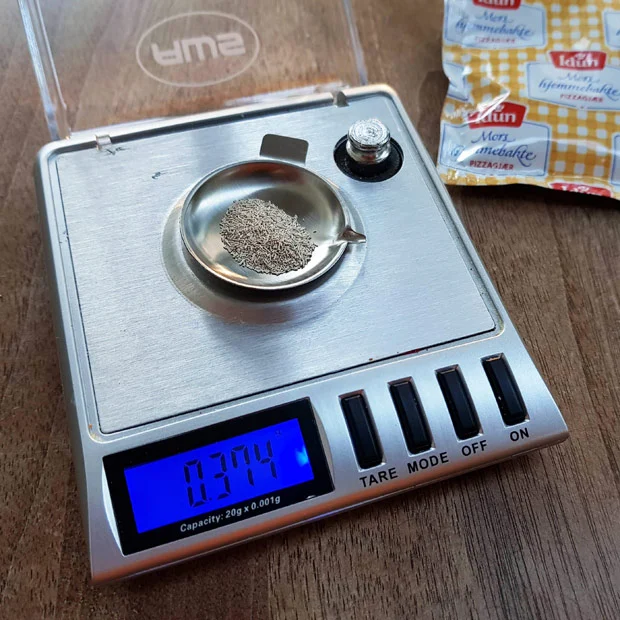
The surge in demand for baking ingredients was immediate and overwhelming. Supermarket aisles, once reliably stocked, frequently displayed empty shelves where flour, sugar, and crucially, yeast, once resided. Reports from major retailers across North America, Europe, and Australia confirmed a dramatic spike in sales. For instance, in the United States, NielsenIQ data indicated a 150% increase in yeast sales during March 2020 compared to the previous year, with similar trends observed for flour, which saw a 100% rise. In the United Kingdom, sales of baking ingredients soared by over 50% in the initial weeks of lockdown. This unprecedented demand quickly outstripped existing supply chains, which were designed for steady, predictable consumption patterns, not a sudden, global pivot to artisanal home production. The experience in Norway, where instant dry yeast became a coveted commodity, was emblematic of a broader international challenge. However, for those already familiar with the principles of yeast’s exponential growth, a single 12-gram sachet of instant dry yeast could be stretched remarkably far, circumventing the shortages for resourceful bakers.
Understanding Exponential Growth: From Virus Spread to Microbe Proliferation
At its core, exponential growth describes a process where a quantity increases by a fixed percentage over a given period. This differs significantly from linear growth, where a quantity increases by a fixed amount. The deceptive nature of exponential growth lies in its initial slow accumulation, which then accelerates with breathtaking speed. The "wheat and chessboard problem" perfectly illustrates this: placing one grain of wheat on the first square, two on the second, four on the third, and so on, seems manageable at first. By the tenth square, there are 512 grains. By the twentieth, over half a million. But by the 64th and final square, the number of grains surpasses the world’s total wheat production by many orders of magnitude.
This same mathematical principle underpins both the rapid spread of infectious diseases like SARS-CoV-2 and the propagation of microorganisms like yeast. In the context of a virus, each infected individual can, under ideal conditions, transmit the pathogen to multiple others, leading to an accelerating caseload. Public health interventions like social distancing and mask-wearing aim to reduce this "reproduction number" (R0) to slow or halt the exponential increase. Conversely, in the world of baking, exponential growth is precisely what makes yeast such a powerful leavening agent. It’s a controlled biological explosion that transforms a dense mixture of flour and water into a light, airy loaf.
The Miraculous Microbe: A Deeper Dive into Yeast Biology
The yeast primarily responsible for baking and brewing is Saccharomyces cerevisiae, a single-celled fungus. Under optimal conditions—specifically, a warm environment (typically 25-35°C or 77-95°F), access to fermentable sugars (from flour), and sufficient moisture—a single yeast cell can reproduce remarkably quickly. Its primary mode of reproduction is budding, where a new cell grows out from the parent cell, eventually detaching to become an independent entity.
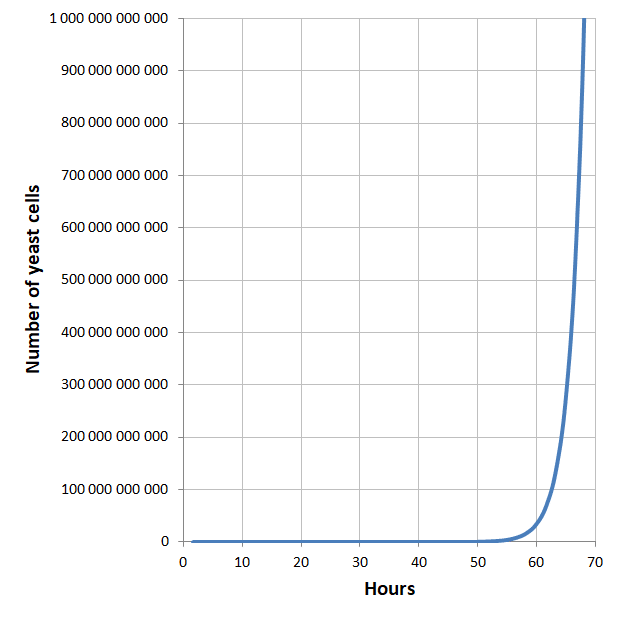
The life cycle of Saccharomyces cerevisiae is astonishingly efficient. In an ideal nutrient-rich medium, a single yeast cell can grow and divide into two new cells in approximately 100 minutes. This means that in less than two hours, the population doubles. After another 100 minutes, these two cells become four, and the process continues. The numbers quickly become staggering:
- After 100 minutes: 2 cells
- After 200 minutes: 4 cells
- After 10 hours (600 minutes, or 6 doublings): 64 cells
- After 24 hours (14.4 doublings, approx.): 16,384 cells
- After 48 hours (28.8 doublings, approx.): 268,435,456 cells (over 268 million)
- Before 3 days (72 hours, or 43.2 doublings) are complete, the population can easily reach the order of a trillion (1,000,000,000,000) yeast cells.
To put this into perspective, a typical 50-gram piece of compressed fresh yeast contains roughly a trillion cells. This rapid proliferation is commercially harnessed in large-scale yeast production facilities, where conditions are meticulously controlled to maximize growth rates. However, in the less-than-ideal environment of a bread dough—which typically has lower sugar concentrations, fluctuating temperatures, and limited oxygen—the growth process is considerably slower. Yet, even at a reduced pace, the exponential nature of yeast reproduction ensures that a small initial inoculum can eventually leaven a substantial dough.
Navigating the Shortage: Ingenuity in the Home Kitchen
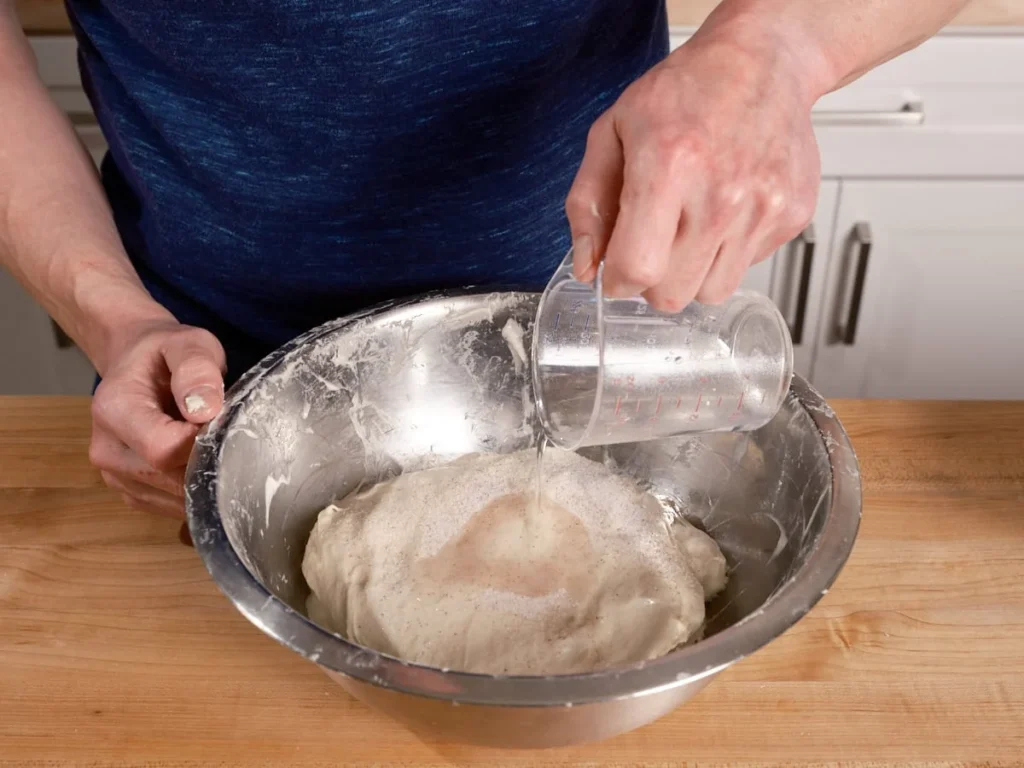
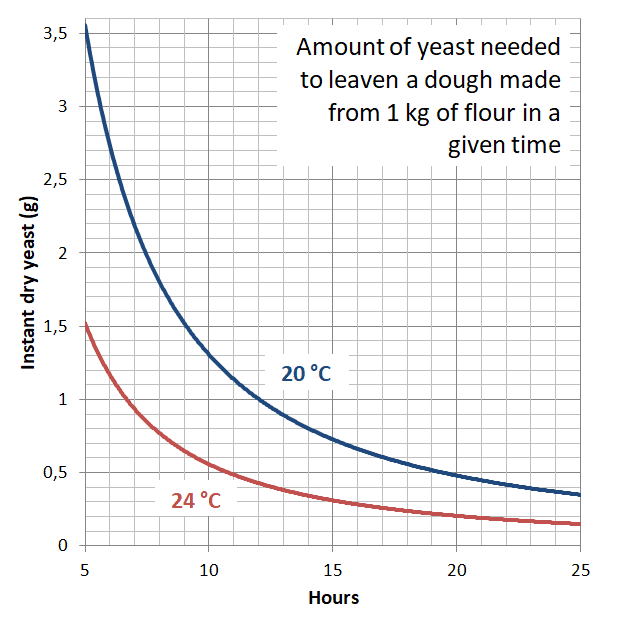
The scarcity of yeast during the pandemic forced many home bakers to reconsider traditional recipes and embrace more economical and time-intensive methods. Instead of adhering to recipes that called for generous amounts of yeast for quick rises, bakers learned to "make time do the work." This involved using significantly smaller quantities of instant dry yeast and extending the bulk fermentation and proofing times.
This approach not only conserved precious yeast but also unlocked superior flavor profiles and textures in the finished bread. A longer, slower fermentation allows for the development of more complex flavors, primarily due to the activity of lactic acid bacteria (LAB) naturally present in flour. These bacteria produce organic acids, which contribute to a more nuanced taste, improved crumb structure, and better keeping qualities of the bread, mimicking some of the benefits typically associated with sourdough. For example, a dough made with 1 kilogram of wheat flour, traditionally calling for 7-10 grams of instant dry yeast for a quick rise, can be perfectly leavened with as little as 0.48 grams of instant dry yeast if given 20 hours to ferment at 20°C (68°F).
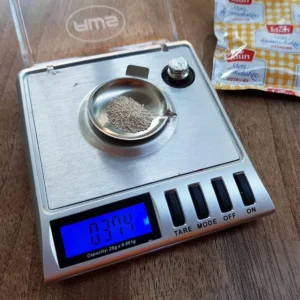
To accurately measure such minute quantities of yeast, precision became paramount. Standard kitchen scales, often with a 1-gram increment, are insufficient. This led to a surge in interest and sales of digital balances capable of measuring down to 0.001 grams. These "milligram scales," once primarily found in scientific laboratories or for niche hobbies, became invaluable tools for the serious home baker looking to maximize their limited yeast supply and experiment with extended fermentation.
Furthermore, digital tools emerged as crucial aids for managing these new baking parameters. Apps like PizzApp+ (available for Android) gained significant traction, allowing bakers to input variables such as flour weight, desired fermentation time, and temperature, and then calculate the precise amount of yeast needed (whether fresh, active dry, instant dry, or even sourdough starter). This technological integration democratized complex baking science, empowering home cooks to achieve professional-level results with minimal ingredients. While the ultimate solution to yeast scarcity for some was to embark on the journey of cultivating a sourdough starter—a self-sustaining leavening agent—the sheer convenience and reliability of instant dry yeast remained an alluring factor for many, ensuring its continued, albeit rationed, use.
Industry Response and Consumer Adaptation
The sudden, unprecedented demand for baking ingredients presented significant challenges and opportunities for the food industry. Yeast manufacturers, such as global giants like Lesaffre, AB Mauri, and Lallemand, faced immense pressure to ramp up production. Many operated their facilities at maximum capacity, often shifting production priorities to focus on retail-sized packages of instant dry yeast over larger commercial formats. However, increasing production volume for a biological product like yeast is not instantaneous; it requires time to grow the cultures and process them. This inherent lead time contributed to the initial and prolonged shortages.
Retailers, caught off guard by the surge, struggled to keep shelves stocked. They implemented various strategies, from limiting purchases per customer to prioritizing essential baking ingredients in their supply chains. Communication with consumers became key, with many stores issuing statements explaining the situation and encouraging patience. Food scientists and baking experts played a vital role in guiding the public, offering practical advice on yeast conservation, substitutes, and the benefits of longer fermentation techniques. They demystified the science of baking, making advanced concepts accessible to a wider audience.
Despite the temporary frustrations, the episode highlighted the resilience and adaptability of both the industry and consumers. The market saw a temporary increase in the availability of different types of yeast, as consumers became less particular about brand or form (fresh vs. dry). There was also a notable increase in interest in traditional baking methods, including the revival of sourdough baking, which offers complete independence from commercial yeast supplies once a starter is established. This shift underscored a growing desire for self-sufficiency and a deeper understanding of food production.
Beyond the Pandemic: Lasting Impacts on Baking Culture
As the world gradually emerges from the shadow of the pandemic, questions arise about the longevity of the home baking trend. While the peak intensity of the "Great Yeast Hunt" has subsided, many industry analysts and cultural observers believe that the renewed interest in home baking represents more than just a fleeting fad. The experience of creating something nourishing from scratch offered a sense of control, accomplishment, and comfort during an uncertain period. For many, it became a therapeutic ritual, a tangible act of creation in a world that felt increasingly chaotic.
This sustained interest could have several lasting impacts. Economically, the market for baking ingredients and kitchen equipment may see a permanently elevated baseline, beyond pre-pandemic levels. Manufacturers of precision scales, stand mixers, and specialized baking tools could continue to benefit from a more engaged and informed consumer base. The appreciation for artisanal bread, cultivated through hands-on experience, might also translate into increased support for local bakeries and a demand for higher-quality flours and ingredients.
Culturally, the pandemic fostered a new generation of home bakers, many of whom are now equipped with advanced skills, knowledge of fermentation science, and digital tools like PizzApp+. This shift signifies a broader trend towards self-sufficiency and a deeper connection to food origins and preparation. It represents a potential re-evaluation of convenience culture, with more individuals opting for the satisfaction of homemade goods over mass-produced alternatives. The digital integration into traditional crafts, exemplified by apps that simplify complex calculations, also points to a future where technology continues to enhance and democratize culinary pursuits.
In conclusion, the story of yeast during the pandemic is a multifaceted narrative. It is a tale of exponential growth, both in its challenging manifestation as a global health crisis and its benevolent role in a culinary renaissance. It highlights the unexpected vulnerabilities in our global supply chains and the remarkable adaptability of individuals and industries alike. Ultimately, the humble microbe, Saccharomyces cerevisiae, became an unlikely symbol of resilience, creativity, and the enduring human desire to find comfort and connection through the simple, yet profound, act of baking.