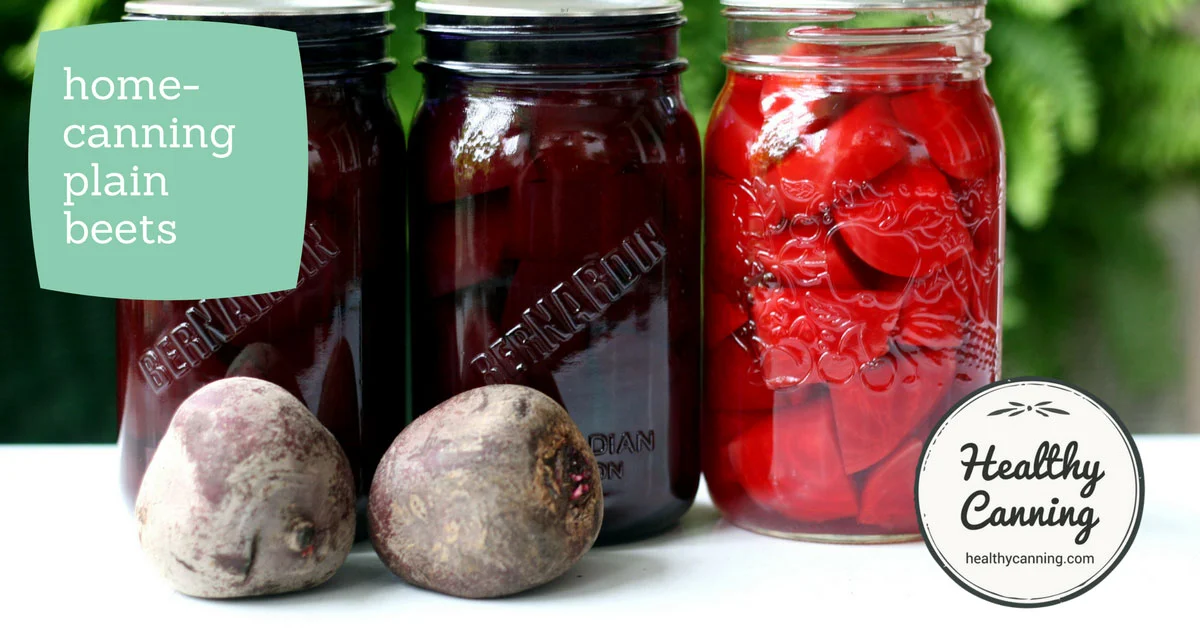

The preservation of low-acid vegetables through home canning requires strict adherence to scientifically validated protocols to ensure consumer safety and product quality. Plain beets, known taxonomically as Beta vulgaris and commonly referred to as beetroot in the United Kingdom, represent a high-quality staple for home pantries when processed correctly. However, the United States Department of Agriculture (USDA) and the National Center for Home Food Preservation (NCHFP) maintain rigorous mandates regarding the processing of this root vegetable. Specifically, plain beets must be processed using a pressure canner to eliminate the risk of Clostridium botulinum contamination. This requirement is non-negotiable, as the low acidity of beets provides an environment where botulism spores can thrive if not subjected to the high temperatures only achievable under pressure.
The Critical Role of Pressure Canning in Pathogen Mitigation
The fundamental principle of food safety in home canning rests on the acidity of the product. High-acid foods, such as most fruits and pickled vegetables, can be safely processed in a boiling water bath at 212°F (100°C). However, plain vegetables like beets are low-acid foods. The spores of Clostridium botulinum are highly heat-resistant and can survive boiling temperatures. In the anaerobic (oxygen-free) environment of a sealed canning jar, these spores can germinate and produce one of the most lethal toxins known to man.

To neutralize these spores, the internal temperature of the food must reach at least 240°F (116°C). This temperature can only be reached in a pressurized environment. Public health records from 1990 to 2012 indicate that at least 10 individuals in the United States contracted botulism specifically from beets that were improperly processed using the water bath method rather than the mandated pressure canning method. Experts at the NCHFP and authors of the seminal preservation text Putting Food By emphasize that beets rank alongside green beans as primary carriers of the botulinum toxin when safety protocols are ignored.
Technical Specifications for Preparation and Processing
Successful home canning begins with the selection of raw materials and precise measurements. On average, approximately 1.25 kilograms (3 pounds) of raw beets are required to yield one 1-liter (US quart) jar of canned product. For those processing in smaller batches, 10 medium-sized raw beets (roughly 9 cm or 3 inches in diameter) with the skins intact weigh approximately 2 kilograms (4.5 pounds).
The preparation process is designed to minimize bacterial load and preserve the aesthetic quality of the vegetable. Beets must be canned peeled. The peeling process is not merely for texture; it is a critical safety step that reduces the number of soil-borne microorganisms entering the jar. To facilitate peeling and minimize color loss (bleeding), the USDA recommends leaving at least one inch of the stem and the entire taproot intact during the initial pre-cooking phase.
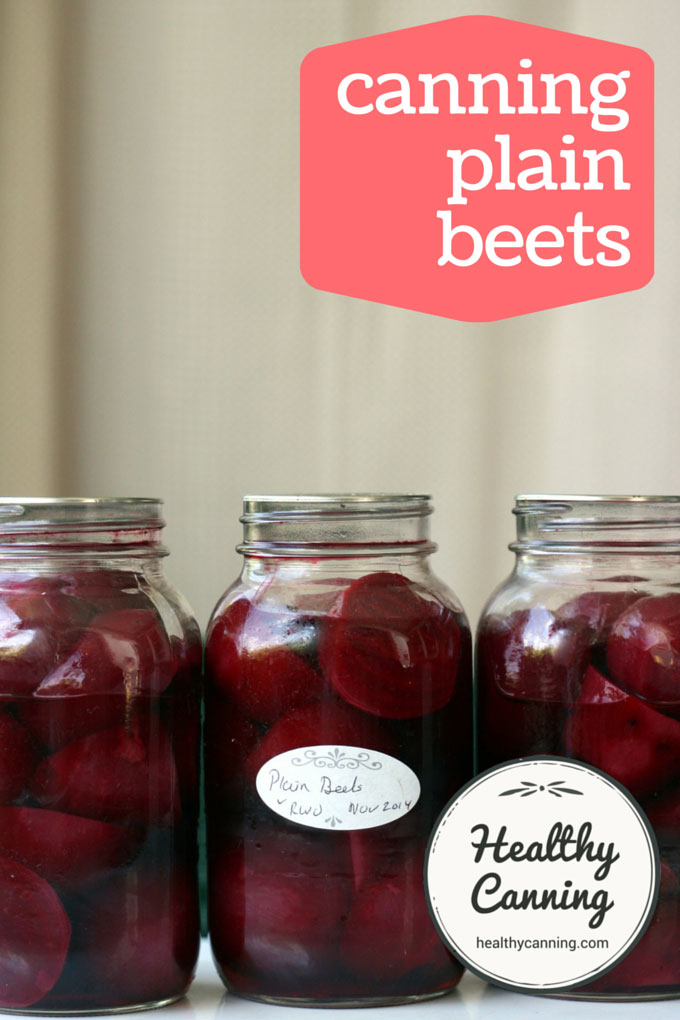
The pre-cooking phase involves boiling the beets until the skins slip off easily. While boiling is the traditional method, modern energy-efficient alternatives include steam canning or pressure cooking the raw beets for approximately three minutes at 15 pounds of pressure followed by a natural release. It is imperative that beets are packed into jars while they are still hot. If the beets cool during the peeling and slicing process, they must be reheated before being placed in the jars to ensure the processing times remain valid.
The technical requirements for the canning process are as follows:
- Jar Sizes: Half-liter (1 US pint) or 1-liter (1 US quart).
- Headspace: A precise 3 cm (1 inch) of headspace must be maintained to allow for expansion and proper vacuum sealing.
- Processing Pressure: 10 lbs (69 kPa) for weighted-gauge canners or 11 lbs (76 kPa) for dial-gauge canners at altitudes below 300 meters (1,000 feet).
- Processing Time: 30 minutes for half-liter jars and 35 minutes for 1-liter jars.
- Altitude Adjustments: For altitudes above 300 meters, the pressure must be increased to 15 lbs to compensate for the lower boiling point of water at higher elevations.
Chronology of Canning Guidelines: From 1926 to Modern Standards
The evolution of canning safety reflects a deepening understanding of microbiology and thermal processing. As early as 1926, the USDA’s Farmers’ Bulletin No. 1471, authored by Louise Stanley, explicitly recommended pressure canning for non-acid vegetables to mitigate the risk of poisoning. At that time, the recommended processing time for quart jars was 40 minutes at 10 pounds of pressure—slightly longer than modern requirements, reflecting a more conservative approach to safety in the early 20th century.

However, the chronology of canning advice includes a period of dangerous regression. During the Second World War, due to the rationing of metals needed for pressure canner production, some regional extension services issued "acid method" guidelines. A 1944 bulletin from the Virginia Agricultural Extension Service suggested that adding one tablespoon of vinegar to a pint of beets would make them safe for a 90-minute water bath process. This was a false and hazardous assumption, as the amount of vinegar was insufficient to lower the pH to a safe level (below 4.6).
Modern food scientists stress that historical "rebel" methods or wartime shortcuts should never be used today. The current USDA Complete Guide to Home Canning (2015) represents the gold standard, based on rigorous heat-penetration studies that ensure every part of the jar reaches the necessary temperature for the required duration.
The Chemistry of Color: Betalaines and Thermal Stability
A common concern among home canners is the loss of the vibrant red color during the high-heat processing of beets. This phenomenon is rooted in the chemistry of betalaines, the pigments responsible for the beet’s hue. Betalaines are sensitive to high temperatures and can transform into colorless compounds during the canning process.
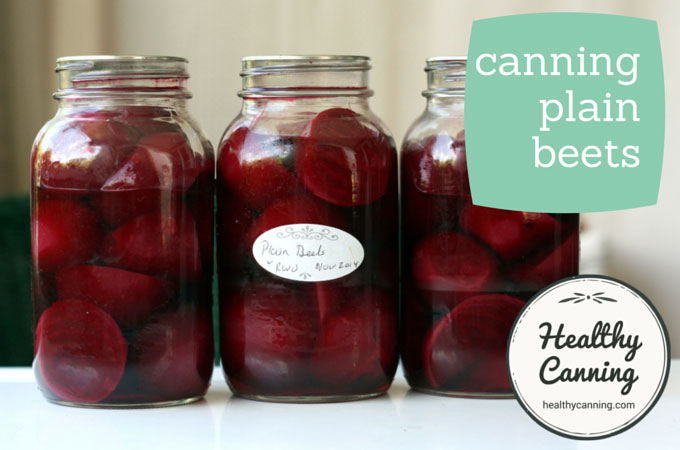
According to the Penn State Extension, this reaction is often reversible. It is common for beets to appear pale or brownish immediately after being removed from the pressure canner, only for the deep red color to return after several days of storage at room temperature. To optimize color retention, gardeners are encouraged to grow specific varieties known for their thermal stability, such as ‘Detroit Dark Red’ or the cylindrical ‘Formanova.’
Furthermore, the addition of salt in the canning process is strictly for seasoning and does not act as a preservative or a color stabilizer. In fact, some historical records suggested that salt might draw out color, though modern guidelines focus on its role as a flavor enhancer.
Standardized Judging Criteria for Quality Control
The National Center for Home Food Preservation provides specific criteria for evaluating the quality of home-canned beets. These standards serve as a benchmark for both competitive exhibition and home quality control:

- Uniformity: Beets should be uniform in size and shape. Whole beets should be under 2 inches (5 cm) in diameter; larger specimens must be sliced or cubed.
- Color: The hue should be dark, deep, and even. Undesirable traits include white rings, brownish-red tints, or excessive fading.
- Liquid Clarity: The liquid (brine) should be sparkling clear and red, free from cloudiness, sediment, or traces of skin.
- Texture: The product must be free from a fibrous appearance, which is common in older, larger beets (over 3 inches in diameter).
Nutritional Profile and Public Health Implications
Home-canned beets remain a nutritionally dense food source. A standard 250-gram serving provides approximately 124 calories, 4 grams of protein, and 3.6 grams of dietary fiber. They are low in fat and sodium (if canned without added salt) and provide essential carbohydrates and sugars.
From a public health perspective, the move toward standardized pressure canning has significantly reduced the incidence of home-canning-related botulism. While the risk is real, it is entirely preventable through education and the use of proper equipment. The broader implication for the home food preservation movement is the necessity of moving away from "ancestral" or "folk" methods in favor of evidence-based practices.
The convenience of home-canned beets—allowing for rapid preparation of dishes like Borscht, maple-syrup roasted beets, or spicy beet curries—must always be balanced against the rigorous technical requirements of the canning process. By following the USDA’s 2015 guidelines, home preservers can ensure that their pantry remains both a source of culinary delight and a bastion of food safety. In the modern era of food preservation, the answer to whether plain beets require a pressure canner remains a definitive and scientifically backed "yes."