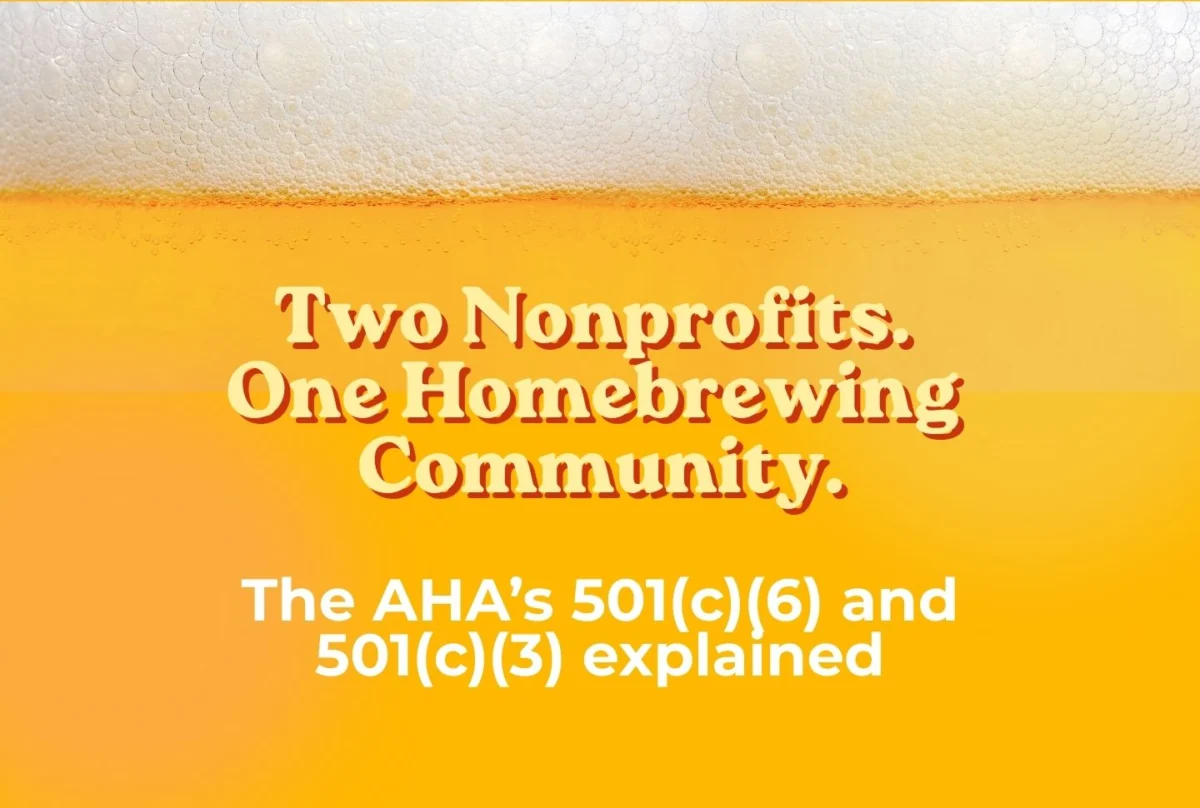

The American Homebrewers Association (AHA), a cornerstone of the global craft beer movement for nearly half a century, has officially achieved independent status and secured dual nonprofit designations from the U.S. Internal Revenue Service. This milestone marks a significant structural evolution for the organization, which has operated under the umbrella of the Brewers Association (BA) for decades. By establishing itself as both a 501(c)(6) membership association and a 501(c)(3) charitable nonprofit, the AHA aims to preserve its historic roots while expanding its capacity for public education, heritage preservation, and charitable outreach.
The transition follows a multi-year strategic review initiated in 2021 under the leadership of Executive Director Julia Herz. The new structure is designed to provide the AHA with the financial flexibility and administrative autonomy necessary to serve a modern community of homebrewers that has shifted significantly in the post-pandemic landscape. By decoupling from the Brewers Association—the trade group representing commercial craft breweries—the AHA returns to its origins as a self-governing body driven exclusively by the interests of hobbyists and fermentation enthusiasts.
A Strategic Shift in Organizational Governance
The decision to seek dual IRS status is a sophisticated move rarely seen in small-scale hobbyist organizations but increasingly common among large national associations. The 501(c)(6) designation serves as the primary membership arm, based in Colorado. This entity will manage traditional member benefits, such as access to Zymurgy magazine, the AHA Member Deals program, and the governing committee structure that allows members to vote on organizational priorities.
Simultaneously, the creation of the AHA Foundation as a 501(c)(3) charitable entity, based in Texas, opens new doors for the organization. This status allows the AHA to accept tax-deductible donations and apply for federal and private grants that were previously inaccessible. These funds are slated for "broadening the cultural, historical, and societal importance of homebrewing," according to association leadership. This includes educational programs aimed at diversifying the hobby and preserving the history of the American craft beer revolution, which was largely born in the kitchens and garages of AHA members.
The dual-state operation—retaining a legal presence in Colorado while moving daily operations to Texas—reflects a pragmatic approach to modern association management. While Colorado remains the spiritual home of the movement, the Texas-based team under Strategic Association Management (SAM) provides the infrastructure needed for efficient, professionalized daily operations.
The Historical Context of the American Homebrewers Association
To understand the weight of this independence, one must look back to 1978, a pivotal year for American beer. At the time, the United States had fewer than 100 brewing locations, and the market was dominated by a handful of massive industrial lagers. Charlie Papazian and Charlie Matzen founded the AHA in Boulder, Colorado, to advocate for the right to brew at home—a practice that was still technically illegal under federal law due to a holdover from Prohibition.
The organization’s early efforts were instrumental in the passage of H.R. 1337, signed by President Jimmy Carter, which legalized homebrewing at the federal level in 1979. Interestingly, the AHA was originally formed as a 501(c)(3) nonprofit, a status it is now reclaiming in a modern context. As the hobby grew, it birthed the commercial craft beer industry. Many of the most recognizable names in beer today, from Sierra Nevada’s Ken Grossman to Dogfish Head’s Sam Calagione, began as AHA members.
As the commercial industry matured, the Brewers Association was formed to represent the business interests of these breweries. The AHA remained a division of the BA for years, sharing resources and staff. However, as the needs of commercial brewers (focused on distribution, taxation, and retail) and homebrewers (focused on education, community, and hobbyist rights) diverged, the argument for independence became undeniable.
Timeline of the Transition to Independence
The path to the current announcement was a deliberate, multi-stage process that began shortly after the global disruptions of 2020.
- 2021: Julia Herz, a respected figure in the brewing world and former BA executive, is appointed Executive Director of the AHA. She begins an internal audit of organizational gaps, identifying the need for greater autonomy.
- 2022–2023: The AHA Governing Committee and staff work with professional advisors to map out a transition plan. This period involved intense coordination with the Brewers Association Board of Directors to ensure a stable handoff of assets and intellectual property.
- 2024: The organization begins the formal application process with the IRS for the dual (c)(3) and (c)(6) statuses. Operational tasks begin transitioning to Strategic Association Management in Texas to streamline costs.
- 2025: The IRS grants official approval for the new nonprofit structures. The AHA begins operating as a fully independent entity, though it maintains a cooperative relationship with the BA for industry-wide initiatives.
- 2026: The new strategic plan is fully implemented, focusing on the core values of Community, Education, Joy, and Volunteerism.
Supporting Data: The Economic and Social Impact of Homebrewing
The move toward a more robust, independent structure is supported by the sheer scale of the homebrewing community. According to AHA data, there are an estimated 1 million homebrewers in the United States. These enthusiasts are not just hobbyists; they are significant contributors to the economy. It is estimated that homebrewers spend over $800 million annually on equipment, ingredients, and education.
Furthermore, the AHA’s National Homebrew Competition remains the largest of its kind in the world. In recent years, the competition has seen thousands of entries across dozens of categories, judged by hundreds of certified volunteers. The Homebrew Con, the association’s annual conference, serves as a major economic driver for host cities, bringing together thousands of attendees and hundreds of vendors.
By moving to an independent nonprofit model, the AHA can better capture this economic energy. The 501(c)(3) status, in particular, allows the organization to address the "graying" of the hobby by launching outreach programs to younger demographics and underrepresented communities, ensuring the long-term sustainability of the craft.
Official Responses and Community Implications
The reaction from the homebrewing community and industry stakeholders has been largely positive. In her announcement, Executive Director Julia Herz emphasized that this change was "built by members." She noted that the belief of the membership base—those who continued to pay dues and volunteer during the lean years of the pandemic—was the primary catalyst for independence.
"This milestone belongs to the entire homebrewing community," Herz stated. She highlighted that the new structure ensures homebrewers themselves guide the AHA’s future, rather than being a secondary concern of a commercial trade group.
The Brewers Association also expressed support for the move. In a statement reflecting on the transition, the BA board acknowledged that while the two organizations share a common history, their future paths are distinct. The BA will continue to focus on the commercial health of craft breweries, while the AHA will dedicate its full resources to the enthusiast experience.
For the average member, the most immediate impact will be felt in the "ebb and flow" of benefits. With nine active volunteer committees now in place, the AHA is poised to update its bylaws, policies, and member perks to better reflect current trends in the hobby, such as the rise of non-alcoholic homebrewing, cider making, and mead production.
Analysis: Broader Impact on the Craft Beverage Landscape
The independence of the American Homebrewers Association is more than just a change in tax paperwork; it is a signal of the maturation of the American "DIY" movement. In an era where corporate consolidation is common, the AHA’s move toward a member-governed, nonprofit model is a counter-trend that prioritizes community over profit.
The dual-status model also sets a precedent for other hobbyist organizations. By separating the "trade" aspects (membership benefits and advocacy) from the "charitable" aspects (education and history), the AHA can pursue a more diverse range of goals. For instance, the AHA Foundation can now seek funding to document the oral histories of early homebrewers or provide scholarships for brewing education, while the membership arm focuses on securing discounts for homebrew shop supplies.
Furthermore, the Texas-Colorado geographic split illustrates a shift in how national organizations operate in a digital-first world. By utilizing an Association Management Company in Texas, the AHA can keep overhead low, ensuring that a higher percentage of member dues go directly toward programming rather than office rent and administrative bloat.
Looking Ahead: The Future of the AHA
As the AHA enters this new chapter, the focus shifts to the implementation of its new strategic plan. The values of "Community, Education, Joy, and Volunteerism" will serve as the North Star for the organization’s next 50 years.
Immediate priorities include the expansion of the National Homebrew Competition and the revitalization of local homebrew clubs, many of which struggled during the social distancing era. The organization also plans to leverage its new (c)(3) status to launch "Intro to Brewing" initiatives aimed at the general public, demystifying the process of fermentation and encouraging a new generation to take up the kettle.
In conclusion, the American Homebrewers Association has successfully navigated a complex legal and organizational transition to emerge as a more focused, versatile, and independent entity. By returning to its maverick roots while embracing modern management structures, the AHA has secured its position as the preeminent voice for homebrewers worldwide, ensuring that the world’s most rewarding hobby continues to thrive for decades to come.