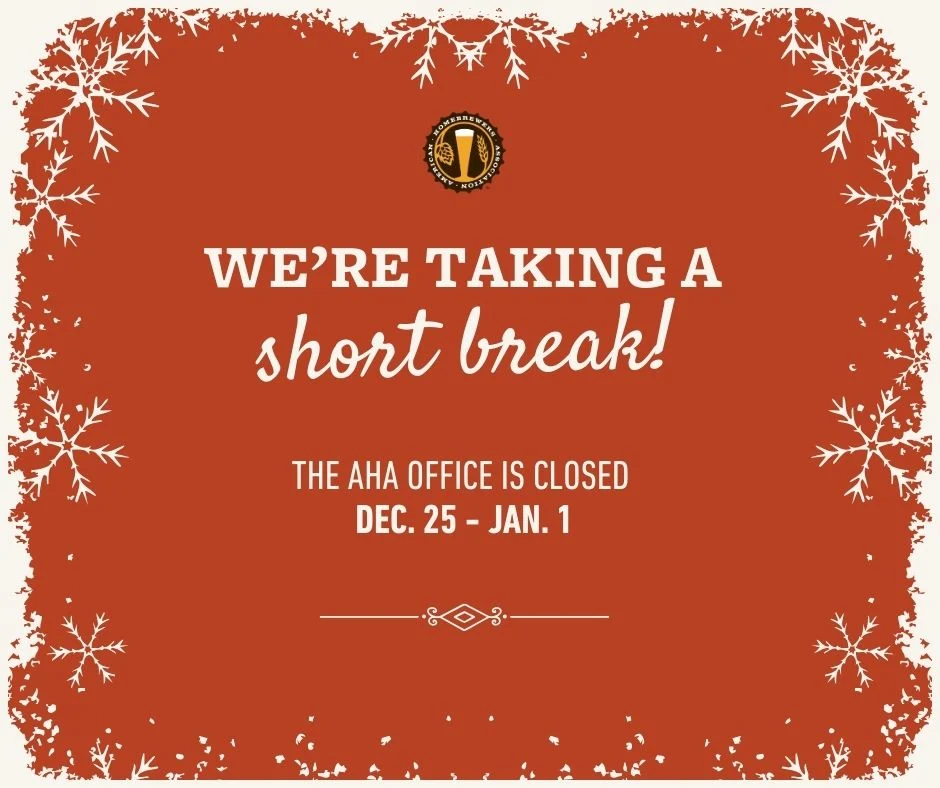

The American Homebrewers Association (AHA) has officially announced a temporary suspension of its standard operations, closing its offices and halting member services from December 25 through January 1. The nationwide organization, which represents hundreds of thousands of amateur brewing enthusiasts, hobbyists, and craft beer advocates across the United States, instituted the year-end pause to allow its professional staff to observe the winter holidays. While digital resources, archived articles, and community forums remain accessible to the public, live customer support, membership processing, and editorial updates are suspended during this eight-day period. Normal business hours and standard operational workflows are scheduled to resume on January 2, with leadership emphasizing that the team will return refreshed and prepared to deliver expanded educational content, recipe databases, and community initiatives for the upcoming year.
Background and Context of the Organization
Founded in 1978 under the umbrella of the Brewers Association—a not-for-profit trade association dedicated to small and independent American craft brewers—the American Homebrewers Association has played a foundational role in the resurgence of hobbyist brewing in North America. In the late 1970s, homebrewing was still largely a niche activity operating in a legal gray area following the prohibition era, until federal legislation signed into law in 1978 legalized home winemaking and homebrewing at the federal level, establishing a tax-free exemption for personal and family use.
Since its inception, the AHA has grown from a small grassroots collective of passionate beer enthusiasts into a robust national organization boasting tens of thousands of active members. The association provides extensive resources to its constituency, including the publication of Zymurgy magazine, the administration of the prestigious National Homebrew Competition, and the organization of the annual Homebrew Con. Furthermore, the AHA acts as a legislative advocate, working at both the state and federal levels to modernize archaic alcohol laws, secure homebrew-friendly regulations, and protect the rights of hobbyists to produce fermented beverages in their own homes.
Given the extensive scope of its programs, the organization maintains a dedicated administrative, editorial, and event-planning staff based out of its headquarters in Boulder, Colorado. This core team manages membership renewals, coordinates nationwide judging circuits, curates educational literature, and maintains digital platforms that serve as a lifeline for amateur brewers seeking technical advice on everything from yeast propagation and water chemistry to advanced mashing techniques and hop selection.
Chronology of the Holiday Closure
The operational pause follows an established annual precedent set by the Brewers Association and its constituent bodies. While the craft brewing industry operates year-round—with commercial breweries often experiencing heightened production schedules ahead of the winter holiday season—administrative and advocacy organizations frequently implement collective end-of-year shutdowns to manage operational overhead, honor accrued employee leave, and perform essential system maintenance on digital infrastructure.
The timeline for the current closure began in early December, when internal leadership finalized administrative schedules and notified regional chapters, affiliated clubs, and digital subscribers of the impending pause. On December 25, official administrative channels, including telephone support lines, membership fulfillment processing, and editorial publishing pipelines, went offline. Automated messaging systems were deployed across the organization’s customer service portals and social media networks to redirect inquirers to static resources, such as the association’s extensive online recipe archive, troubleshooting guides, and previously published editions of Zymurgy.
The temporary suspension is scheduled to conclude on January 1, with staff returning to corporate offices and remote workstations on January 2. At that time, accumulated member inquiries, physical mail, and pending digital submissions will be processed in a prioritized queue. Leadership has assured stakeholders that subscription renewals, competition registrations, and publication deliveries impacted by the calendar pause will be seamlessly absorbed into the regular workflow during the first week of the new year.
Supporting Data and Industry Landscape
The decision to pause operations during the final week of December occurs against a backdrop of broader economic and cultural trends within the wider American craft beverage sector. According to data compiled by the Brewers Association, the homebrewing community experienced a significant surge in participation during the early 2020s, driven largely by pandemic-era lockdowns that encouraged indoor hobbies and culinary experimentation. Although participation rates normalized as public health restrictions lifted and consumer habits shifted back toward pre-pandemic routines, the core demographic of dedicated hobbyists remains resilient and highly engaged.
Statistical insights published by industry analysts indicate that the average American homebrewer invests substantial time and capital into their craft, purchasing specialized equipment such as stainless-steel kettles, temperature-controlled fermentation chambers, and sophisticated water filtration systems. Consequently, organizations like the AHA provide a vital economic and educational anchor for this specialized consumer base. Membership metrics consistently highlight high retention rates among dedicated hobbyists who rely on peer-reviewed recipes, safety guidelines, and organized competitions to refine their brewing acumen.
While commercial craft breweries often scale up operations to meet holiday demand for seasonal ales, stouts, and winter warmers, the homebrewing sector typically mirrors broader corporate calendar trends. December represents a period where many amateur brewers complete their heavy brewing schedules ahead of the cold winter months, allowing fermentation processes to run their course while participants turn their attention to family gatherings and holiday festivities.
Official Responses and Stakeholder Perspectives
While the American Homebrewers Association is a non-governmental organization and its holiday closure did not prompt formal legislative or regulatory statements, representatives and community leaders have communicated the rationale behind the operational pause to their base. In official communications released across digital channels, organizational leadership framed the closure not merely as a routine holiday break, but as a necessary investment in staff well-being and institutional sustainability.
"Our team works tirelessly throughout the year to support the homebrewing community, organize world-class competitions, and produce high-caliber educational resources," an AHA spokesperson noted in an internal briefing distributed to regional club leaders. "Granting our staff a dedicated window to rest, spend time with their families, and recharge away from their desks ensures that our organization returns with the energy, creativity, and dedication that our members have come to expect."
Reactions from the broader homebrewing community have been overwhelmingly understanding and supportive. Across various online forums, social media discussion boards, and local club meetings, members acknowledged the necessity of the break. Many veteran brewers noted that the temporary unavailability of customer support is easily mitigated by the abundance of static educational content available on the AHA website, as well as the strong peer-to-peer support networks found within local homebrew clubs.
Regional club presidents across the country echoed these sentiments, pointing out that local chapters often hold their own seasonal hiatuses or transition to casual, social-only gatherings during the final week of December. This synchronization between national administrative bodies and grassroots clubs minimizes any potential disruption to the hobbyist experience.
Broader Impact and Implications
A factual analysis of the operational pause reveals minimal negative impact on the broader homebrewing industry or the day-to-day activities of individual hobbyists. Because the closure is announced well in advance and falls during a historically low-activity period for administrative inquiries, the suspension functions as a smooth transition rather than a disruptive bottleneck.
However, the timing of the closure underscores the evolving nature of digital resource management in member-based organizations. Even while physical offices are closed and live staff are unavailable, the continuous availability of the AHA’s digital database—comprising decades of technical articles, stylistic guidelines, and peer-reviewed brewing formulas—highlights the resilience of modern knowledge repositories. Members retain uninterrupted access to foundational tools required for maintaining ongoing fermentation projects, monitoring conditioning phases, and planning future brewing sessions for the upcoming year.
Looking forward, the resumption of normal business operations on January 2 marks the official kickoff to a new strategic cycle for the American Homebrewers Association. With preparations already underway for upcoming national competitions, regional rallies, and editorial milestones for the new year, the organization is poised to resume its dual role as an educational authority and a passionate advocate for homebrewing culture. As millions of Americans set New Year’s resolutions focused on personal growth, skill acquisition, and creative hobbies, the AHA anticipates steady interest from newcomers looking to enter the world of amateur brewing, backed by a fully staffed and recharged administrative team ready to guide them through their first successful batch.