
Paul Mangiamele, the Chairman and CEO of Legendary Restaurant Brands, is currently spearheading one of the most improbable turnarounds in the history of the American hospitality sector. In a recent detailed reflection on the 50th anniversary of Bennigan’s and the highly anticipated return of Steak and Ale, Mangiamele outlined a strategic roadmap that defies conventional industry wisdom. His approach, which he characterizes as a blend of "NEWstalgia" and rigorous operational discipline, seeks to reclaim a market share that many analysts believed was permanently lost following the 2008 financial crisis.
The narrative of Bennigan’s and Steak and Ale is not merely one of corporate restructuring; it is a case study in brand equity and the enduring power of emotional consumer connections. While many casual dining chains have struggled to maintain relevance in an era dominated by fast-casual giants and delivery-centric models, Mangiamele argues that the fundamental desire for high-touch hospitality and value-driven experiences remains a potent force in the market.
The Descent into the Abyss: A Historical Context
To understand the magnitude of the current revival, one must look back at the catastrophic collapse of the brands’ former parent company, S&A Restaurant Corp. In July 2008, amid the tightening grip of the Great Recession, the company filed for Chapter 7 liquidation. Unlike Chapter 11 bankruptcy, which allows for reorganization and continued operation, Chapter 7 typically signals the end of a corporate entity, resulting in the immediate shuttering of all company-owned locations.
At the time of the filing, Bennigan’s saw more than 150 corporate-owned restaurants close overnight, leaving only franchised locations to navigate the fallout. Steak and Ale, a brand that had once been the premier destination for American polished-casual dining since its founding by Norman Brinker in 1966, vanished entirely from the landscape. For 16 years, Steak and Ale existed only in the memories of its former patrons, a defunct icon of a bygone era of salad bars and prime rib.
Mangiamele, who took the reins of the brands in 2011, inherited a fractured system and a skeptical public. The prevailing sentiment among industry experts was that Bennigan’s was a relic of the 1970s "fern bar" era and that Steak and Ale was a ghost that could not be summoned back to life. Mangiamele’s response to these doubters has become a cornerstone of his leadership philosophy: "No company has ever come back from a Chapter 7. I said, okay, I’ll give you two words: Watch us."
The Philosophy of NEWstalgia and Emotional Equity
Central to the revival strategy is the concept of "NEWstalgia." This involves a delicate balancing act: preserving the core DNA that built the brands’ original loyalty while ruthlessly modernizing the elements that no longer serve the contemporary guest. For Bennigan’s, this meant retaining signature items like the World Famous Monte Cristo—a battered and fried turkey, ham, and cheese sandwich—and the brand’s Irish-themed hospitality. For Steak and Ale, it meant the return of the iconic salad bar, the honey-wheat bread, and the Tudor-style architectural cues, but updated for a 21st-century aesthetic.
Mangiamele posits that the downfall of many casual dining competitors stems from a failure to recognize that restaurants are emotional investments for consumers, not just transactional ones. He argues that many operators have attempted to "save their way to profitability" by cutting labor, reducing portion sizes, or lowering the quality of ingredients. These cost-cutting measures, while providing short-term relief to balance sheets, ultimately erode the guest experience and drive away loyal customers.

"Emotional connections equal visitation, frequency, and revenue generation," Mangiamele notes. By leaning into the nostalgia of the brands, Legendary Restaurant Brands is tapping into a pre-existing reservoir of goodwill that newer "concept" restaurants spend millions of dollars trying to manufacture from scratch.
Tactical Execution: The Burnsville Milestone
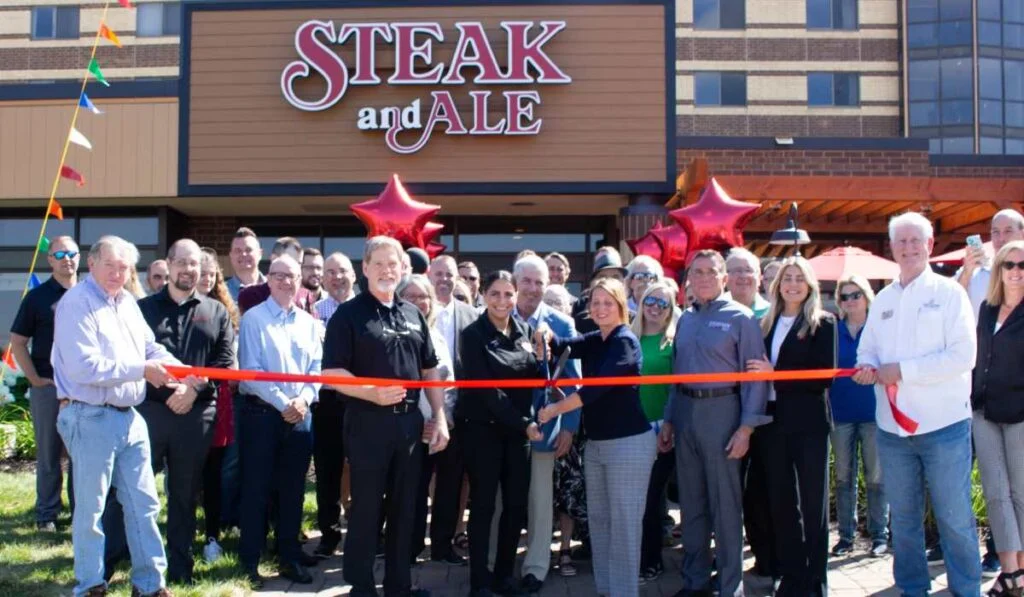
The theoretical framework of the revival met reality on July 8, 2024, with the official reopening of Steak and Ale in Burnsville, Minnesota. The launch was the culmination of years of planning and served as a litmus test for the brand’s viability. To gauge interest prior to the opening, the company launched a Facebook page for the comeback. The response was overwhelming, with more than 60,000 followers joining the community—a clear indication that the brand’s disappearance had not led to its erasure from the public consciousness.
The Burnsville location, operated by franchisee Roy Arnold of Dakota Hospitality Group, serves as the prototype for the "New Steak and Ale." It features a refined menu that emphasizes value without sacrificing the "polished" feel of the original concept. A primary example of this value proposition is a full meal consisting of Hawaiian chicken, rice pilaf, sautéed broccoli, the signature salad bar, and scratch-made bread with honey butter, priced at approximately $18.
In the current economic climate, where the price of a standard fast-food meal often exceeds $12 to $15, Mangiamele believes a full-service experience at an $18 price point offers an "unmatched" value proposition. This pricing strategy is designed to capitalize on what he calls a "new frontier" in the industry, where the narrowing price gap between quick-service and casual dining is driving consumers back to traditional sit-down environments.
Redesigning the Footprint: Efficiency Over Excess
One of the most significant shifts in the revival strategy involves the physical footprint of the restaurants. The original Bennigan’s and Steak and Ale locations were often sprawling "big box" units, ranging from 8,000 to 10,000 square feet. In the modern real estate market, such large footprints are frequently unsustainable due to high rent, utility costs, and the difficulty of maintaining consistent service across a massive floor plan.
Legendary Restaurant Brands has pivoted toward more efficient, smaller footprints that prioritize unit economics. By reducing square footage while maintaining seating capacity through smarter design, the brands offer a more attractive ROI for franchisees. "The real asset for me was the brand, not the real estate," Mangiamele explained. This shift allows the brands to fit into a wider variety of locations, from traditional standalone buildings to high-traffic end-caps and lifestyle centers.
Furthermore, the company has introduced "Bennigan’s On The Fly," a fast-casual and hybrid offshoot. This model is specifically designed for nontraditional venues such as airports, hotels, and universities, as well as delivery-focused "host kitchen" partnerships. By the end of 2024, Bennigan’s On The Fly is expected to reach approximately 40 units. This diversification ensures that the brand can capture consumer dollars across different dayparts and convenience levels.
Financial Independence and Deliberate Growth
Unlike many of its competitors in the casual dining space, Legendary Restaurant Brands remains privately held and debt-free. This financial structure is a deliberate choice by Mangiamele and his wife, Gwen Mangiamele, who serves as a key partner in the business. By eschewing private equity and outside investors, the company is not beholden to the pressure of quarterly earnings reports or the need for rapid, often unsustainable, expansion.

The company currently has more than 100 restaurants open or under contract globally. This growth is being managed with a level of caution that Mangiamele describes as "deliberate and hopefully intelligent." The focus is on finding the right franchise partners—those who share the company’s passion for culture and hospitality—rather than simply chasing unit counts.
This "culture-first" approach extends to the internal management of the brands. Mangiamele emphasizes that the hospitality industry is, at its core, a people business. In an era of high labor turnover and staffing challenges, he argues that a strong, supportive corporate culture is the only way to ensure consistent execution at the unit level.
The Macroeconomic Outlook: A Rebirth of Casual Dining
The revival of Bennigan’s and Steak and Ale comes at a pivotal moment for the restaurant industry. Post-pandemic consumer behavior has shown a resurgence in the desire for social interaction and "experiential" dining. While delivery and takeout remain significant components of the market, the "third place" role of the neighborhood restaurant—a space between home and work—is seeing a revival.
Mangiamele’s analysis suggests that the industry-wide "price reset" has benefited casual dining. As inflationary pressures have forced fast-food chains to raise prices significantly, the perceived value of a full-service meal has increased. However, he warns that this rebirth is not a rising tide that will lift all boats. "Not all casual-dining brands are created equal," he cautions. Those that have compromised on quality or failed to evolve their business models will likely continue to struggle, while those that leverage brand equity and operational efficiency are poised for growth.
Implications for the Future of Brand Revivals
The success of Mangiamele’s strategy offers several lessons for the broader business world. First, it demonstrates that brand equity can survive even the total disappearance of a product from the market, provided the brand was built on a foundation of genuine emotional connection. Second, it highlights the importance of adaptability; a revival cannot simply be a carbon copy of the past but must be a modern interpretation that addresses current economic realities.
As Bennigan’s enters its second half-century and Steak and Ale begins its new chapter in Minnesota and beyond, the industry will be watching closely. If Mangiamele can sustain this momentum, it will serve as a definitive blueprint for how to bring iconic concepts back from "the abyss" and thrive in a new era of American dining. For Mangiamele, the motivation remains rooted in a simple, personal truth: "It’s called love. I love what I do. You’ve got to have passion for what you do. Or don’t do it."