
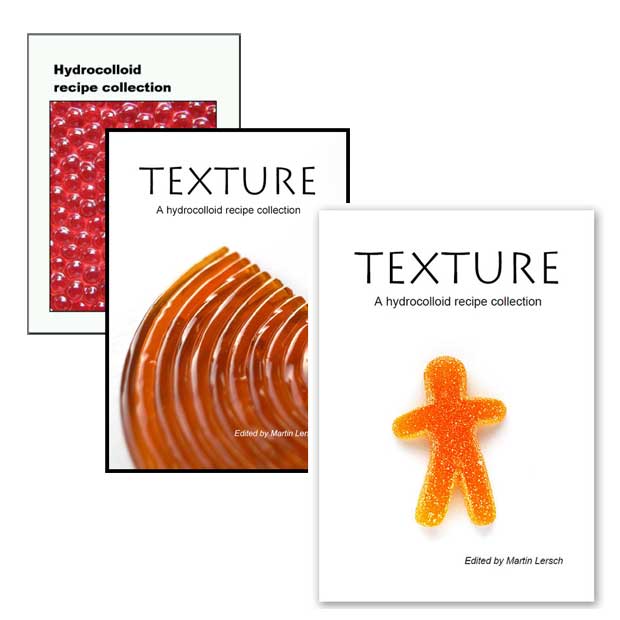
The acclaimed digital compendium, "Texture – A hydrocolloid recipe collection," a seminal resource for culinary professionals, food scientists, and enthusiastic home cooks delving into the intricate world of food texture, is poised for its next significant update. Six years after its last major revision, the creator of Khymos.org has announced an impending release of version 3.1, signaling an incremental but crucial refinement of the widely utilized guide. This forthcoming update aims to address existing "wrinkles," integrate community feedback, and broaden its scope by incorporating previously underrepresented ingredients and novel gelling mechanisms. The announcement, made via the Khymos.org platform, underscores the project’s ongoing commitment to accuracy, comprehensiveness, and collaborative development within the evolving landscape of modern gastronomy.
The Enduring Legacy of "Texture": A Cornerstone in Modern Culinary Arts
"Texture – A hydrocolloid recipe collection" emerged as a pioneering resource at a time when molecular gastronomy was transitioning from avant-garde experimentation into a more formalized culinary discipline. First published in 2007 as version 1.0, the collection quickly established itself as an indispensable reference for understanding and applying hydrocolloids—a diverse group of substances, primarily polysaccharides and proteins, that are used to thicken, gel, emulsify, and stabilize food products. These ingredients, derived from various natural sources such as plants, algae, and microorganisms, are fundamental to creating specific textures, improving mouthfeel, and extending shelf life in a myriad of food applications, from fine dining to industrial food production.
The initial release provided an accessible yet scientifically rigorous guide to hydrocolloids like agar, alginate, carrageenan, gellan gum, xanthan gum, and many others, demystifying their properties and offering practical recipes for their application. Before "Texture," information on these specialized ingredients was often scattered across academic journals, niche industrial publications, or proprietary manufacturer data sheets, making it challenging for the broader culinary community to access and utilize effectively. The collection’s clear explanations, precise measurements, and practical recipes helped bridge this knowledge gap, empowering chefs and food enthusiasts to confidently explore new textural possibilities.
Subsequent updates, version 2.0 in 2008 and version 3.0 in 2014, progressively expanded the collection’s depth and breadth. Each iteration incorporated new ingredients, refined existing recipes based on user experience, and integrated evolving scientific understanding of hydrocolloid interactions. The project’s ethos has always been deeply rooted in a collaborative, open-source model, actively soliciting feedback, corrections, and new contributions from its global user base. This community-driven approach has been instrumental in maintaining the collection’s relevance and accuracy over more than a decade, transforming it into a dynamic, living document rather than a static publication.
The forthcoming version 3.1, while described as an "incremental revision," is significant precisely because it continues this tradition of continuous improvement. In the six years since version 3.0, the culinary world has not stood still. New ingredients have emerged, innovative techniques have been developed, and global food trends have shifted, all of which necessitate a careful review and update of foundational resources. The current announcement signals that the creator remains dedicated to ensuring "Texture" reflects the most current knowledge and practices, solidifying its position as a go-to reference for advanced culinary techniques and ingredient science.
A Call for Community Collaboration: Shaping the Next Iteration
A central tenet of the "Texture" project has always been its reliance on community feedback, a tradition that is being vigorously reaffirmed for the v.3.1 update. The creator has issued an open invitation to users worldwide to contribute their insights, experiences, and photographic documentation to enrich the upcoming revision. This call for participation is not merely a formality but a critical mechanism for ensuring the guide’s accuracy and practical utility.
Users are encouraged to report any typographical errors, factual inaccuracies, or recipes that did not yield expected results. Such detailed feedback is invaluable for "ironing out wrinkles" and improving the overall reliability of the collection. The creator explicitly states that all feedback, even if not individually acknowledged immediately, is carefully reviewed and considered for incorporation. This commitment to user-generated quality assurance distinguishes "Texture" from many commercial publications, fostering a sense of shared ownership and collective expertise.
Beyond error correction, a significant emphasis has been placed on the submission of photographs. The creator highlights that "if a recipe is accompanied by a photo it’s a good sign that it has been tested with a successful outcome." Visual documentation provides tangible proof of concept, offering readers clear examples of desired textures and presentations. Detailed instructions for photo submission have previously been outlined on the Khymos.org blog (dating back to 2010) and are also available within the existing "Texture" document itself (p. 8), indicating a long-standing framework for such contributions. This visual element not only enhances the aesthetic appeal of the collection but also serves as a practical guide, demonstrating successful applications of complex techniques.
Expanding the Hydrocolloid Horizon: Focus on Underrepresented Gums
One of the key objectives for version 3.1 is to enhance coverage of several hydrocolloids that are currently "underrepresented" within the collection. The creator specifically named guar gum, gum arabic, konjac, locust bean gum (LBG), and tara gum as areas requiring more robust recipe development and application examples. While these ingredients are well-established in the food industry, their nuanced culinary applications may not be as widely documented for the general user as some other hydrocolloids.
-
Guar Gum: Derived from guar beans, guar gum is a potent thickener and stabilizer. It is highly soluble in cold water and widely used in dairy products, sauces, dressings, and gluten-free baking for its ability to increase viscosity and improve texture. Its relatively low cost and high efficiency make it a common industrial additive, but its precise culinary applications beyond basic thickening often benefit from more detailed guidance.
-
Gum Arabic (Acacia Gum): An exudate from the acacia tree, gum arabic is prized as an emulsifier and stabilizer, particularly in beverages, confectionery, and encapsulation technologies. It helps prevent sugar crystallization, stabilizes emulsions, and provides desirable mouthfeel. Documenting its specific roles in various culinary preparations, especially for home cooks, can unlock new possibilities.
-
Konjac (Glucomannan): Extracted from the konjac plant, this hydrocolloid is known for forming strong, heat-stable, elastic gels. It is a staple in Asian cuisine, notably in shirataki noodles and various vegetarian and vegan preparations. Its unique textural properties make it an excellent candidate for innovative culinary applications, including plant-based meat alternatives and specialized desserts.
-
Locust Bean Gum (LBG): Sourced from the seeds of the carob tree, LBG acts as a thickener and stabilizer. It is particularly effective when used in synergy with other hydrocolloids, such as xanthan gum or carrageenan, to create a range of textures. Commonly found in ice creams, cream cheeses, and pet foods, LBG contributes to creaminess and prevents ice crystal formation, offering significant potential for texture modification in gourmet dishes.
-
Tara Gum: Derived from the seeds of the tara tree, tara gum shares structural similarities with both guar gum and LBG. It exhibits good cold solubility and thickening properties, often used as a direct substitute or in combination with other gums. Its relatively newer presence in mainstream culinary applications means a collection of diverse recipes would be highly beneficial for users seeking to explore its full potential.
The call for recipes featuring these specific hydrocolloids aims to provide a broader spectrum of examples, illustrating their versatility and optimizing their use across different food matrices. Users are invited to share their proven recipes either through the comments section on the Khymos.org announcement or directly via email, ensuring a streamlined process for submission.
Addressing Omissions: Proprietary Products and Novel Discoveries
The "Texture" collection has always maintained a clear policy regarding the inclusion of certain ingredients. The creator notes that some omissions are intentional, particularly for proprietary products. Examples given include Ultra-Tex and Pure Cote (both modified starches) and Trisol (a wheat fiber). These products, while texturally impactful, are often brand-specific, may have limited availability, and their precise compositions can be protected intellectual property. Excluding them ensures that the collection remains focused on more universally accessible and scientifically transparent ingredients, aligning with its educational mission.
However, the creator also acknowledges that other omissions might be accidental, especially concerning rare or novel hydrocolloids that have emerged or gained prominence since the last update. The rapid pace of food science and ingredient innovation means that new gelling agents or textural modifiers are continually being discovered or refined. The call for feedback extends to identifying such accidental omissions, inviting experts and enthusiasts to bring attention to deserving hydrocolloids that might enhance the collection’s comprehensiveness. This open dialogue ensures that "Texture" remains a cutting-edge resource, adapting to new developments in the field.
The Fascination of Non-Hydrocolloid Gels: Regional Kitchens and Viral Sensations
A distinctive and highly valued section of "Texture" is dedicated to "non-hydrocolloid recipes." This category explores traditional gelling mechanisms found in regional kitchens worldwide, where unique textures are achieved without the addition of industrial hydrocolloids. Instead, these preparations rely on natural processes such as enzyme action, protein coagulation, or starch gelatinization. The inclusion of such recipes broadens the understanding of texture beyond mere ingredient lists, connecting scientific principles with cultural culinary heritage.
The current collection already features compelling examples:
- Junket: A traditional European dessert made by coagulating milk with rennet, an enzyme, resulting in a delicate, spoonable gel.
- Cuajada: A similar milk curd, often associated with Basque cuisine, typically made with sheep’s milk and rennet, offering a distinctive flavor and texture.
- Ginger Milk Custard: A popular Chinese dessert where the natural proteases in fresh ginger juice coagulate milk proteins, forming a smooth, silky custard.
- Aiyu Jelly: A refreshing Taiwanese dessert made from the seeds of the Aiyu fig (Ficus pumila var. awkeotsang), which release pectin-like gelling agents when rubbed in water.
- Grass Jelly: A beloved Southeast Asian dessert, typically made from the Platostoma palustre plant, whose leaves contain polysaccharides that form a dark, slightly bitter gel.
- Gelled Seafood Sauce: Often a result of reducing seafood stocks rich in natural collagen from bones and skin, which forms a gel upon cooling.
- Tofu: A staple in Asian cuisine, created by coagulating soy milk proteins with salts like nigari (magnesium chloride) or gypsum (calcium sulfate), forming a wide range of textures from silken to firm.
- Hominy: Nixtamalized corn kernels, where the process of soaking and cooking corn in an alkaline solution gelatinizes the starch, yielding a distinctively chewy texture.
The creator is actively seeking more examples of such culturally significant gels and foams to further enrich this section. This pursuit highlights the project’s dedication to showcasing the diversity of textural innovation across global culinary traditions, demonstrating that sophisticated texture manipulation is not solely a modern scientific endeavor but deeply embedded in historical cooking practices.
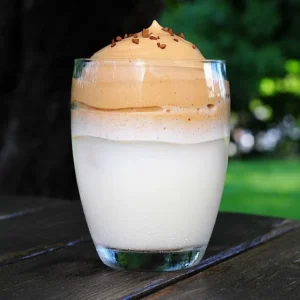
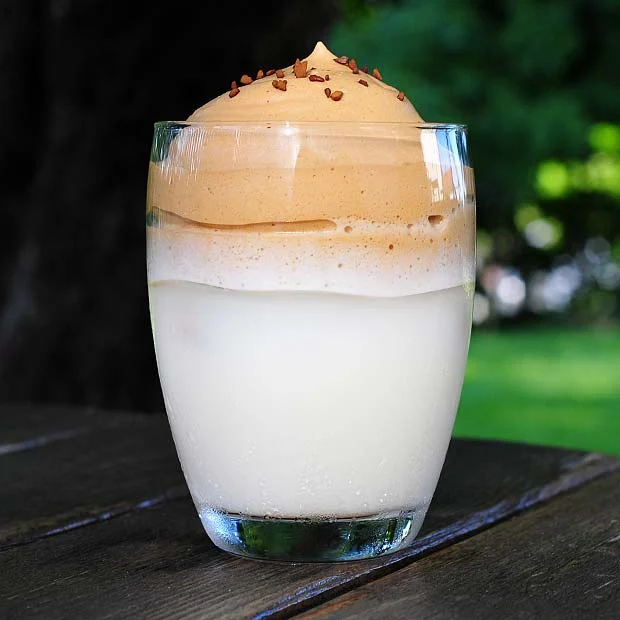
A notable new inclusion confirmed for v.3.1 is the Dalgona coffee foam. This particular foam captured global attention and became a viral sensation during the spring of 2020, offering a prime example of a non-hydrocolloid foam. It is made by vigorously whisking equal parts instant coffee, sugar, and hot water until it forms a light, airy, and stable foam, which is then spooned over cold milk. The stability of Dalgona coffee foam is primarily attributed to the surface-active proteins in instant coffee and the sugar, which stabilize the air bubbles without the need for gums or starches. Its popularity underscores how simple ingredients and mechanical action can create complex textures, and its inclusion in "Texture" will provide a timely and relevant example of a contemporary gelling/foaming mechanism.
Implications for Culinary Innovation and Education
The impending update to "Texture – A hydrocolloid recipe collection" carries significant implications for various stakeholders in the food industry and culinary arts. For culinary professionals, the updated guide will provide access to refined recipes, expanded ingredient applications, and insights into traditional techniques, fostering innovation in menu development and dish creation. Chefs can explore new textural contrasts, develop unique sensory experiences, and confidently integrate lesser-known hydrocolloids into their repertoire.
For food scientists and product developers, the collection serves as a practical complement to academic research, offering real-world application examples that can inform ingredient selection and formulation strategies. The detailed documentation of hydrocolloid properties and interactions, combined with user-tested recipes, provides a valuable empirical database. The inclusion of novel and underrepresented hydrocolloids, along with a focus on non-hydrocolloid gels, could inspire new approaches to food product design, particularly in the growing segments of plant-based foods and functional ingredients.
For educators and students in culinary schools and food science programs, "Texture" remains an accessible yet authoritative textbook. The community-driven nature of the project means that the content is continually vetted and improved, offering a dynamic learning resource that keeps pace with industry developments. The emphasis on photographic evidence and user feedback cultivates a practical, experimental mindset essential for understanding food science principles.
Furthermore, the project reinforces the value of open-source knowledge sharing in specialized fields. By actively engaging its user base in the content generation and validation process, "Texture" demonstrates how collective intelligence can create a resource that is more comprehensive, accurate, and relevant than any single author or institution could achieve alone. This collaborative model democratizes access to advanced culinary techniques and scientific information, making cutting-edge knowledge available to a wider audience, from professional research kitchens to passionate home cooks.
The six-year gap between major updates, while seemingly long, has allowed for substantial real-world testing, accumulation of diverse feedback, and the emergence of new culinary trends and ingredients. The v.3.1 update is not merely a cosmetic refresh but a considered evolution, reflecting the project’s dedication to providing a robust, reliable, and continually relevant resource. As the culinary world continues its trajectory of innovation, resources like "Texture" remain vital in grounding experimentation in sound scientific principles and practical application. The call for community contributions is a testament to the enduring spirit of collaboration that has made "Texture – A hydrocolloid recipe collection" an unparalleled guide in the exploration of food texture.