
The acclaimed Khymos blog, a long-standing authority in the intersection of food and science, has broken a seven-year silence on its book recommendations, offering a comprehensive review of notable titles published in 2020 that delve into the scientific underpinnings of gastronomy. The eagerly anticipated return of this curated list underscores a burgeoning interest in understanding the ‘why’ behind culinary processes, moving beyond mere recipes to explore the intricate physics, chemistry, and biology that shape our eating experiences. This hiatus, which saw the blog’s last book recommendations dating back to 2013, highlights the significant evolution and expansion of food science literature, now catering to both the curious home cook and the seasoned professional seeking deeper insights into flavor, technique, and ingredient interaction.
The Resurgence of Culinary Science Literature
The landscape of food literature has undergone a profound transformation over the past decade, witnessing a remarkable surge in titles that bridge the gap between the kitchen and the laboratory. Historically, food science was often confined to academic journals or highly technical textbooks, inaccessible to the general public. Pioneers like Harold McGee, whose seminal work On Food and Cooking: The Science and Lore of the Kitchen first published in 1984, ignited a widespread interest by demystifying complex culinary phenomena. McGee’s approach—combining meticulous scientific explanation with historical context and practical application—paved the way for a new genre of food writing.
In recent years, this trend has accelerated, fueled by popular culinary television shows, the rise of molecular gastronomy, and a growing consumer demand for healthier, more informed eating choices. Home cooks are increasingly seeking to understand not just how to follow a recipe, but why certain techniques yield specific results. This intellectual curiosity has fostered a fertile ground for authors, scientists, and chefs to collaborate on works that are both rigorously scientific and eminently practical. The 2020 recommendations from Khymos exemplify this shift, showcasing books that are designed to enrich culinary practice through scientific understanding, often featuring accessible language, integrated scientific explanations, and practical applications for everyday cooking.
Spotlight on 2020’s Culinary Science Gems
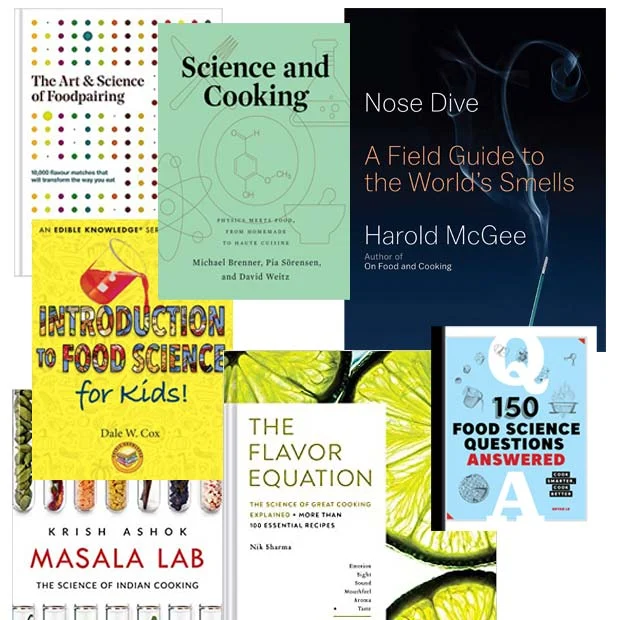
The 2020 selection from Khymos presents a diverse array of books, each contributing uniquely to the field of culinary science. These titles collectively represent the depth and breadth of contemporary food science exploration.
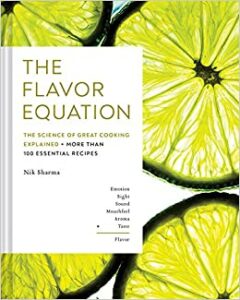
The Flavor Equation by Nik Sharma
Nik Sharma’s The Flavor Equation (352 pages, 2020) stands out for its innovative approach to understanding and manipulating flavor. Sharma, a renowned food writer, photographer, and former molecular biologist, transcends traditional recipe formats by integrating scientific principles directly into each dish. The book features approximately 100 recipes, but its true genius lies in the "The Flavor Approach" sections accompanying each, offering concise yet profound scientific insights. Rather than segregating science into separate chapters, Sharma weaves it into the narrative of cooking, explaining how factors like aroma, taste, texture, sight, and even sound contribute to our overall perception of flavor. For instance, he might explain the Maillard reaction’s role in browning, the impact of acid on protein denaturation, or how specific volatile compounds create distinct aromatic profiles. The inclusion of metric units is a practical bonus, particularly appreciated by an international audience and those seeking precision in their culinary experiments. The remaining third of the book is dedicated to exploring flavor from multiple perspectives, making complex concepts easily digestible for a broad readership. Sharma’s background in science allows him to articulate these principles with clarity, empowering cooks to move beyond rote memorization and truly understand the transformative power of ingredients and techniques.
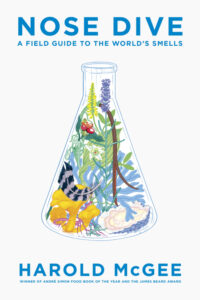
Nose Dive: A Field Guide to the World’s Smells by Harold McGee
Harold McGee’s Nose Dive: A Field Guide to the World’s Smells (688 pages, 2020) is a monumental achievement, reinforcing his status as a titan in food science literature. Following his groundbreaking On Food and Cooking, Nose Dive dedicates itself entirely to the often-underestimated sense of smell. McGee’s exploration extends far beyond the confines of the kitchen, delving into the olfactory world in its entirety—from the aromas of fresh earth and rain to the complex bouquets of wines and the subtle scents of human skin. The book meticulously discusses countless volatile molecules, identifying the chemical compounds responsible for the vast spectrum of odors we perceive. While the scientific detail is considerable, McGee’s masterful storytelling and accessible prose ensure that readers, even those without a scientific background, can engage with the material. He transforms what could be a dry chemical catalog into a fascinating narrative about how smell shapes our experiences, memories, and appreciation of the world. This work is not just a reference guide but an immersive journey into the very essence of sensation, offering profound insights into why certain smells evoke particular feelings or complement specific foods. The mere breadth and depth of research within its pages make it an indispensable resource for anyone interested in sensory science.
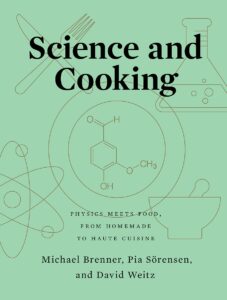
Science and Cooking: Physics Meets Food, From Homemade to Haute Cuisine by Michael Brenner, Pia Sørensen, and David Weitz
This book (320 pages, 2020) emerges directly from the acclaimed "Science and Cooking" course first taught at Harvard University a decade ago. Authored by the course founders—Michael Brenner (applied mathematics), Pia Sørensen (chemistry), and David Weitz (physics)—it crystallizes the interdisciplinary approach that has made the course a global phenomenon. Many of the original lectures, featuring luminaries from both the culinary and scientific worlds, are publicly available on YouTube, demonstrating the course’s commitment to open education. The book skillfully integrates advanced scientific concepts with practical culinary applications, showcasing how principles of fluid dynamics, heat transfer, material science, and chemical reactions manifest in everyday cooking and haute cuisine alike. For example, it might explain the physics of emulsion stability in mayonnaise, the thermodynamics of baking bread, or the chemical changes occurring during fermentation. The authors excel at making complex scientific ideas relevant to food, often juxtaposing theoretical explanations with corresponding recipes. Like Sharma’s book, it also earns a "bonus for metric units," reflecting a commitment to scientific precision and global accessibility. This book is an invaluable resource for students, educators, and curious cooks who wish to explore the fundamental scientific principles governing culinary artistry.
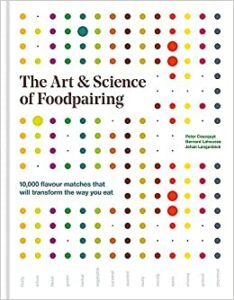
The Art and Science of Foodpairing by Peter Coucquyt, Bernard Lahousse, and Johan Langenbick
The Art and Science of Foodpairing (388 pages, 2020) is the culmination of extensive research by the company Foodpairing, co-founded by Bernard Lahousse. The concept of "flavor pairing"—the idea that ingredients sharing similar volatile aromatic compounds will taste good together—has been a topic of both fascination and controversy in the culinary world. Critics sometimes argue that it oversimplifies taste, neglecting cultural context, personal preference, and the complex interplay of non-aromatic compounds. However, this book systematically presents the scientific basis for these pairings, drawing on advanced analytical techniques to map the molecular profiles of thousands of ingredients. The authors, including Peter Coucquyt (chef) and Johan Langenbick (entrepreneur), illustrate how data-driven insights can inspire novel and unexpected ingredient combinations, such as chocolate and cauliflower, or oysters and passion fruit. While the science provides the framework, the book emphasizes that true culinary innovation still requires the "art" of a chef to balance, refine, and present these pairings. It showcases how scientific analysis can serve as a powerful tool for creativity, pushing the boundaries of traditional flavor combinations and offering guaranteed inspiration for culinary experimentation.
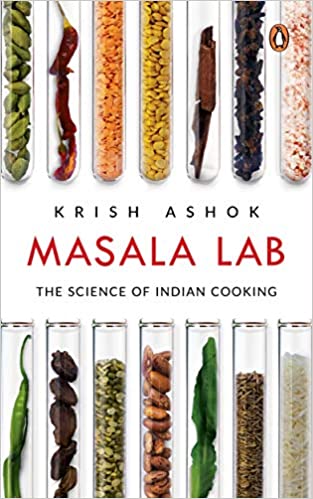
Masala Lab by Krish Ashok
Krish Ashok’s Masala Lab (280 pages, 2020) represents a significant contribution by applying a scientific lens to regional cuisines, specifically Indian cooking. Ashok, an electronic and software engineer, brings a methodical and curious mind to the complexities of traditional Indian culinary practices. The book explores the science behind common techniques like tempering spices, achieving the perfect texture in curries, and understanding the role of various ingredients in creating layered flavors. It breaks down the chemical reactions and physical transformations that occur during cooking, offering explanations for why certain steps are crucial and how they can be optimized. This scientific treatment of a rich and diverse cuisine is particularly valuable, as many food science books tend to focus on Western culinary traditions. Masala Lab empowers cooks to understand the principles governing their heritage cooking, allowing for greater mastery and innovation. The article notes its primary availability through Amazon in India, highlighting a need for broader distribution to make this invaluable resource accessible to a global audience eager to explore the science of diverse culinary traditions.
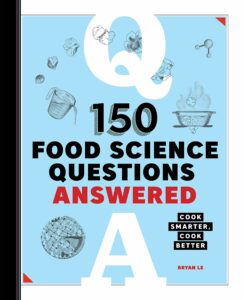
150 Food Science Questions Answered: Cook Smarter, Cook Better by Bryan Le
Bryan Le’s 150 Food Science Questions Answered: Cook Smarter, Cook Better (198 pages, 2020) serves as an excellent entry point for individuals new to integrating a scientific mindset into their cooking. Structured as a series of clear Q&As, the book provides concise and practical explanations for common culinary queries. Chapters cover fundamental topics such as cooking basics (e.g., "Why does meat shrink when cooked?"), flavor basics ("What makes food taste umami?"), and the main groups of ingredients (e.g., "What’s the difference between baking soda and baking powder?"). A dedicated chapter on food safety and storage ("How long can leftovers safely be stored?") offers essential practical advice. This format makes the book highly browsable and an ideal reference for quick look-ups, allowing readers to easily find answers to specific questions without having to navigate dense scientific prose. Le’s ability to distill complex information into easily digestible answers makes this an invaluable tool for enhancing kitchen confidence and efficiency.
Introduction to Food Science for Kids!: A Kitchen-Based Workbook by Dale W Cox
Dale W Cox’s Introduction to Food Science for Kids!: A Kitchen-Based Workbook (112 pages, 2020) addresses a critical need: introducing scientific concepts to children through engaging, hands-on activities. The kitchen is, arguably, one of the most accessible and exciting "laboratories" for young minds. This workbook provides a structured approach to exploring basic chemical and physical principles using everyday ingredients and cooking processes. Children can learn about states of matter by melting chocolate, understand emulsions by making mayonnaise, observe chemical reactions with baking soda and vinegar, or explore density through layered drinks. By framing these experiments as fun cooking activities, Cox helps demystify science and foster early curiosity in STEM fields. This book is an excellent resource for parents, educators, and anyone looking to spark a love for science in children, demonstrating that learning can be both delicious and entertaining.
A Decade of Discovery: Notable Trends from 2014-2019
While the original Khymos blog post only mentioned "highlights from 2014-2019" without detailing specific titles, the period itself was rich with developments in food science literature. Following the initial wave of molecular gastronomy explorations, the mid-to-late 2010s saw a diversification of focus. Books on fermentation, such as Sandor Ellix Katz’s The Art of Fermentation, gained immense popularity, explaining the microbiology behind kombucha, kimchi, and sourdough. There was also a growing emphasis on plant-based cooking and its unique scientific challenges and opportunities, exploring protein structures in plant ingredients and techniques for achieving satisfying textures and flavors without animal products. Nutritional science also began to integrate more deeply with culinary science, with authors exploring the bioavailability of nutrients, the impact of cooking methods on health, and the science behind personalized diets. This period solidified the notion that food science was not a niche academic pursuit but a dynamic field with direct relevance to everyday eating and broader societal trends in health and sustainability.
Broader Impact and Implications of Food Science Literature
The proliferation of accessible food science literature, as exemplified by the Khymos recommendations, has profound implications across various sectors.
For Home Cooks: These books empower the average home cook to become a more intuitive and confident culinarian. Understanding the why behind a recipe allows for greater adaptability, troubleshooting skills, and creativity. Instead of blindly following instructions, cooks can adjust techniques based on ingredient quality, desired outcomes, and even personal preferences, leading to more consistent and enjoyable results. This deeper understanding fosters a sense of mastery and reduces kitchen frustrations.
For Professional Chefs and Culinary Education: For professional chefs, food science books are not just theoretical texts but practical guides for innovation. They offer insights into ingredient interactions, temperature control, texture manipulation, and flavor development that can elevate dishes to new heights. Culinary schools are increasingly integrating food science into their curricula, recognizing that a strong scientific foundation is crucial for developing the next generation of culinary leaders. Books like those from Harvard’s "Science and Cooking" program provide excellent pedagogical tools.
Cultural Significance and Inclusivity: The emergence of books like Masala Lab highlights a vital shift towards greater inclusivity in food science. By applying scientific principles to diverse global cuisines, these works validate and elevate traditional knowledge, demonstrating that culinary wisdom across cultures often rests on sophisticated, albeit unarticulated, scientific understanding. This fosters a deeper appreciation for global food traditions and encourages cross-cultural culinary dialogue.
Future Trends: Looking ahead, the field is likely to continue its expansion. We may see more literature exploring sustainable cooking practices, the science of food waste reduction, the application of artificial intelligence and machine learning to recipe development, and the intricate science of personalized nutrition tailored to individual microbiomes and genetic predispositions. The increasing global connectivity will undoubtedly lead to more interdisciplinary and multicultural approaches to understanding the science of what we eat.
In conclusion, the Khymos blog’s return to book recommendations marks a significant moment for enthusiasts of food science. The 2020 selections underscore a vibrant and expanding field, offering invaluable resources that deepen our understanding of food, empower culinary creativity, and bridge the gap between scientific inquiry and everyday cooking. These works collectively affirm that the kitchen remains an endlessly fascinating laboratory, ripe for exploration and discovery.